
Port-en-Bessin, Entrance to the Harbor — History & Facts
When Georges Seurat painted Port-en-Bessin, Entrance to the Harbor in 1888, he was deep in the midst of his experiments with pointillism—a technique that had already sparked both fascination and controversy in Parisian art circles. Unlike his monumental A Sunday Afternoon on the Island of La Grande Jatte, this coastal scene was part of a series in which Seurat applied his scientific approach to color and light to the rugged Normandy coastline. Contemporary critics were divided: some praised the "mathematical precision" of his brushwork, while others found the method cold.
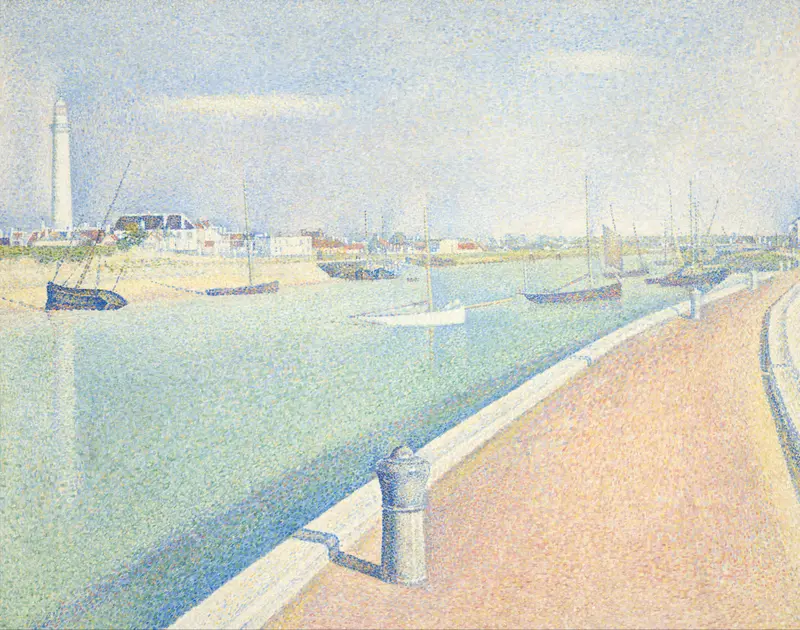
The painting stands as a testament to Seurat’s relentless pursuit of a new visual language, one dot at a time. Seurat chose a moment of quiet anticipation: the harbor mouth of Port-en-Bessin, a small fishing village, at the instant before boats return or depart. The composition is anchored by the stone jetties that frame the entrance, their geometric solidity offset by the shimmering, mosaic-like surface of the sea. Tiny figures and boats are rendered with the same meticulous dabs of color as the sky and water, blurring the boundary between human activity and the natural world.
The light, broken into countless points, captures the crispness of a Channel morning. Unlike Claude Monet’s more atmospheric harbors, Seurat’s view is analytical, almost architectural, inviting the viewer to see the scene as a structure of color and form. The painting’s early history is not as well documented as some of Seurat’s larger works, but it is known that he painted several views of Port-en-Bessin during a summer stay in 1888. Works from this series were exhibited in Paris and quickly entered private collections, as collectors recognized the innovation of Seurat’s technique.
Over time, Port-en-Bessin, Entrance to the Harbor has traveled through the hands of dealers and connoisseurs, eventually finding a home in a major museum collection. Today, it is valued not only as a record of a specific place and time, but as a key example of Seurat’s mature style—an artist at the height of his powers, reshaping the possibilities of painting.
More Artworks by Georges Seurat
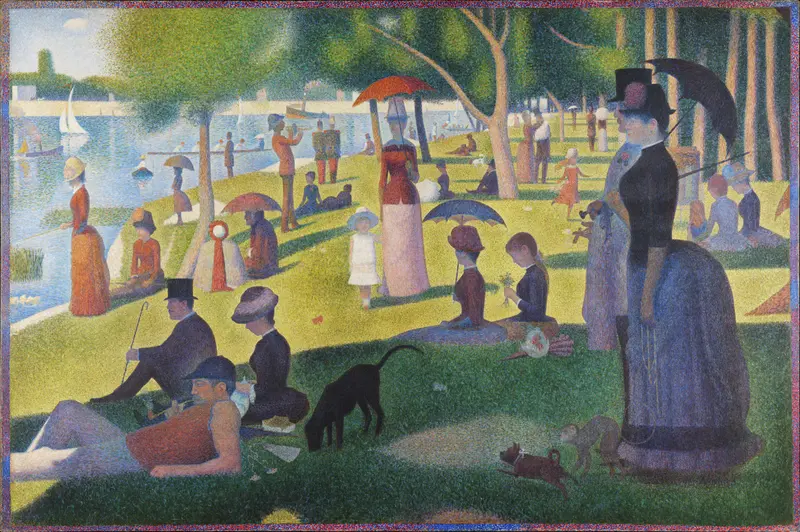
A Sunday Afternoon on the Island of La Grande Jatte
Georges Seurat
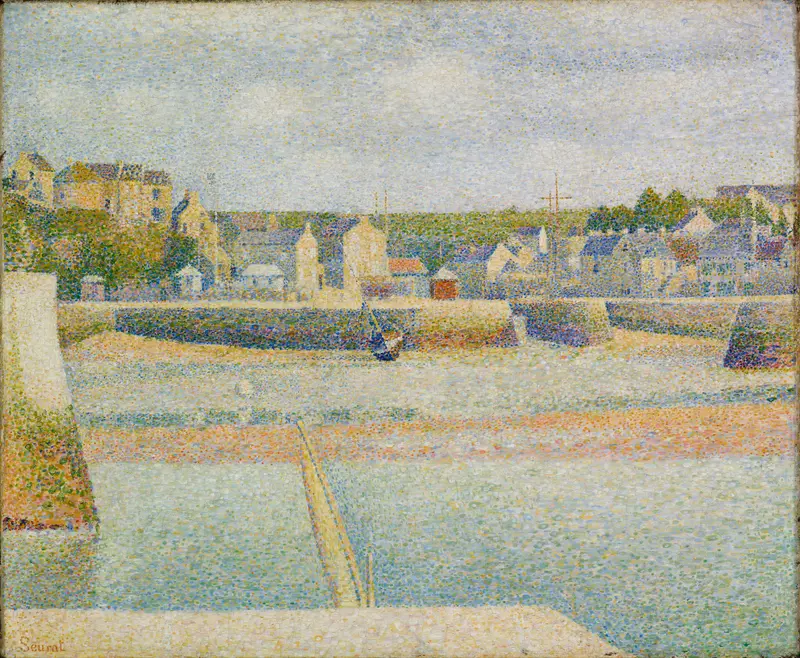
Port-en-Bessin, The Outer Harbor (Low Tide)
Georges Seurat
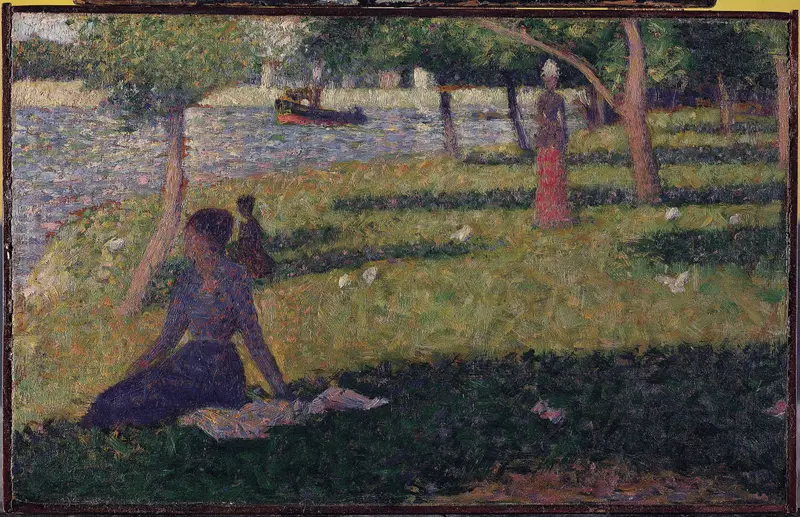
Étude pour ‘La Grande Jatte’ (Study for ‘La Grande Jatte’)
Georges Seurat
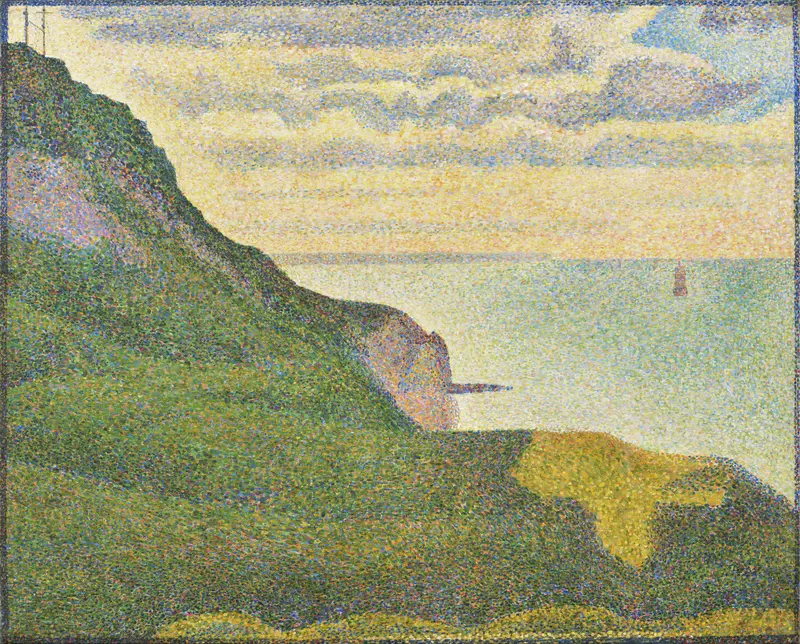
Seascape at Port-en-Bessin,Normandy
Georges Seurat
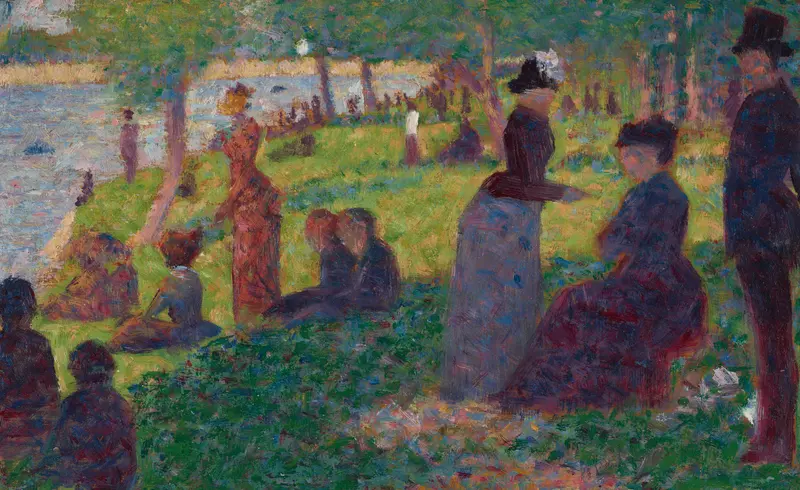
Oil Sketch for "A Sunday on La Grande Jatte — 1884"
Georges Seurat
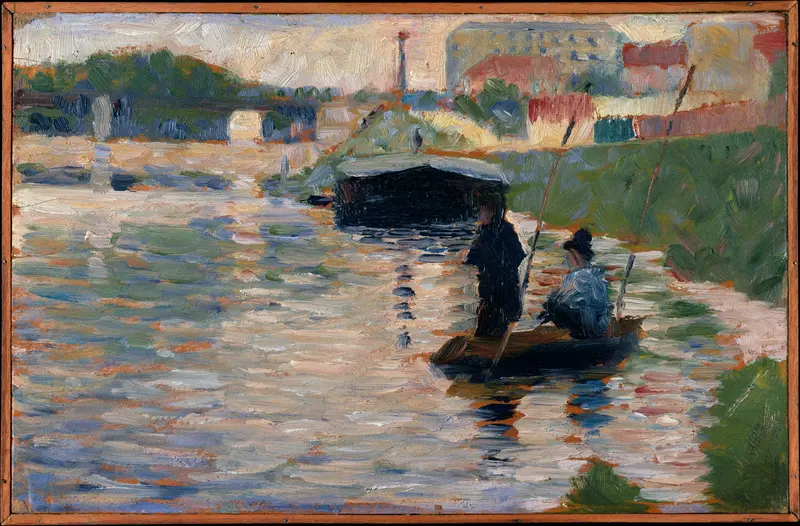
View of the Seine
Georges Seurat
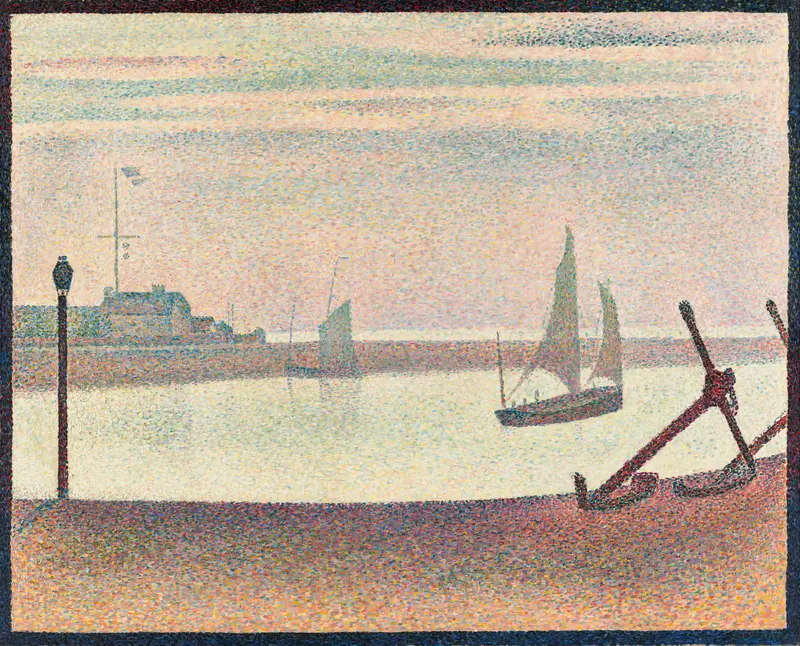
The Channel at Gravelines, Evening
Georges Seurat
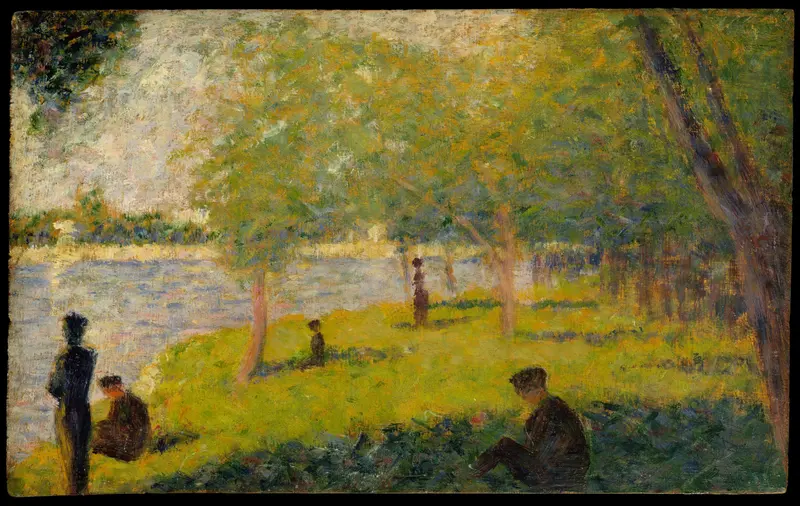
Study for ‘A Sunday on La Grande Jatte’
Georges Seurat
Study for A Sunday on La Grande Jatte
Georges Seurat
The Channel of Gravelines, Petit Fort Philippe
Georges Seurat





