
Portrait of the Infanta Maria Teresa — History & Facts
A young girl faces forward, her pale face framed by elaborately curled brown hair adorned with large, white, fan-shaped ribbons. Her cheeks are softly flushed, and her lips are delicately tinted, giving her an air of youthful solemnity. She gazes outward with a calm, almost reserved expression, her eyes set wide beneath finely arched brows.
The sitter wears a formal gown in silvery gray, its surface shimmering with highlights that suggest the sheen of fine fabric. Gold embroidery and lace trim the bodice and sleeves, catching the light in thick, textured strokes of paint. A large, white, rosette-shaped ornament sits on her right shoulder, its petals rendered with quick, creamy brushwork.
Her left arm is only partly visible, emerging from a voluminous sleeve that falls in heavy folds, painted with a mix of broad and fine strokes. A gold sash drapes diagonally across her chest, its metallic gleam picked out with dabs of bright pigment. Behind her, the background is a deep, velvety black, setting off the luminous tones of her skin and dress.
The paint surface shows a lively handling, with visible brushstrokes especially in the highlights and the intricate details of the costume. The composition is tightly focused on the upper body, filling the frame with the figure and eliminating any sense of surrounding space. A band of large, gold capital letters runs along the very top edge of the painting, partially cropped by the upper frame.
The upper left and right corners of the image are filled with the dark background, with no visible objects or figures intruding into these areas. Light falls from the left, illuminating the sitter’s face and the left side of her hair more strongly, while the right side recedes into softer shadow. The edges of the figure’s right sleeve blend into the background with loose, feathery brushstrokes, creating a subtle transition between the costume and the dark space.
The paint on the gold embroidery and ribbons is applied in thick, raised lines, giving the surface a tactile, almost three-dimensional quality in certain highlights.
Sources: Philadelphia Museum of Art, record Cat. 812 · Wikidata Q20810228 · Image source (Wikimedia Commons)
More Artworks by Diego Velázquez

Las Meninas
Diego Velázquez
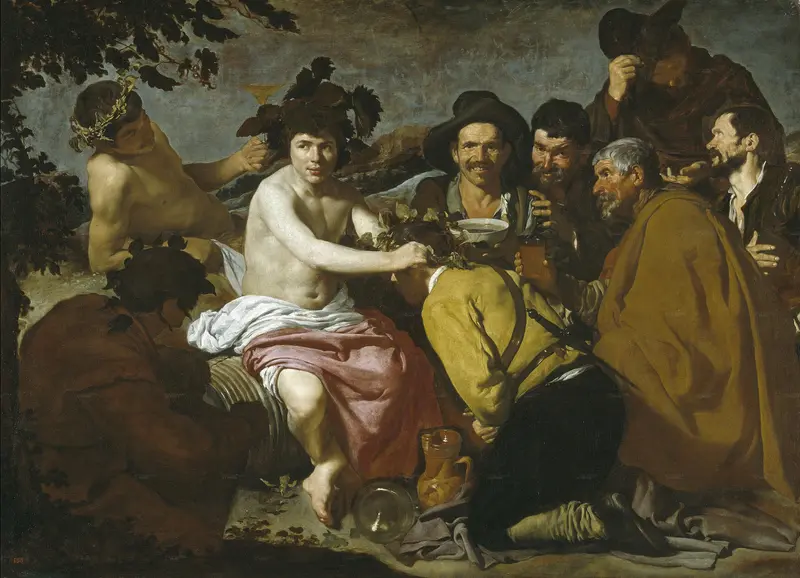
The Triumph of Bacchus
Diego Velázquez
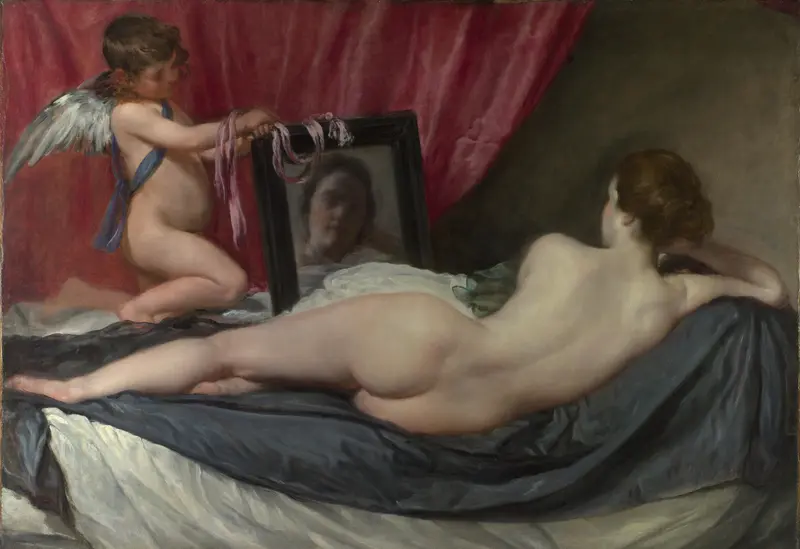
Rokeby Venus
Diego Velázquez
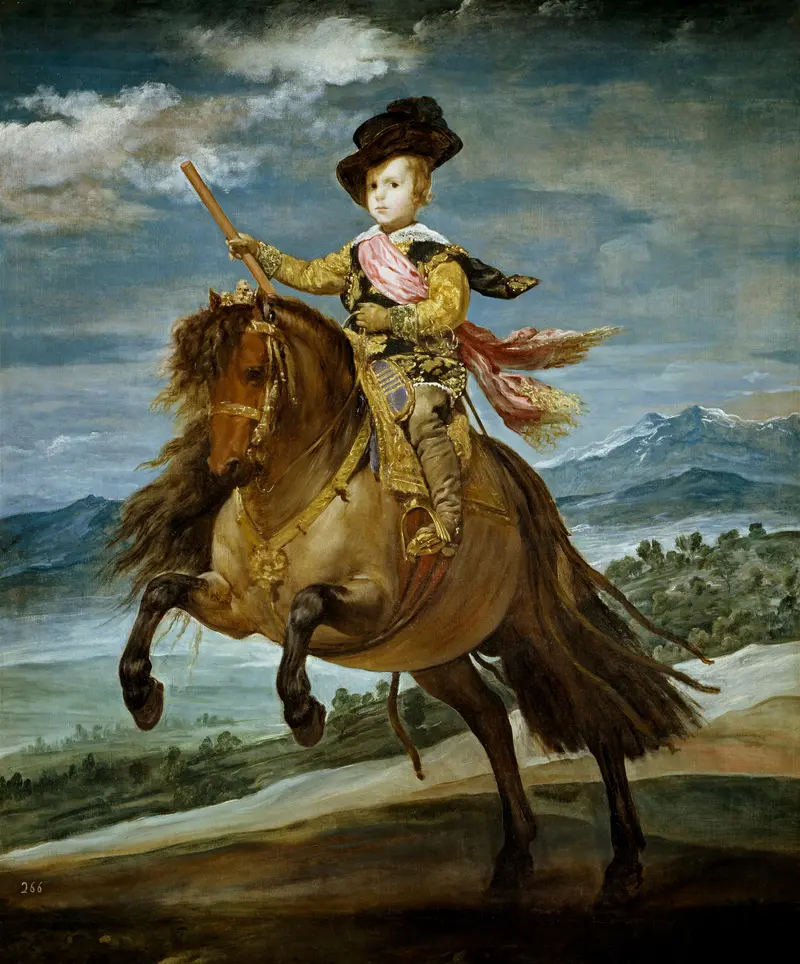
Equestrian Portrait of Prince Balthasar Charles
Diego Velázquez
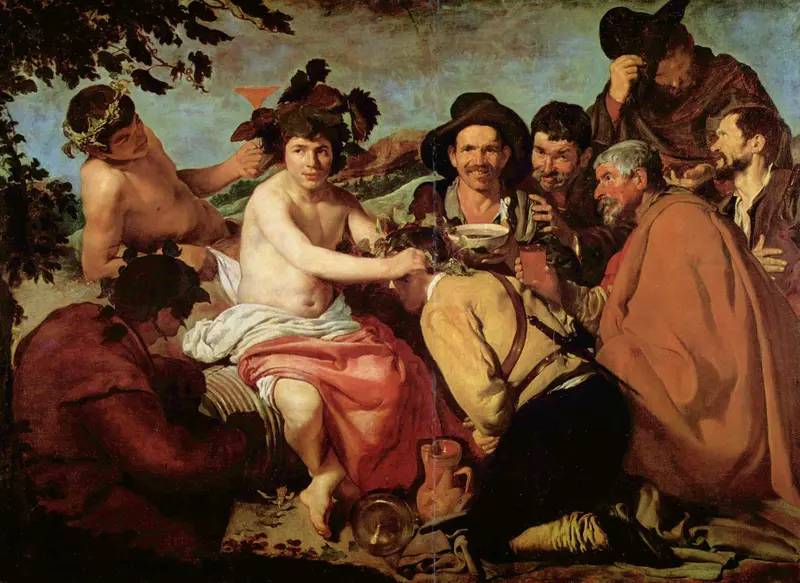
Bacchus
Diego Velázquez
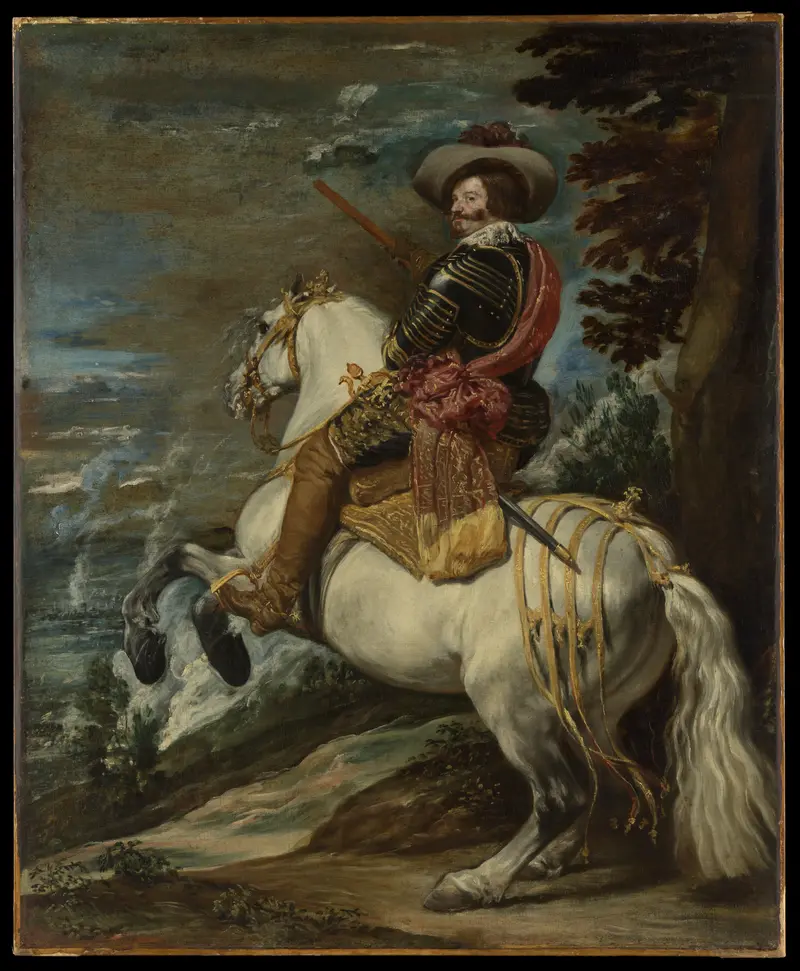
Don Gaspar de Guzmán (1587–1645), Count-Duke of Olivares
Diego Velázquez
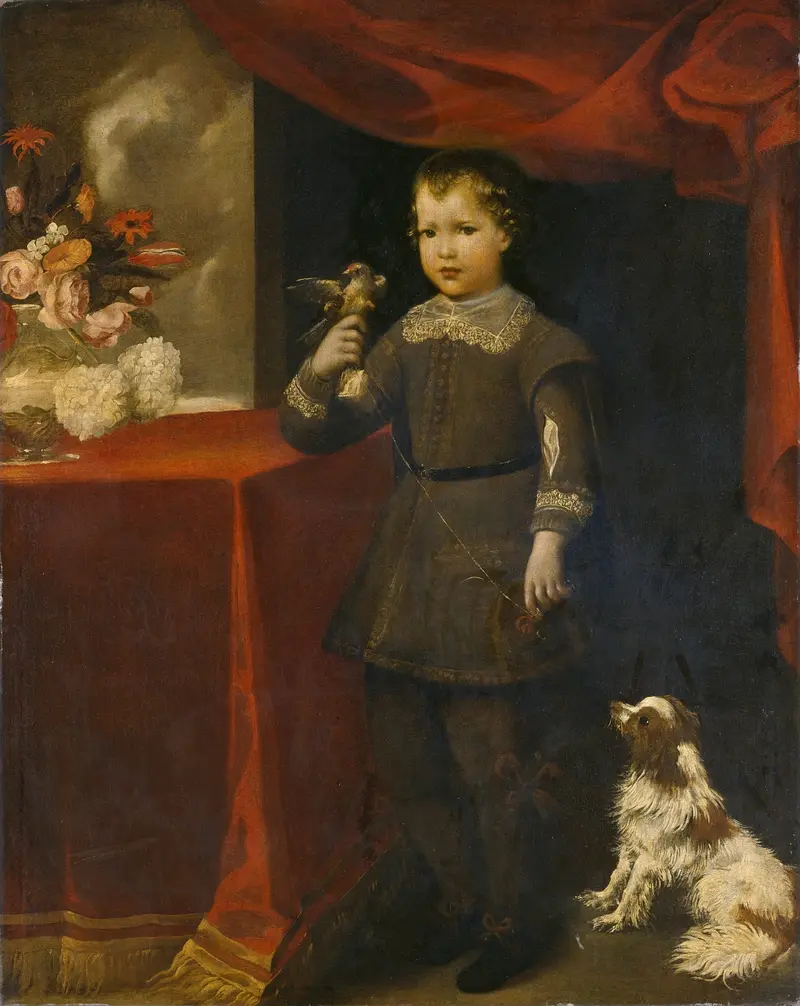
El príncipe Baltasar Carlos de Austria
Diego Velázquez
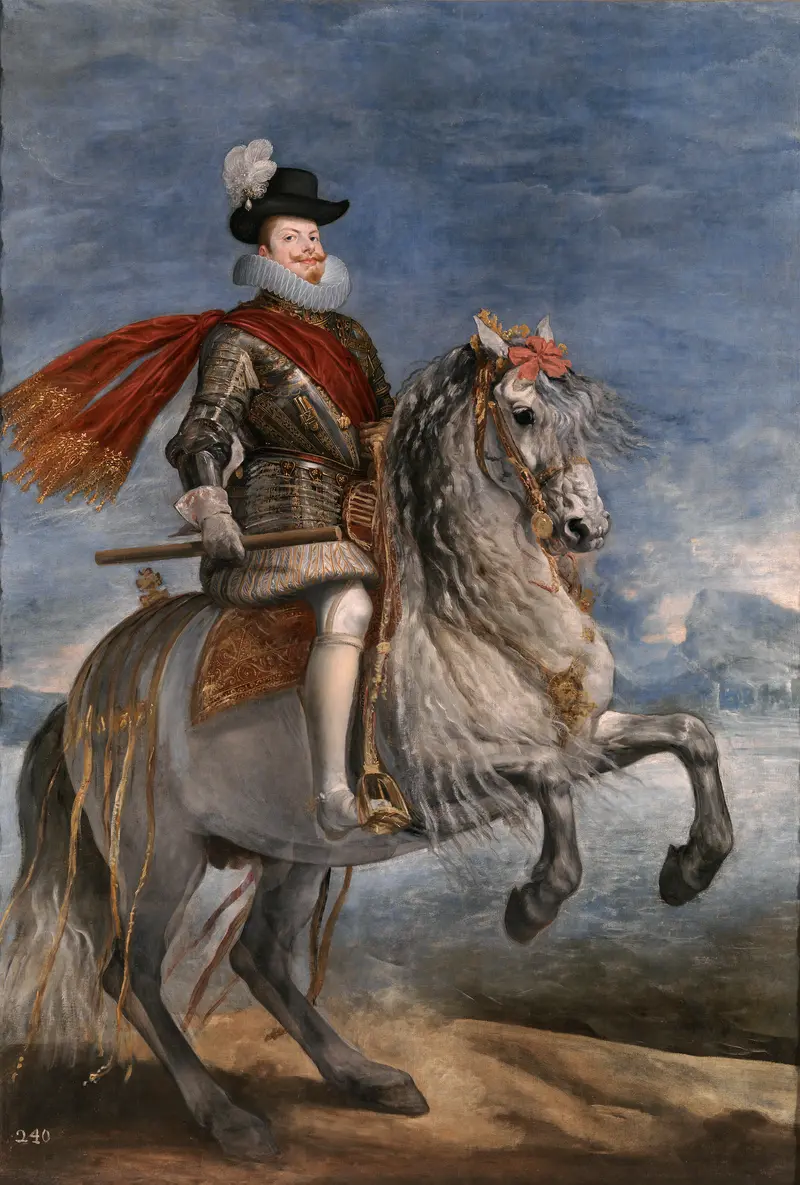
Equestrian Portrait of Philip III
Diego Velázquez
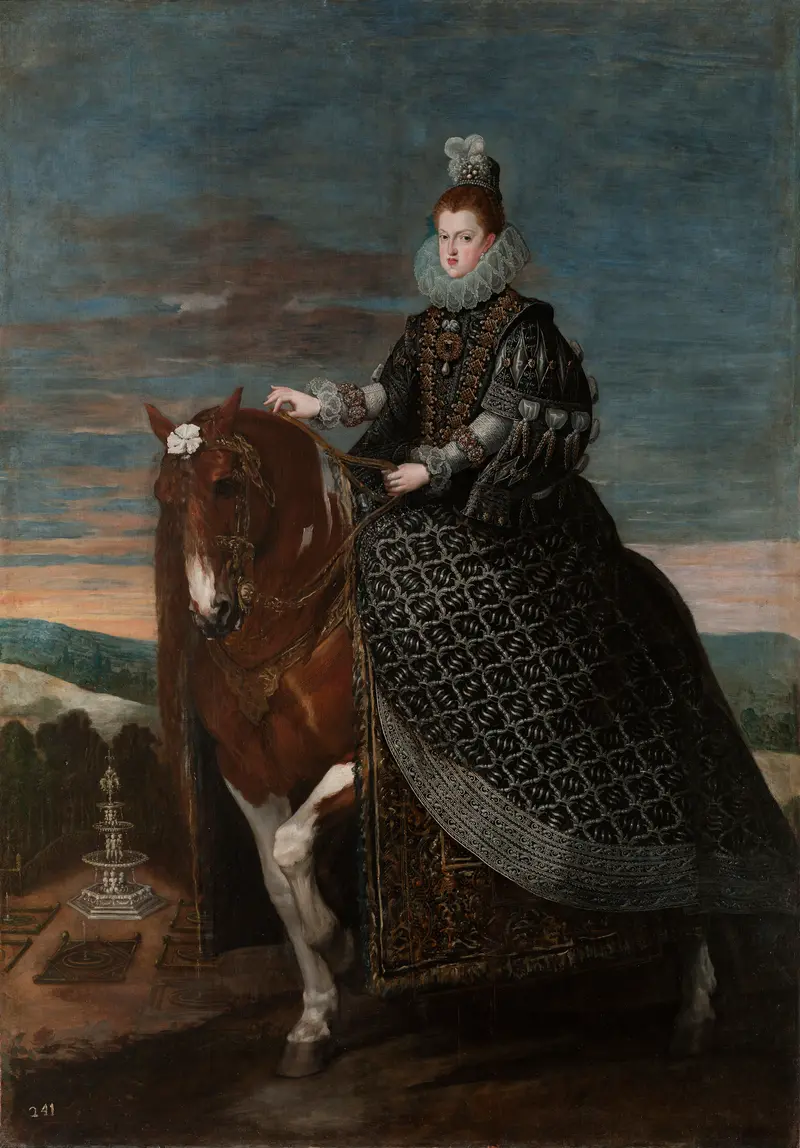
Equestrian Portrait of Margarita of Austria
Diego Velázquez
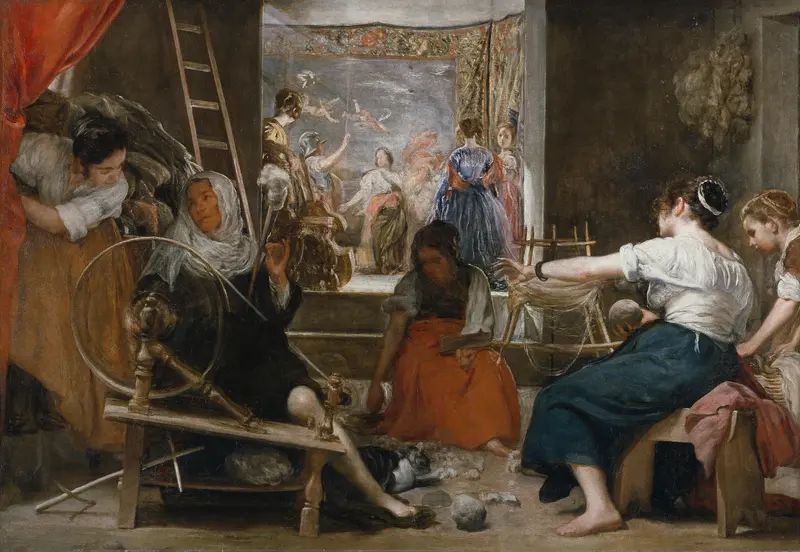
Las Hilanderas
Diego Velázquez




