Renaissance Ornament No. 1 — History & Facts
A page like this from Renaissance Ornament No. 1 by Owen Jones invites the eye to wander through a lush tangle of forms, each panel a miniature world of invention. The most striking feature is how the designs seem to pulse with life: foliage unfurls in disciplined spirals, mythic creatures perch or peer from behind curling leaves, and faces—half-human, half-god—emerge from the thicket.
Every detail is purposeful; the symmetry guides the gaze inward, while the dense interplay of line and shadow conjures the illusion of depth and movement. The golden ground unifies the page, lending warmth and a sense of preciousness, as if these fragments of ornament were rare specimens pinned for study. This chromolithograph, published in London in the early twentieth century, belongs to a tradition that looked back to the Renaissance not just for inspiration, but as a model for the unity of art and craft. Pattern books like this were prized by architects, designers, and craftsmen eager to revive the richness of historical ornament in a rapidly industrializing world.
Owen Jones, celebrated for his role in shaping Victorian design theory, compiled such plates to educate and inspire, drawing on museum collections and historic buildings. The page now resides in the Polona Digital Library, a testament to how these once-practical guides have become objects of study in their own right. Let your eye linger on the details—a griffin’s claw, a laughing mask, a burst of acanthus—and imagine the hands that once traced these forms into wood, stone, and plaster.
More Artworks by Owen Jones

Greek Ornament No. 1
Owen Jones
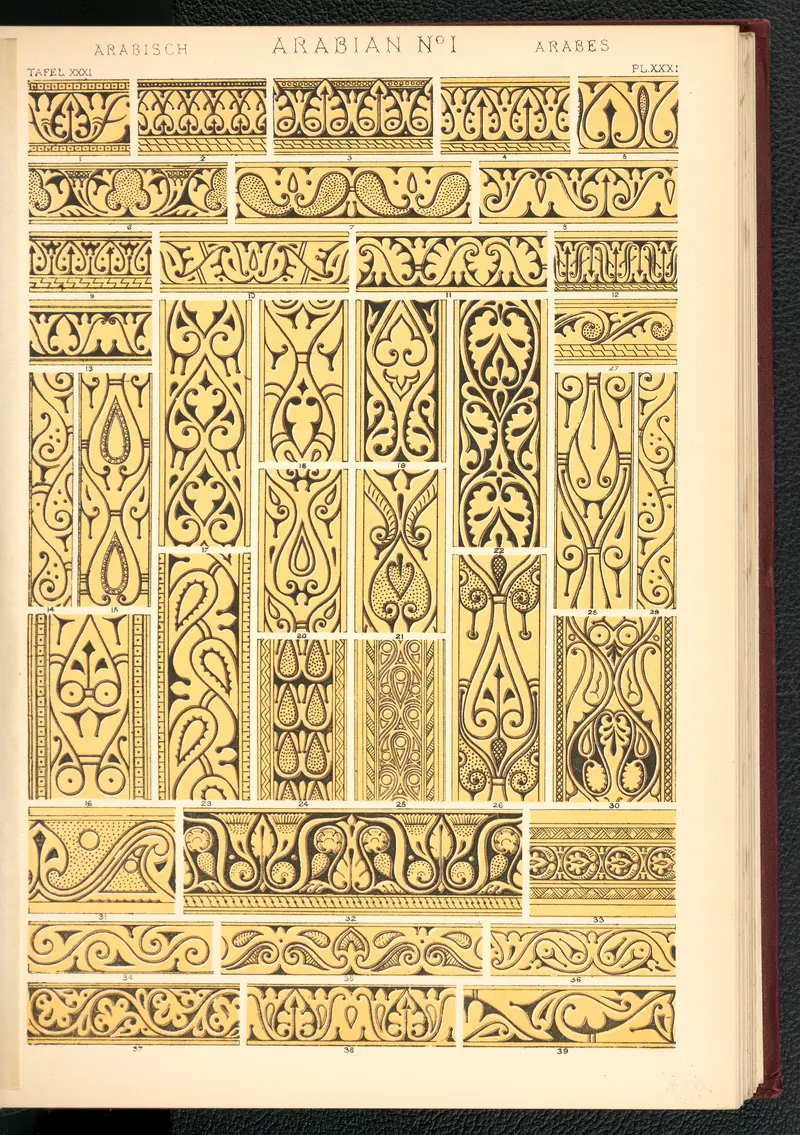
Arabian Ornament No. 1
Owen Jones
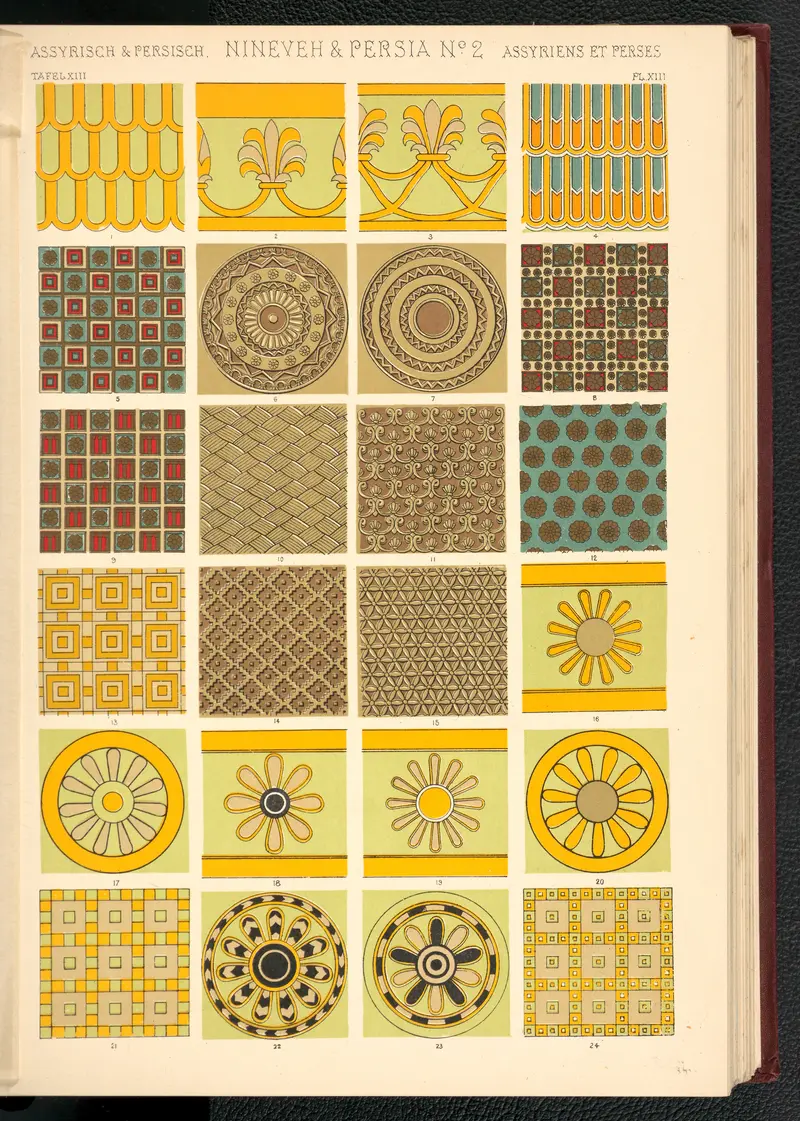
Assyrian Ornament No. 2
Owen Jones

Egyptian Ornament No. 3
Owen Jones
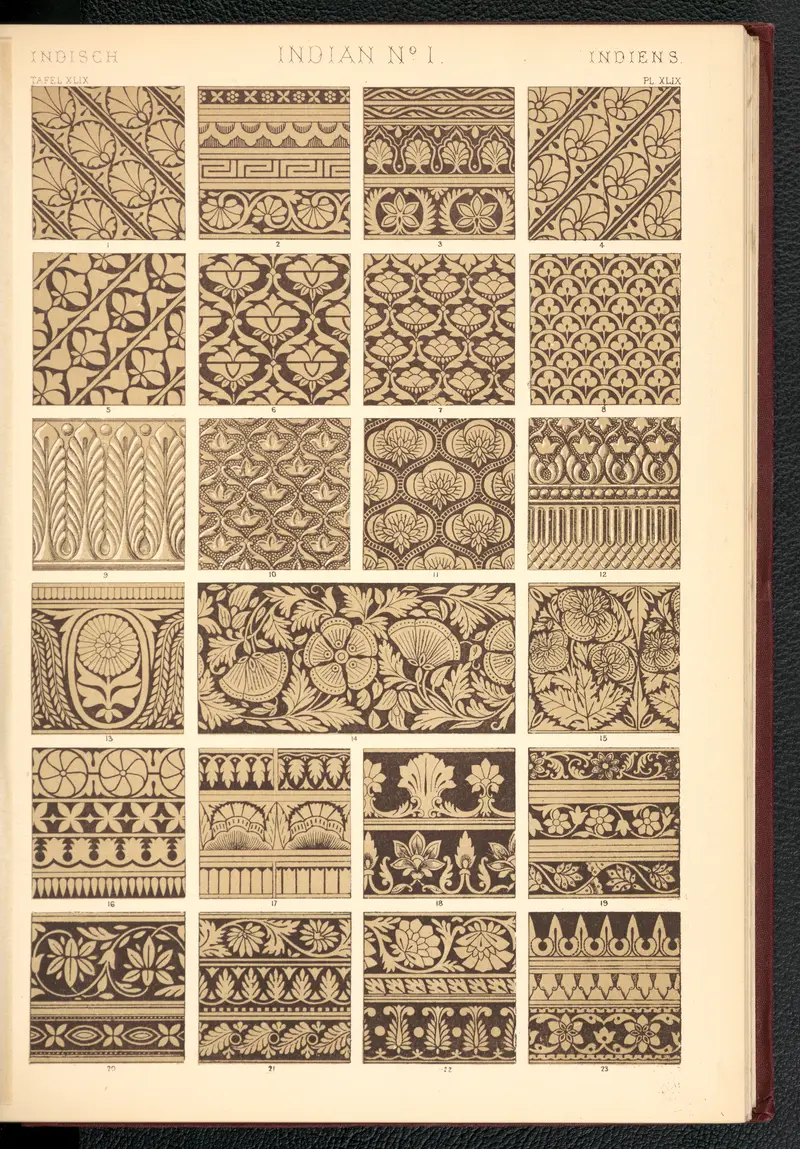
Indian Ornament No. 1
Owen Jones
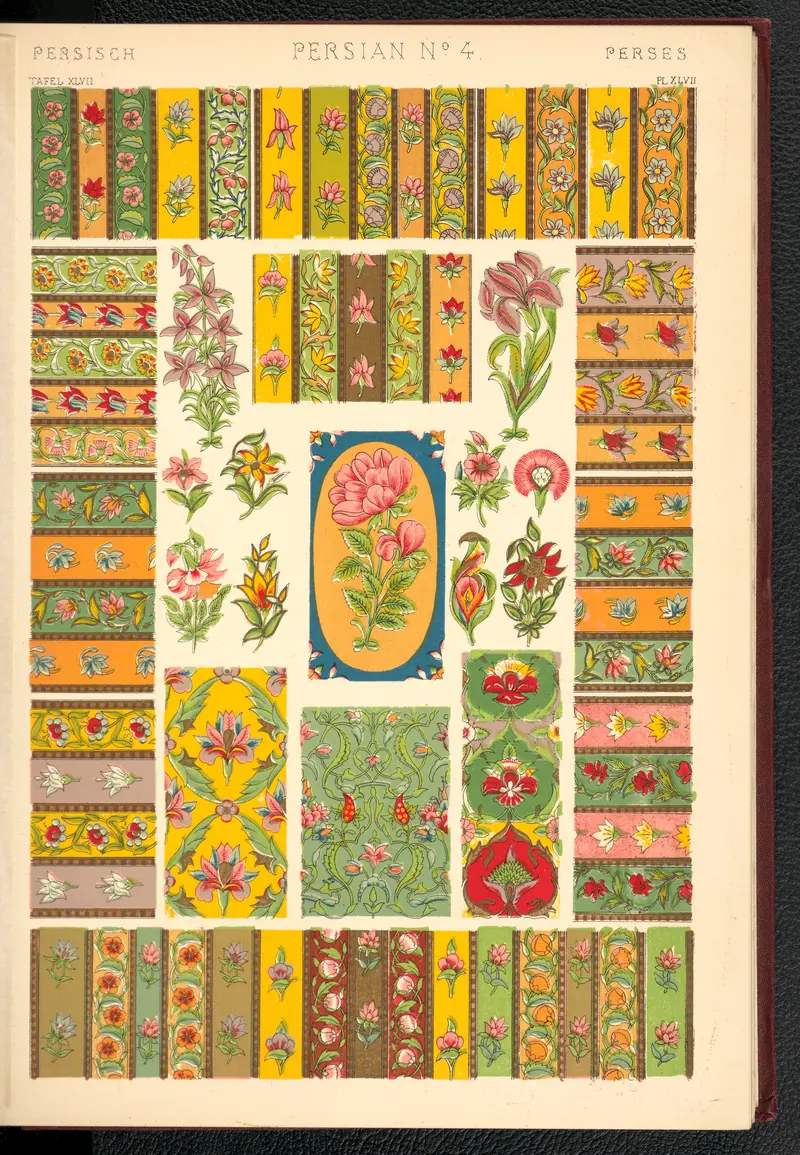
Persian Ornament No. 4
Owen Jones
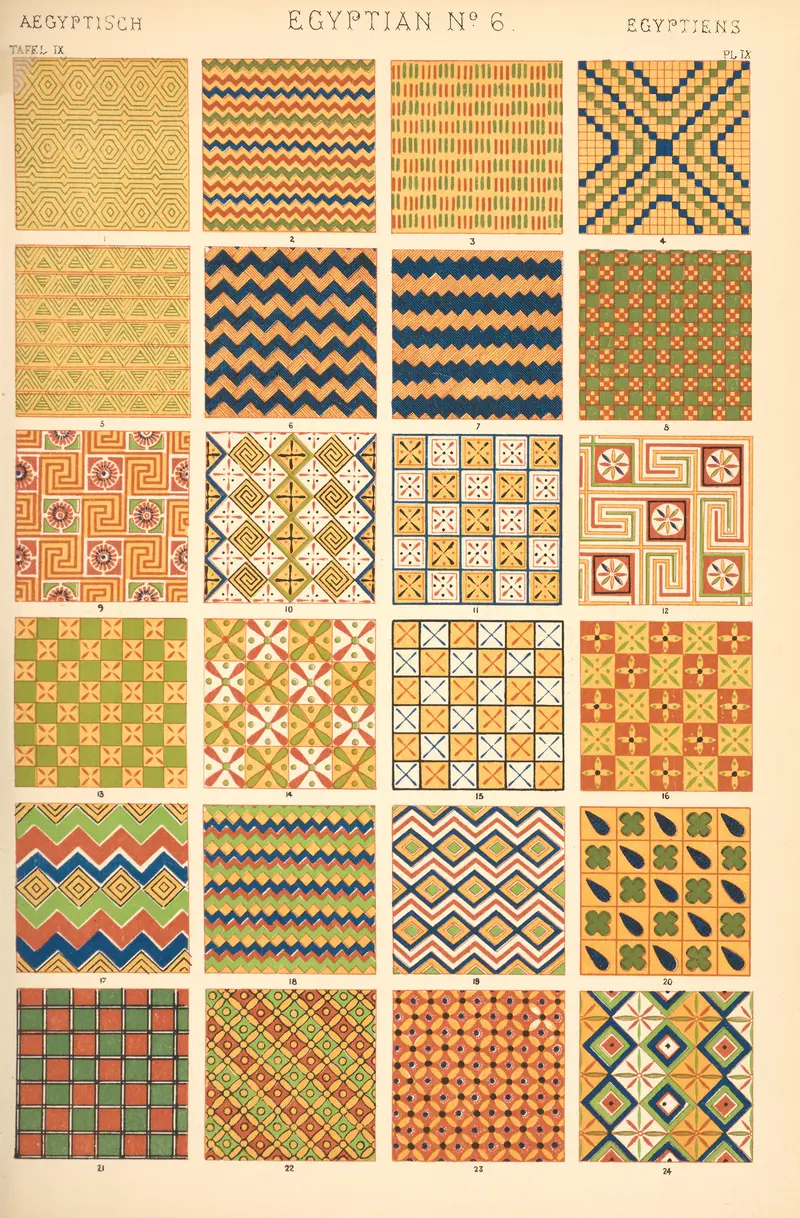
Egyptian Ornament No. 6
Owen Jones
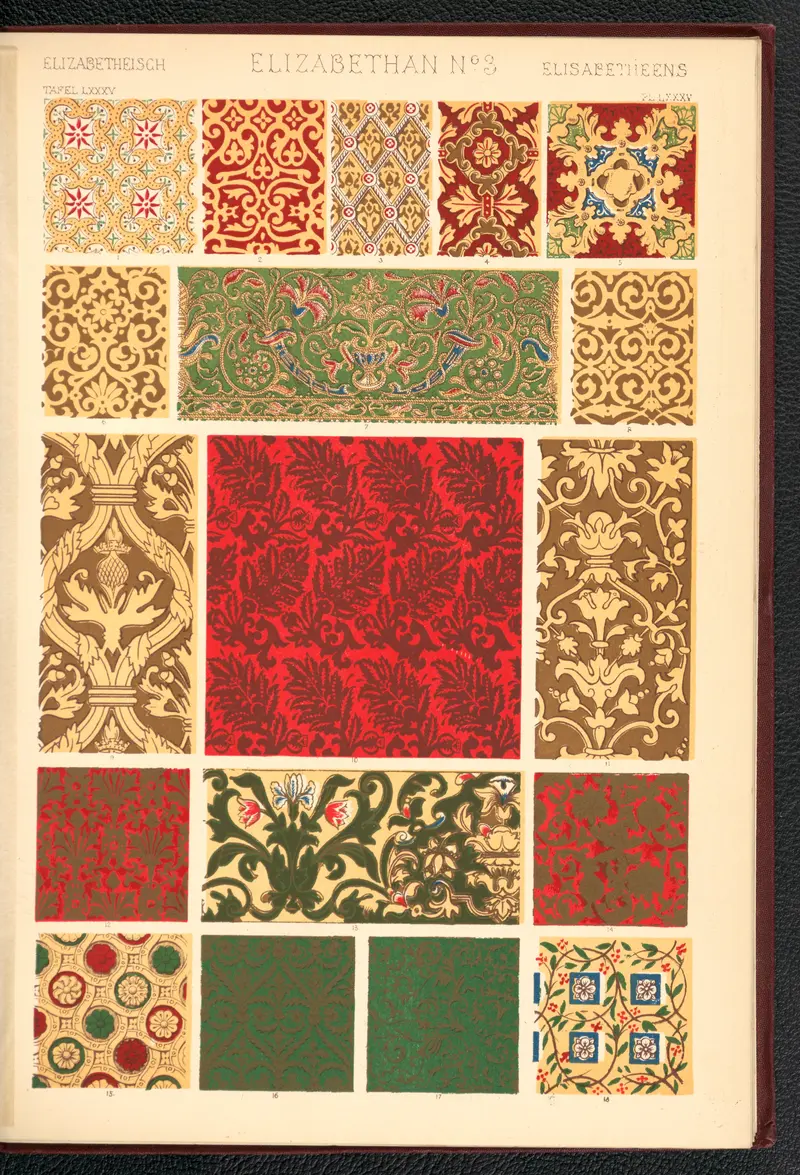
Elizabethan Ornament No. 3
Owen Jones
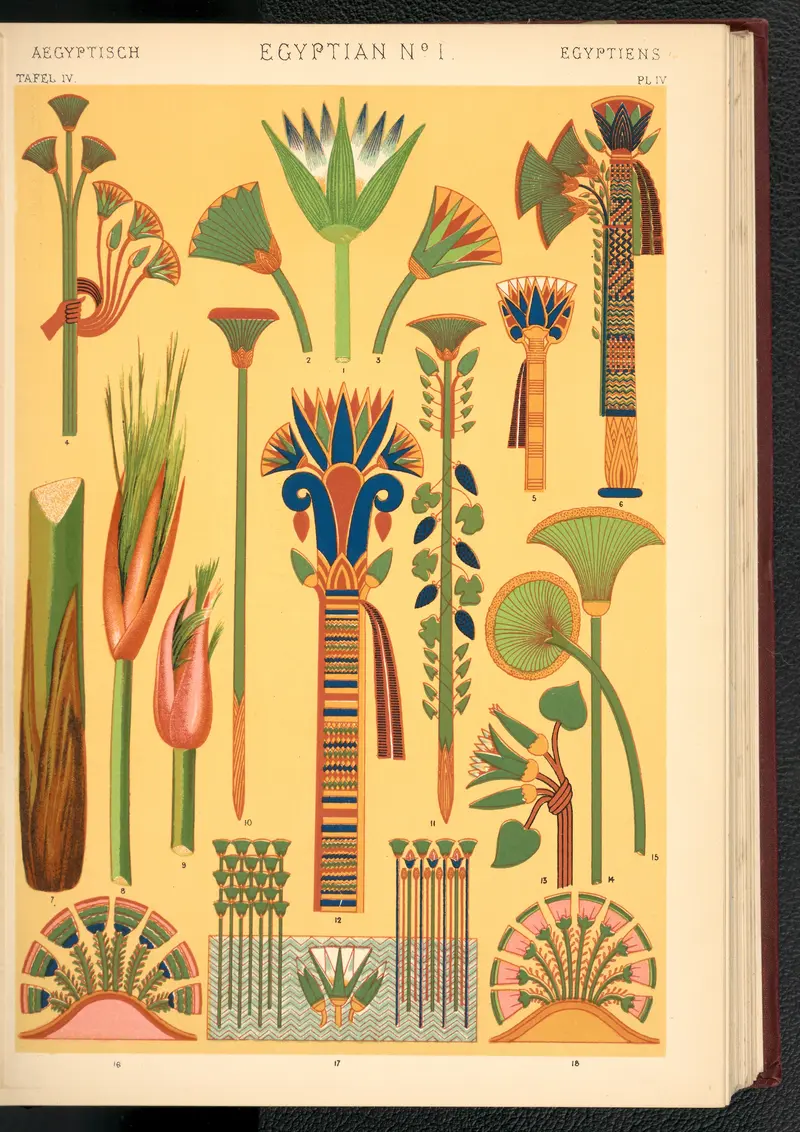
Egyptian Ornament No. 1
Owen Jones
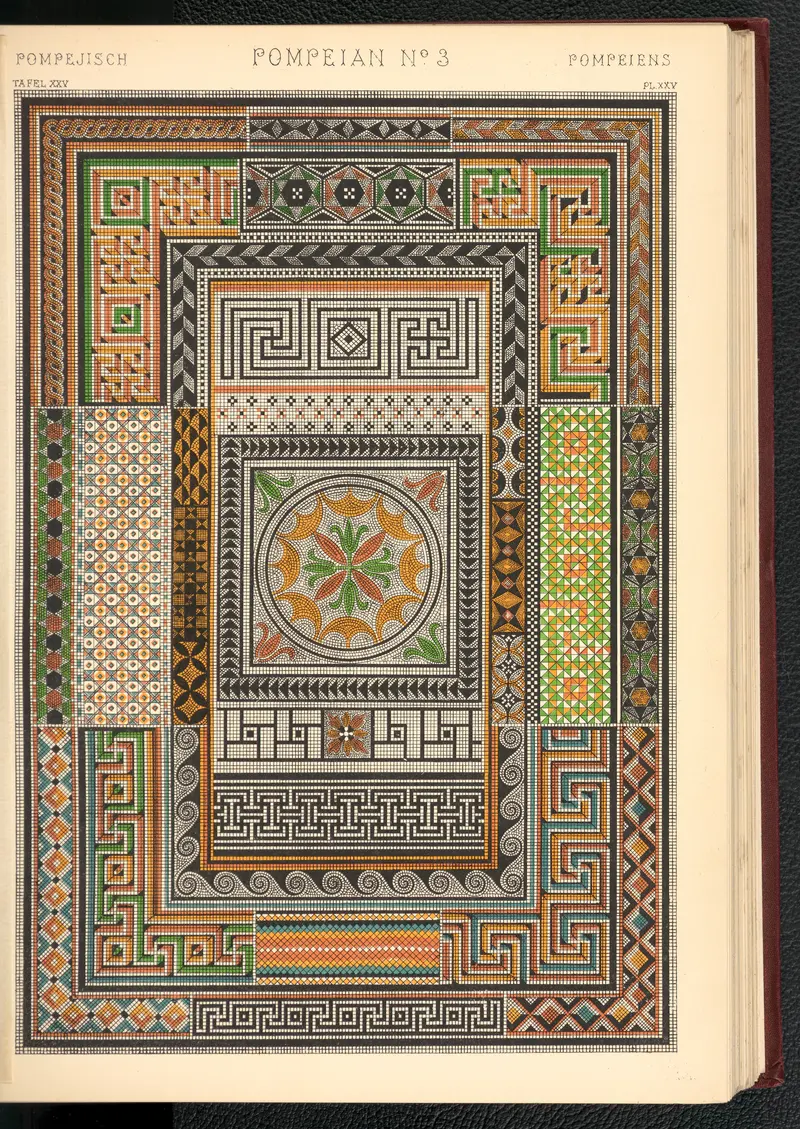
Pompeian Ornament No. 3
Owen Jones