
Rue des Oiseaux, Marché des Enfants-Rouges, le soir. 3ème arrondissement — History & Facts
When did color learn to lie? Within the tender embrace of dusk, the world unfolds in hues that deceive and delight, inviting the heart to trust in the vibrancy of its surroundings. Each brushstroke whispers secrets of faith, hinting at stories hidden beneath the surface. Focus on the rich palette that envelops this market scene, where deep blues and warm amber beckon the viewer into a world alive with possibility. Notice how the light falls upon the cobblestones, casting reflections that dance in harmony with the shadows, creating a sense of movement despite the stillness of the painted moment.
The careful arrangement of figures—vendors and passersby—imbues the scene with a rhythm that feels almost musical, guiding your eye towards the vibrant expressions of life captured in this urban haven. Look closer to find the subtle contrasts between the warmth of the evening light and the coolness creeping in from the shadows. The bustling activity, punctuated by moments of solitude, reveals an emotional tension: the joyous embrace of community against the encroaching night, hinting at the transient nature of time and experience. Each figure seems to bear witness to the unseen connections between them, suggesting a deeper faith in humanity that transcends the mere act of trading goods. Frédéric Houbron painted this evocative piece between 1907 and 1908 in Paris, a city alive with artistic experimentation and social change.
The turn of the century saw a flourishing of avant-garde movements, and Houbron, immersed in this creative zeitgeist, sought to capture the essence of everyday life while exploring the interplay of light and color. His work reflects both a personal vision and the broader narrative of an era in which artists sought to articulate the complexities of modern existence.
More Artworks by Frédéric Houbron
Browse all →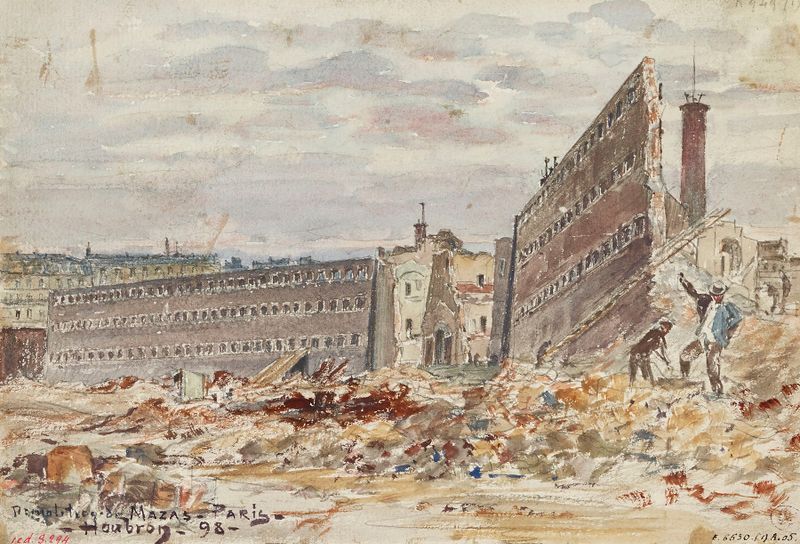
Démolition de la prison Mazas, 23, 25 boulevard Diderot (ancien boulevard Mazas)
Frédéric Houbron
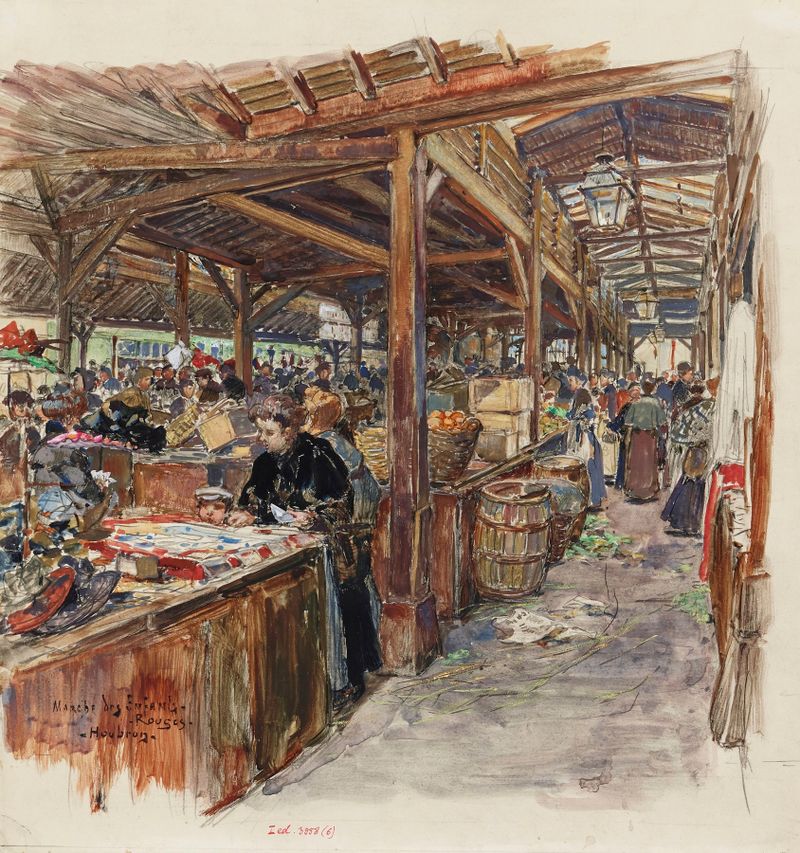
Intérieur du Marché des Enfants Rouges. 3ème arrondissement
Frédéric Houbron
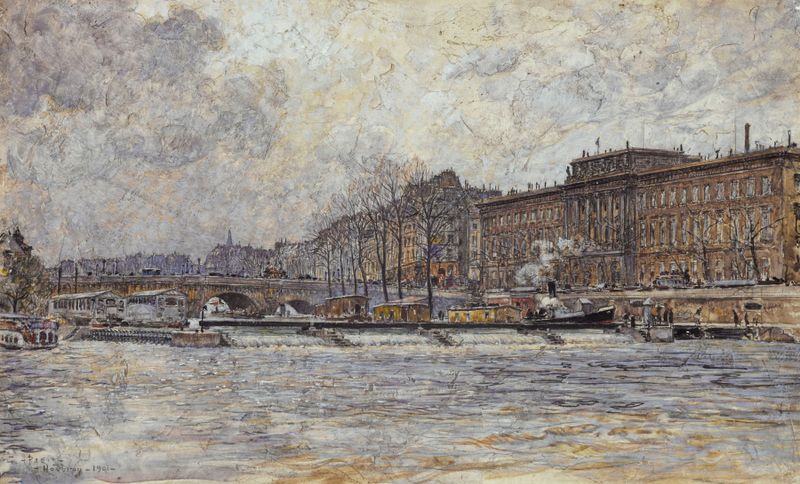
L’Hôtel de la Monnaie et le Pont-Neuf
Frédéric Houbron

Quai des Orfèvres. Paris. 1906
Frédéric Houbron
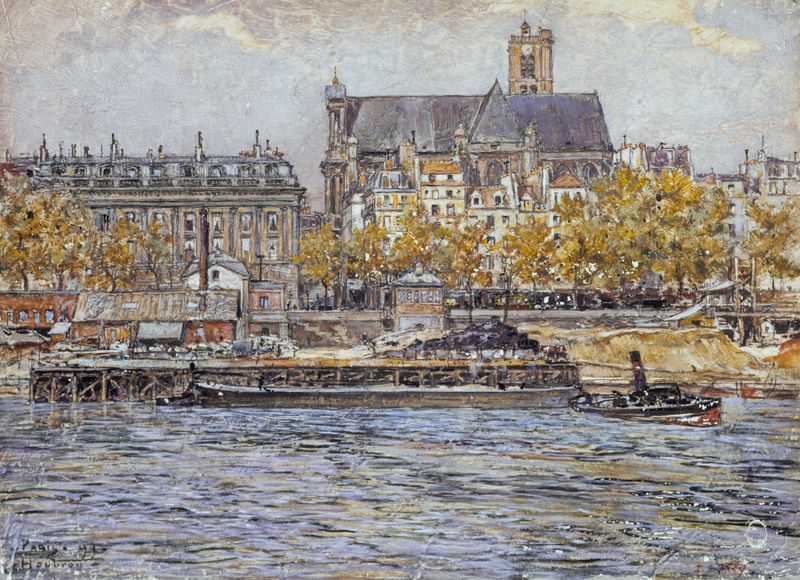
Le quai de l’Hôtel-de-Ville et l’église Saint-Gervais-Saint-Protais
Frédéric Houbron
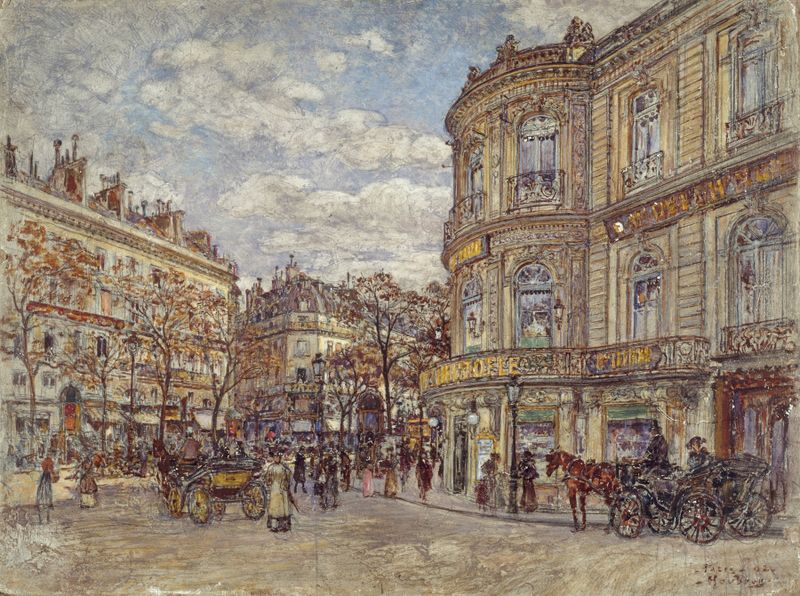
Le Pavillon de Hanovre, rue Louis-le-Grand
Frédéric Houbron

La rue du Chevalier-de-la-Barre, avec le Sacré-Cœur en construction
Frédéric Houbron
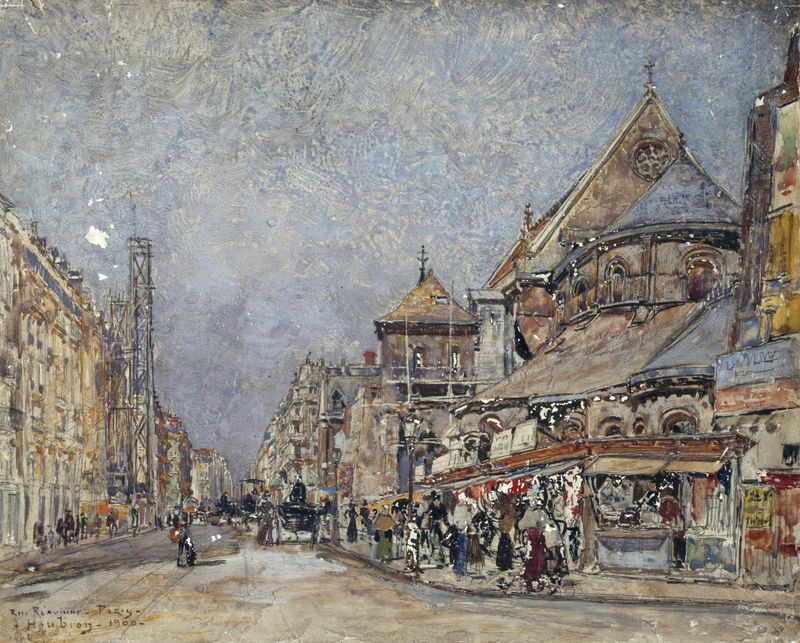
La rue Réaumur et le chevet de l’église Saint-Martin-des-Champs
Frédéric Houbron
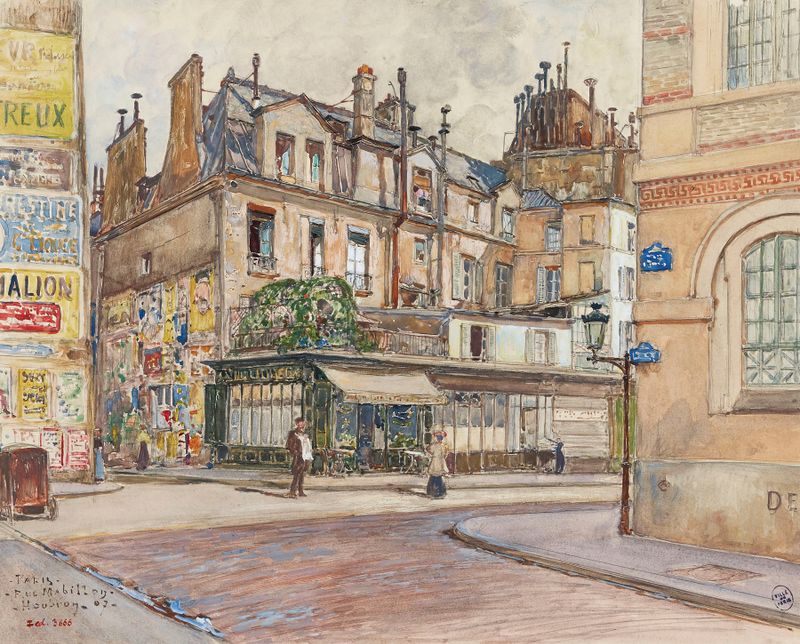
Angle rue Mabillon et rue Clément, en 1907. 5ème et 6ème arrondissements
Frédéric Houbron
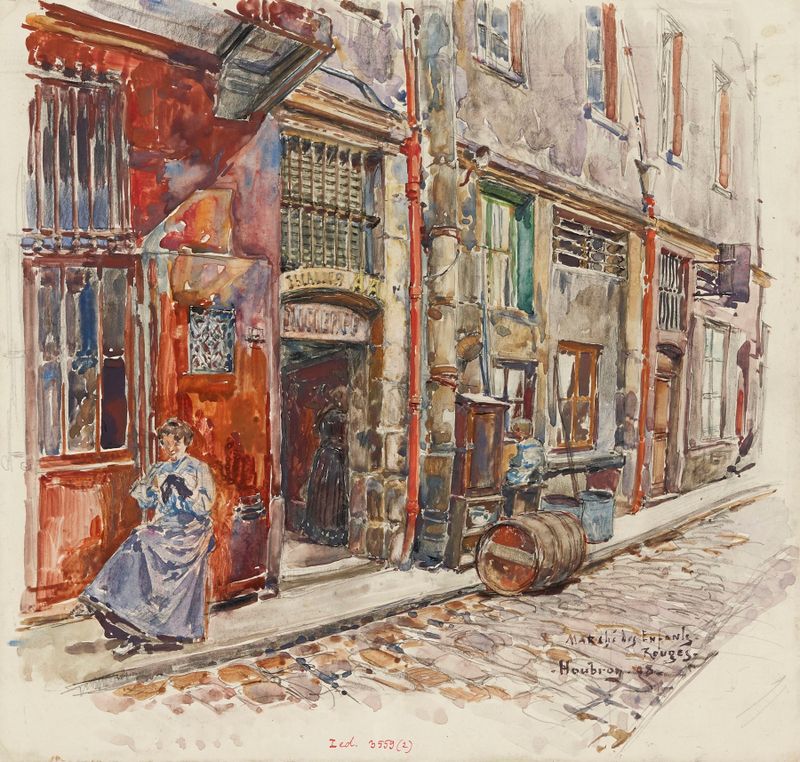
Entrée escalier A du Marché des Enfants-Rouges, en 1908. 3ème arrondissement
Frédéric Houbron





