
Saint Agatha — History & Facts
In the year 1630, Francisco de Zurbarán painted Saint Agatha at the height of his reputation as Seville’s foremost interpreter of female sanctity. What sets this work apart is its extraordinary focus on Agatha’s calm dignity in the face of horror: the painting captures her not in the throes of martyrdom, but in the poised aftermath, a choice that has led some scholars to debate whether Zurbarán was responding to a specific commission from a convent or producing the work for the open market. The painting’s serene gravity would have resonated with the devout communities of 17th-century Spain, where images of virgin martyrs were central to both private devotion and public display. Saint Agatha, a Christian noblewoman from 3rd-century Sicily, was tortured for her faith after refusing the advances of a Roman official.
Zurbarán chooses the moment after her ordeal: Agatha stands, composed and luminous, holding the plate bearing her severed breasts—a symbol of both her suffering and her unwavering faith. The white linen and rich velvet of her garments, rendered with Zurbarán’s signature attention to texture, contrast with the delicate pink of her flesh, underscoring her purity and humanity. The saint’s gaze, directed outward but inwardly focused, invites the viewer to contemplate both her pain and her victory.
Unlike Caravaggio’s more dramatic martyrdoms, Zurbarán’s restraint and clarity create an atmosphere of quiet reverence. The early provenance of Saint Agatha remains uncertain, as is common with many works by Zurbarán from this period; it likely originated in Andalusia, where the artist’s studio supplied numerous religious institutions. Over time, the painting’s attribution has never been seriously questioned, thanks to its unmistakable style—broad planes of color, sculptural light, and a meditative mood. Today, Saint Agatha is recognized as a touchstone of Spanish Counter-Reformation art, exemplifying Zurbarán’s unique ability to blend realism with spiritual intensity.
It hangs in the Museo del Prado, a testament to the enduring power of faith rendered through paint.
More Artworks by Francisco de Zurbarán
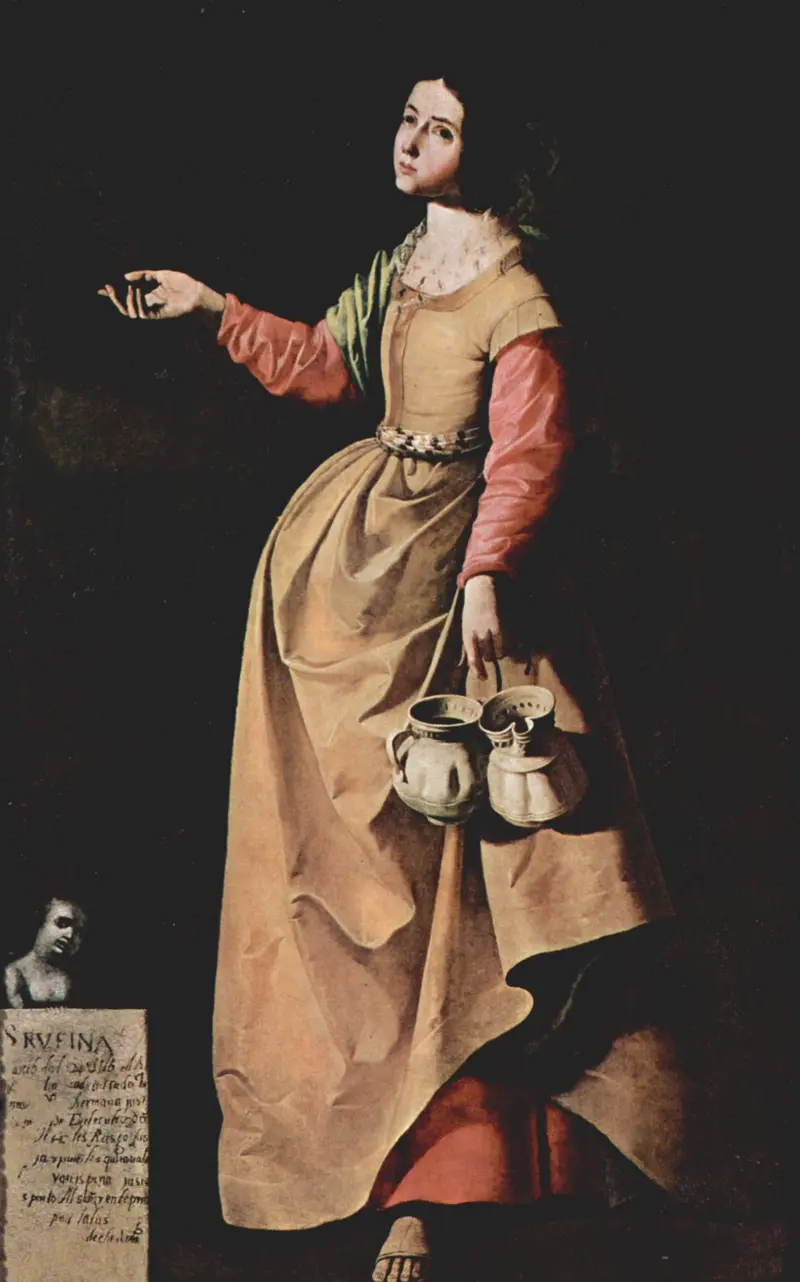
Saint Rufina
Francisco de Zurbarán
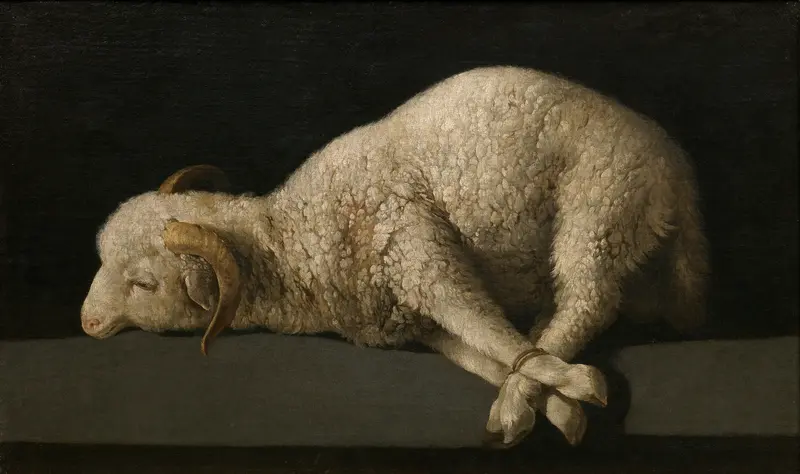
Agnus Dei
Francisco de Zurbarán
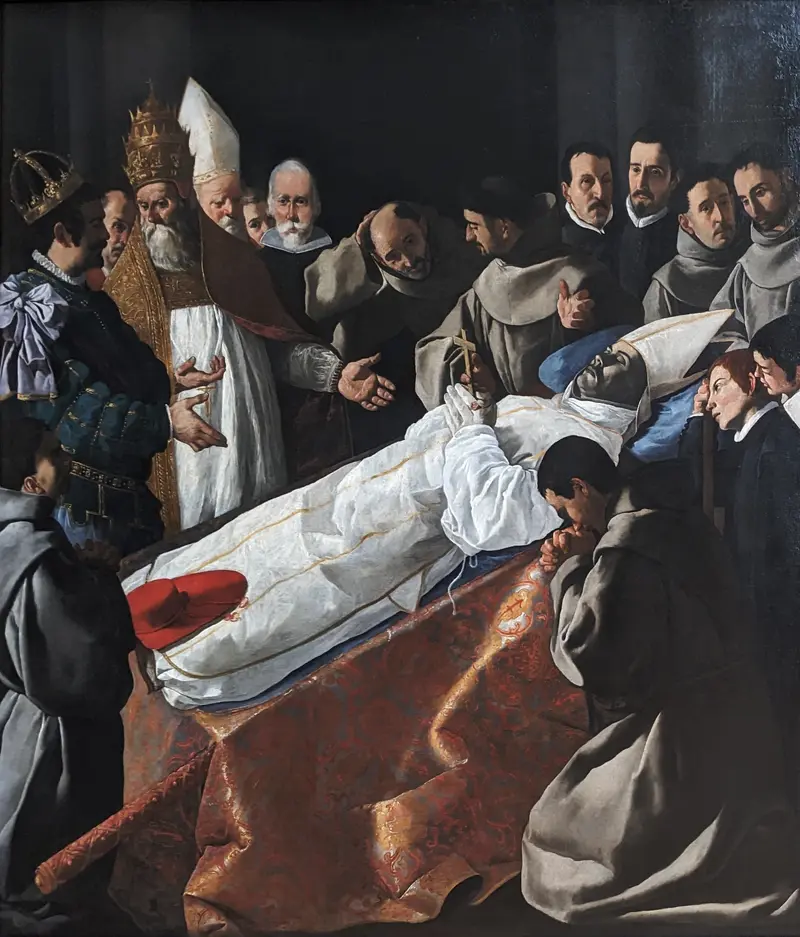
Saint Bonaventure's Body Lying in State
Francisco de Zurbarán
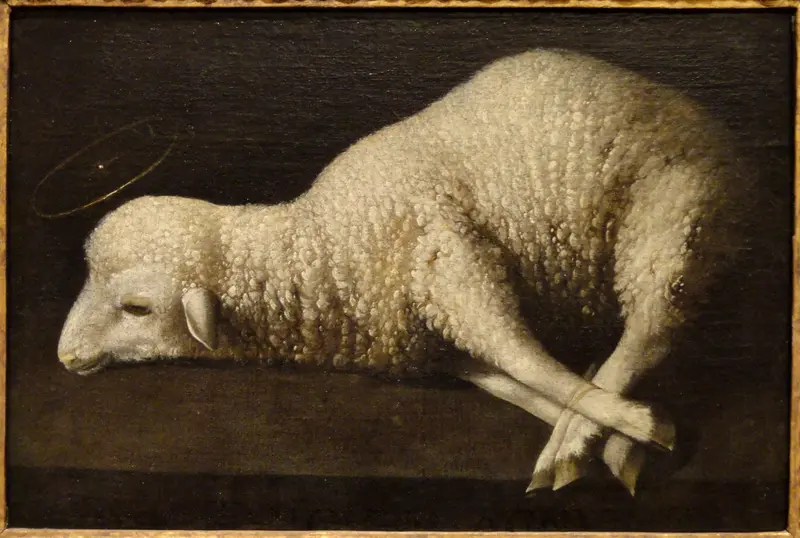
The Lamb of God
Francisco de Zurbarán

Adoration of the Magi
Francisco de Zurbarán
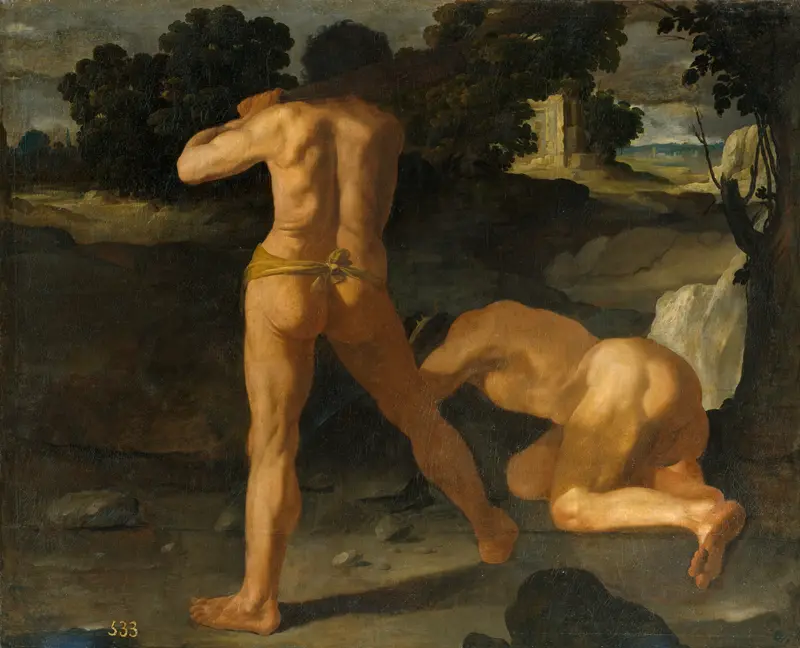
Hercules defeats King Geryon
Francisco de Zurbarán
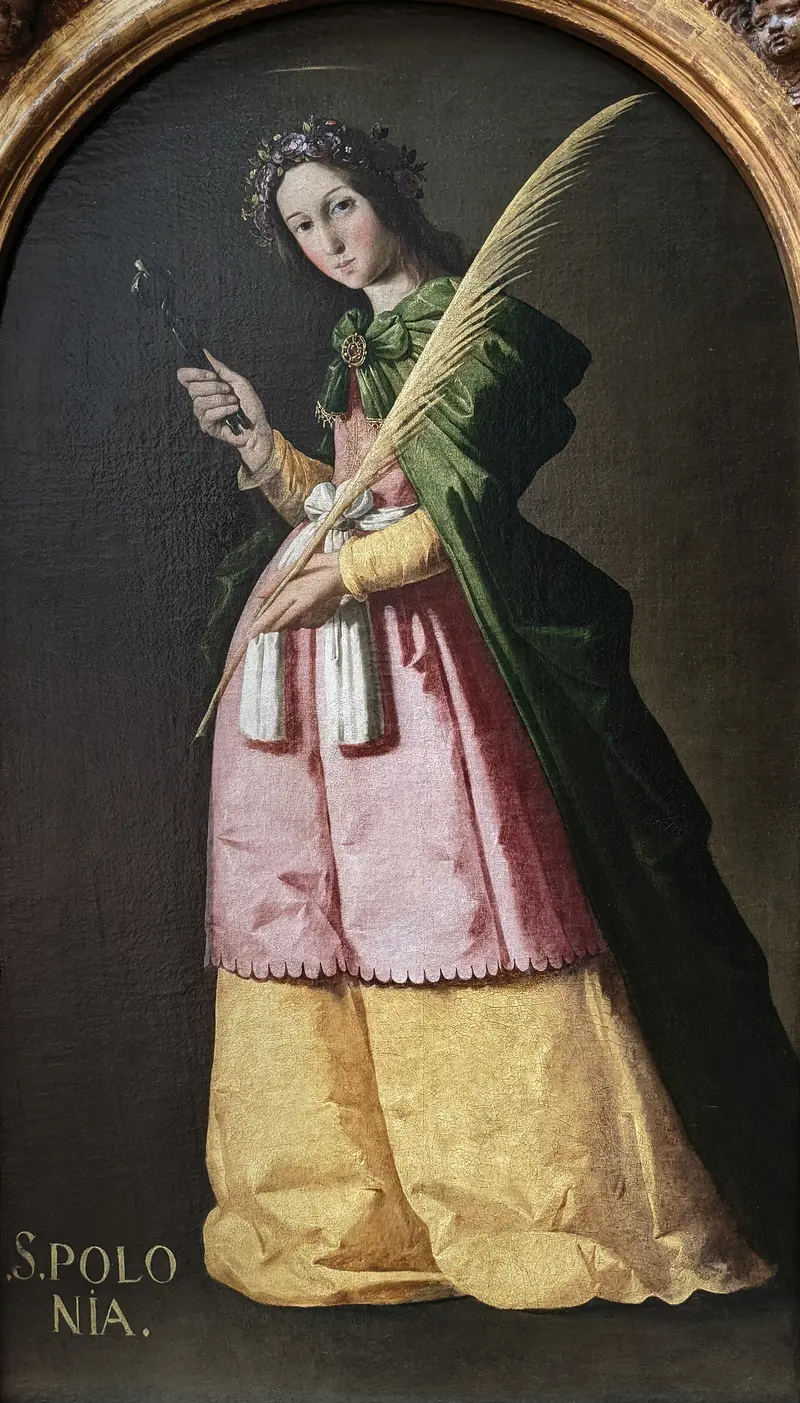
Saint Apollonia
Francisco de Zurbarán
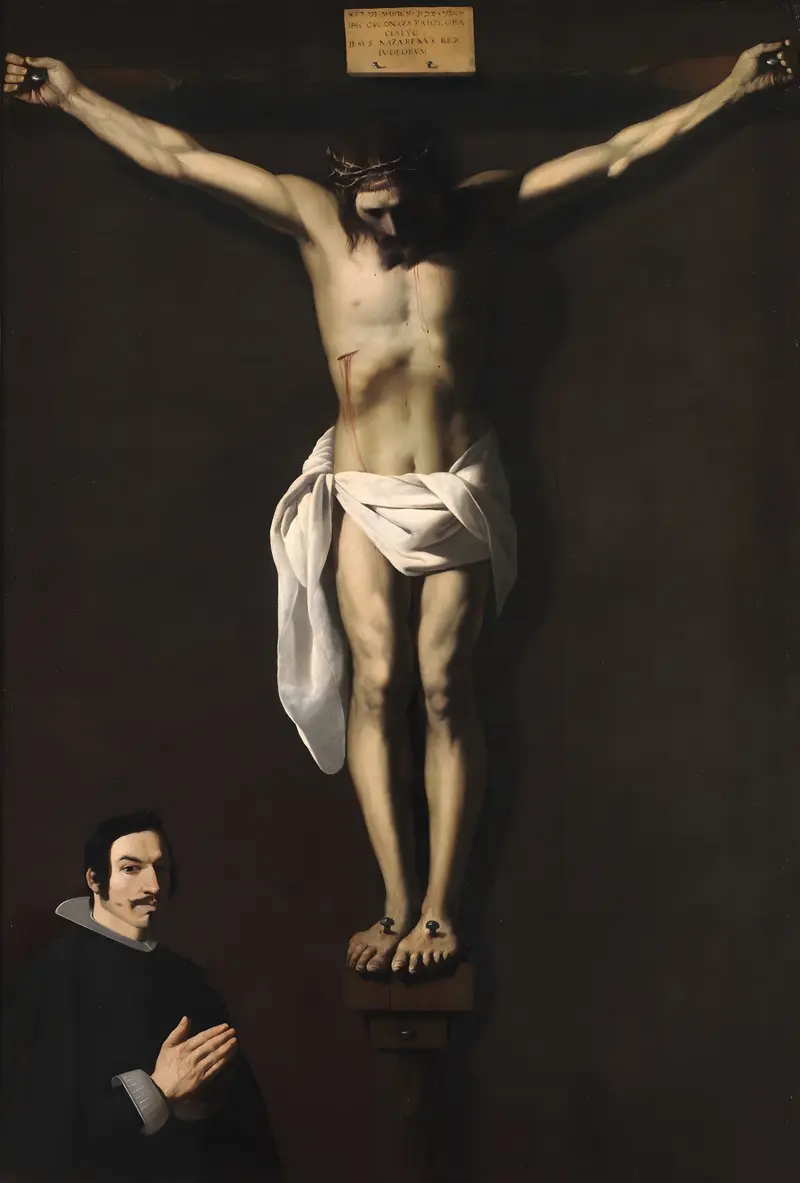
The Crucified Christ with a Donor
Francisco de Zurbarán
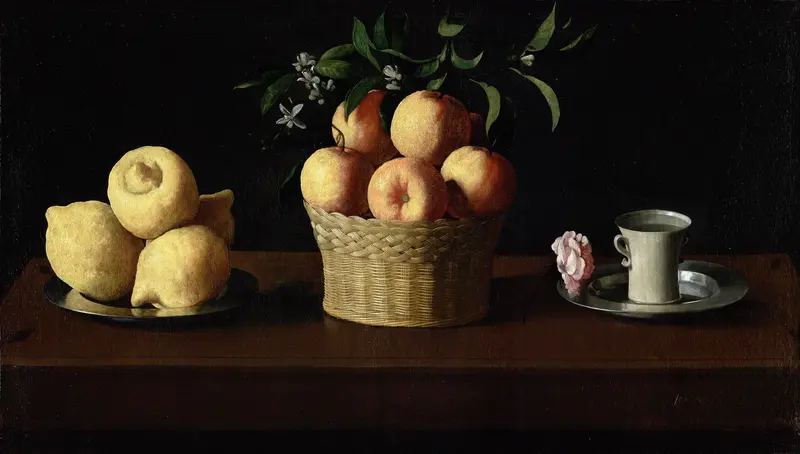
Still Life with Lemons, Oranges and a Rose
Francisco de Zurbarán
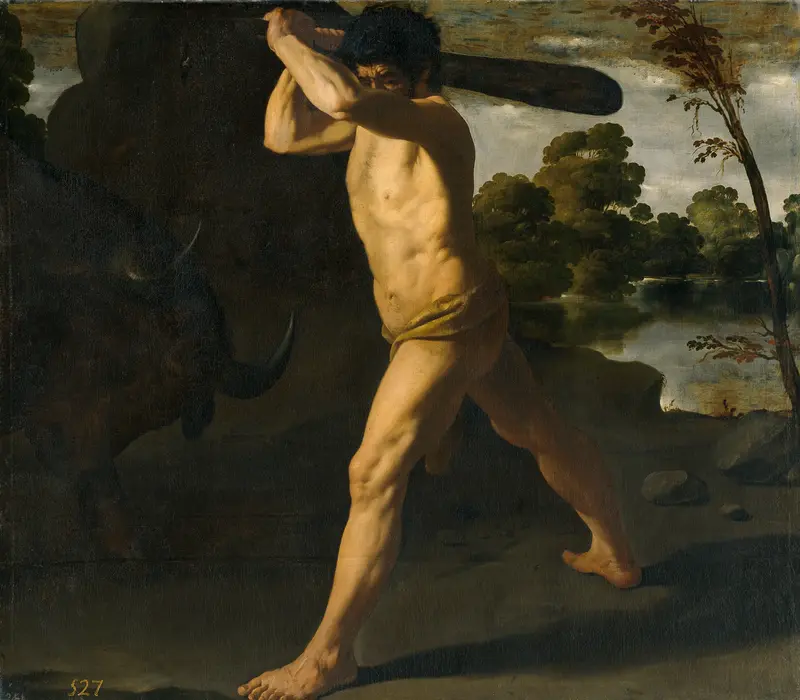
Hercules and the Cretan Bull
Francisco de Zurbarán





