
Scène du déluge — History & Facts
When Théodore Géricault exhibited Scène du déluge at the Salon of 1819, the public was still reeling from the shock of his sensational The Raft of the Medusa, shown the previous year. Yet here, Géricault turned from recent French tragedy to the most ancient disaster of all: the biblical flood. The painting’s ambition was immense—he aimed to rival the grandest history painters of his age, offering a vision of humanity at the mercy of nature.
Critics were divided; some admired its raw power, while others found its darkness overwhelming. What is certain is that Scène du déluge marked Géricault’s determination to push the limits of what painting could express. The canvas captures a desperate moment: a family clings to a fragile raft as the waters rise, bodies limp or straining, the sky a churning mass above. Géricault chooses not the moment of salvation, but of utter uncertainty—no ark in sight, only the struggle to survive.
The twisted bodies recall Michelangelo’s figures in the Sistine Chapel, each gesture charged with fear and hope. A man hoists an unconscious companion, while another reaches for a child, their faces contorted by exhaustion and terror. The light, sparse and cold, falls on pale flesh and swollen waters, making the scene feel both immediate and mythic.
Unlike Poussin’s ordered The Flood, Géricault’s vision is chaos and human frailty. There is little documentation about the commission or early ownership of Scène du déluge, and it is not clear whether Géricault painted it for a specific patron or as a statement of artistic ambition. Today, the painting is held by the Louvre, where it stands as a testament to the artist’s brief but intense career. Created in the same feverish period as The Raft of the Medusa, it reflects Géricault’s fascination with catastrophe and the limits of human endurance.
The work’s dark palette and turbulent forms would influence later artists of the Romantic movement, confirming Géricault’s place as one of its pioneers.
More Artworks by Théodore Géricault
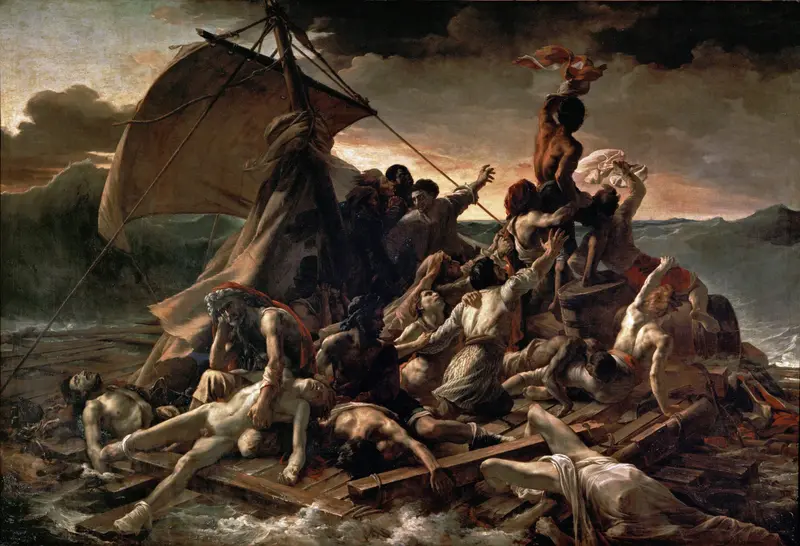
The Raft of the Medusa
Théodore Géricault

Géricault - Le naufrage du radeau de la Méduse, MBA 790
Théodore Géricault
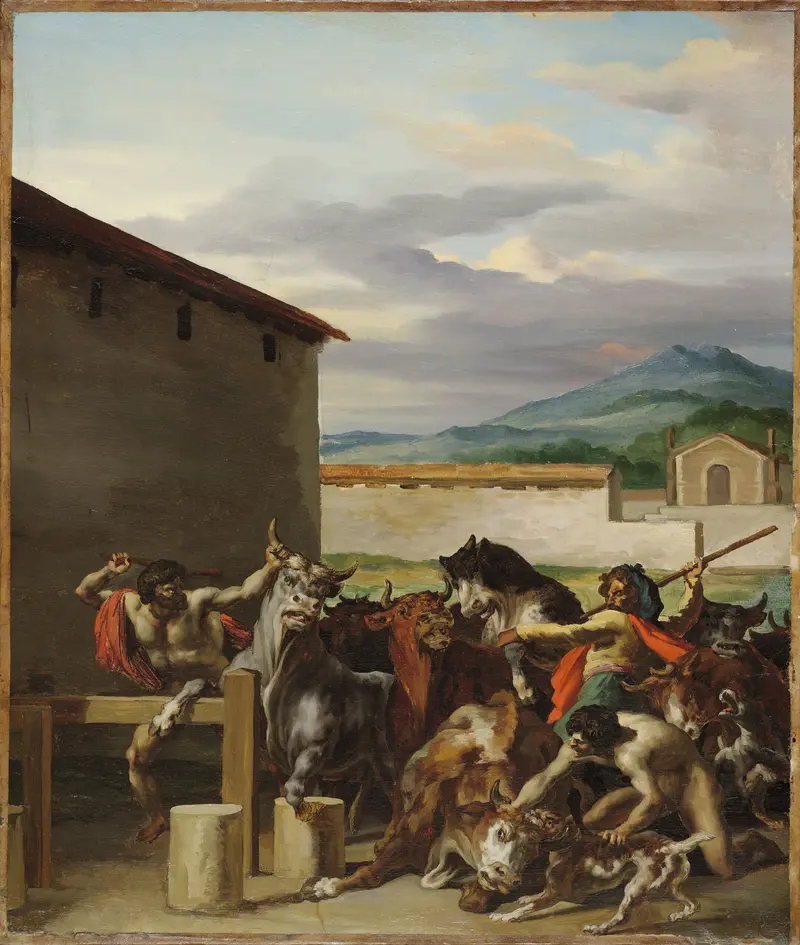
Cattle Market
Théodore Géricault
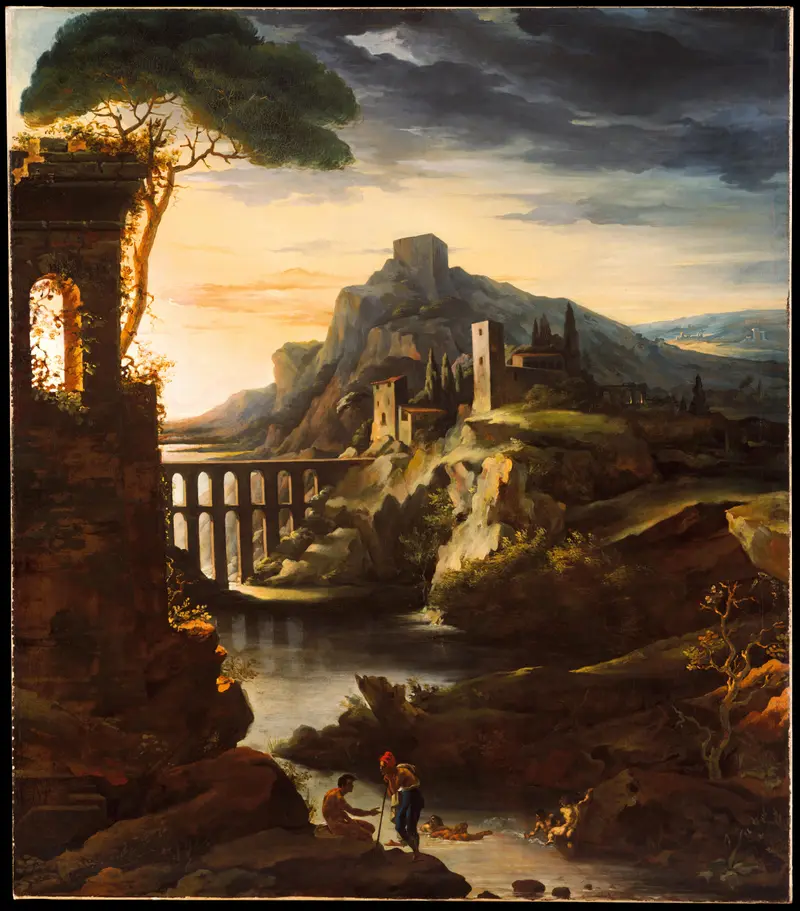
Evening; Landscape with an Aqueduct
Théodore Géricault
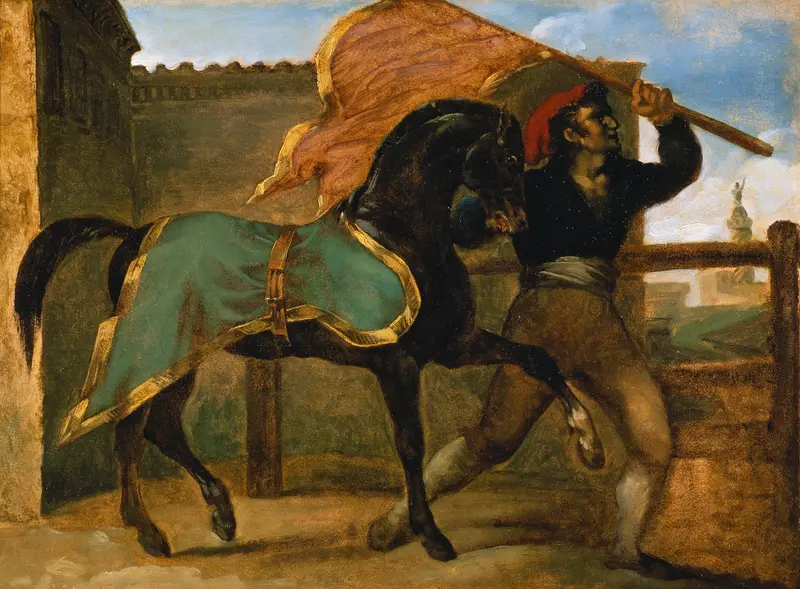
Horse Race
Théodore Géricault

Horses Standing in a Mews
Théodore Géricault
Portrait of a Negro
Théodore Géricault
Portrait of Zoë Elmore
Théodore Géricault
Cheval attaqué par un lion
Théodore Géricault
Cheval brun à l'écurie
Théodore Géricault





