
Seascape — History & Facts
What first catches the eye in Seascape by Abraham van Beyeren is the restless energy of the water, each crest and trough rendered with a sense of motion that feels almost audible. The low horizon grants the sky a commanding presence, its heavy clouds pressing down over the fleet of small vessels. Sails billow and lean, their angles echoing the gusty wind that drives the boats forward and tilts the masts at precarious angles.
Figures aboard the boats are dwarfed by the scene, their gestures lost in the wide sweep of sea and sky, yet their presence anchors the drama in human endeavor. The light, breaking through the clouds, glances off the waves and picks out the rigging, guiding the viewer’s gaze from foreground to distant shore. This is the world of the Dutch Golden Age, when painters like van Beyeren found endless fascination in the ever-changing moods of the sea. Between 1635 and 1690, artists responded to a society shaped by maritime trade and a growing pride in seafaring skill, producing seascapes both as records and as celebrations.
Works such as this, now in the collection of the RKD – Nederlands Instituut voor Kunstgeschiedenis, were often commissioned by merchants or shipowners, eager to commemorate the source of their fortunes. History has kept few traces of the individual stories behind many such paintings, but their enduring power lies in how they capture the daily reality of a nation bound to the water—inviting us to step into the wind and salt spray, and look again.
More Artworks by Abraham van Beyeren

Still Life
Abraham van Beyeren
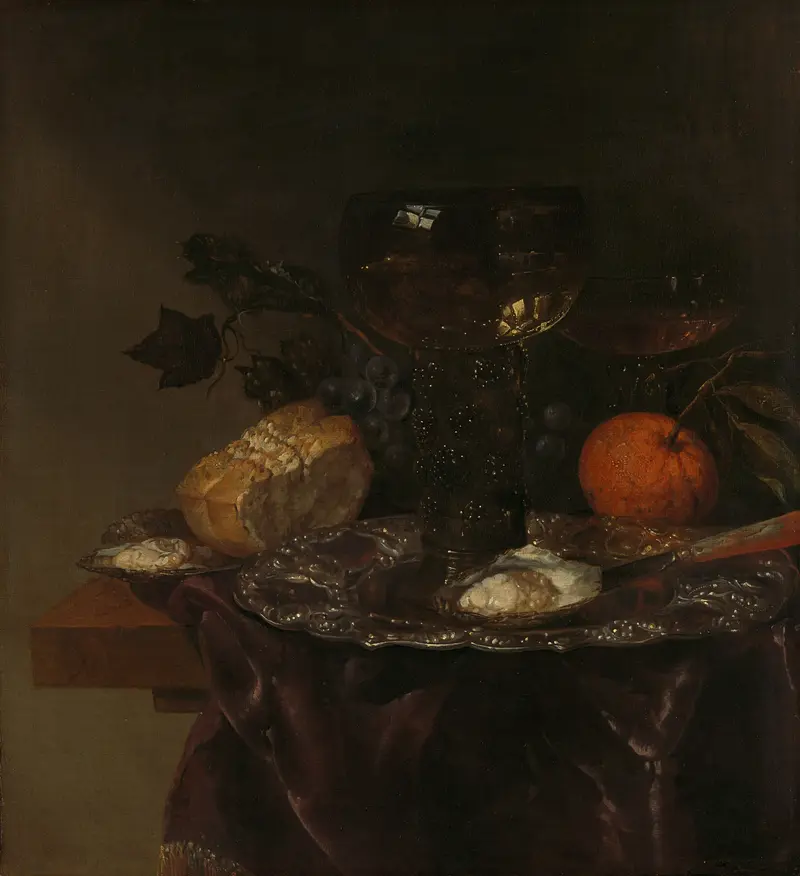
Still Life
Abraham van Beyeren
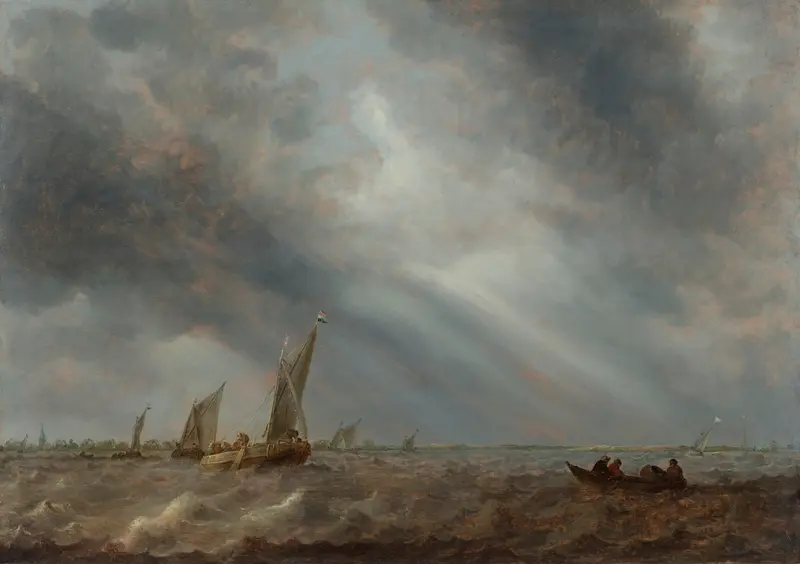
Various sailing vessels and a rowing boat with fishermen on choppy waters under a stormy sky
Abraham van Beyeren
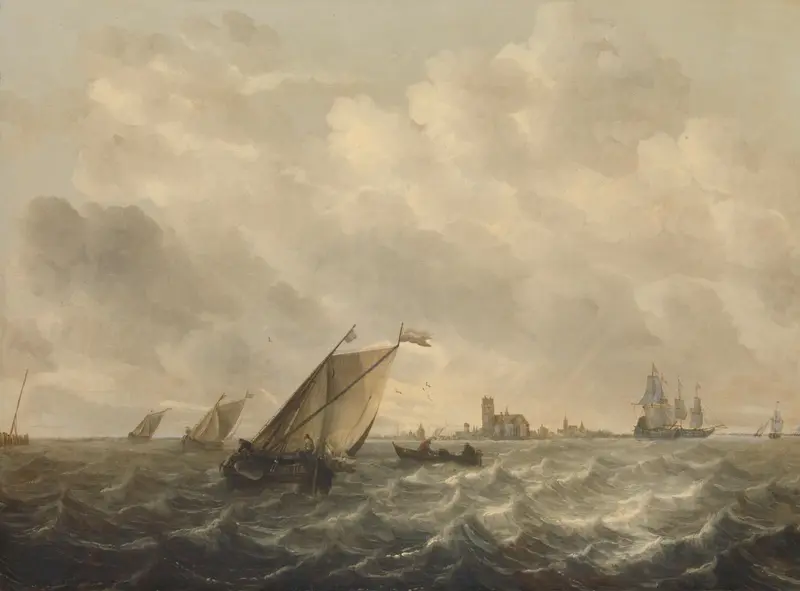
River View
Abraham van Beyeren
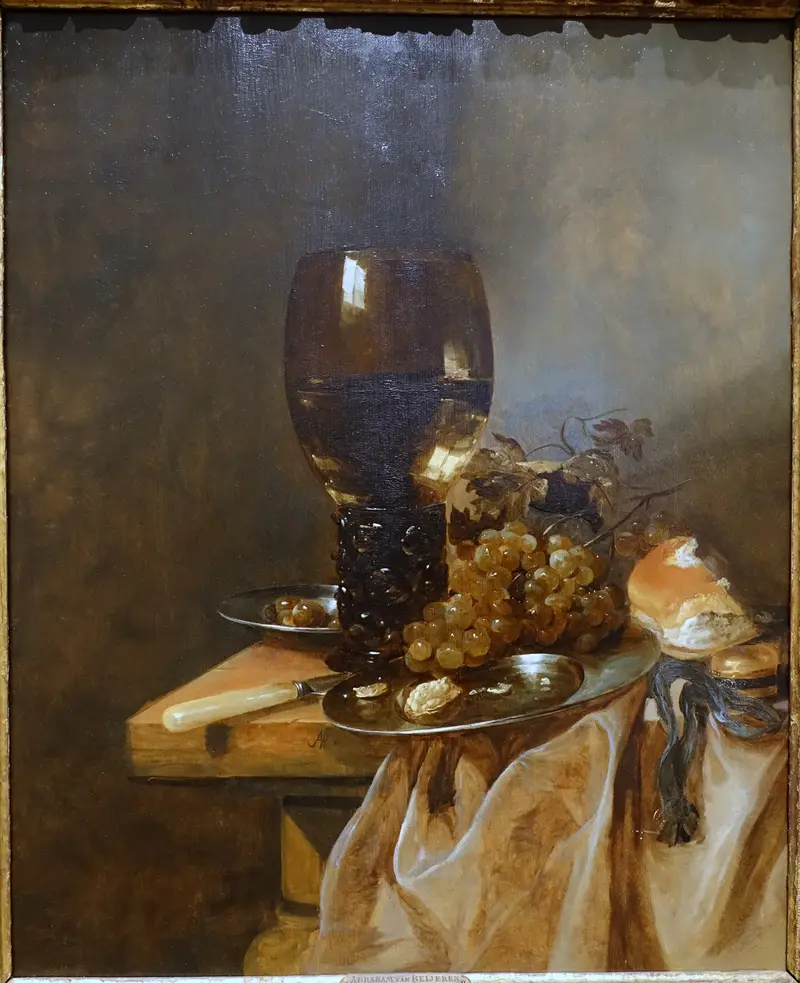
A Roemer with Grapes, a Pewter Plate and a Roll
Abraham van Beyeren
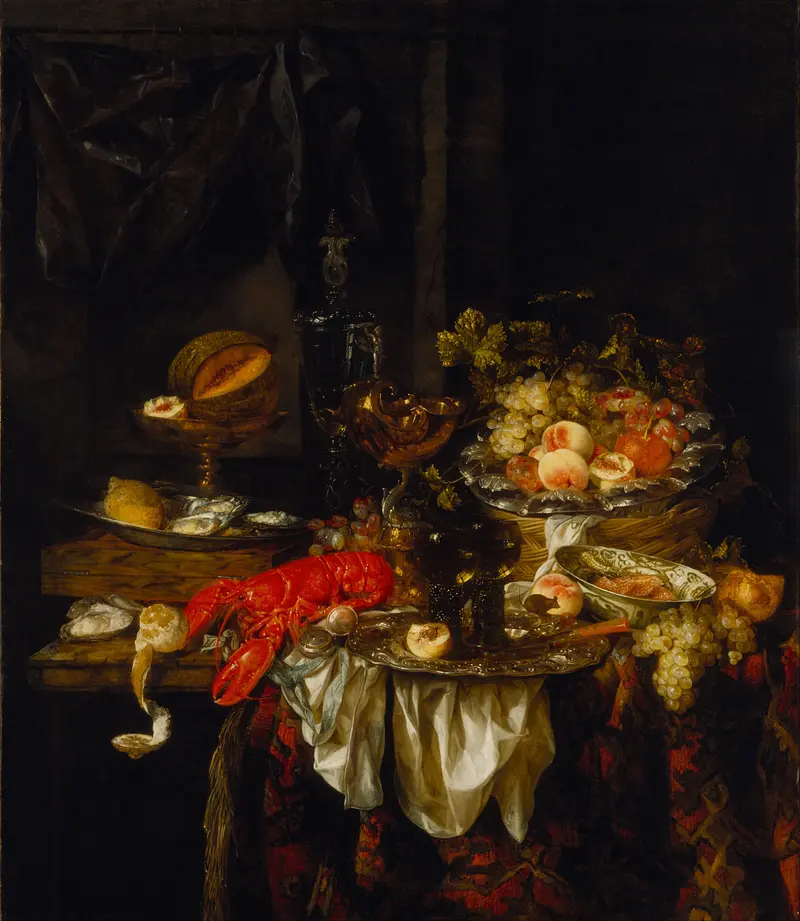
Banquet Still Life
Abraham van Beyeren
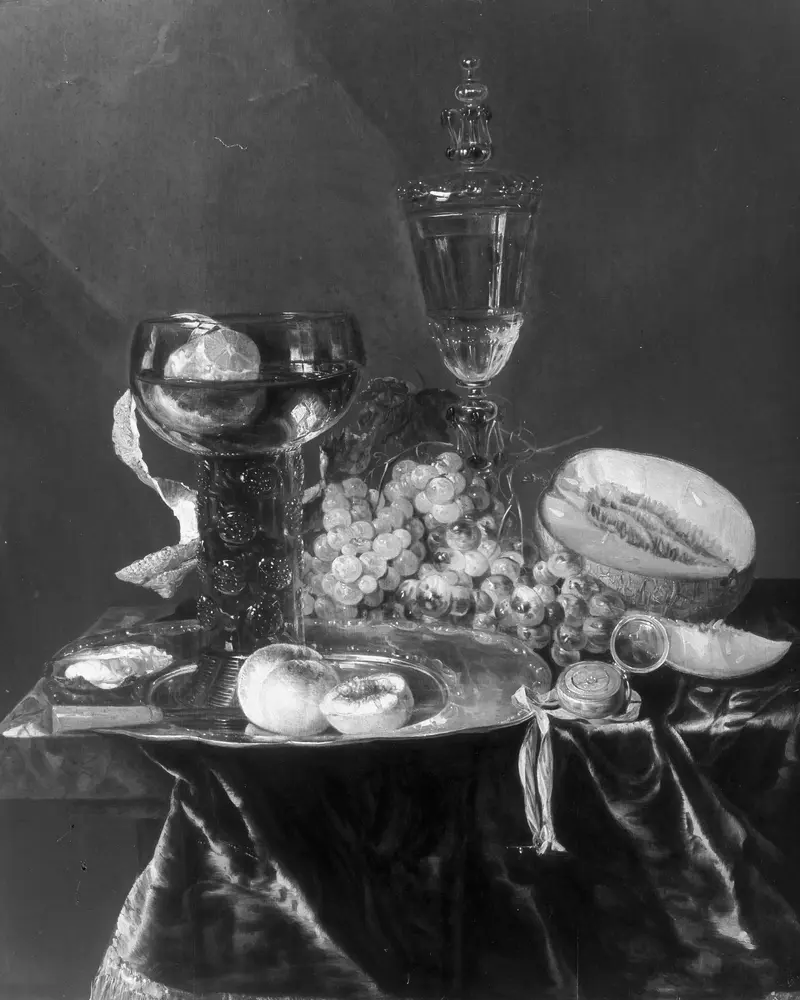
Still life with a glass lid goblet
Abraham van Beyeren
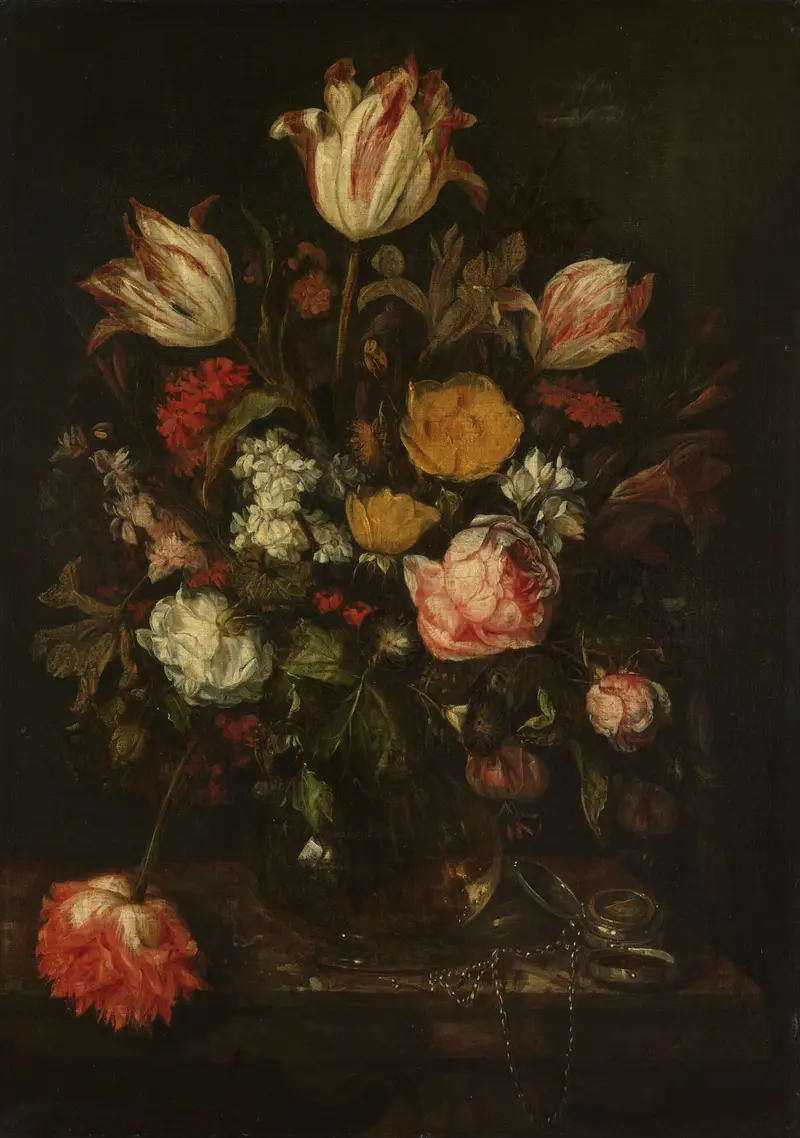
Still life with flowers
Abraham van Beyeren
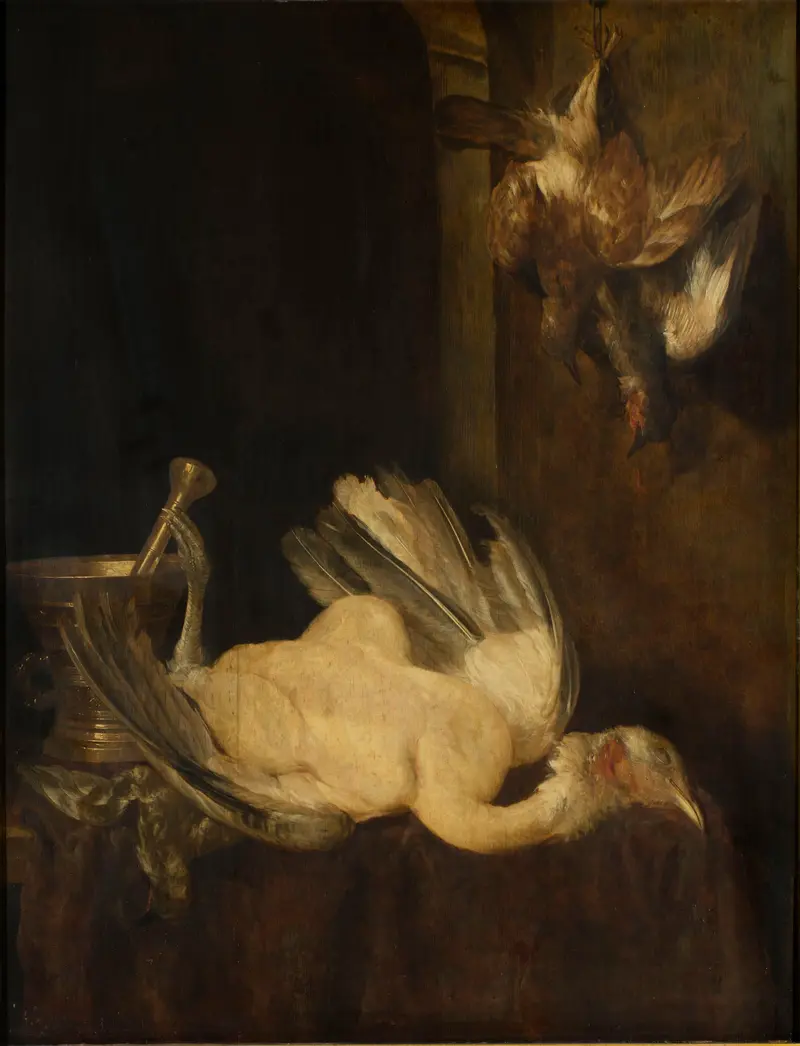
Still life with dead birds
Abraham van Beyeren
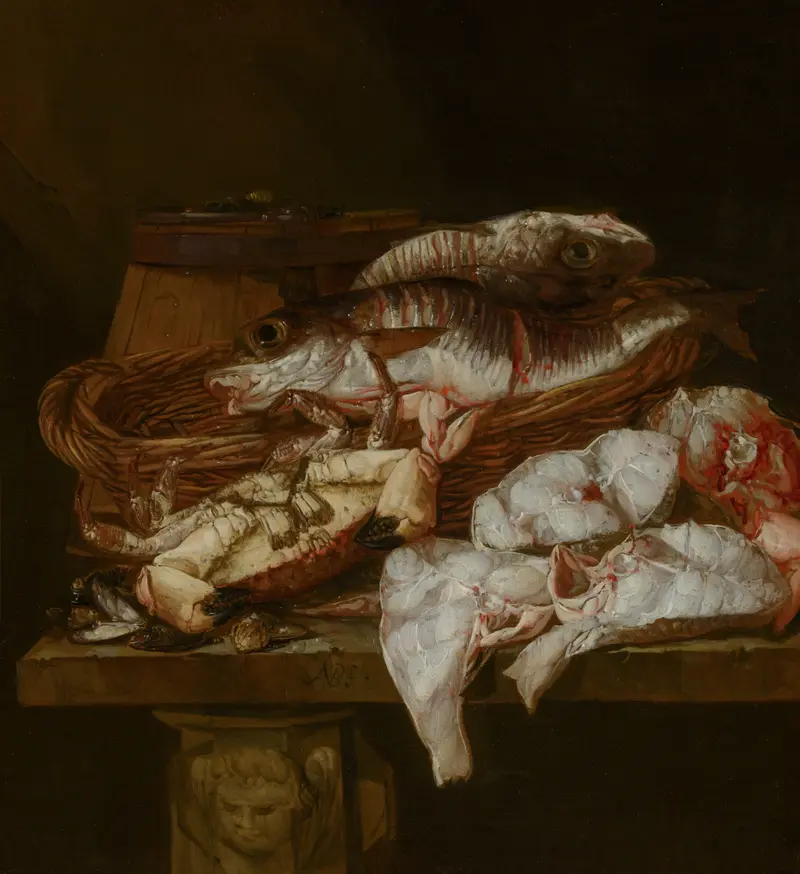
Still Life with Seafood
Abraham van Beyeren





