
Self-portrait with his sons Carlos and Vicente — History & Facts
What draws the viewer in is the quiet, almost theatrical intimacy of three faces turned toward the light, each with a different story to tell. At the center, the artist—Antonio María Esquivel—meets our gaze directly, his posture alert, brush poised as if interrupted mid-creation. To his left, a young boy clutches an artist’s mannequin, its paper hat a playful touch that hints at childhood’s blend of imitation and invention.
The older child leans in, hand resting on the chair, his expression a mix of curiosity and pride as he watches his father at work. The composition forms a triangle of attention, binding the family together by shared purpose and affection, while the warm palette and careful modeling of flesh and fabric give the scene a sense of living presence. Painted in 1843, this Self-portrait with his sons Carlos and Vicente belongs to a period when family portraits often doubled as declarations of legacy and vocation. In nineteenth-century Spain, artists like Esquivel—himself a prominent painter—would sometimes use the self-portrait not only to assert their own image, but to introduce the next generation, as both sons would become painters in their own right.
Such works were rarely mere private keepsakes; they signaled status, ambition, and continuity in a world where artistic families were both workshop and dynasty. While little is recorded of this particular canvas’s journey, its presence in a modern collection invites us to read it as both a personal testament and a window into the aspirations of a family bound by art. Look again at the hands, the tools, the shared glance—each detail is a thread in the story of how art and lineage intertwine.
More Artworks by Antonio Maria Esquivel

Baldomero Espartero
Antonio Maria Esquivel
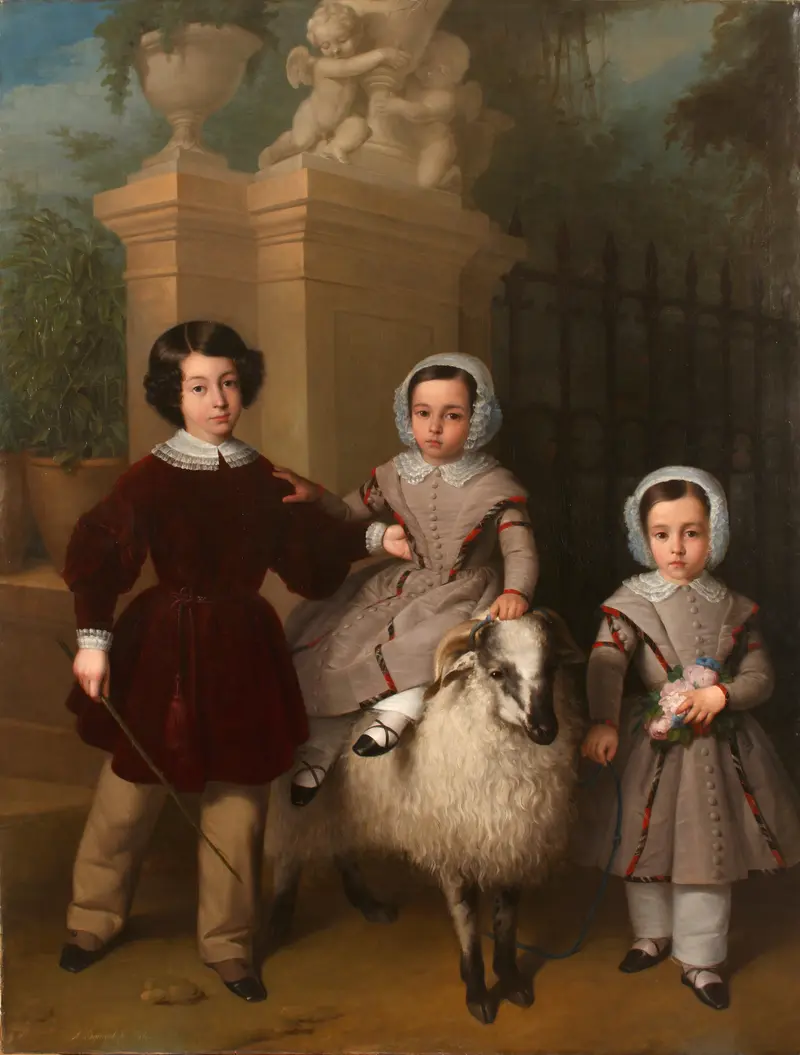
Children playing with a ram
Antonio Maria Esquivel
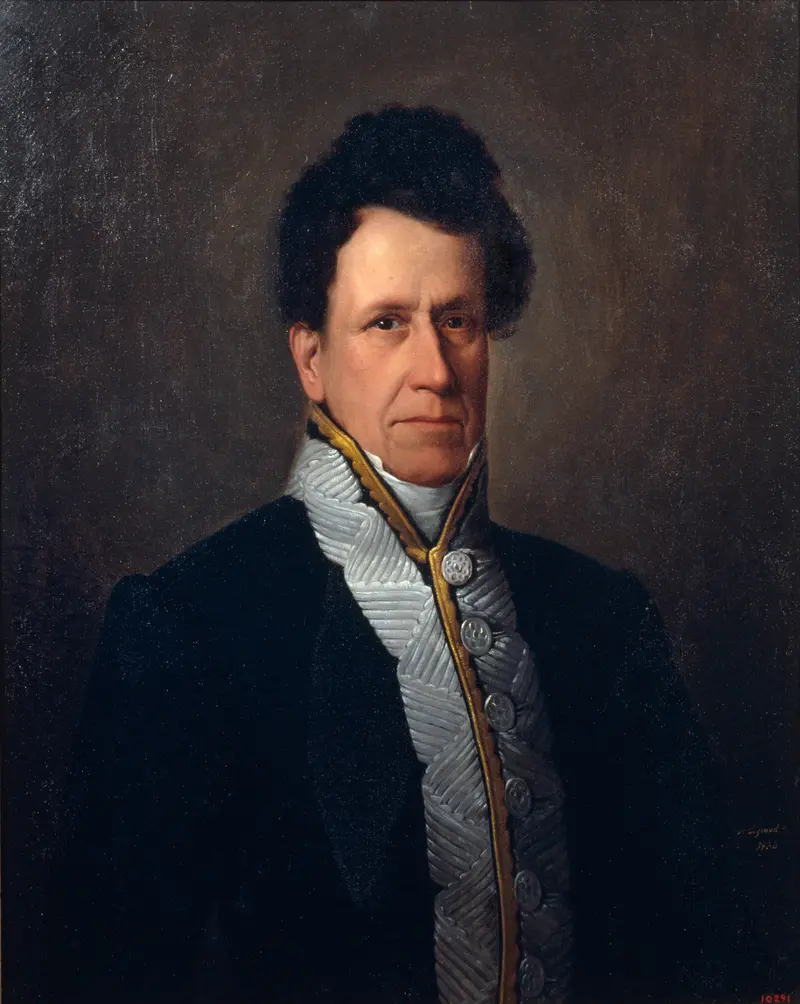
Portrait of Manuel Mª Gutiérrez
Antonio Maria Esquivel
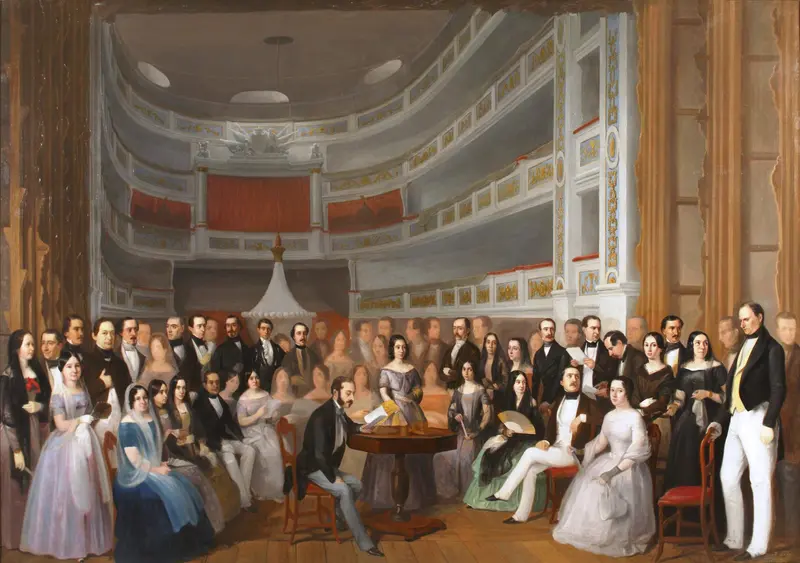
Ventura de la Vega reading a play at the Teatro del Príncipe
Antonio Maria Esquivel
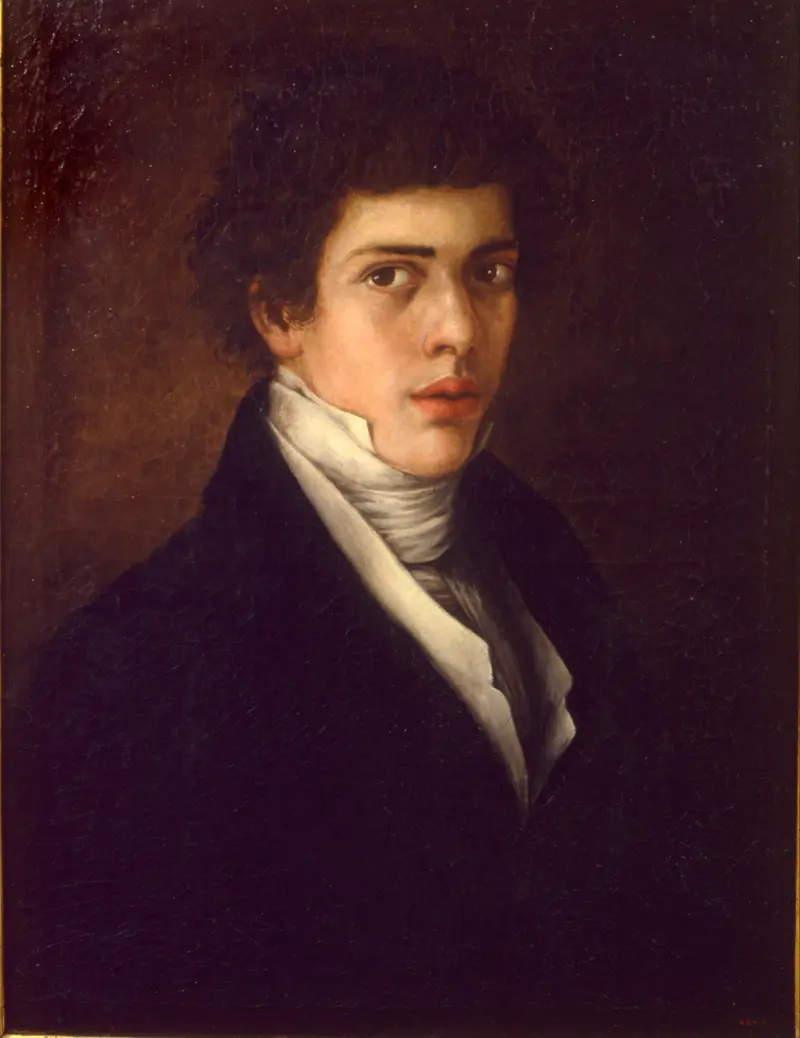
Self-portrait
Antonio Maria Esquivel
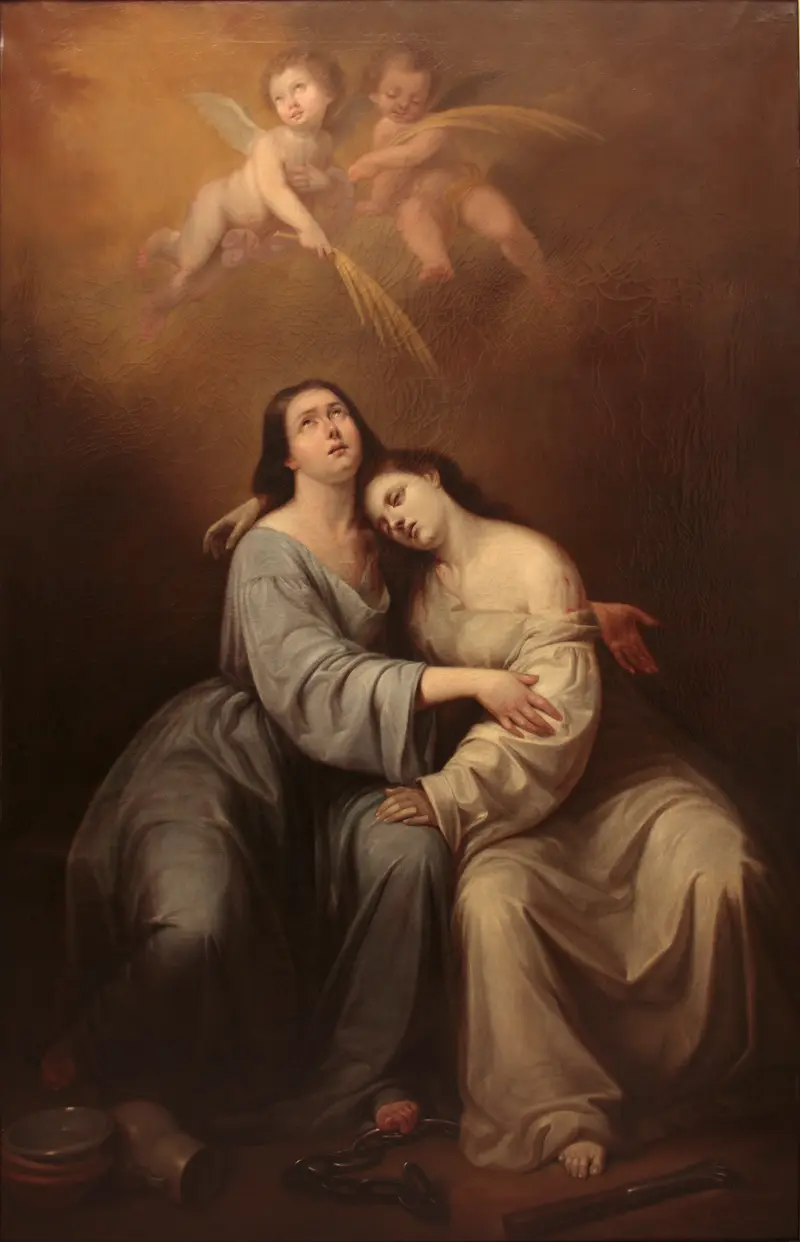
Saint Justa and Saint Rufina
Antonio Maria Esquivel
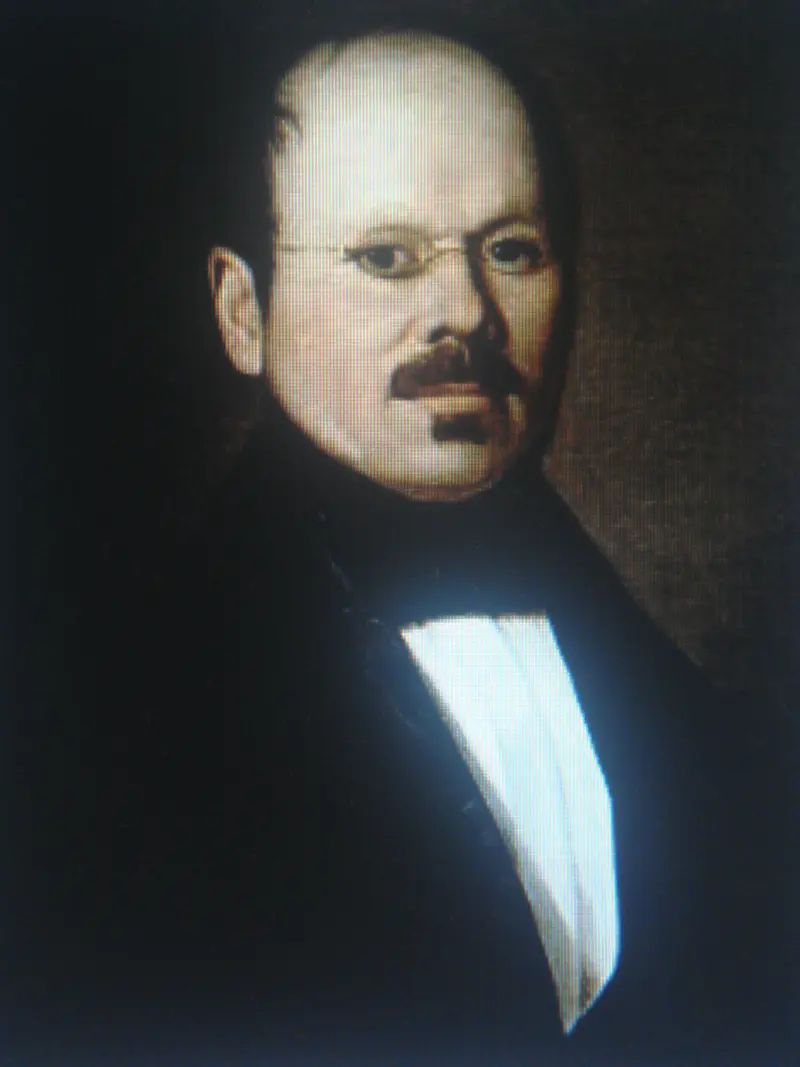
Antonio Benavides Fernández de Navarrete (Real Academia de la Historia)
Antonio Maria Esquivel
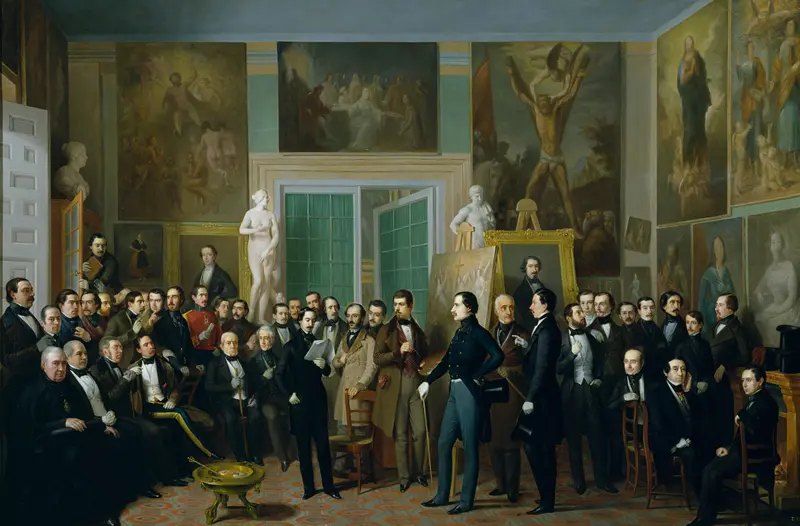
The Contemporary Poets. A Reading of Zorrilla in the Artist's Studio
Antonio Maria Esquivel
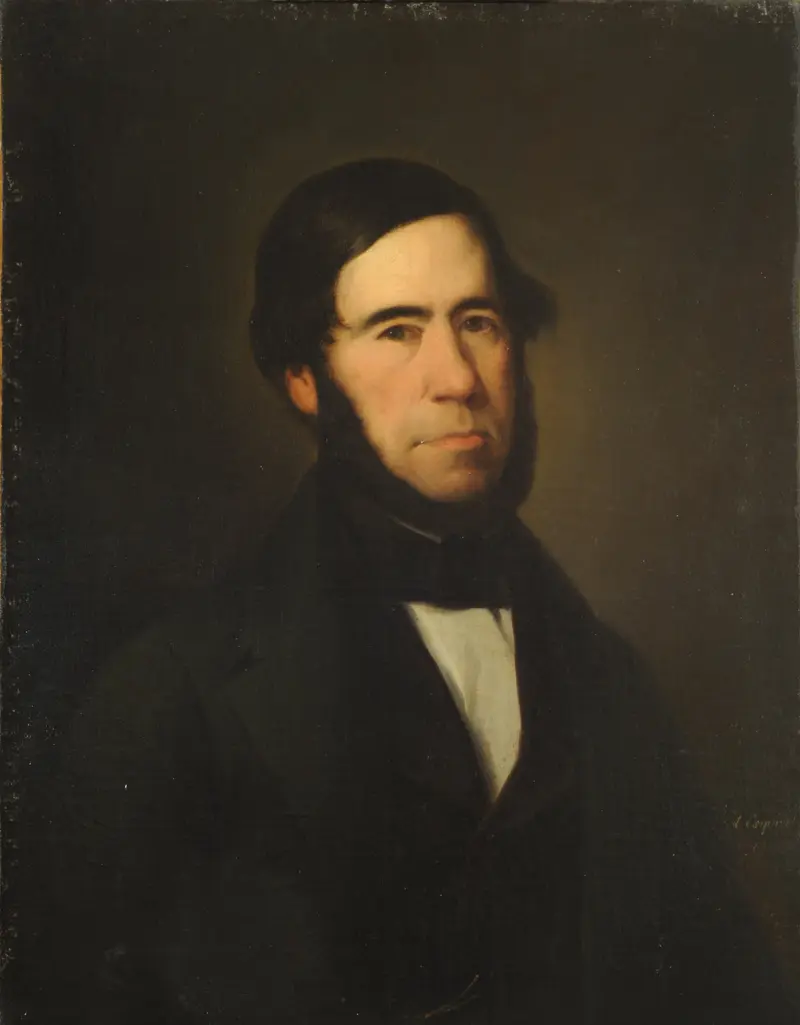
Portrait of Don Manuel José de Guerrico
Antonio Maria Esquivel
Portrait of Cesáreo María Sáenz y de la Barrera
Antonio Maria Esquivel





