
Children playing with a ram — History & Facts
What first catches the eye in Children playing with a ram is the air of careful ceremony beneath the playful title. Three children, dressed in immaculate, formal attire, are grouped around a ram in a garden setting that feels both staged and intimate. The eldest, confidently holding a thin rod, stands protectively beside the ram while the youngest, bouquet in hand, gazes forward with a composure far beyond her years.
The central figure, perched atop the ram, seems caught between worlds—her hand resting gently on the animal’s horn, her expression poised but uncertain. The sculpted putti above them, entwined around a stone urn, echo the theme of childhood but in marble, as if to remind the viewer that innocence is fleeting and always watched over by the weight of tradition. Painted in 1843, this work by Antonio Maria Esquivel belongs to a world where portraiture was both a family record and a declaration of status. In early nineteenth-century Spain, such images were often commissioned by prosperous families eager to assert lineage and refinement, especially as social mobility and new wealth began to unsettle old hierarchies.
The children’s starched collars and matching bonnets signal not just fashion but the discipline and aspirations of their household. Little is recorded about this particular painting’s journey, but its presence in a digital collection today invites us to look past the surface and imagine the real lives behind these composed faces—their games, their lessons, and the gentle tug-of-war between childhood freedom and adult expectation.
More Artworks by Antonio Maria Esquivel

Baldomero Espartero
Antonio Maria Esquivel
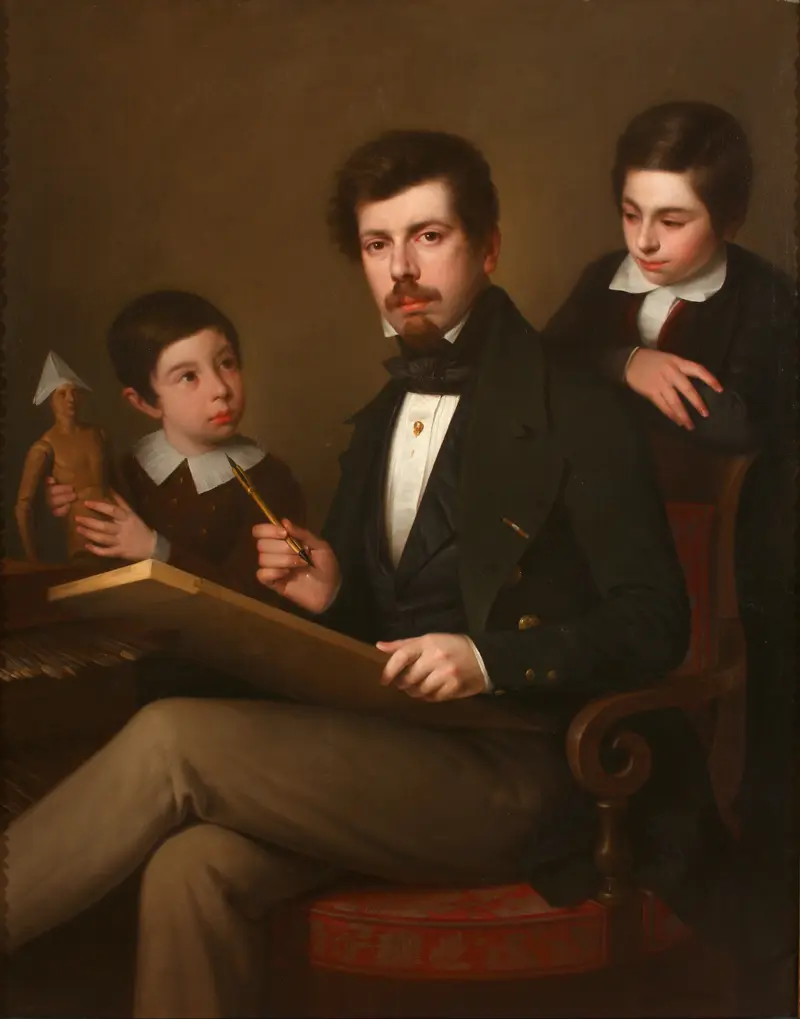
Self-portrait with his sons Carlos and Vicente
Antonio Maria Esquivel
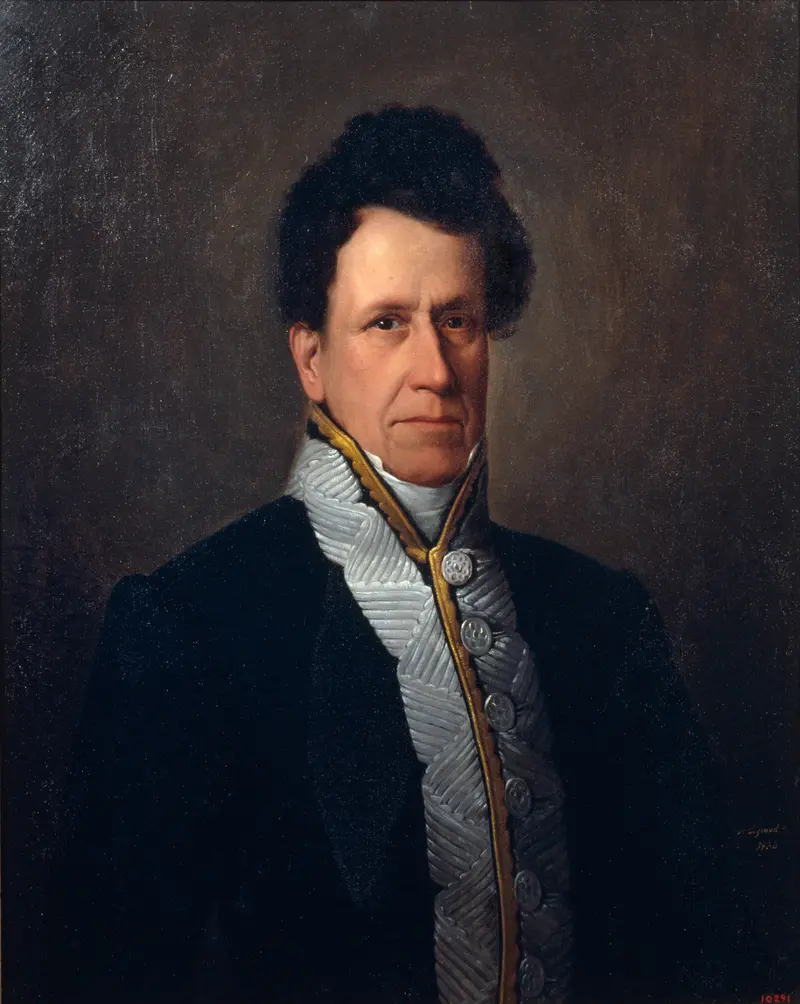
Portrait of Manuel Mª Gutiérrez
Antonio Maria Esquivel
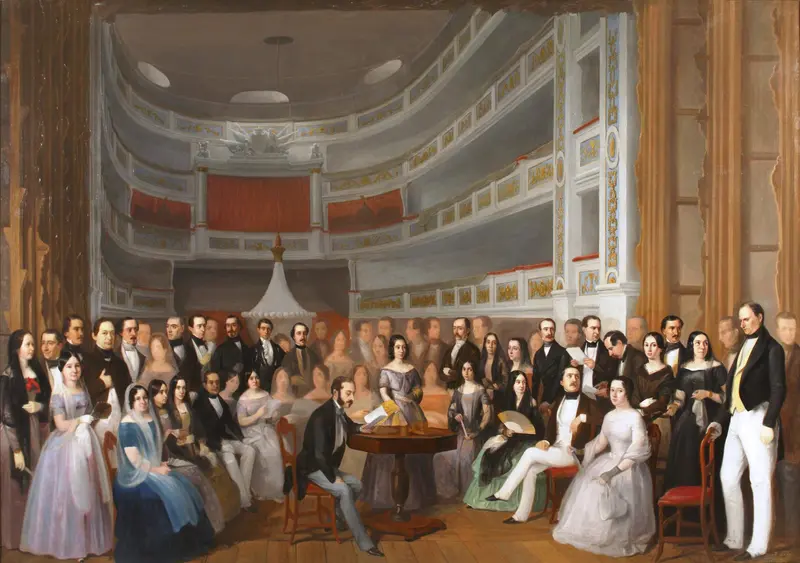
Ventura de la Vega reading a play at the Teatro del Príncipe
Antonio Maria Esquivel
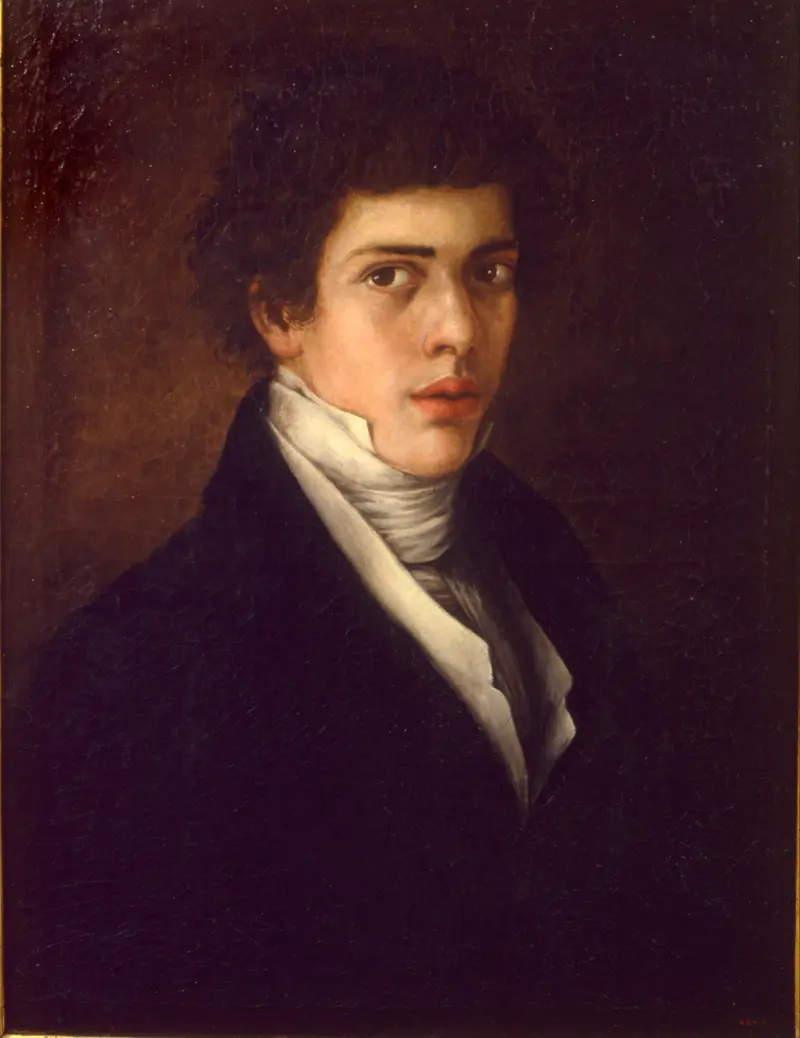
Self-portrait
Antonio Maria Esquivel
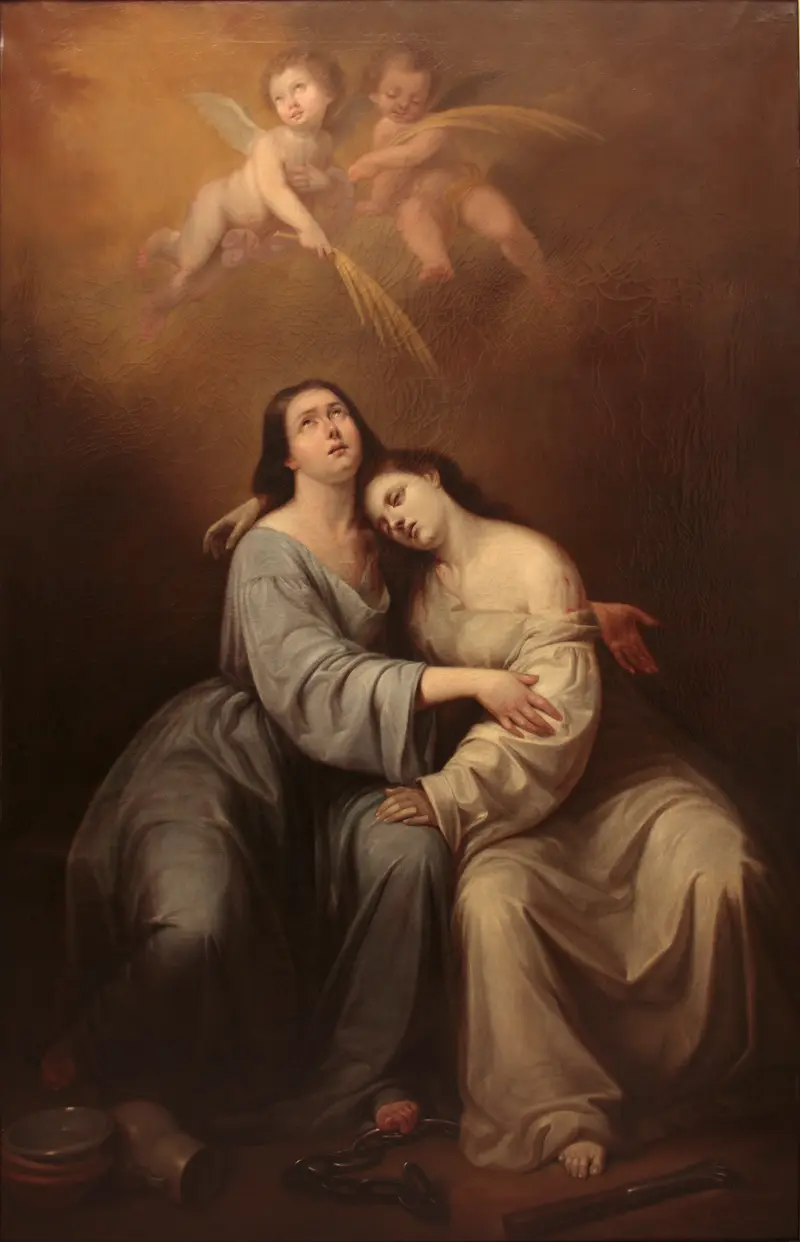
Saint Justa and Saint Rufina
Antonio Maria Esquivel
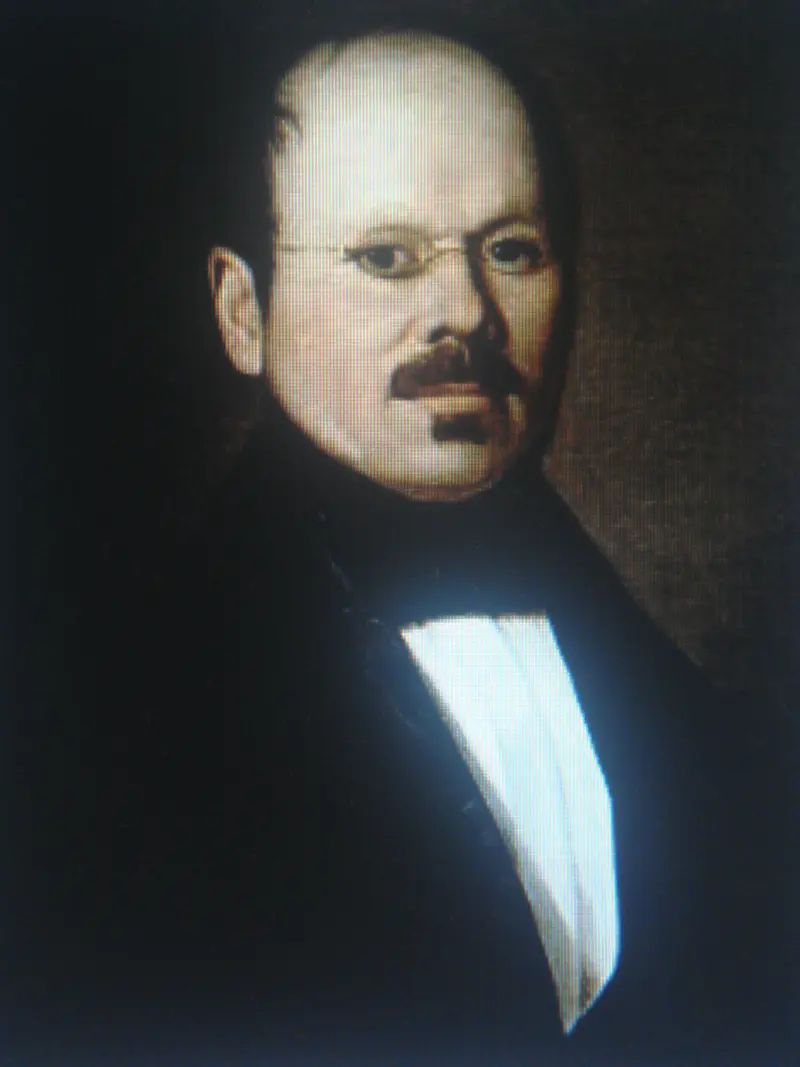
Antonio Benavides Fernández de Navarrete (Real Academia de la Historia)
Antonio Maria Esquivel
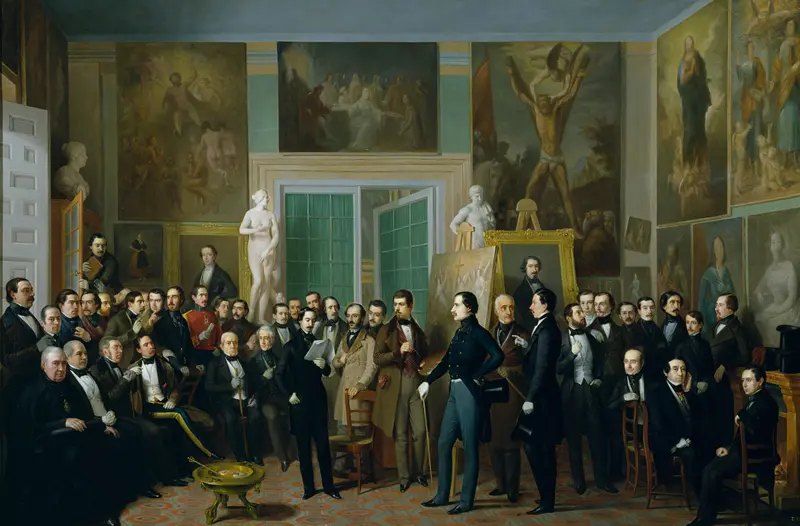
The Contemporary Poets. A Reading of Zorrilla in the Artist's Studio
Antonio Maria Esquivel
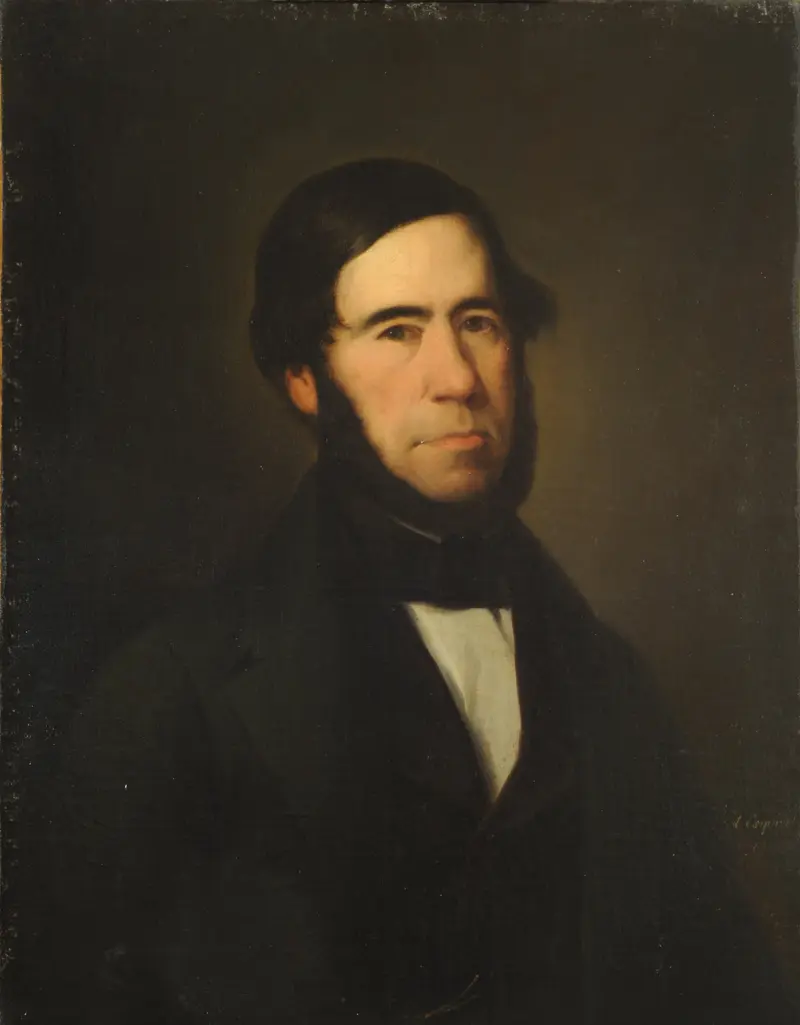
Portrait of Don Manuel José de Guerrico
Antonio Maria Esquivel
Portrait of Cesáreo María Sáenz y de la Barrera
Antonio Maria Esquivel
More Genre Scene Art

Banquet of the Officers of the St George Civic Guard
Frans Hals

Rembrandt and Saskia in the Scene of the Prodigal Son
Rembrandt van Rijn

Bal du moulin de la Galette
Pierre-Auguste Renoir

Quadrille at the Moulin Rouge
Henri de Toulouse-Lautrec

A Burial at Ornans
Gustave Courbet

When Will You Marry?
Paul Gauguin