
Ventura de la Vega reading a play at the Teatro del Príncipe — History & Facts
The hush before a play begins is rarely captured, but in Ventura de la Vega reading a play at the Teatro del Príncipe, the moment is suspended for all time. The painter, Antonio Maria Esquivel, draws us into a charged gathering: the playwright sits at a round table, manuscript open, surrounded by a sea of attentive faces. Every gaze is anchored to him, the air heavy with expectation, as if the next word might tip the balance between approval and disappointment.
The setting is unmistakably theatrical, yet the drama is not on the stage but in the audience, in the collective anticipation of art being born in real time. The composition leads the eye from the ornate balconies and red-draped boxes of the Teatro del Príncipe down to the crowded floor, where men and women in formal dress cluster in a semicircle. The painter arranges the figures almost as if they are actors themselves, each posture and glance a study in engagement or skepticism. Light pools around the central table, spotlighting Ventura de la Vega’s poised figure and the manuscript before him, while the theater’s grand chandelier hovers above like a silent witness.
The palette is sober but luminous, the whites and blacks of evening wear punctuated by delicate pastels, suggesting a world where intellect and society meet under the same roof. In this tableau, the theater is not just a building but a crucible for ideas, and the crowd, with its mix of curiosity and judgment, becomes part of the play itself. Works like this, painted in Madrid between 1846 and 1847, remind us that the 19th-century theater was as much a social arena as a site for performance. Portraits of literary salons or artistic gatherings were popular among the educated elite, who saw themselves reflected in these images of wit and refinement.
The Teatro del Príncipe—now known as the Teatro Español—was a hub for Madrid’s cultural life, and a painting like this would have been both a tribute to its community and a record of its rituals. Though history has kept few traces of the private moments behind such public events, Esquivel’s painting invites us to imagine ourselves among the audience, waiting for the words that might change the night.
More Artworks by Antonio Maria Esquivel

Baldomero Espartero
Antonio Maria Esquivel
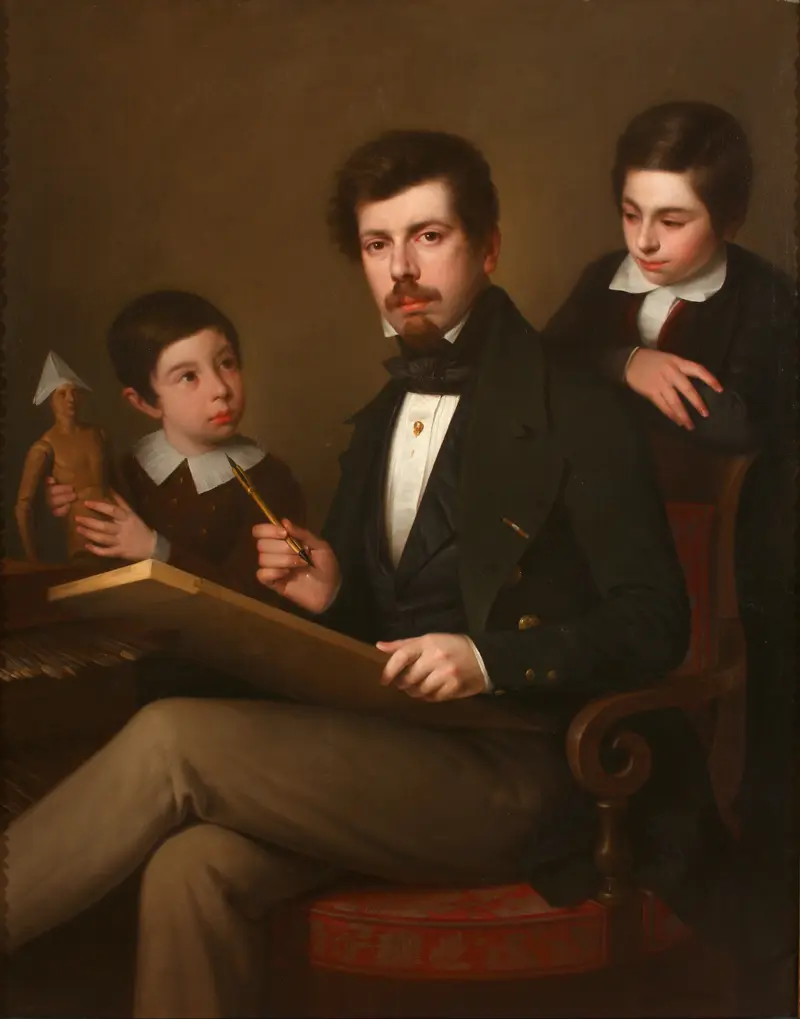
Self-portrait with his sons Carlos and Vicente
Antonio Maria Esquivel
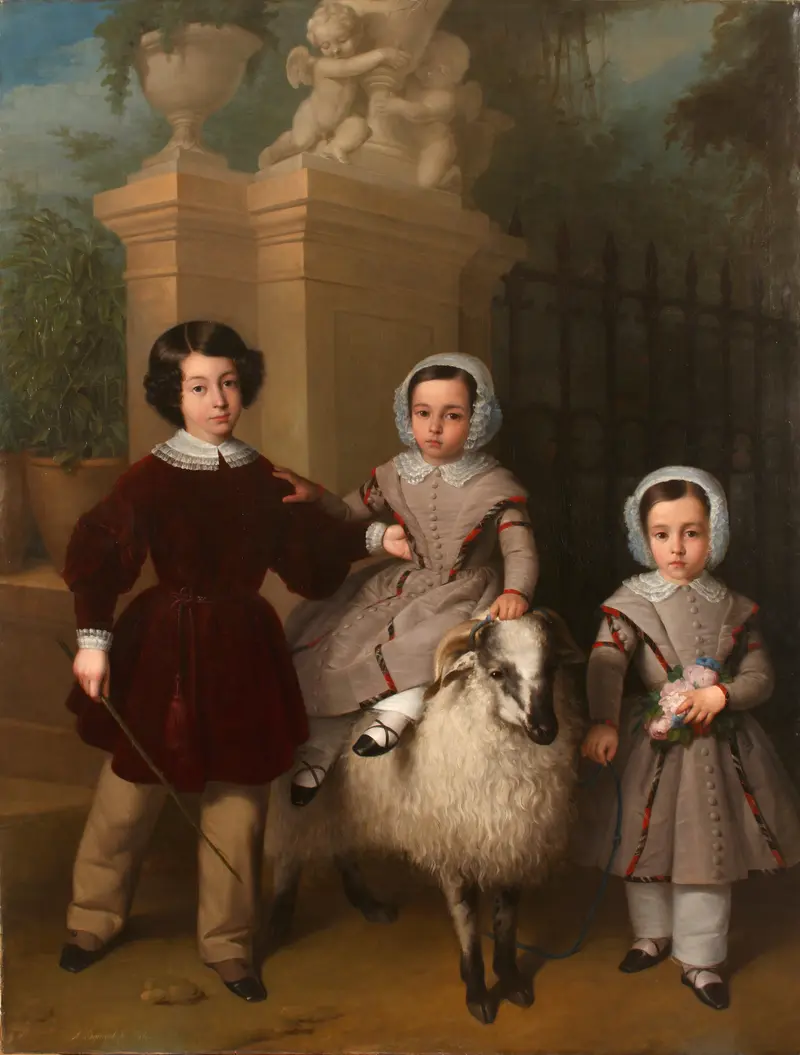
Children playing with a ram
Antonio Maria Esquivel
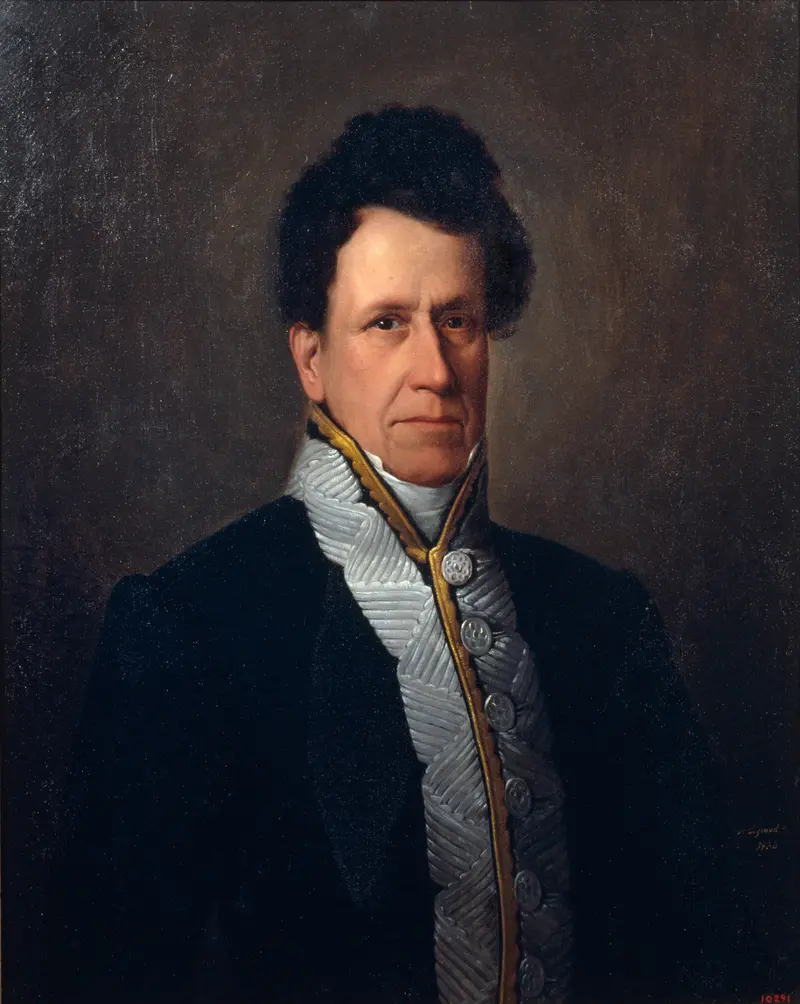
Portrait of Manuel Mª Gutiérrez
Antonio Maria Esquivel
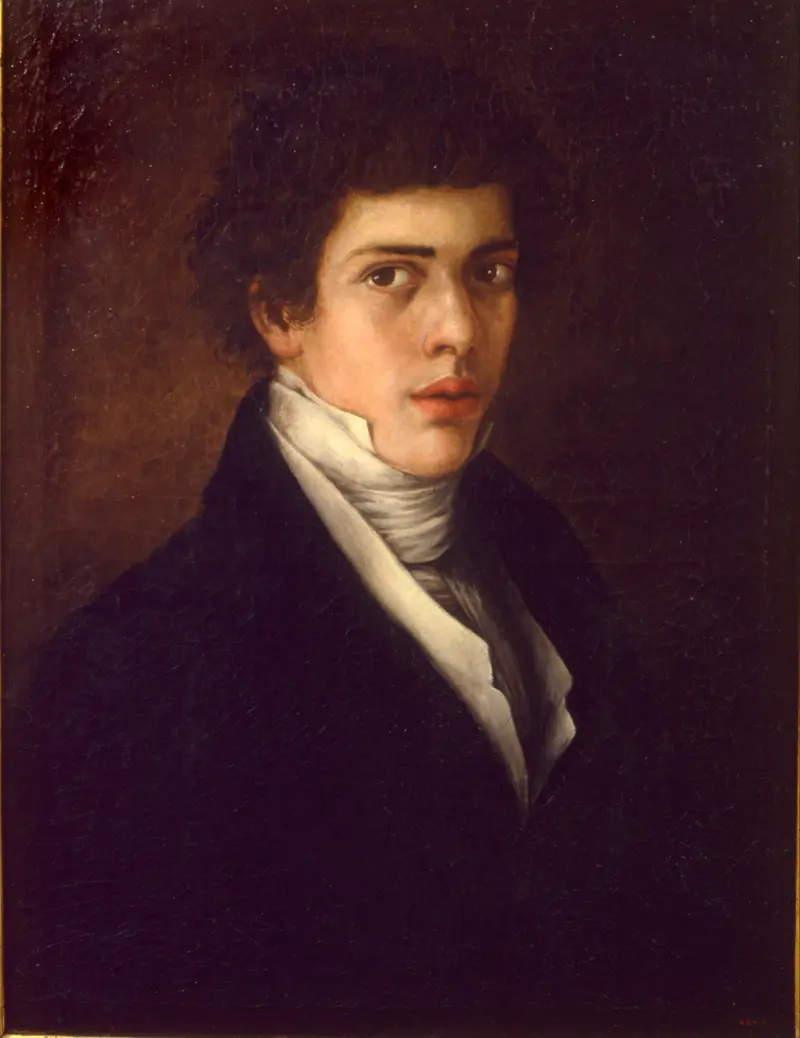
Self-portrait
Antonio Maria Esquivel
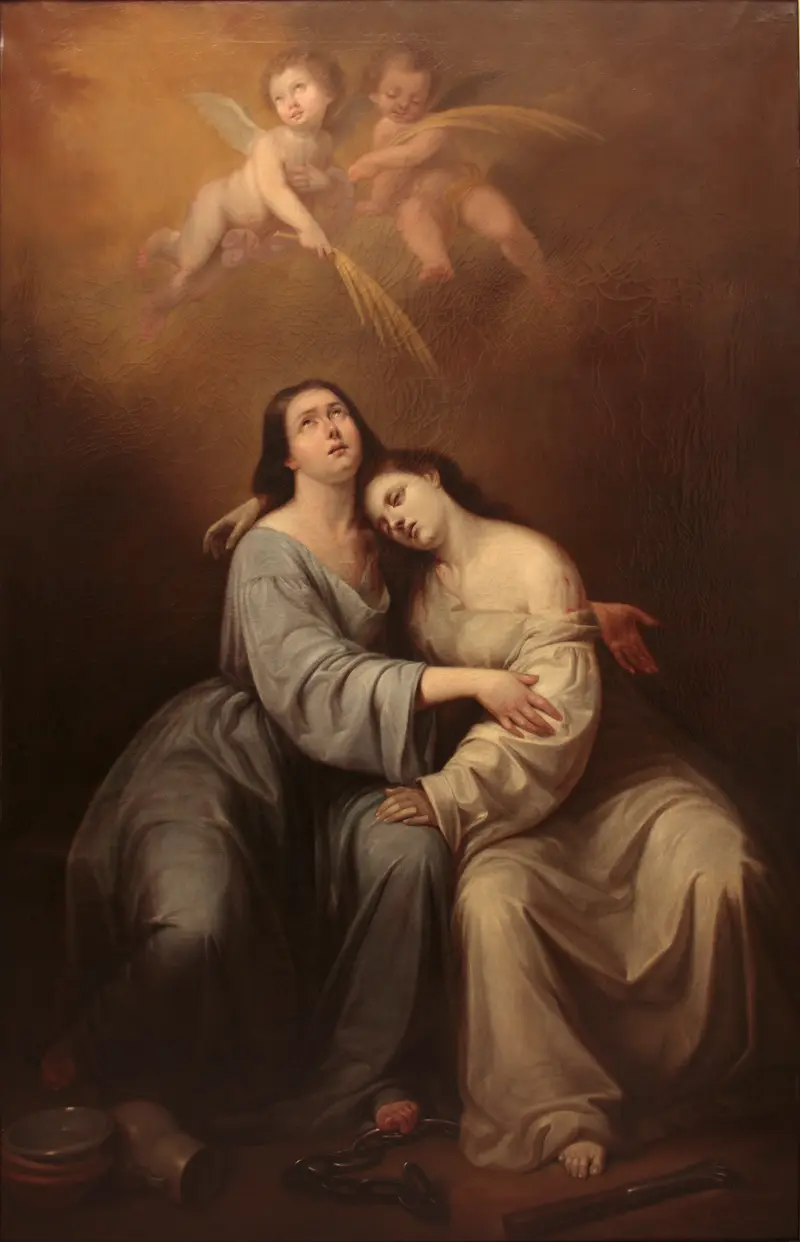
Saint Justa and Saint Rufina
Antonio Maria Esquivel
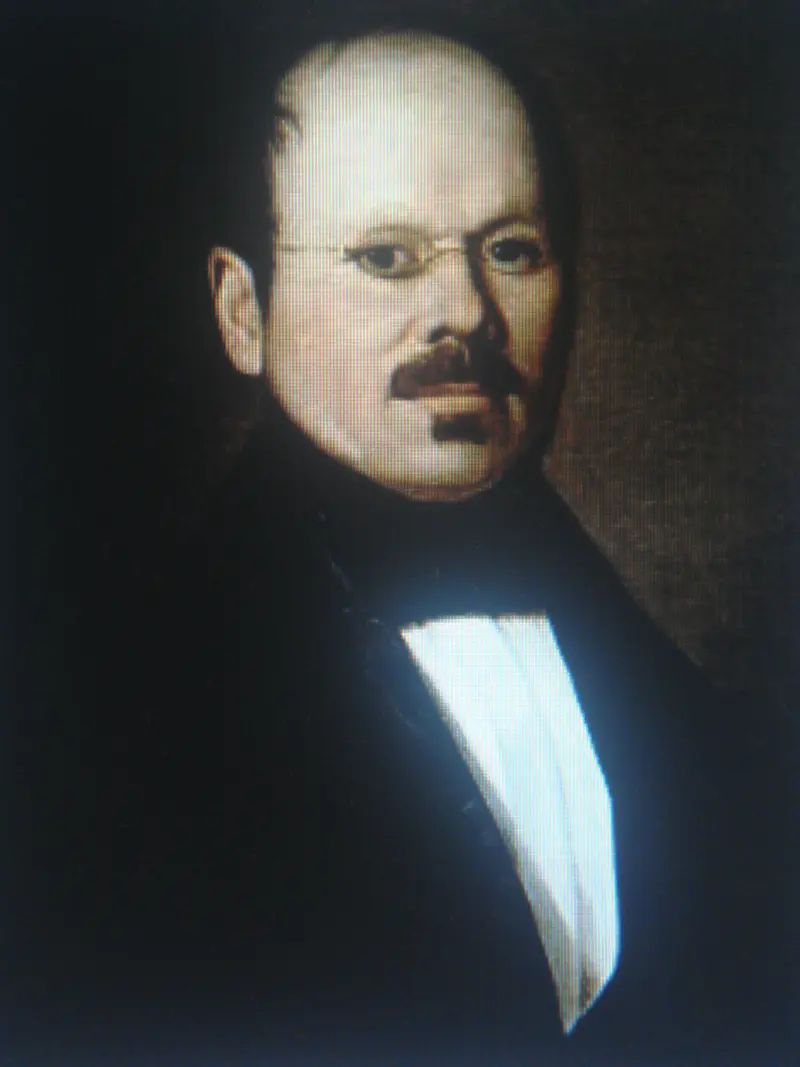
Antonio Benavides Fernández de Navarrete (Real Academia de la Historia)
Antonio Maria Esquivel
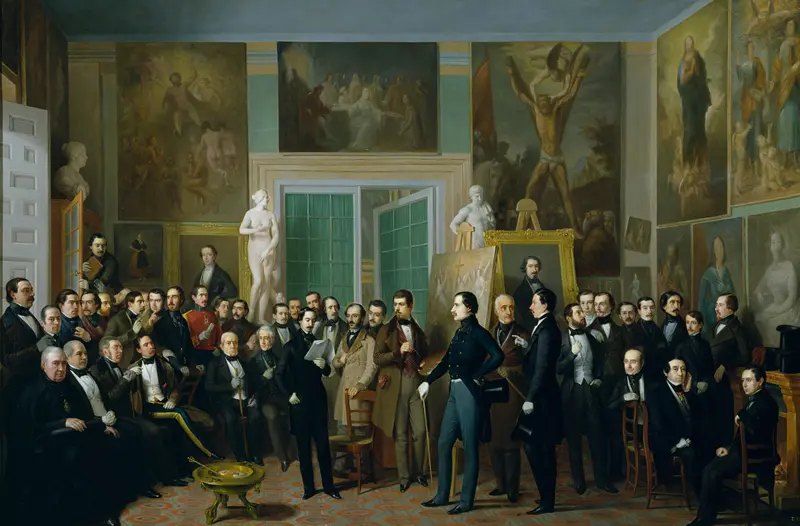
The Contemporary Poets. A Reading of Zorrilla in the Artist's Studio
Antonio Maria Esquivel
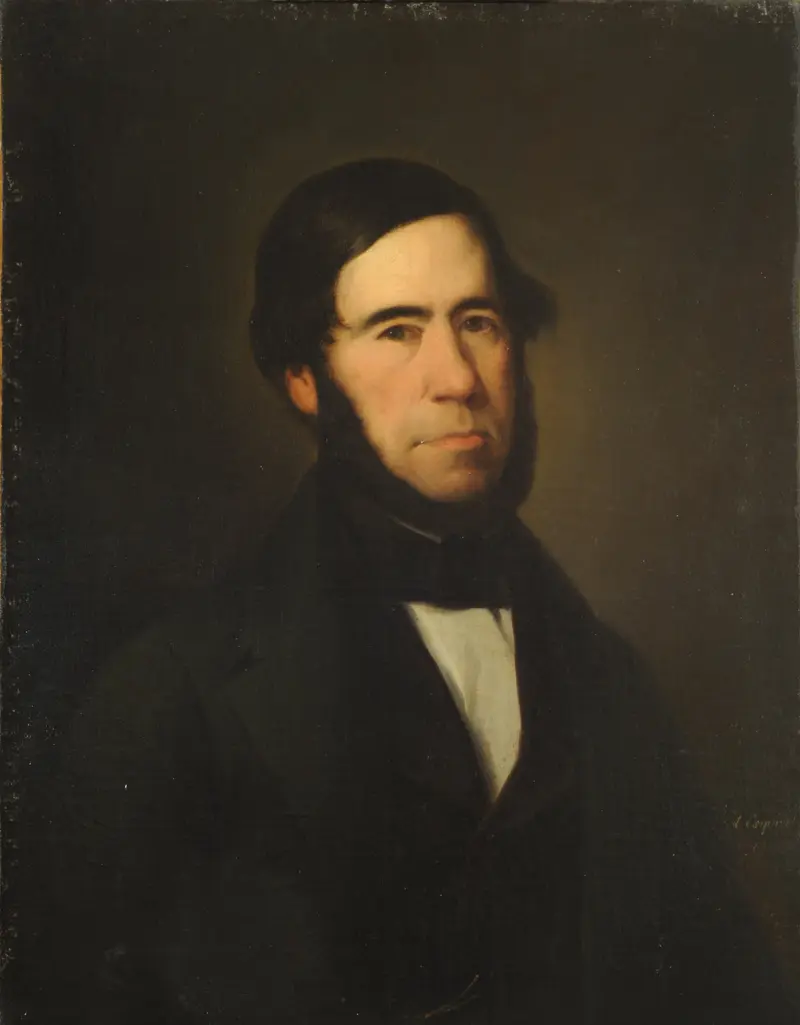
Portrait of Don Manuel José de Guerrico
Antonio Maria Esquivel
Portrait of Cesáreo María Sáenz y de la Barrera
Antonio Maria Esquivel
More Genre Scene Art

Banquet of the Officers of the St George Civic Guard
Frans Hals

Rembrandt and Saskia in the Scene of the Prodigal Son
Rembrandt van Rijn

Bal du moulin de la Galette
Pierre-Auguste Renoir

Quadrille at the Moulin Rouge
Henri de Toulouse-Lautrec

A Burial at Ornans
Gustave Courbet

When Will You Marry?
Paul Gauguin