
Portrait of Don Manuel José de Guerrico — History & Facts
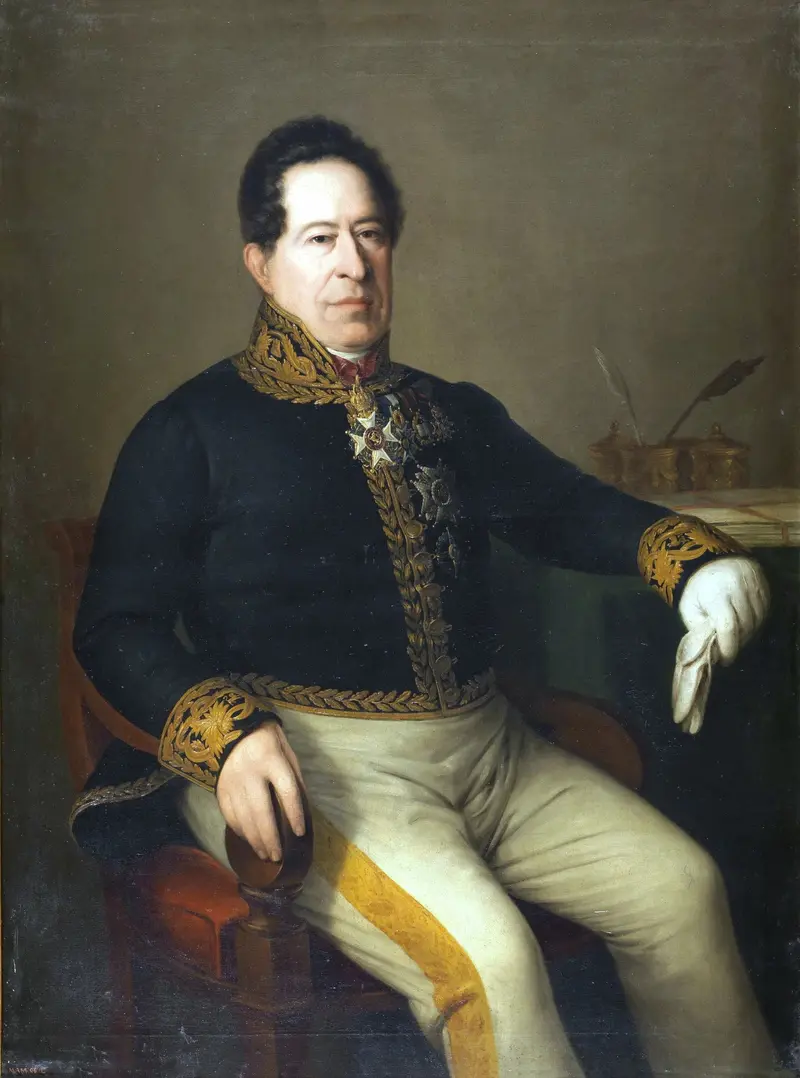
What first draws the eye in Portrait of Don Manuel José de Guerrico is the direct, unguarded gaze of the sitter—a look that seems to weigh the viewer as much as he is being weighed in return. The face emerges from a deep, almost velvety darkness, the light falling across the forehead and cheeks with the precision of a spotlight on a stage. Each brushstroke in the hair and sideburns is rendered with care, but it is the subtle tension in the mouth and the steady, slightly furrowed brow that hint at a life of responsibility and thought.
The dark suit, crisply painted, anchors the figure in a world of sober dignity, while the soft gradations of shadow behind him create a quiet, contemplative atmosphere. Painted in 1842 by Antonio Maria Esquivel, this portrait belongs to a period when likenesses such as this were more than mere records—they were declarations of status, intellect, and personal presence. The mid-19th century in Latin America saw a rising class of professionals and landowners eager to assert their place in a rapidly changing society, often turning to artists trained in the European academic tradition. The work now resides in the collection of the Museo Nacional de Bellas Artes, a reminder of both the ambitions and the anxieties of its age.
History has kept few traces of Don Manuel José de Guerrico himself, but the painting’s quiet intensity invites us to imagine the world he inhabited—one where the act of being seen was itself a statement.
More Artworks by Antonio Maria Esquivel

Baldomero Espartero
Antonio Maria Esquivel
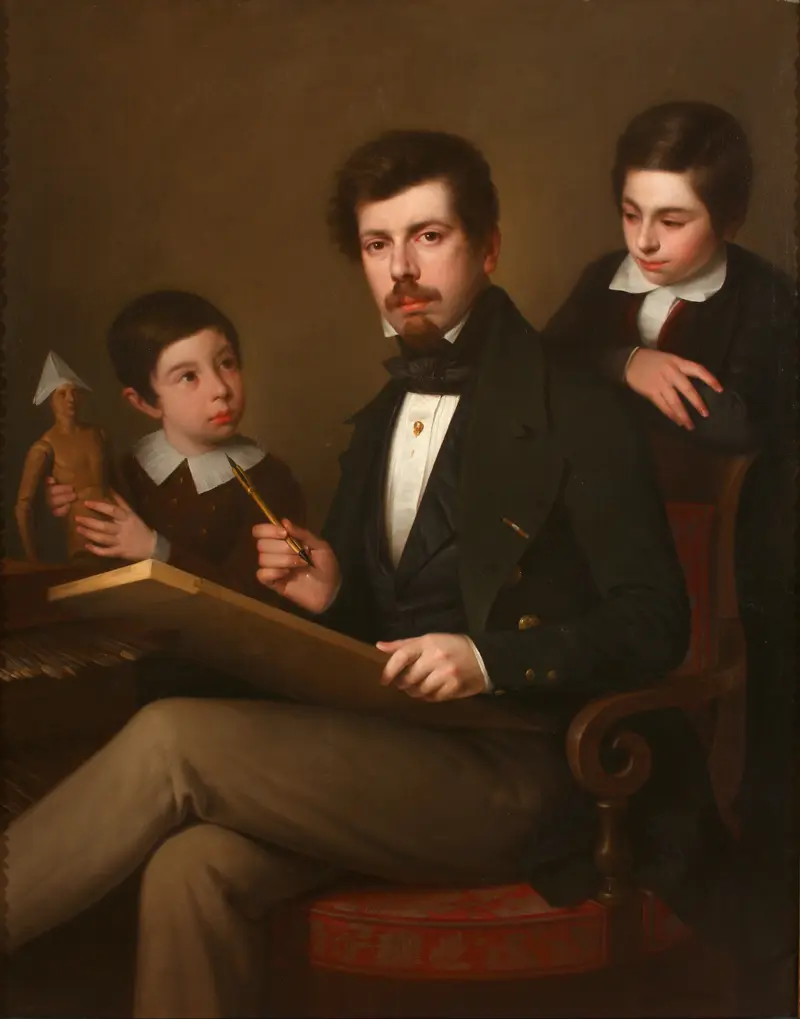
Self-portrait with his sons Carlos and Vicente
Antonio Maria Esquivel
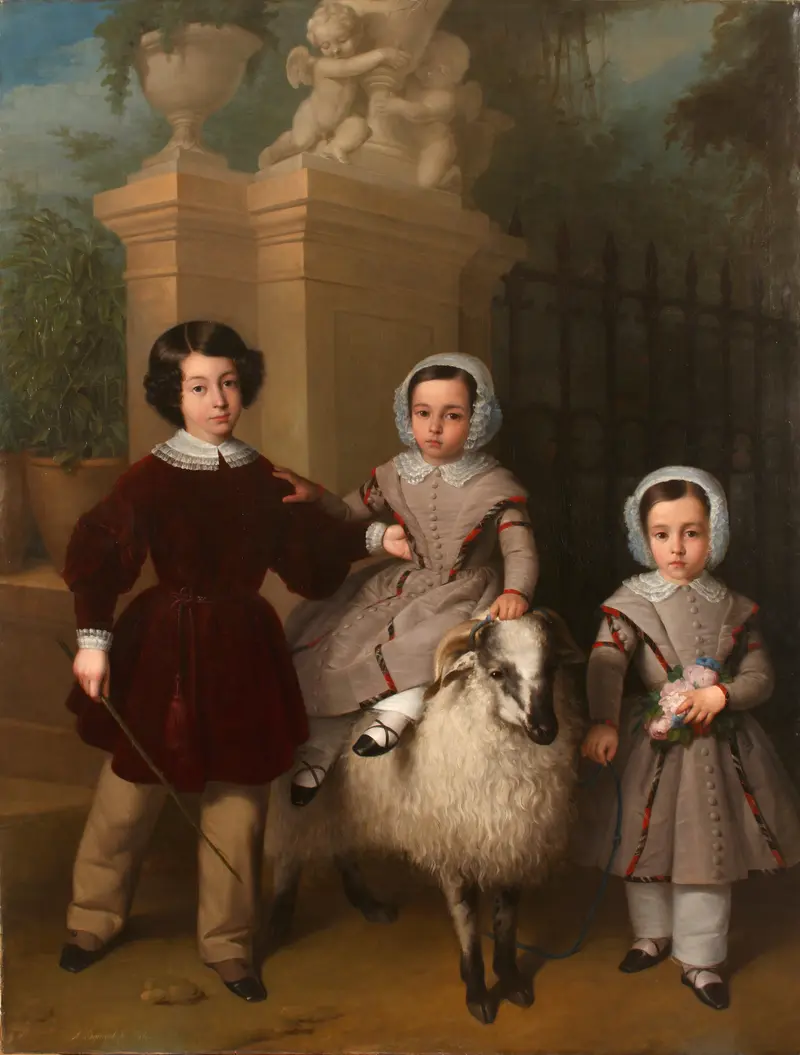
Children playing with a ram
Antonio Maria Esquivel
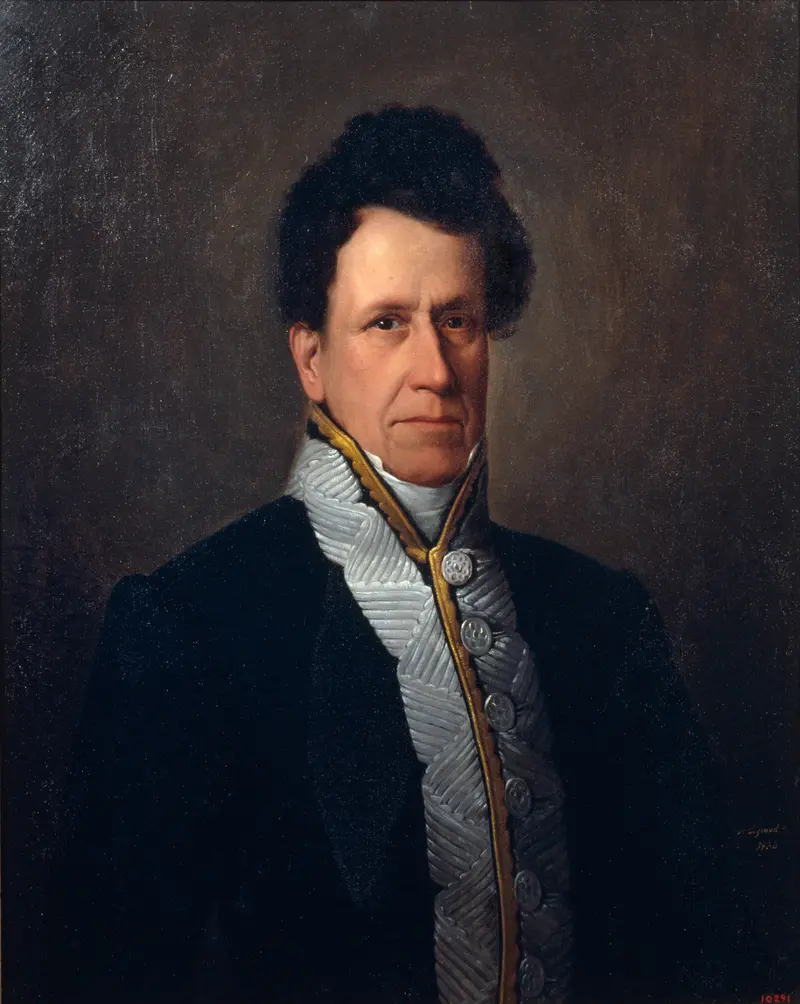
Portrait of Manuel Mª Gutiérrez
Antonio Maria Esquivel
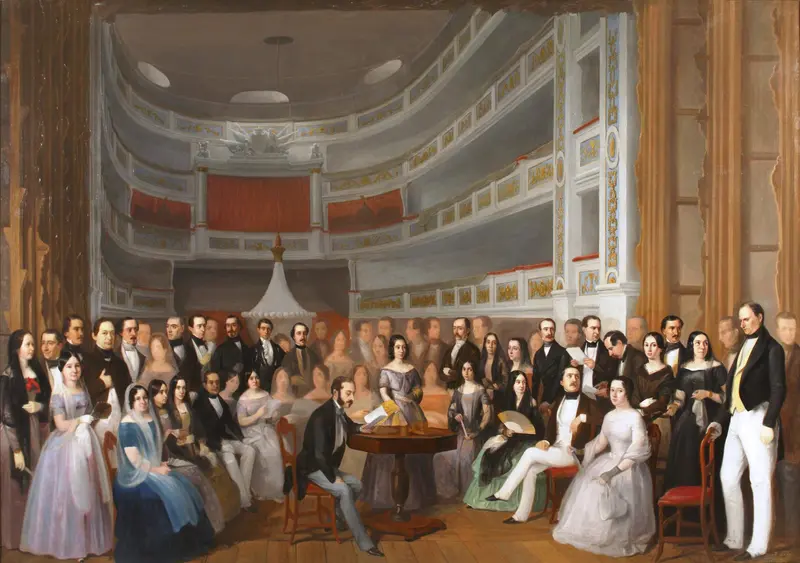
Ventura de la Vega reading a play at the Teatro del Príncipe
Antonio Maria Esquivel
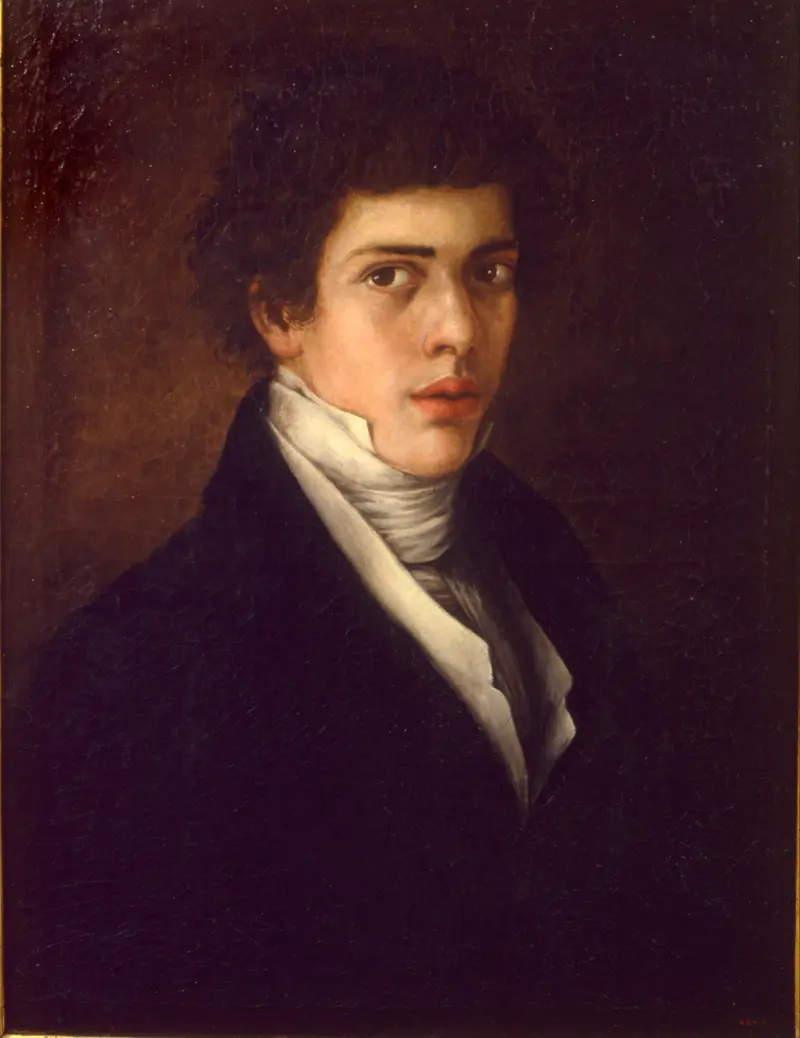
Self-portrait
Antonio Maria Esquivel
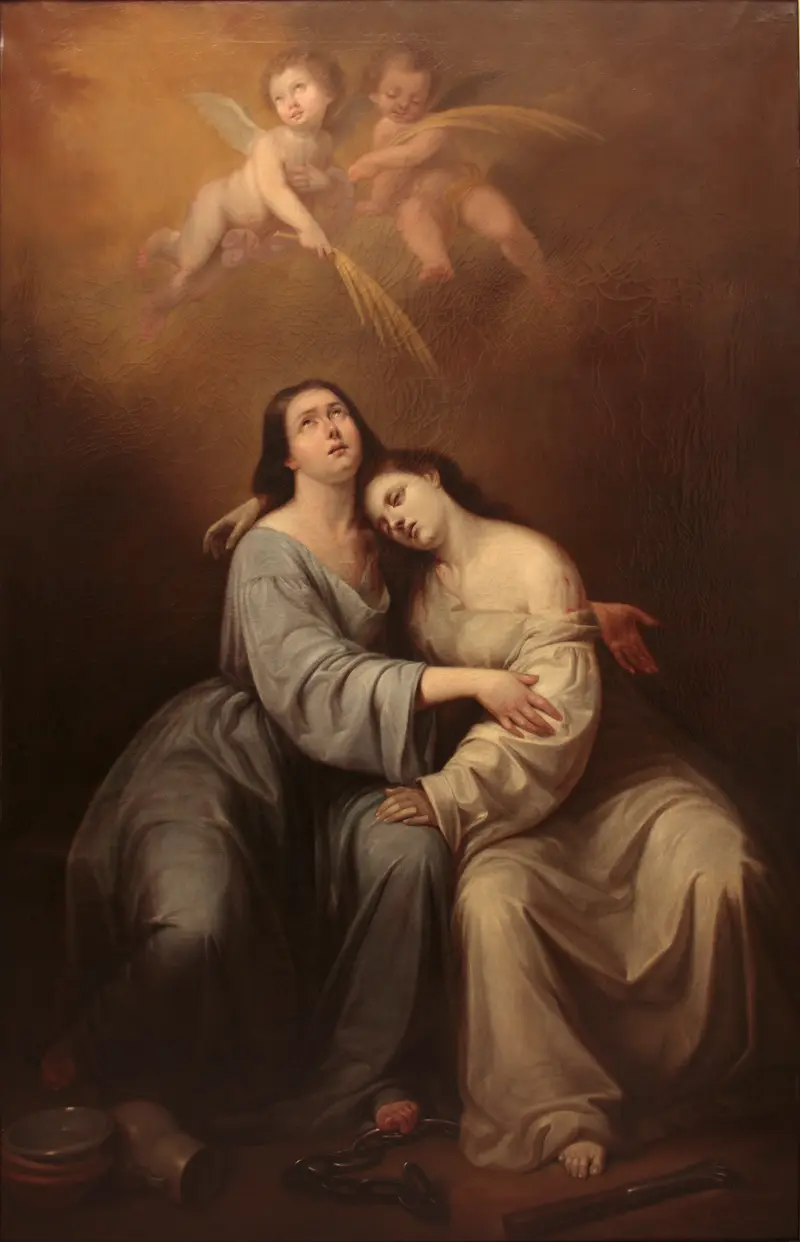
Saint Justa and Saint Rufina
Antonio Maria Esquivel
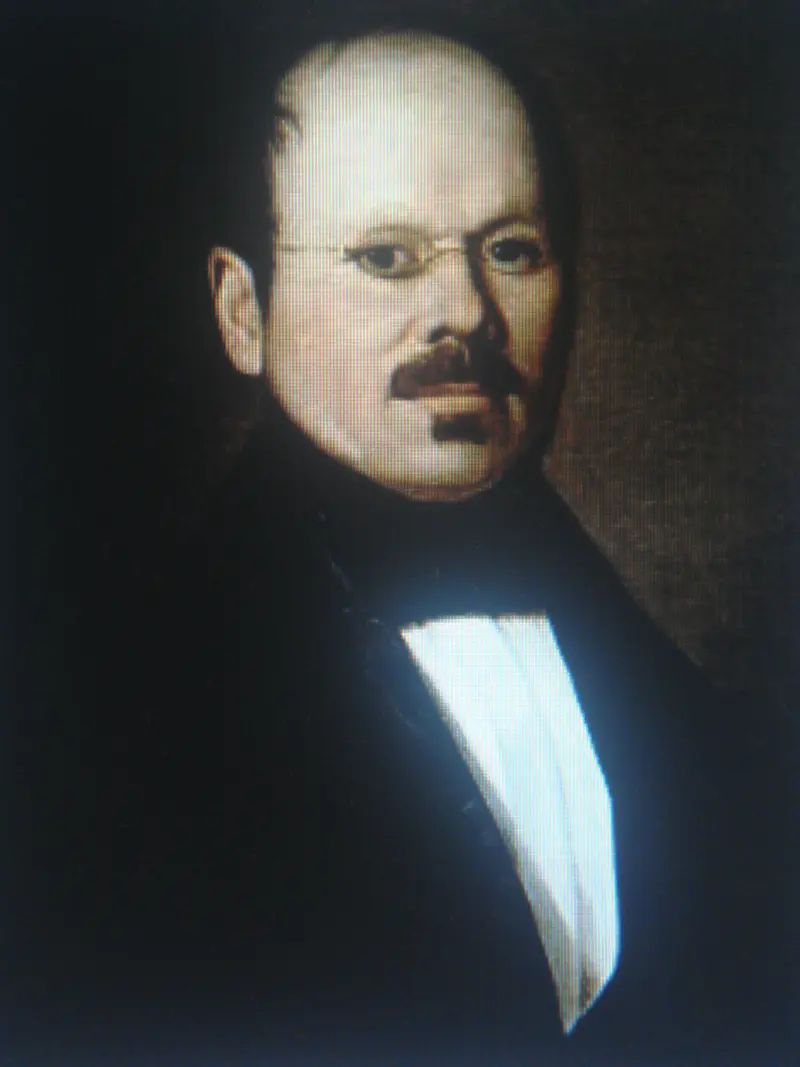
Antonio Benavides Fernández de Navarrete (Real Academia de la Historia)
Antonio Maria Esquivel
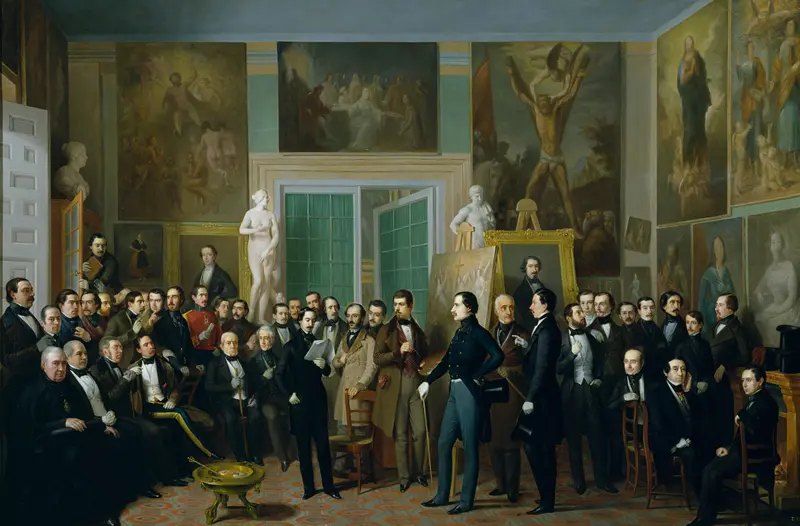
The Contemporary Poets. A Reading of Zorrilla in the Artist's Studio
Antonio Maria Esquivel
Portrait of Cesáreo María Sáenz y de la Barrera
Antonio Maria Esquivel





