
Sense of Taste — History & Facts
A burst of laughter seems ready to erupt from this cramped, smoky room, where four figures huddle around a battered table, each lost in the pleasures of food and drink. The eye is drawn first to the man in a red jacket, legs splayed, who drinks straight from a heavy jug—his posture careless, his appetite unchecked. Beside him, a woman leans in, spoon poised, while another man, hunched and intent, digs into a pot with rustic concentration.
The fourth figure, standing, covers his mouth as if to stifle a grin or a belch, his eyes glinting with mischief. The warm, golden light pools on their faces and rough clothing, highlighting the greasy sheen of the food and the battered pottery, while the shadowy rafters above remind us of the humble, even raucous, setting. Painted in 1635, Sense of Taste by Adriaen van Ostade belongs to a world where scenes of everyday life—especially those of peasants at leisure—became a favored subject for Dutch artists. In an age when the Dutch Republic was growing prosperous, such paintings offered both amusement and a subtle, moralizing glance at excess and folly.
Works like this were often snapped up by urban collectors eager to decorate their homes with images that were both entertaining and, perhaps, gently cautionary. Today, this painting is preserved in the Hermitage Museum’s collection, its rowdy energy and earthy humor still inviting viewers to lean in and listen to the laughter echoing off those old timbers.
More Artworks by Adriaen van Ostade

Dans in de herberg
Adriaen van Ostade
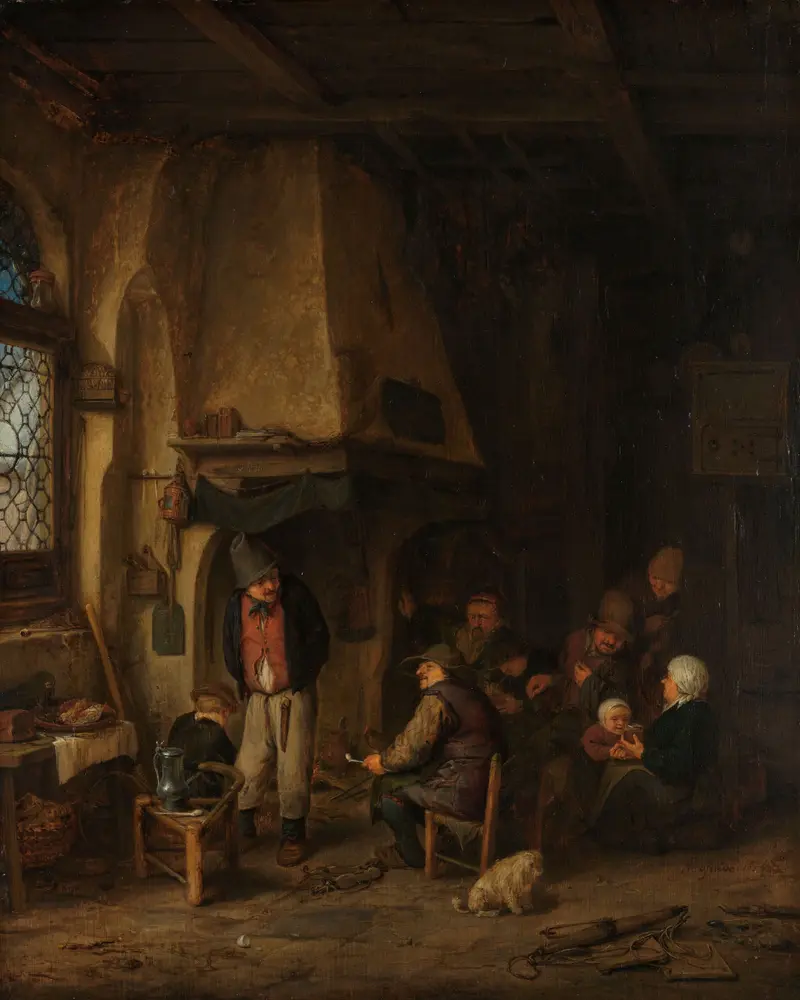
‘The Skaters’: Peasants in an Interior
Adriaen van Ostade
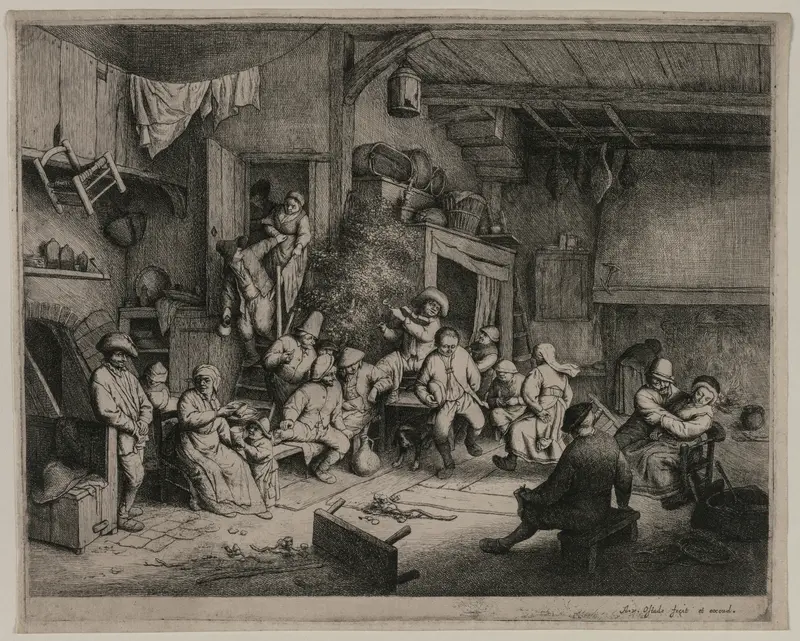
Dance at the Inn
Adriaen van Ostade
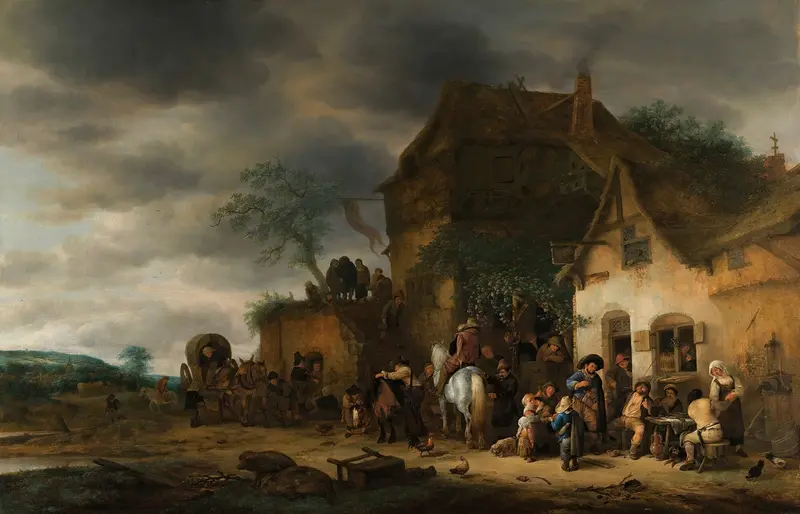
Travellers Halted At A Country Inn
Adriaen van Ostade
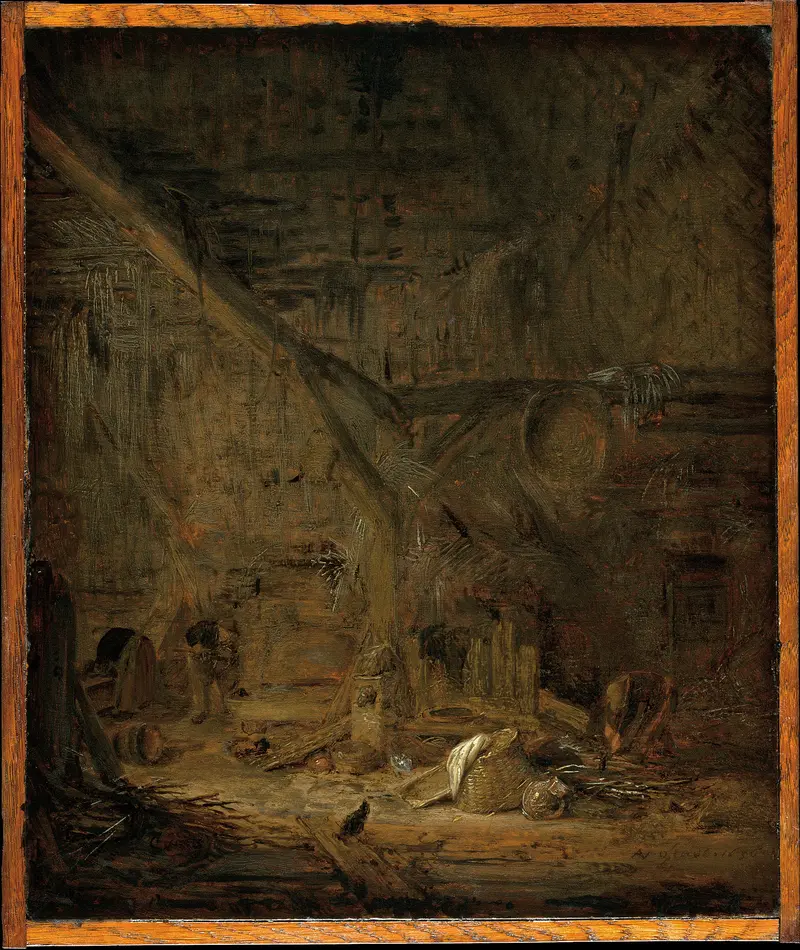
Interior of a Barn
Adriaen van Ostade
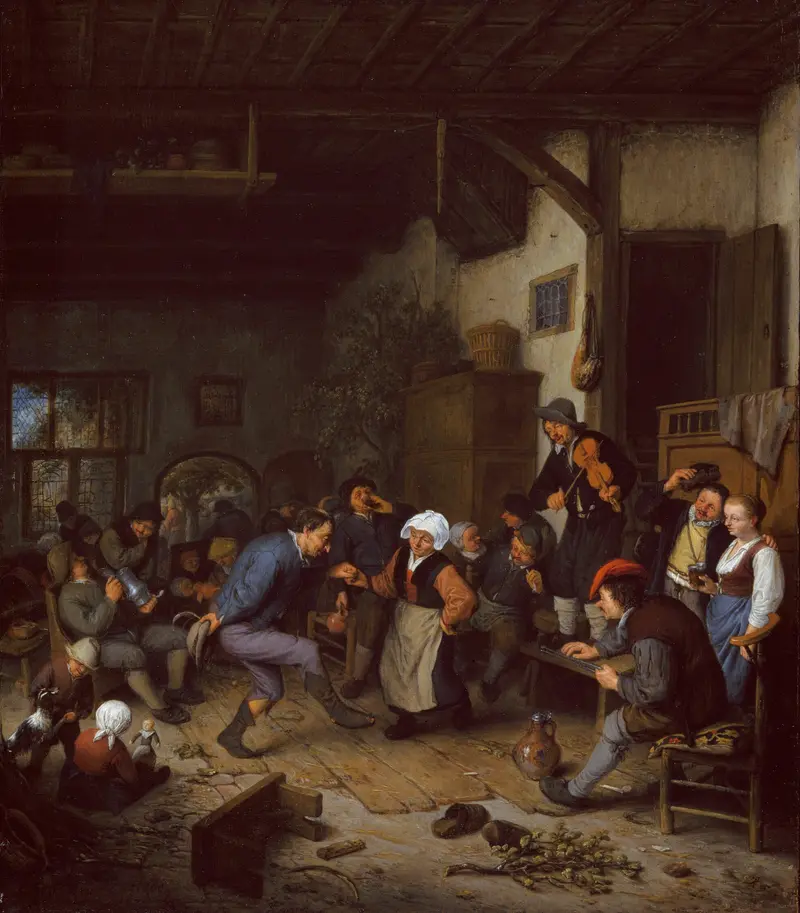
Merrymakers in an Inn
Adriaen van Ostade
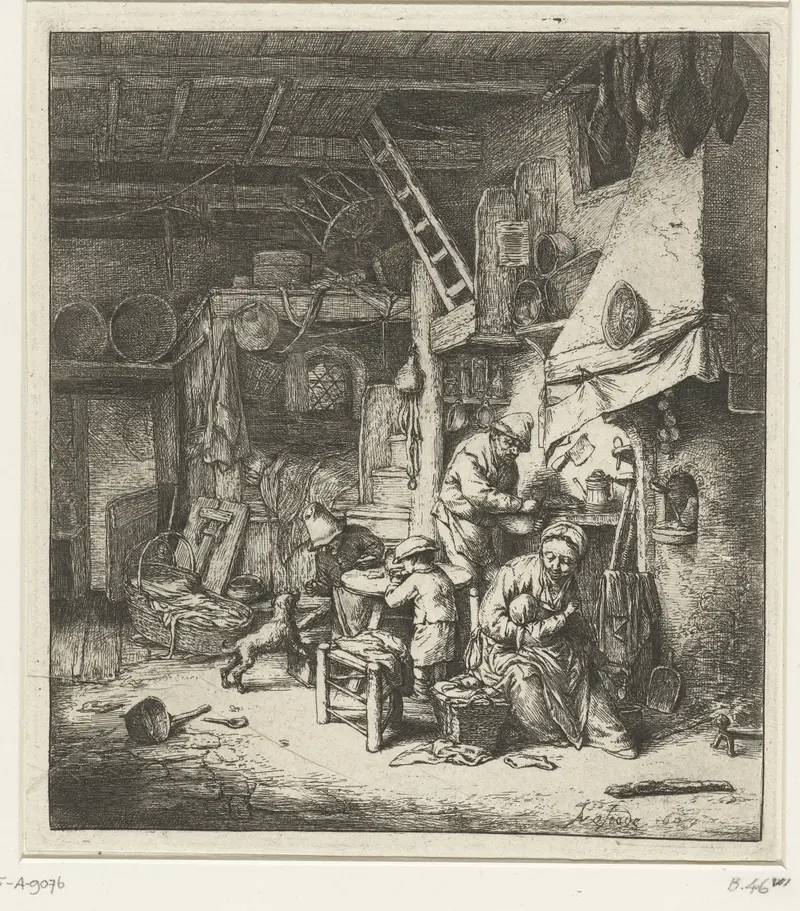
Boerengezin in interieur
Adriaen van Ostade
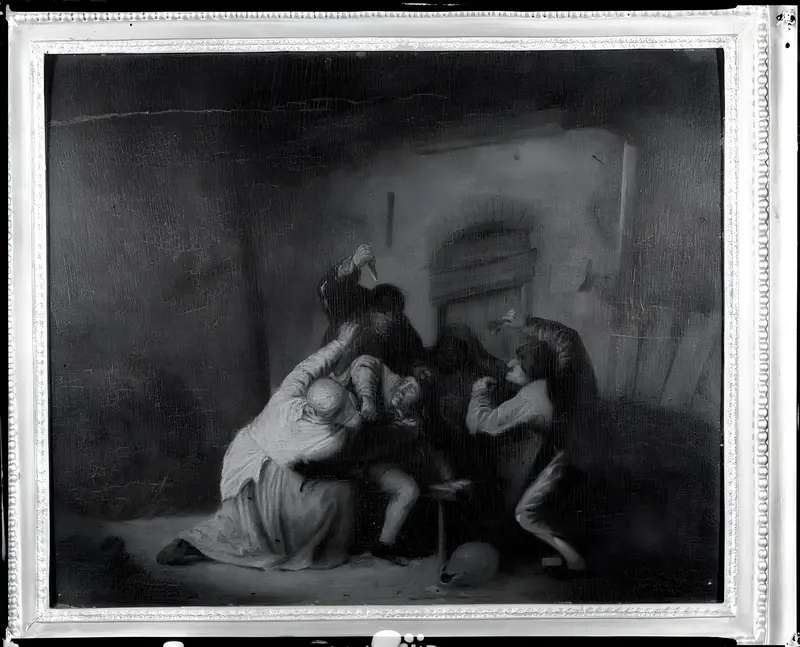
Peasants Brawling in a Tavern
Adriaen van Ostade
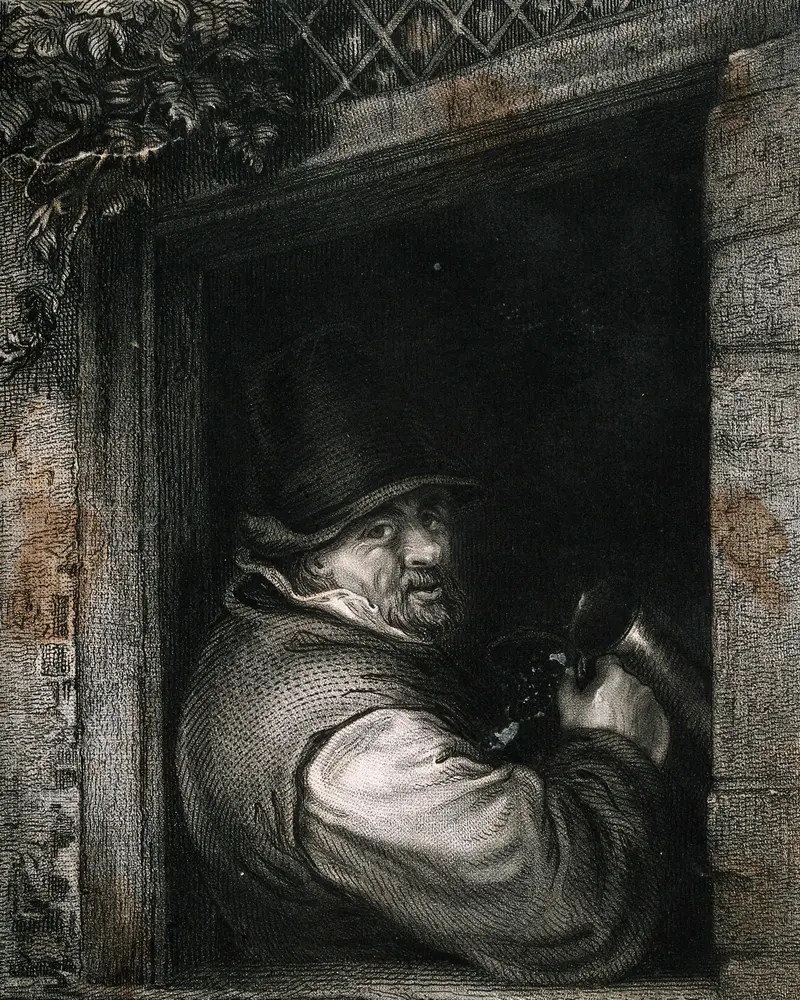
Man with a Tankard at a Window
Adriaen van Ostade
Dans in de herberg
Adriaen van Ostade
More Genre Scene Art

Banquet of the Officers of the St George Civic Guard
Frans Hals

Rembrandt and Saskia in the Scene of the Prodigal Son
Rembrandt van Rijn

Bal du moulin de la Galette
Pierre-Auguste Renoir

Quadrille at the Moulin Rouge
Henri de Toulouse-Lautrec

A Burial at Ornans
Gustave Courbet

When Will You Marry?
Paul Gauguin