
Shepherds Resting — History & Facts
In the silence of a pastoral landscape, the desire for solace whispers through the air, wrapping itself around the weary shepherds as they pause in their labor. Each figure, though still, emanates a sense of longing, a wish for rest amidst the burdens of their daily toil. Look to the left at the shepherd resting against a mossy rock, the soft light illuminating his features with a warm glow, inviting the viewer to share in his moment of respite. Notice how the lush greens and golden hues of the surrounding meadows contrast with the deep blues of the sky, creating an atmosphere of serenity and yearning.
The painter’s brushwork, fluid and confident, captures not only the figures’ physical forms but their unspoken emotions, inviting us to contemplate the dichotomy of work and rest. The art resonates with deeper meanings; the shepherds’ posture suggests vulnerability, while the expansive landscape signifies both freedom and the constraints of their lives. The idyllic scene is colored with an undercurrent of desire—yearning for peace and the eternal struggle between duty and leisure. Subtle details, like the way light dances across the blades of grass, mirror the fleeting nature of contentment in their hard-earned lives. Created in 1660, this piece emerged during a time when Roos was establishing his reputation in the realm of landscape painting in Germany.
He sought to elevate pastoral scenes beyond mere depictions of rural life, weaving complex emotional narratives into serene settings, reflective of the changing tides in both society and art during the Baroque period.
More Artworks by Johann Heinrich Roos
Browse all →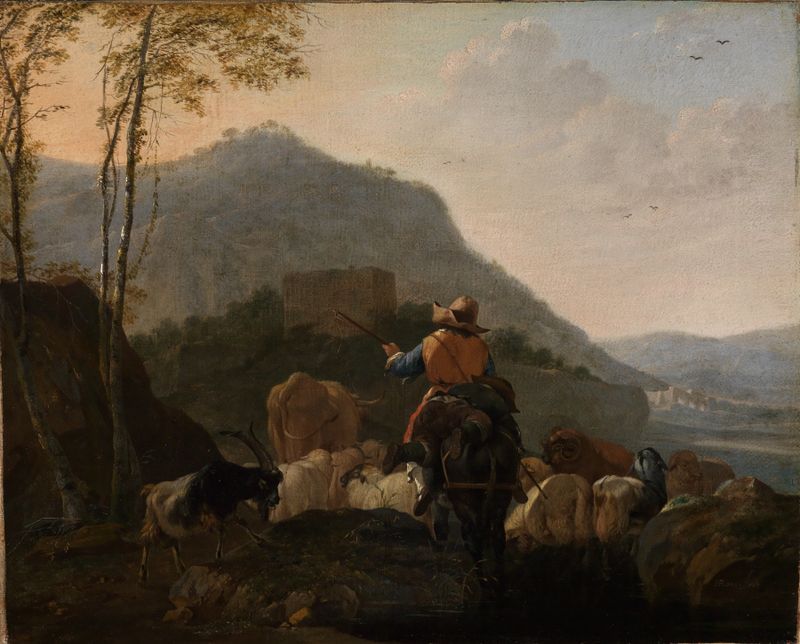
Ausziehende Hirten mit ihrer Herde in südlicher Berglandschaft
Johann Heinrich Roos
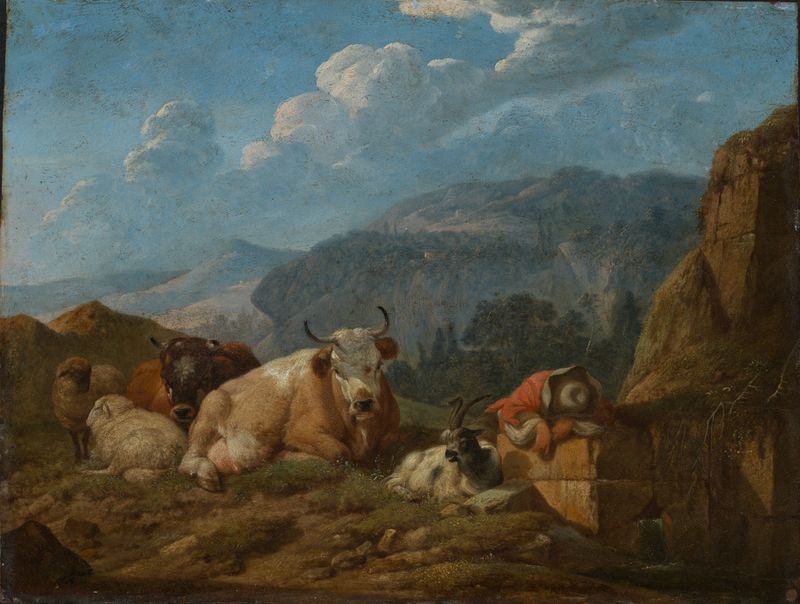
Italienische Berglandschaft
Johann Heinrich Roos
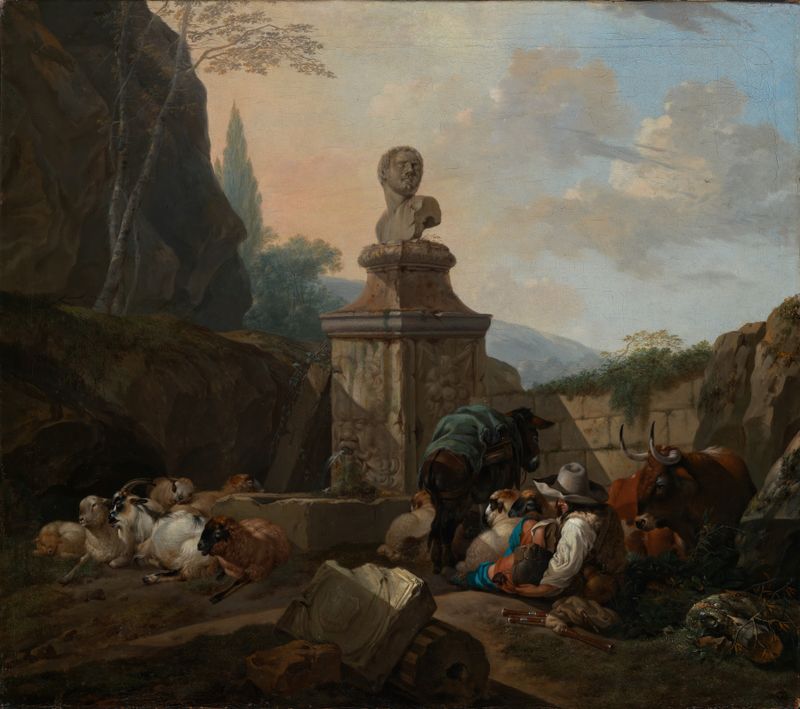
Ruhender Hirt und Herde an römischem Brunnen
Johann Heinrich Roos
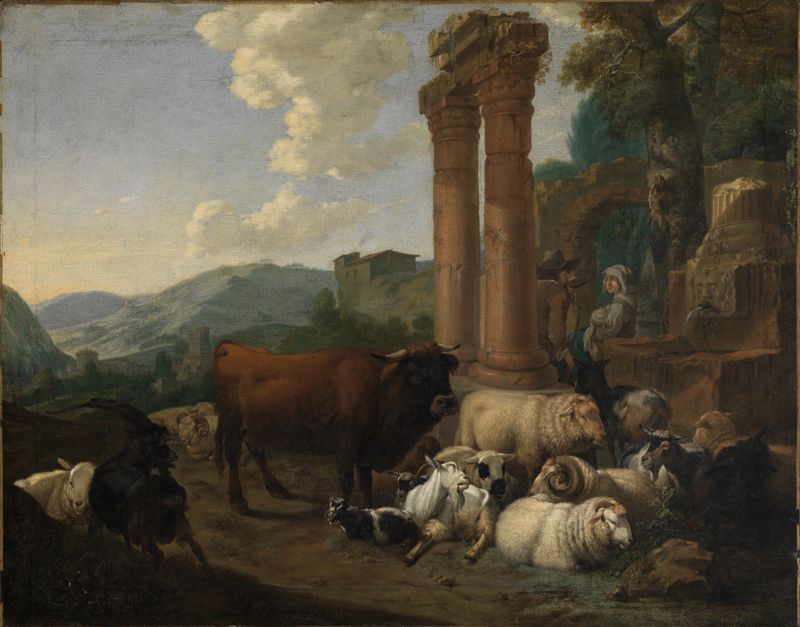
Hirtenszene in römischer Ruinenlandschaft
Johann Heinrich Roos
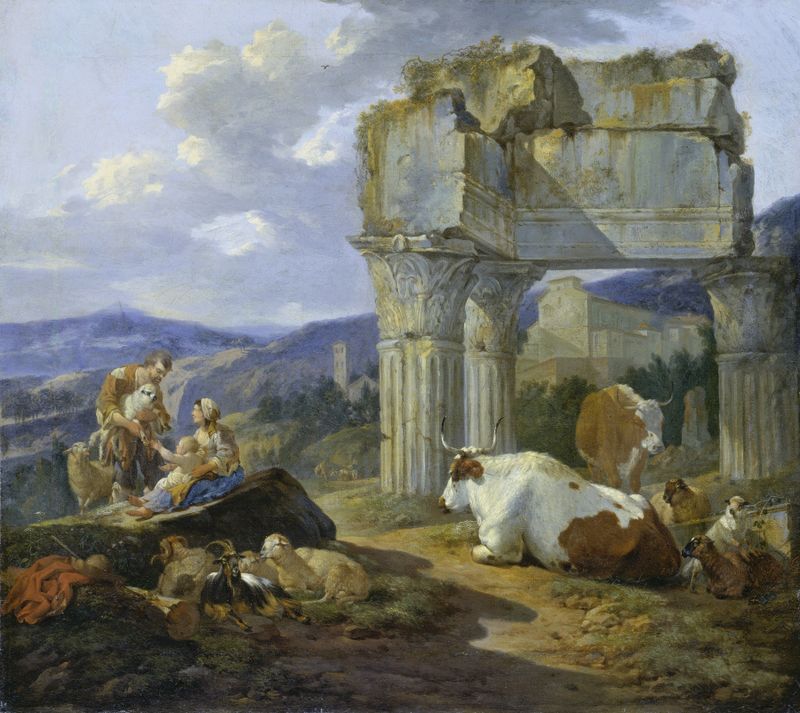
Shepherd’s Family at the Ruins of the Temple of Vespasian
Johann Heinrich Roos
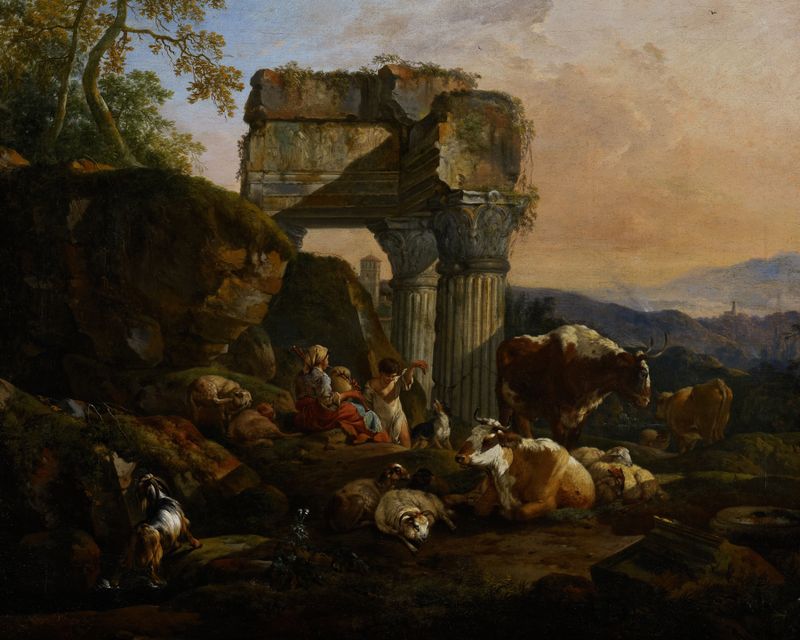
Roman Landscape with Cattle and Shepherds
Johann Heinrich Roos
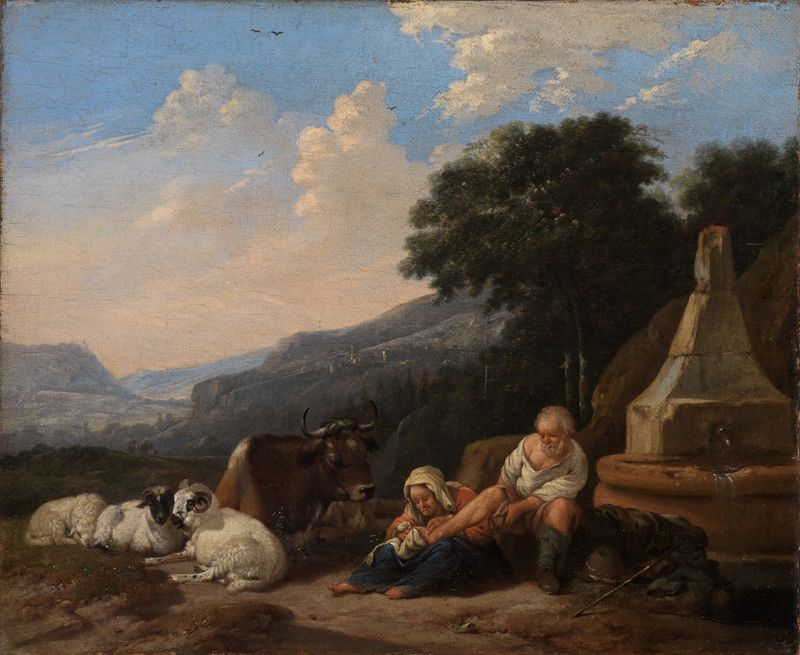
Berglandschaft mit Hirten am Brunnen
Johann Heinrich Roos
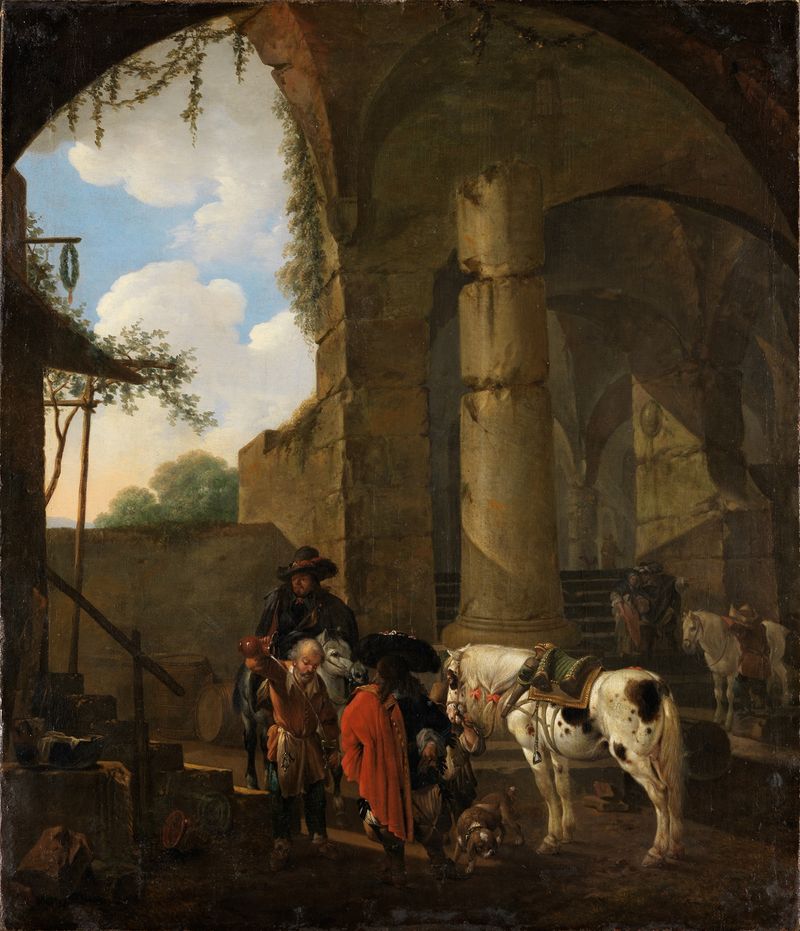
Osteria in römischer Ruine
Johann Heinrich Roos
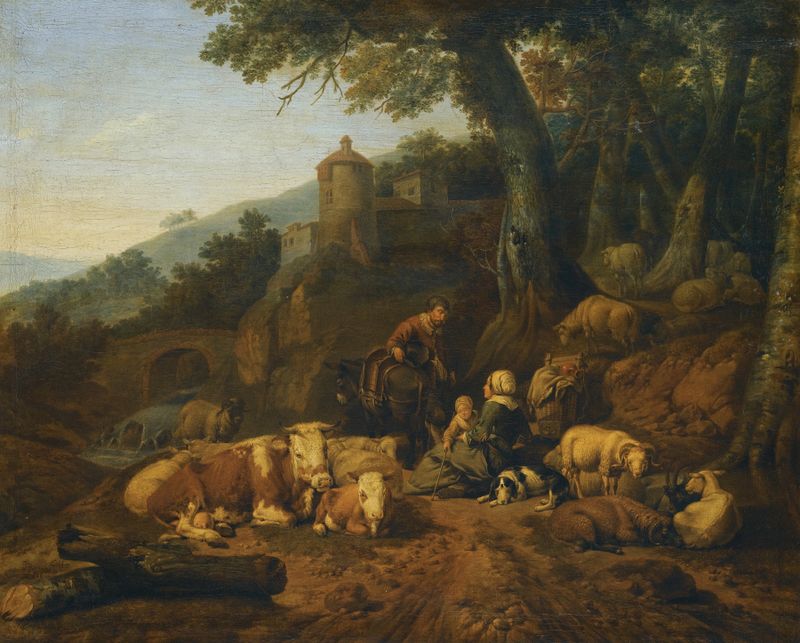
A Landscape With Drovers And Their Flock At Rest
Johann Heinrich Roos
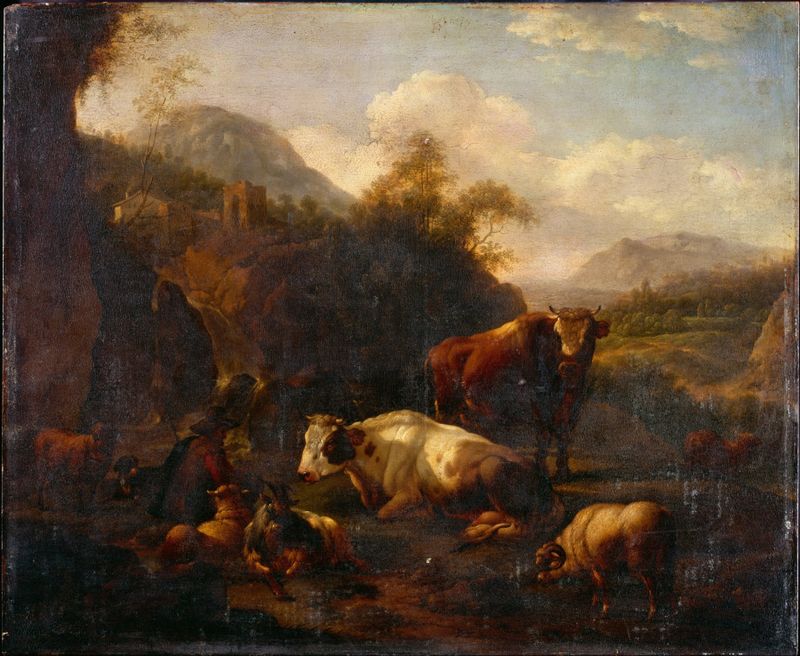
Landscape
Johann Heinrich Roos





