
Ships on Choppy Water — History & Facts
What first holds the eye in Ships on Choppy Water is the restless energy of the sea itself: waves crowd the foreground, their crests whipped by wind, while the boats ride their luck with sails taut and hulls angled sharply. The artist draws us into the thick of the action, placing the nearest ship so close that you can almost feel the spray. The low horizon gives the sky a sweeping dominance, its heavy clouds echoing the turmoil below.
Each vessel leans into its own struggle, flags streaming, masts tilting, the crews mere silhouettes against the pale light. The palette is restrained, almost monochrome, which only heightens the sense of a world pared down to essentials—wind, water, and the will to keep afloat. Painted in 1647, this work belongs to the thriving Dutch tradition of marine painting, a genre that mirrored the Republic’s maritime ambitions and anxieties. Artists like Abraham van Beyeren found eager patrons among merchants and shipowners who saw their fortunes reflected in such scenes.
These paintings were not just decoration but statements of pride and reminders of the risks that underpinned prosperity. While history has kept few traces of this particular canvas beyond its date and its presence in the RKD collection, its subject and style speak to a moment when the sea was both lifeblood and threat. Look again at the horizon—how the distant ships become mere lines against the sky—and consider how much of seventeenth-century Dutch life was lived at the edge of the unknown.
More Artworks by Abraham van Beyeren

Still Life
Abraham van Beyeren
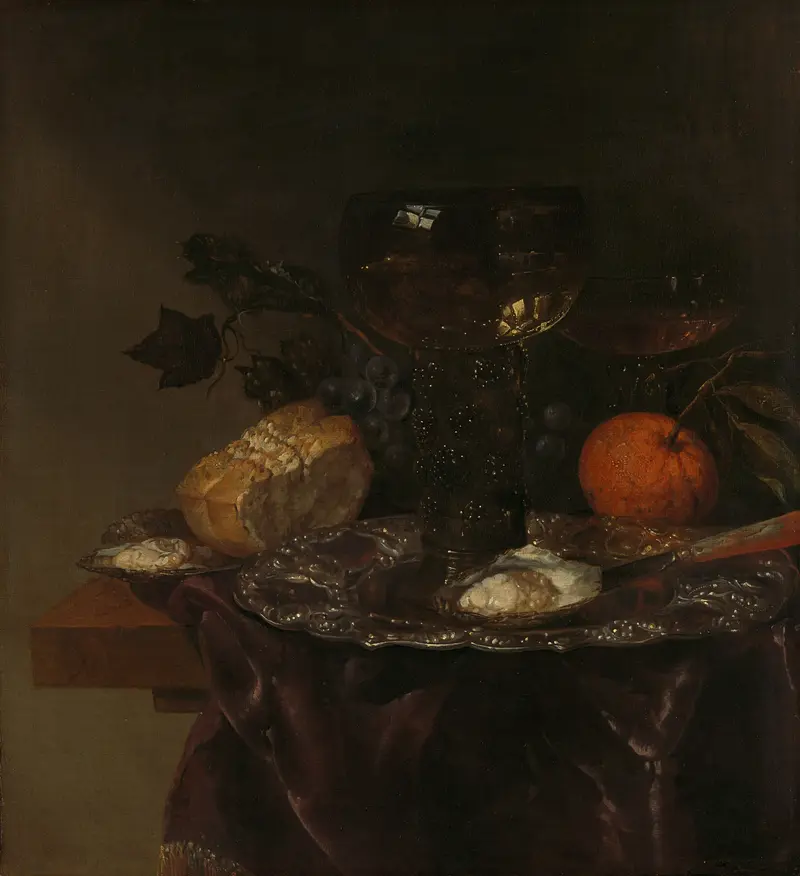
Still Life
Abraham van Beyeren
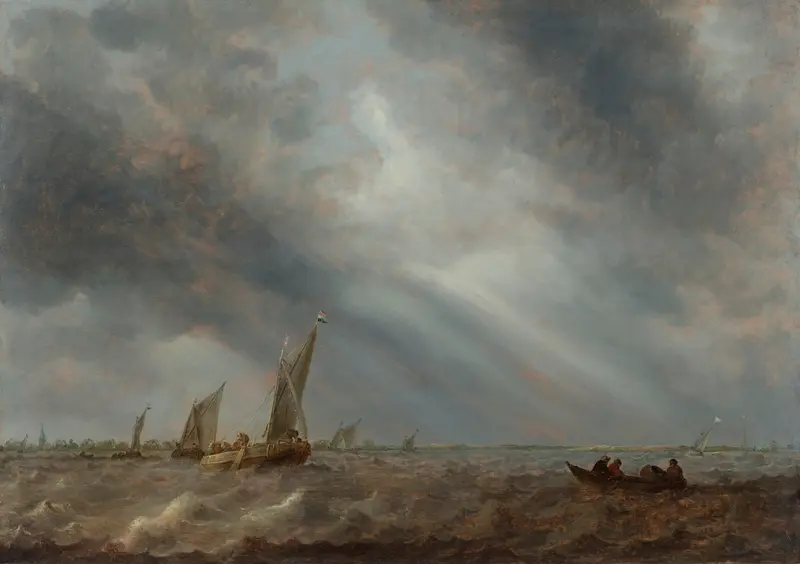
Various sailing vessels and a rowing boat with fishermen on choppy waters under a stormy sky
Abraham van Beyeren
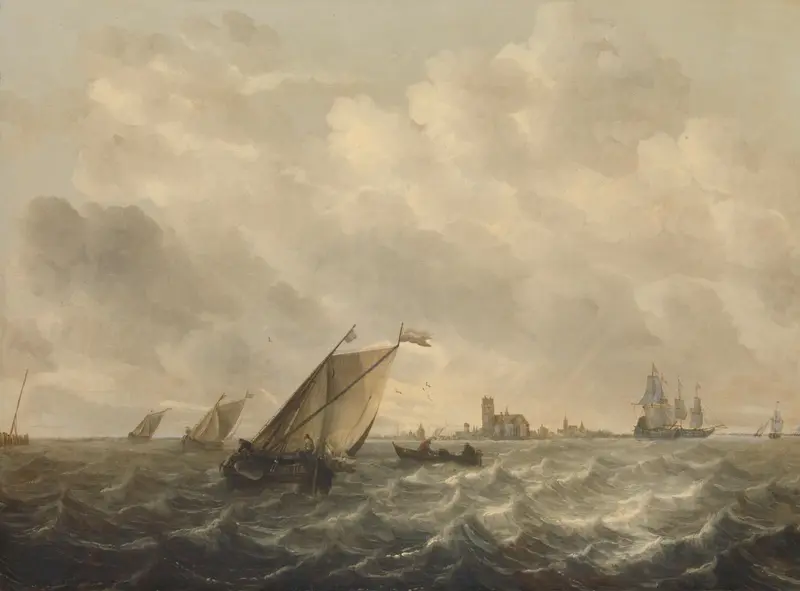
River View
Abraham van Beyeren
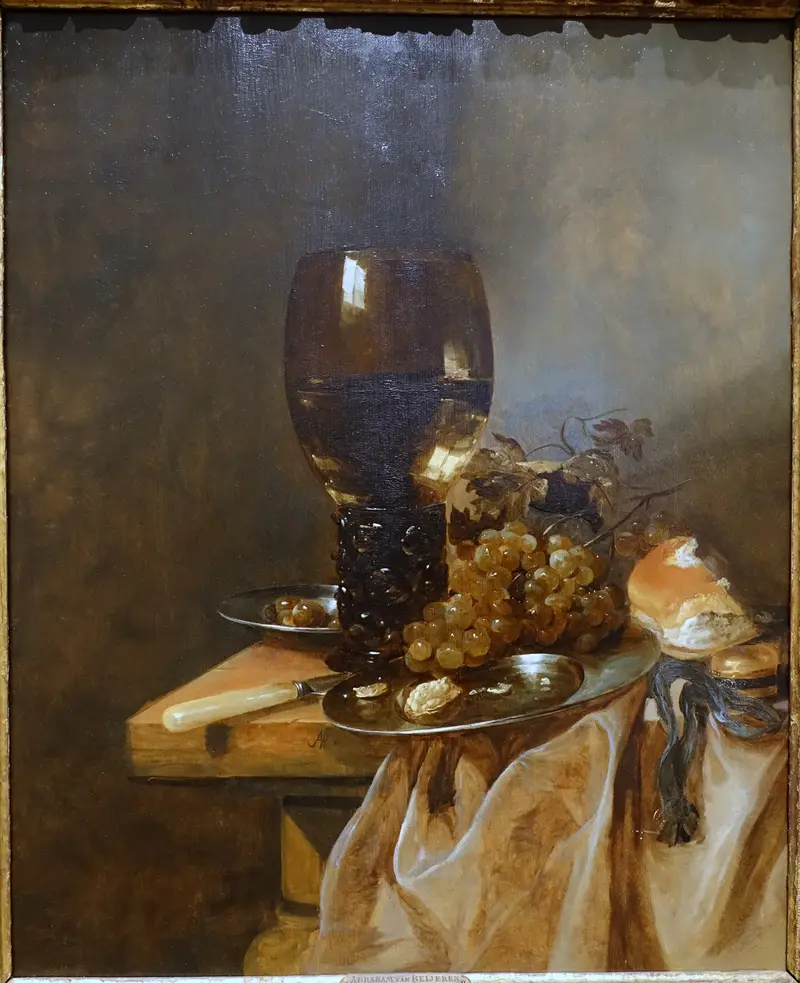
A Roemer with Grapes, a Pewter Plate and a Roll
Abraham van Beyeren
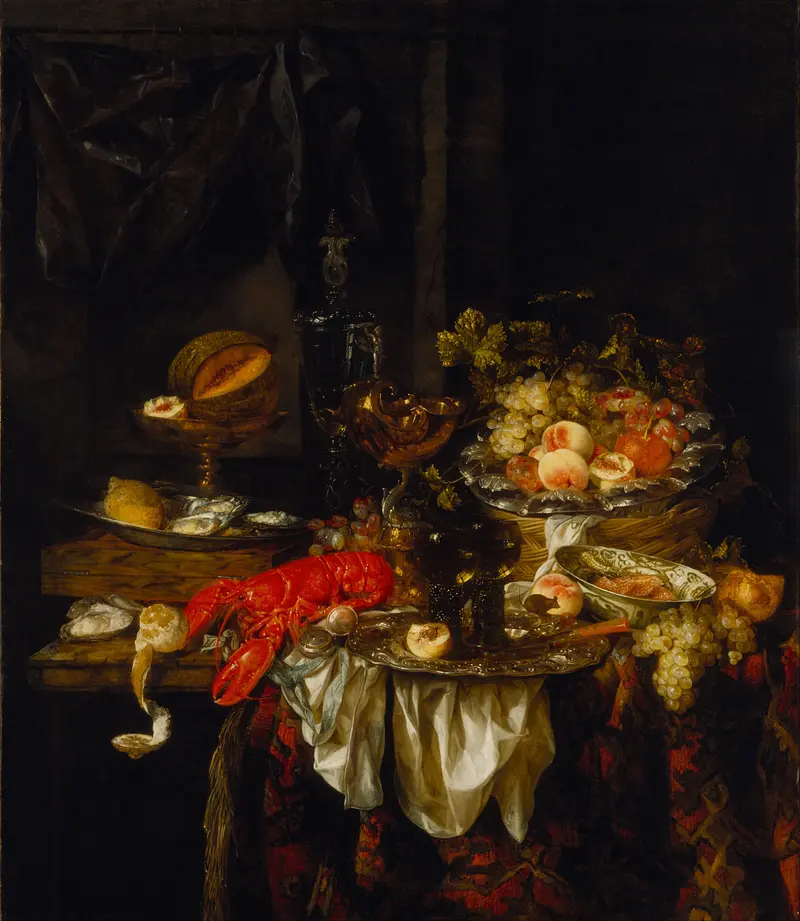
Banquet Still Life
Abraham van Beyeren
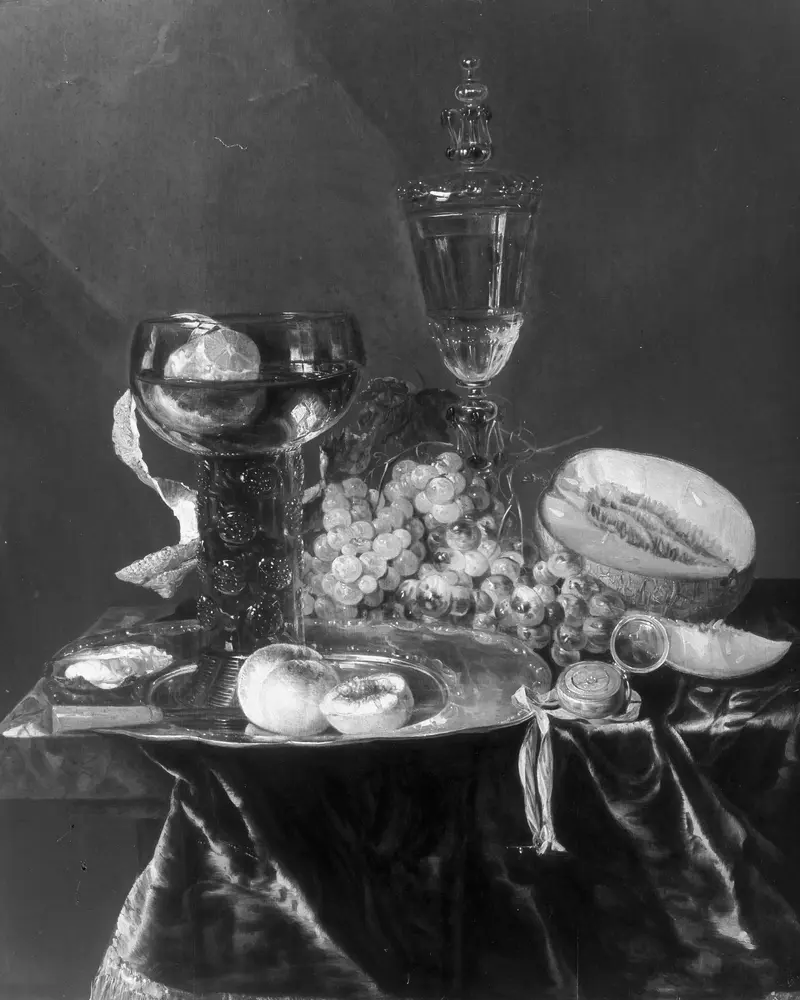
Still life with a glass lid goblet
Abraham van Beyeren
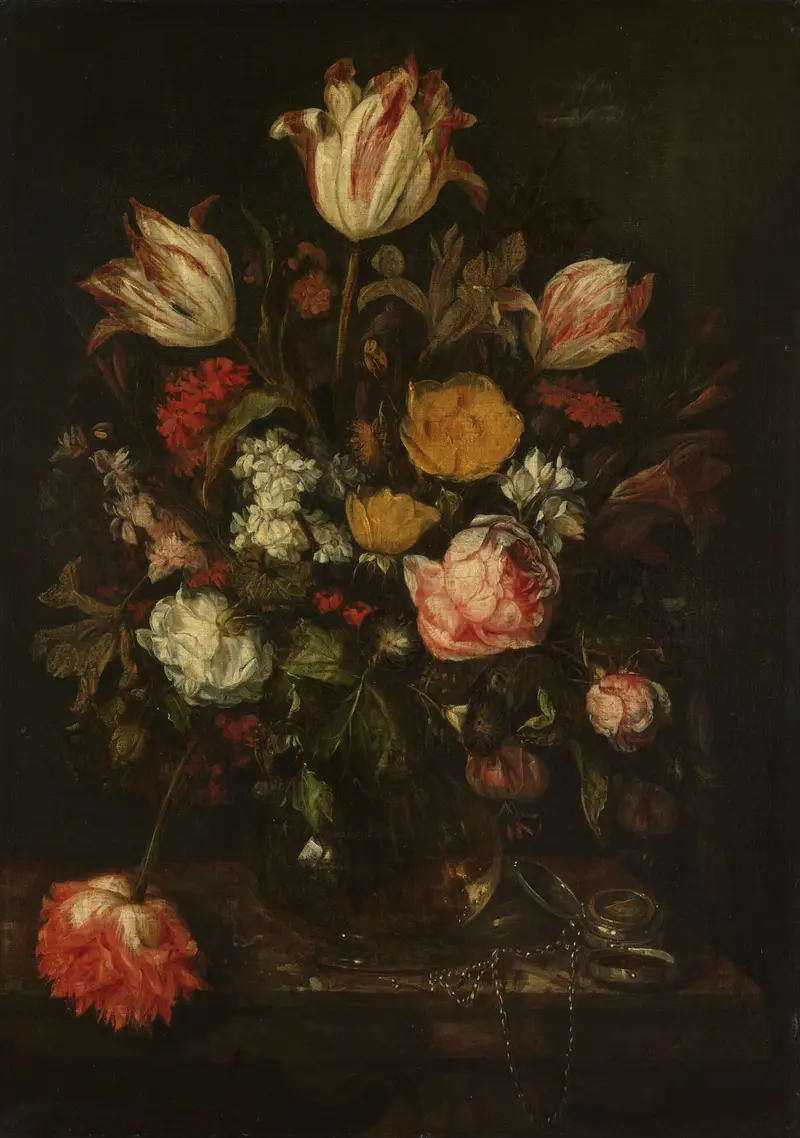
Still life with flowers
Abraham van Beyeren
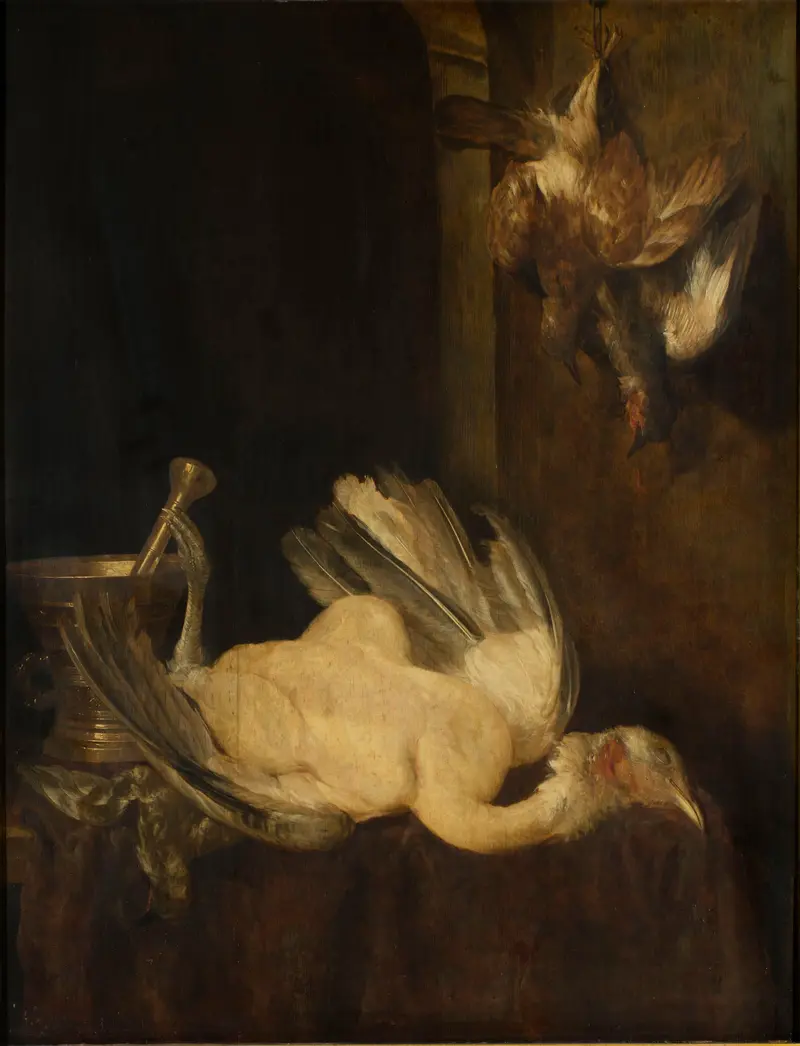
Still life with dead birds
Abraham van Beyeren
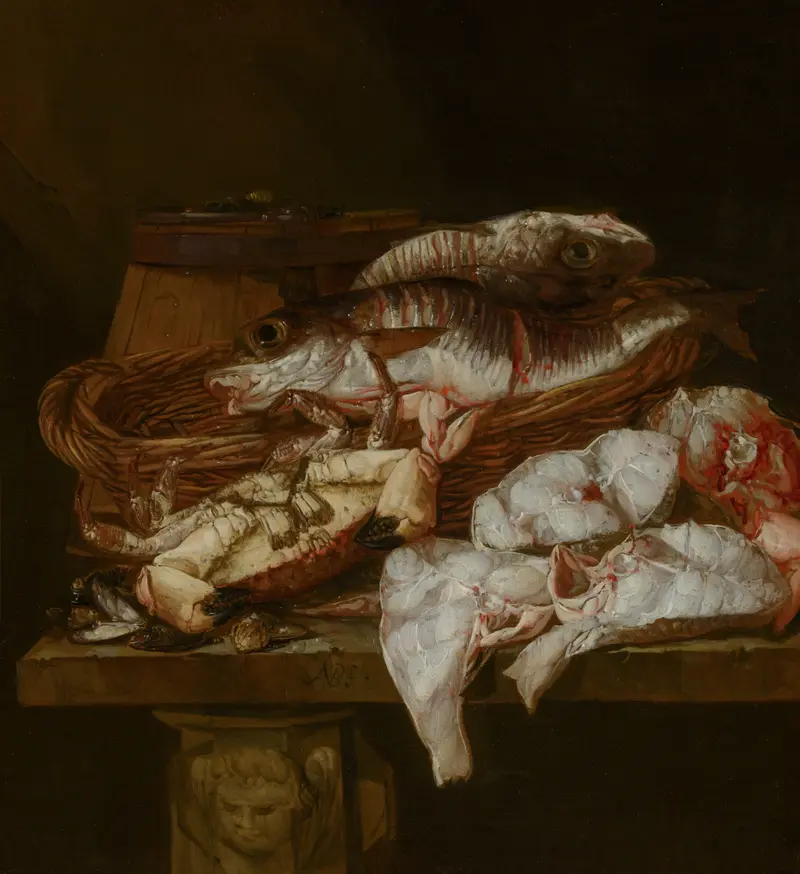
Still Life with Seafood
Abraham van Beyeren





