
Sonnenblumen vor meiner Wohnung — History & Facts
What first catches the eye in Sonnenblumen vor meiner Wohnung is the sheer exuberance of the sunflowers, their faces turned in every direction, crowding the foreground with a kind of stubborn cheer. The painter, Hermann Max Pechstein, gives each bloom its own character—some upright and round, others drooping or half-turned, as if caught mid-conversation. The thick, confident brushstrokes carve out the stalks and leaves, while the sunflowers’ yellows blaze against a backdrop of deep purples and blues.
The fence posts and the shadowed house beyond set the stage, but it is the living tangle of green and gold that commands the scene, drawing the viewer into a private garden moment just outside the artist’s own window. Painted in 1932, this work stands at the crossroads of a turbulent era in Germany, when artists like Pechstein—once a member of the Brücke group—sought refuge in nature and color from the anxieties of the time. Expressionist painters often turned to gardens and flowers, not as idle decoration, but as declarations of vitality and resistance. The painting’s bold palette and rhythmic composition recall the energy of Brücke canvases from earlier decades, yet here the mood is more contemplative: the sunflowers are both sentinels and companions, rooted and resilient.
Today, Sonnenblumen vor meiner Wohnung belongs to the Brücke-Museum Berlin, a fitting home for a work that pulses with the spirit of a movement and a moment—inviting us to linger, and look again.
More Artworks by Hermann Max Pechstein
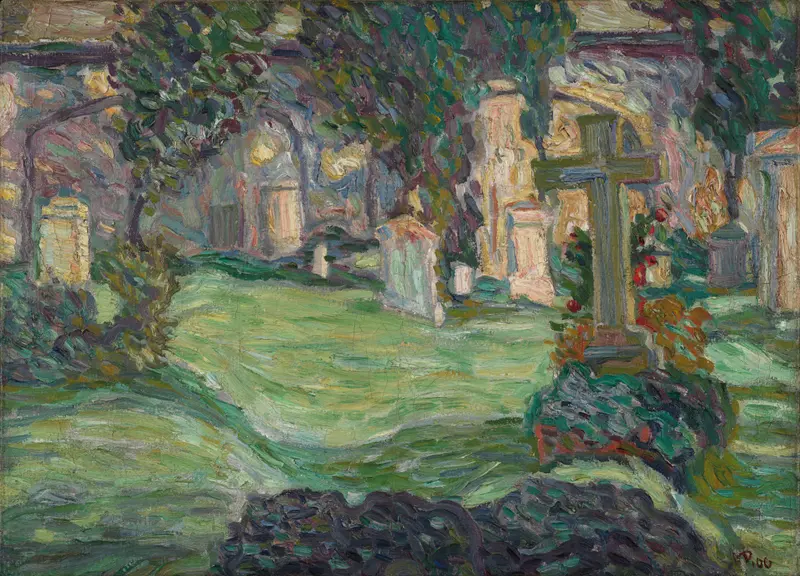
Max Pechstein Eliasfriedhof in Dresden
Hermann Max Pechstein

Früchte
Hermann Max Pechstein
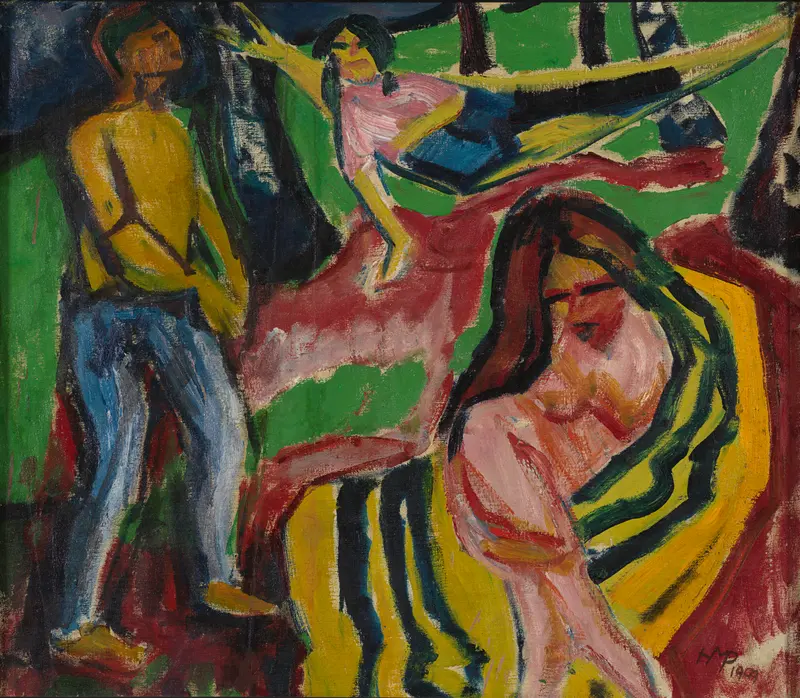
Im Wald bei Moritzburg
Hermann Max Pechstein
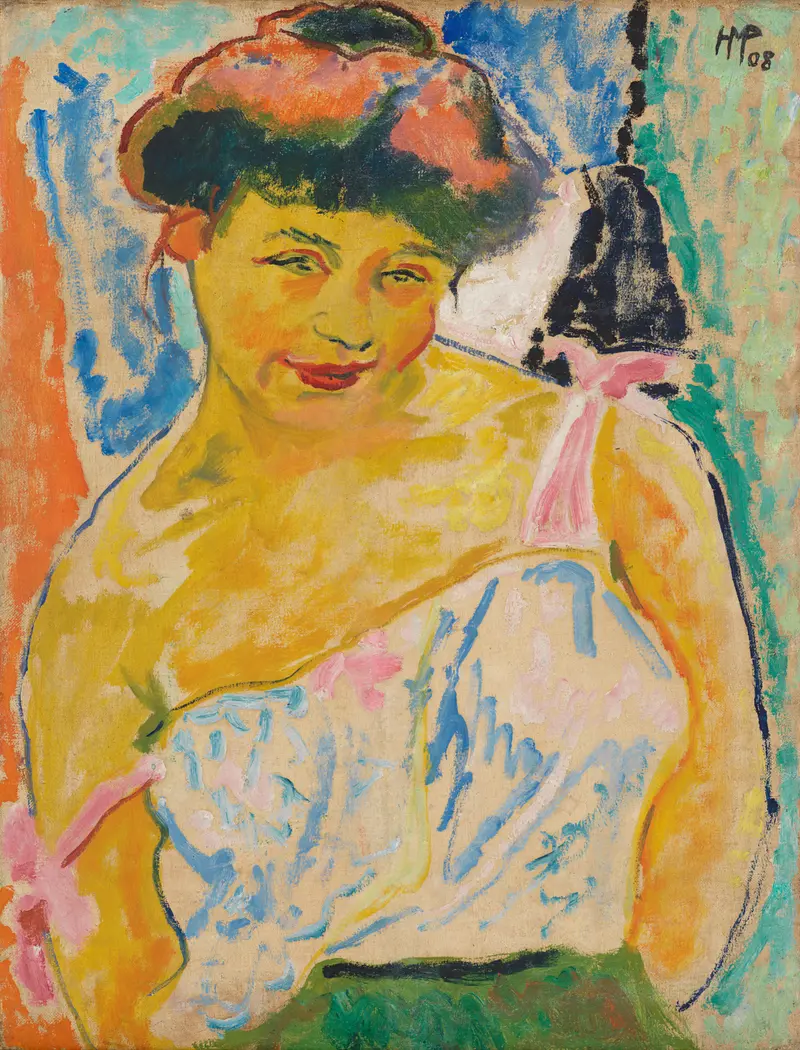
Junges Mädchen
Hermann Max Pechstein
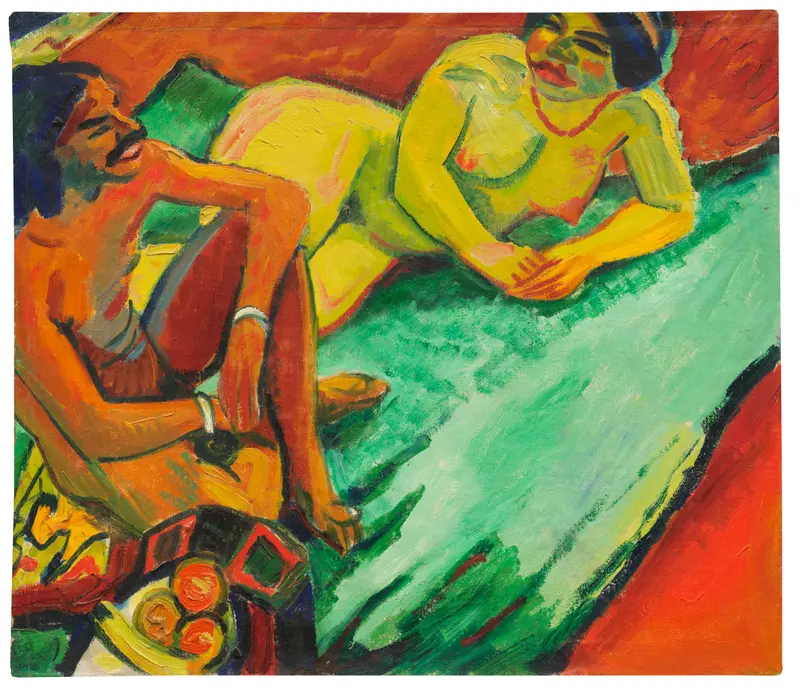
Weib mit Inder auf Teppich
Hermann Max Pechstein
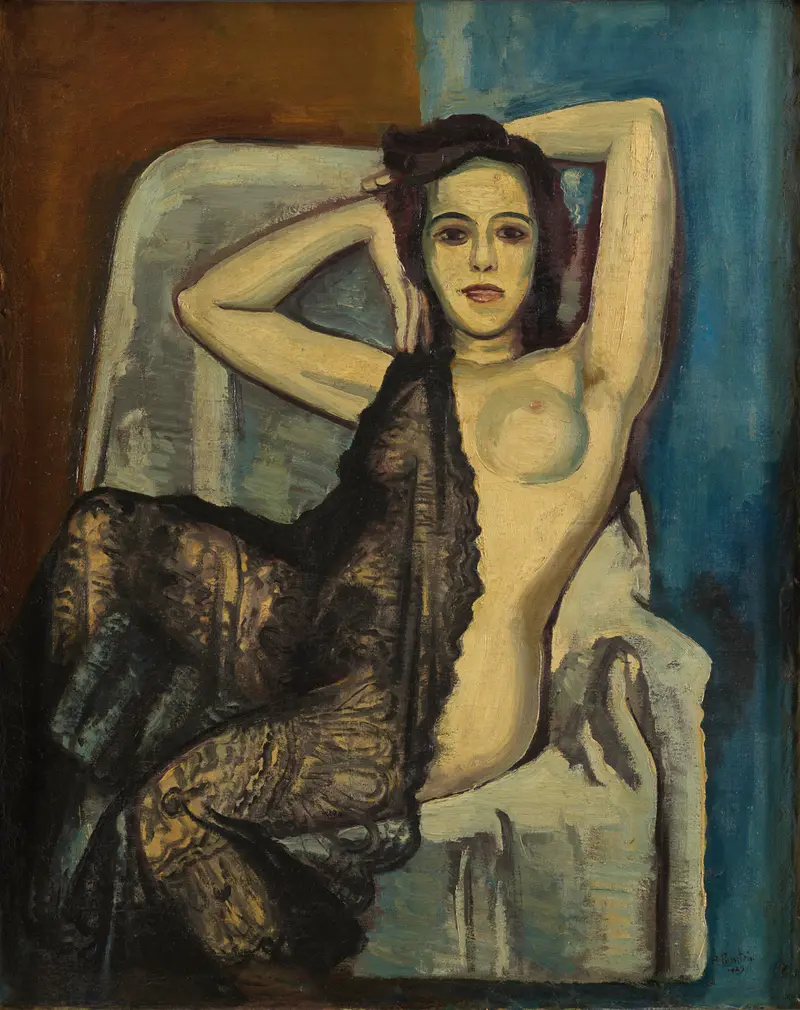
Max Pechstein Mädchen mit Schleier
Hermann Max Pechstein
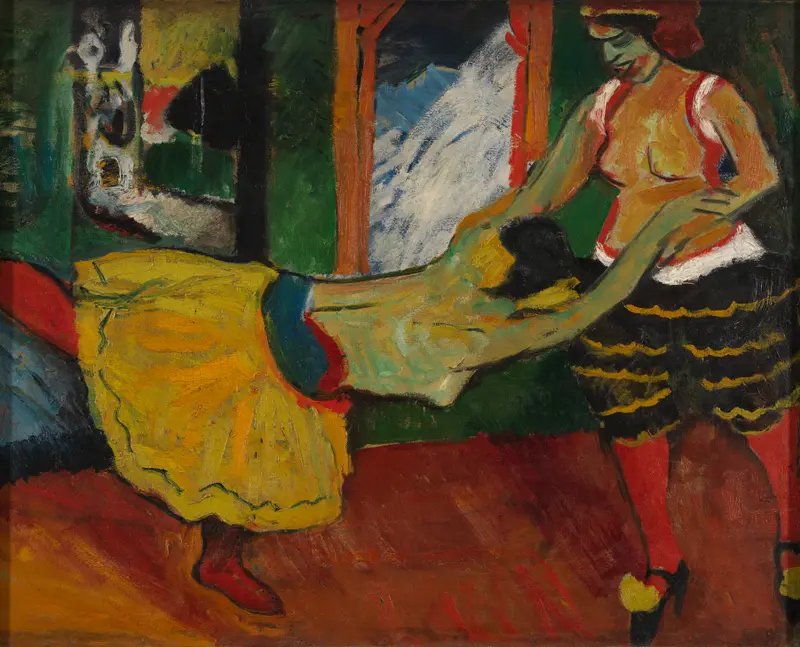
Max Pechstein Tanz
Hermann Max Pechstein
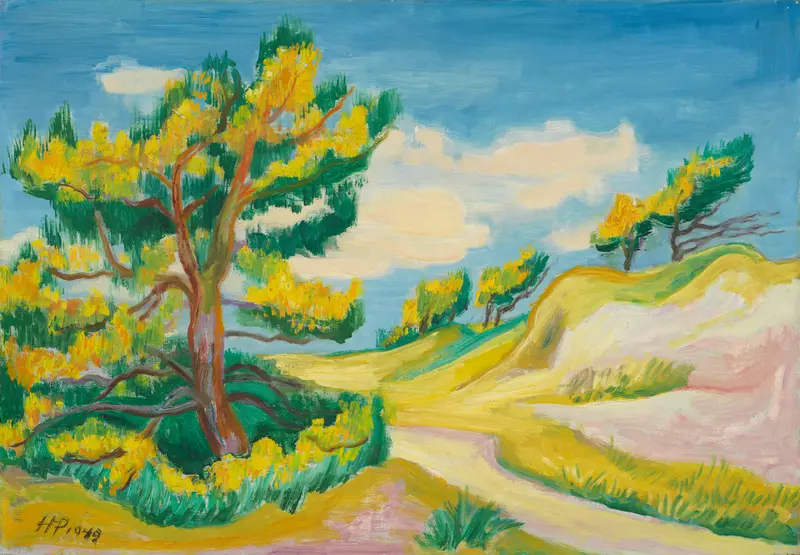
Blühende Kiefern in den Dünen
Hermann Max Pechstein

Die Quelle
Hermann Max Pechstein
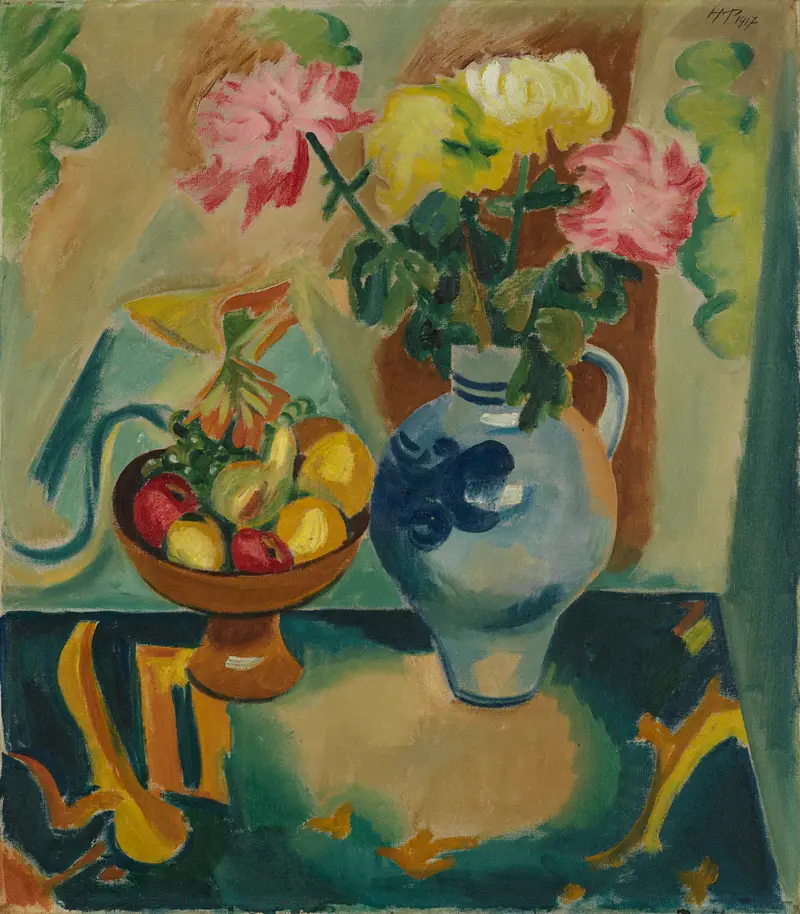
Stilleben mit Chrysanthemen und Früchten
Hermann Max Pechstein
More Landscape Art

The Starry Night
Vincent van Gogh

View of Delft
Johannes Vermeer

Water Lilies
Claude Monet

The Grand Canal, Venice, looking north-west from the Ca' Corner to the Ca' Contarini degli Scrigni, with the campanile of Santa Maria della Carità
Canaletto

Windsor Castle
Canaletto

The Grand Canal looking North-East from the Palazzo Dolfin-Manin to the Rialto Bridge
Canaletto