
Street Scene — History & Facts
When Georges Seurat first exhibited Street Scene in 1883, critics were caught off guard by its experimental brushwork, which hinted at the revolutionary technique he would later perfect in A Sunday Afternoon on the Island of La Grande Jatte. This early work stands at the threshold of Seurat's break from traditional Impressionism, capturing a moment when he was still searching for his own visual language. The painting’s debut did not cause a scandal, but it did attract the attention of fellow artists who sensed that something new was stirring in Parisian art circles. The canvas freezes a slice of urban life: figures crossing a broad boulevard, carriages rattling past, and the diffuse light of a Parisian afternoon settling on hats and cobblestones.
The eye is drawn to the interplay of shadows and the subtle division of color, a precursor to the pointillist method Seurat would soon develop. The compositional balance—pedestrians in mid-stride, a child tugging at a mother’s hand—evokes the fleeting rhythms of city life, much as Gustave Caillebotte did in his own street scenes. Here, though, the brushwork is more deliberate, almost analytical, suggesting Seurat’s growing interest in the science of perception. The exact provenance of Street Scene is not fully documented, and the medium remains uncertain, though it is likely oil on canvas given Seurat’s practice at the time.
The painting has passed through several private collections and has occasionally been loaned to major exhibitions exploring the birth of Neo-Impressionism. Today, it stands as a key work from Seurat’s formative years, capturing the moment before his leap into the systematic use of color and light that would define his mature style. As such, it offers a rare glimpse into the evolution of one of the most influential artists of the late nineteenth century.
More Artworks by Georges Seurat
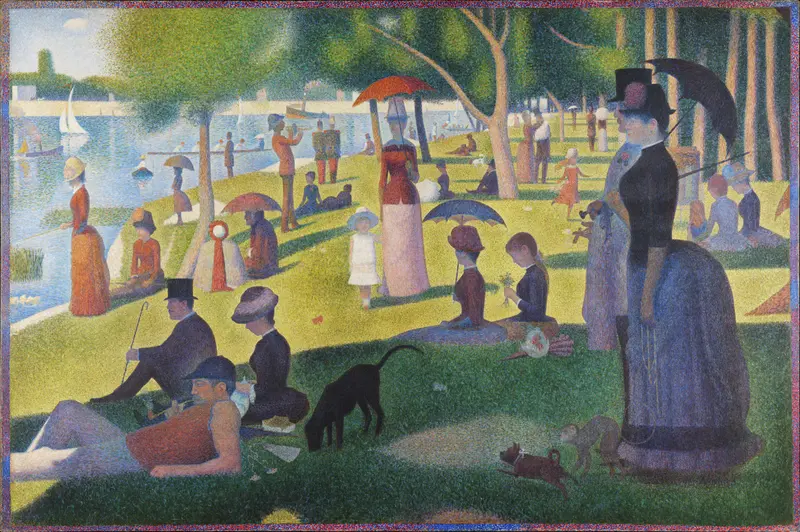
A Sunday Afternoon on the Island of La Grande Jatte
Georges Seurat
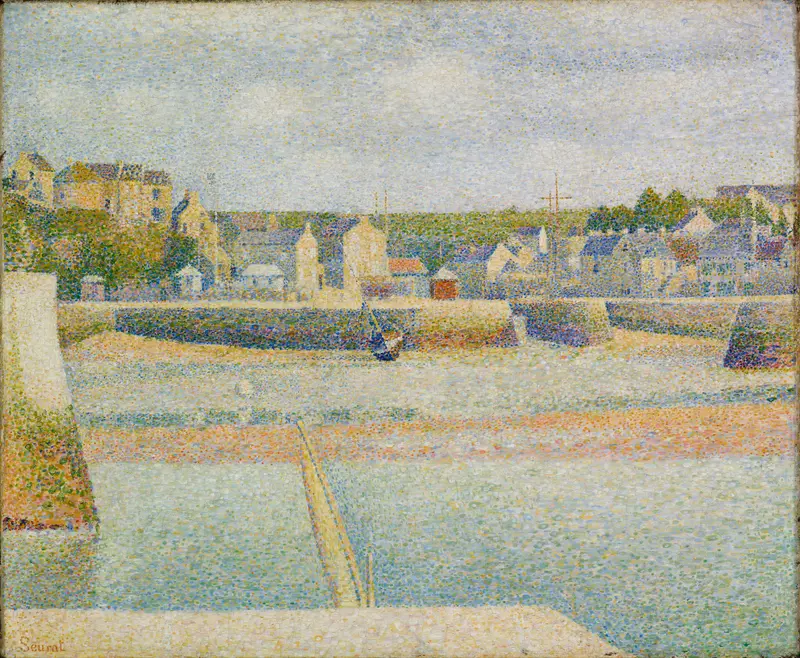
Port-en-Bessin, The Outer Harbor (Low Tide)
Georges Seurat
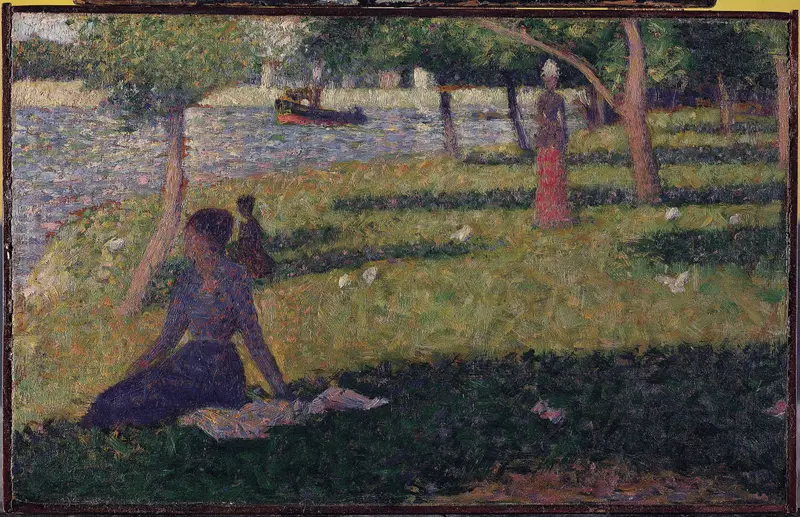
Étude pour ‘La Grande Jatte’ (Study for ‘La Grande Jatte’)
Georges Seurat
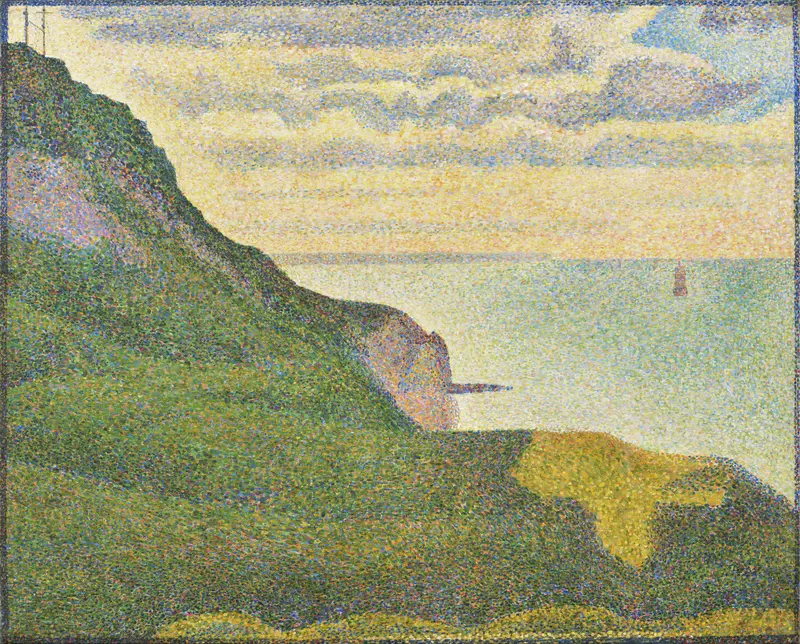
Seascape at Port-en-Bessin,Normandy
Georges Seurat
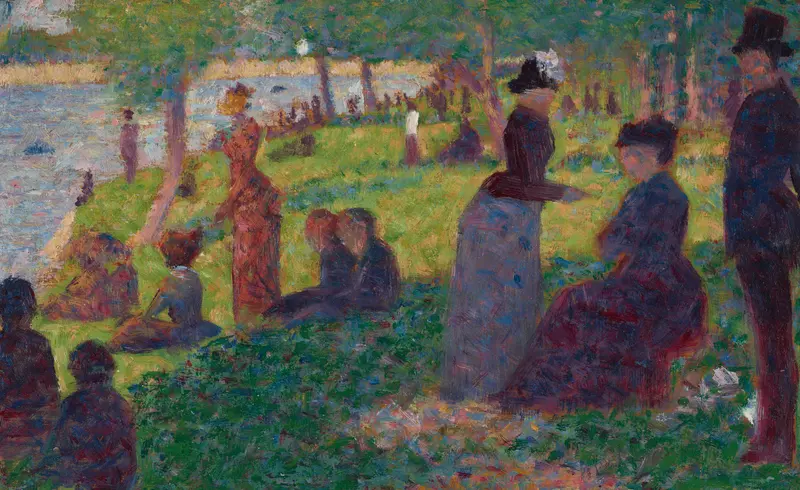
Oil Sketch for "A Sunday on La Grande Jatte — 1884"
Georges Seurat
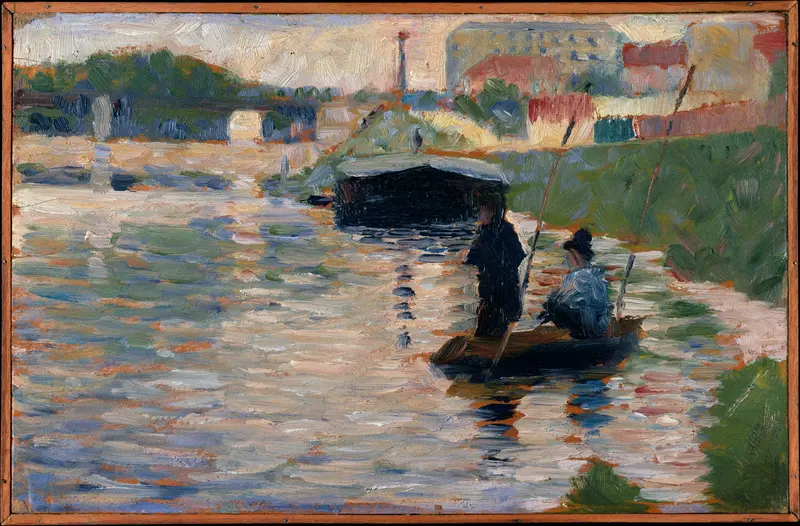
View of the Seine
Georges Seurat
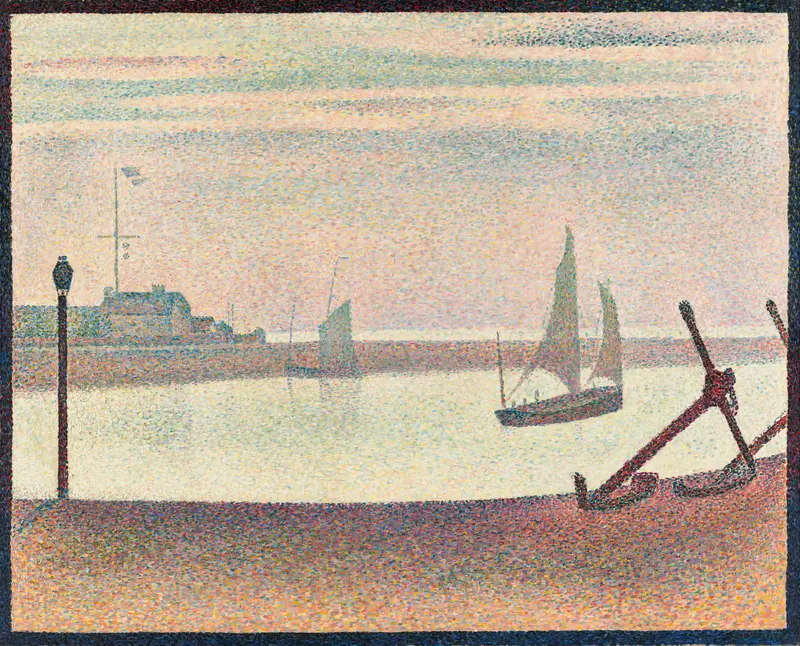
The Channel at Gravelines, Evening
Georges Seurat
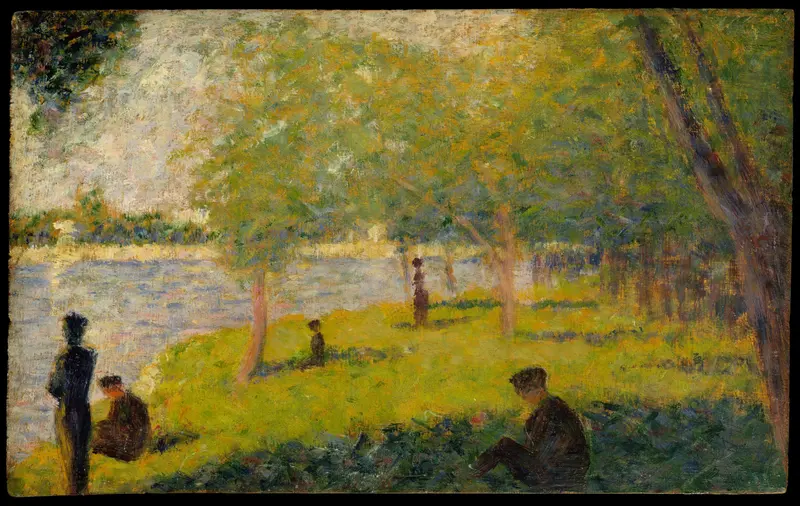
Study for ‘A Sunday on La Grande Jatte’
Georges Seurat
Study for A Sunday on La Grande Jatte
Georges Seurat
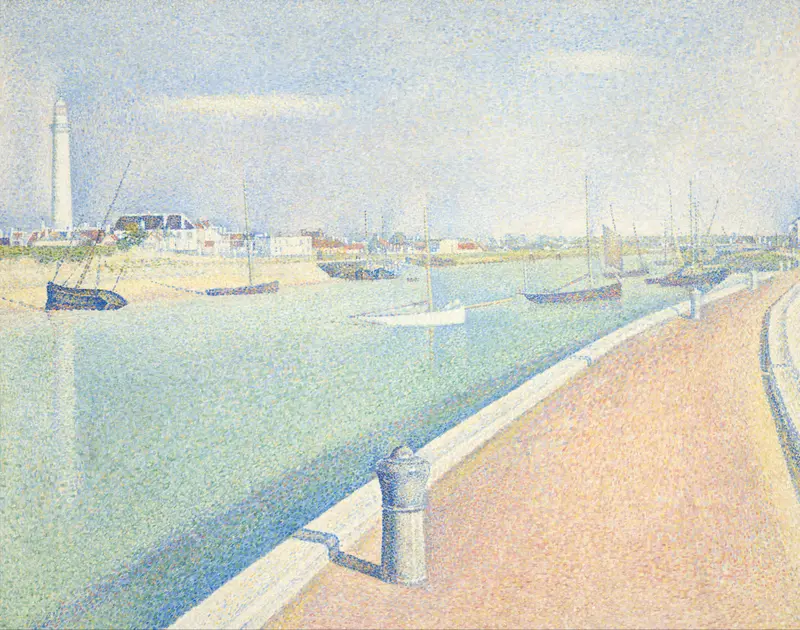
The Channel of Gravelines, Petit Fort Philippe
Georges Seurat
More Genre Scene Art

Banquet of the Officers of the St George Civic Guard
Frans Hals

Rembrandt and Saskia in the Scene of the Prodigal Son
Rembrandt van Rijn

Bal du moulin de la Galette
Pierre-Auguste Renoir

Quadrille at the Moulin Rouge
Henri de Toulouse-Lautrec

A Burial at Ornans
Gustave Courbet

When Will You Marry?
Paul Gauguin