
Street urchin with guitar — History & Facts
What first catches the eye in Street urchin with guitar is the sharp contrast between the boy’s ragged elegance and the oversized guitar he cradles with practiced hands. His gaze is fixed, not on the viewer, but somewhere off to the side, as if lost in the music or the promise of a coin tossed his way. The artist, Antonio Mancini, frames the boy against a lively, painted backdrop—perhaps a circus poster—its orange letters and striped figure hinting at a world of spectacle just out of reach.
The boy’s dark curls and flushed cheeks are rendered with a tactile immediacy, while the battered velvet jacket and makeshift medallion at his throat speak to a life lived on the margins, yet not without pride. Painted in 1877, this work belongs to a moment in European art when the realities of street life began to command the attention of painters and audiences alike. In the late nineteenth century, images of working children and street performers became a favored subject for artists seeking to capture the grit and vitality of modern cities. Mancini was among those who, inspired by both the academic tradition and the new realism, brought a searching eye to the overlooked corners of society.
While history has kept few traces of this particular painting’s journey, its presence in the mostrabelleepoque.it collection reminds us how the art of that era could transform even the humblest subject into a scene of vivid humanity—inviting us to linger over every detail, from the boy’s intent fingers to the painted harlequin dancing behind him.
More Artworks by Antonio Mancini

Portrait of a lady
Antonio Mancini
Self-Portrait
Antonio Mancini
The Flower Seller
Antonio Mancini
The Saltimbanco
Antonio Mancini
The sick child
Antonio Mancini
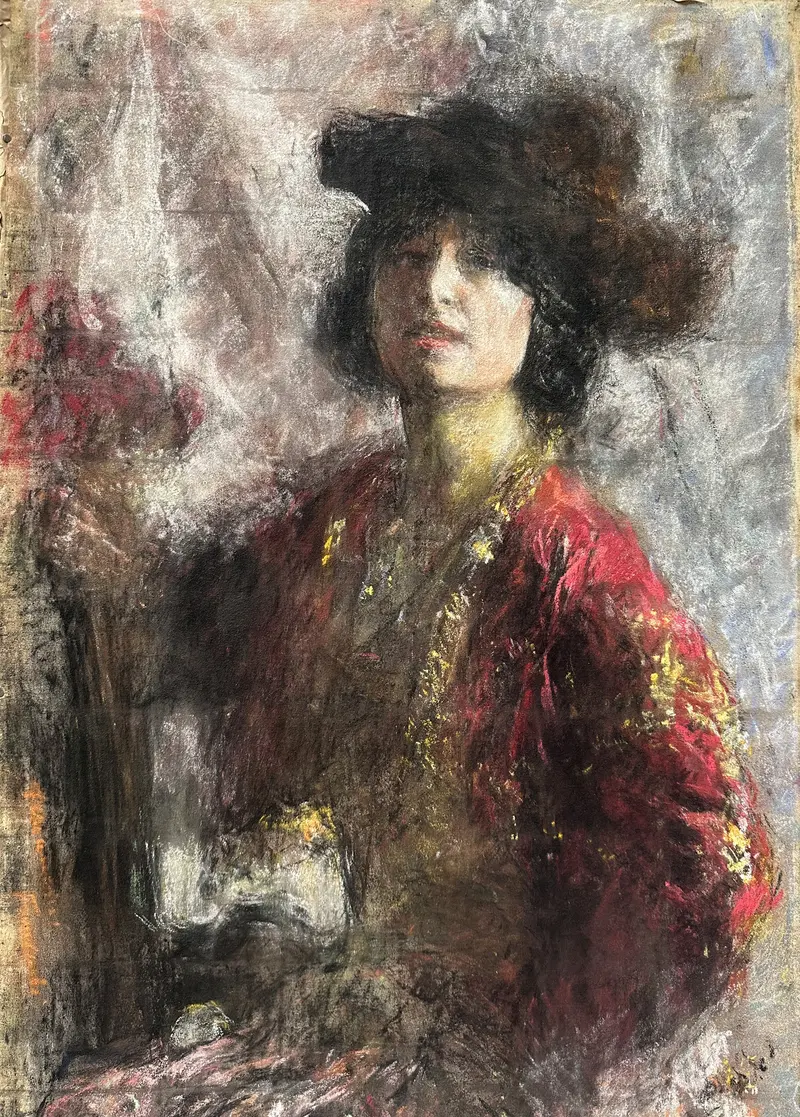
Bolero. Bullfighter
Antonio Mancini
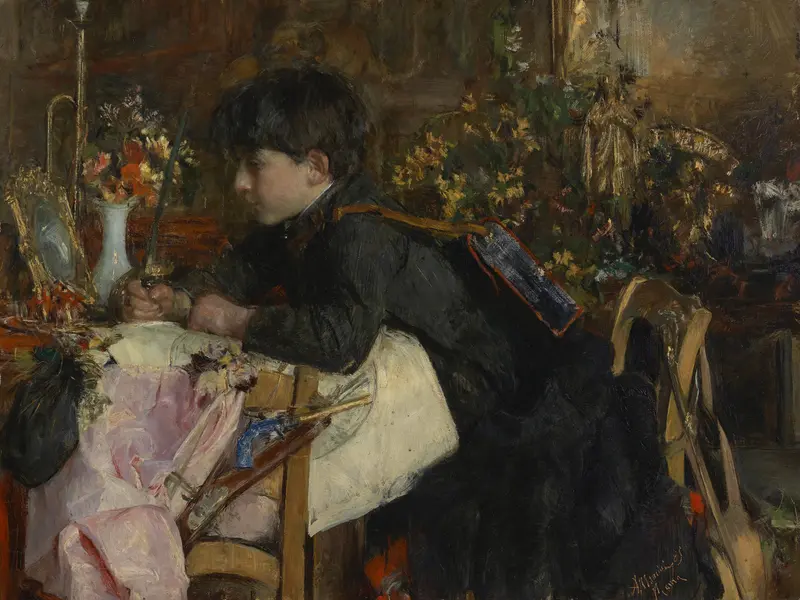
The birthday
Antonio Mancini
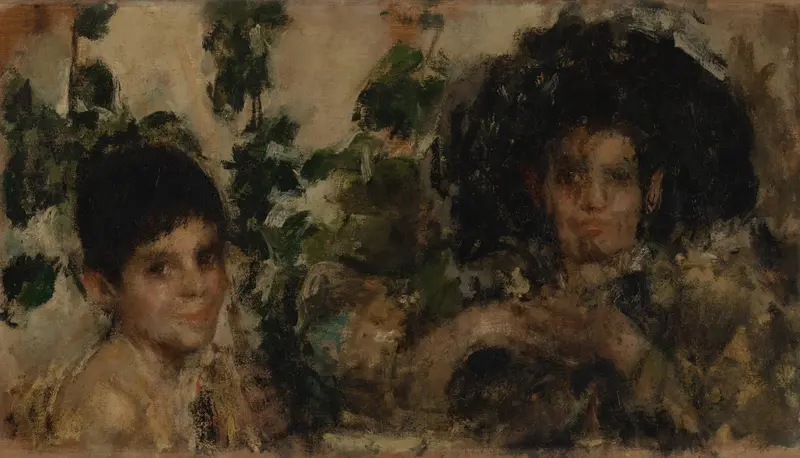
The brothers
Antonio Mancini
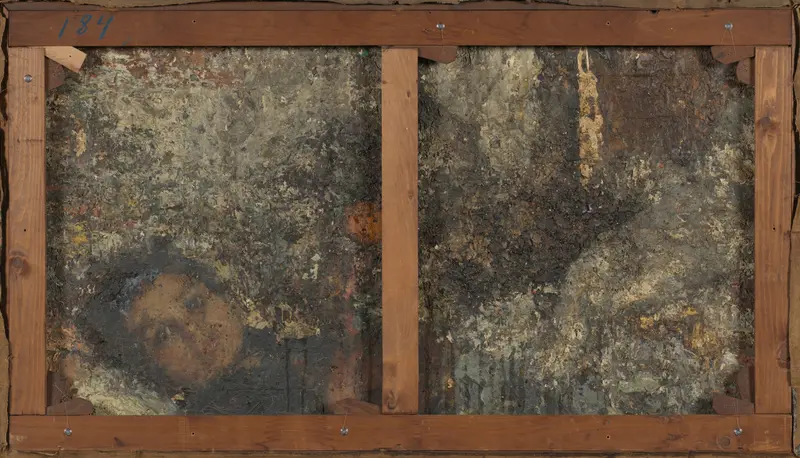
Liggend kind hwm0184v The Mesdag Collection
Antonio Mancini
Servetta
Antonio Mancini
More Genre Scene Art

Banquet of the Officers of the St George Civic Guard
Frans Hals

Rembrandt and Saskia in the Scene of the Prodigal Son
Rembrandt van Rijn

Bal du moulin de la Galette
Pierre-Auguste Renoir

Quadrille at the Moulin Rouge
Henri de Toulouse-Lautrec

A Burial at Ornans
Gustave Courbet

When Will You Marry?
Paul Gauguin