
Study for "Bathers at Asnières" — History & Facts
When Georges Seurat began work on his ambitious painting Bathers at Asnières in the early 1880s, he was only in his early twenties and virtually unknown in the Parisian art world. What is remarkable about this particular study is that it marks one of Seurat’s first forays into the large-scale compositions and careful observation of modern life that would later define his career. The subject—a group of working-class Parisians relaxing by the Seine—was a bold choice at a time when such scenes were rarely given monumental treatment.
This study stands as a crucial step in Seurat’s painstaking process, revealing the artist’s methodical approach and his early experiments with light, color, and form. The study captures a quiet afternoon on the banks of the Seine at Asnières, a suburb just north of Paris. Young men lounge on the grass, some gazing across the water, others lost in thought, their bodies arranged in a gentle rhythm that guides the viewer’s eye from one figure to the next. The river shimmers in the background, its surface broken by the silhouettes of distant factories—a subtle reminder of the industrial world encroaching on leisure.
Seurat’s careful placement of each figure and the soft, almost hazy handling of light recall the influence of Impressionism, yet his attention to structure and geometry hints at the new direction he would soon take. Unlike the lively, bustling riverside scenes of Claude Monet or Pierre-Auguste Renoir, Seurat’s study is marked by a sense of calm and introspection. The exact medium of this study remains uncertain, but it is likely oil on canvas or panel, as was typical for preparatory works of the period. While the finished Bathers at Asnières now hangs in the National Gallery, London, this study survives as a testament to Seurat’s rigorous working method—he produced numerous sketches and oil studies before tackling the final canvas.
The study has passed through private hands and exhibitions, valued both as a glimpse into Seurat’s evolving technique and as an independent work of art. Today, it is prized by scholars for the insight it offers into the early stages of Seurat’s innovative approach, standing at the threshold of his later development of Pointillism and his leading role in the Neo-Impressionist movement.
More Artworks by Georges Seurat
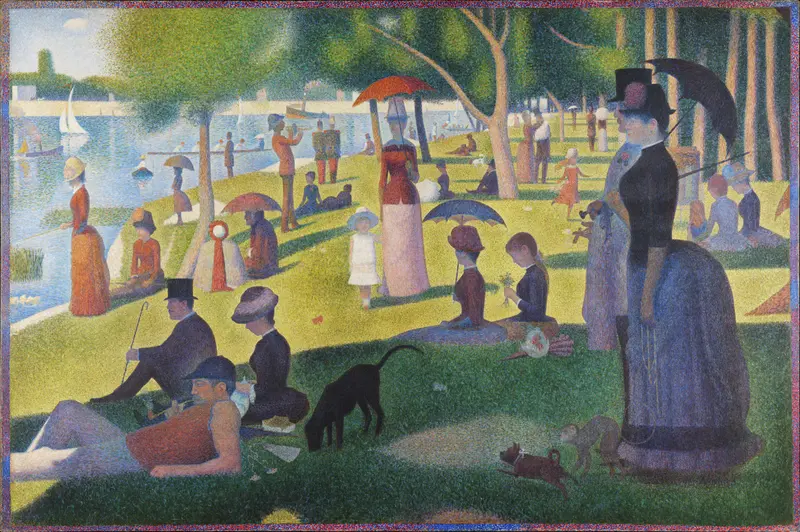
A Sunday Afternoon on the Island of La Grande Jatte
Georges Seurat
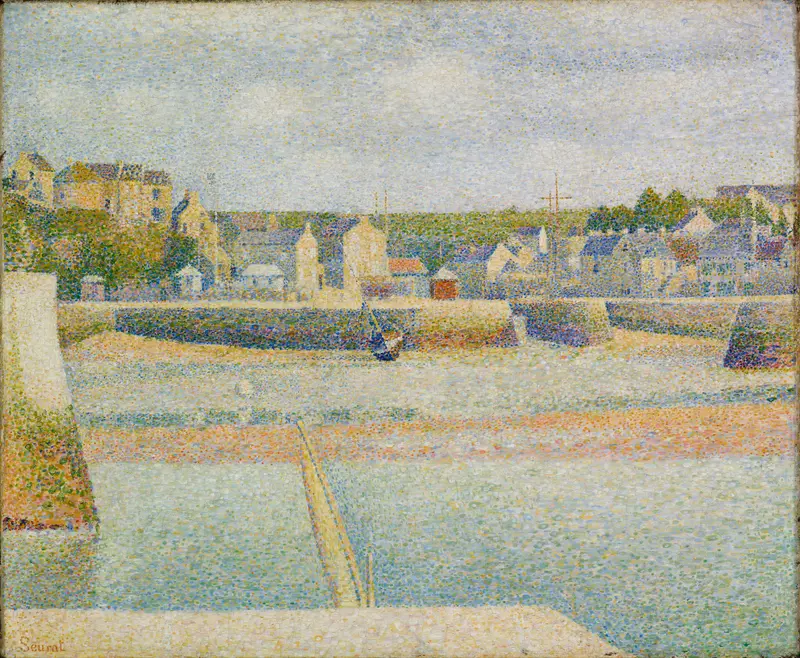
Port-en-Bessin, The Outer Harbor (Low Tide)
Georges Seurat
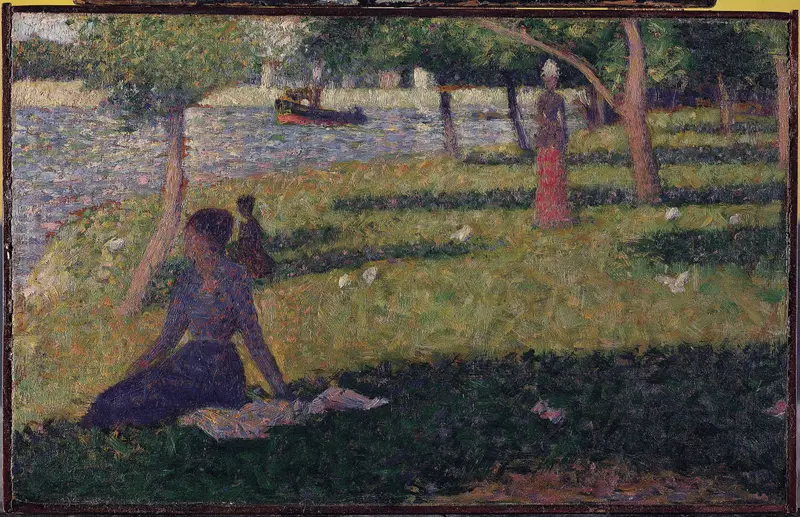
Étude pour ‘La Grande Jatte’ (Study for ‘La Grande Jatte’)
Georges Seurat
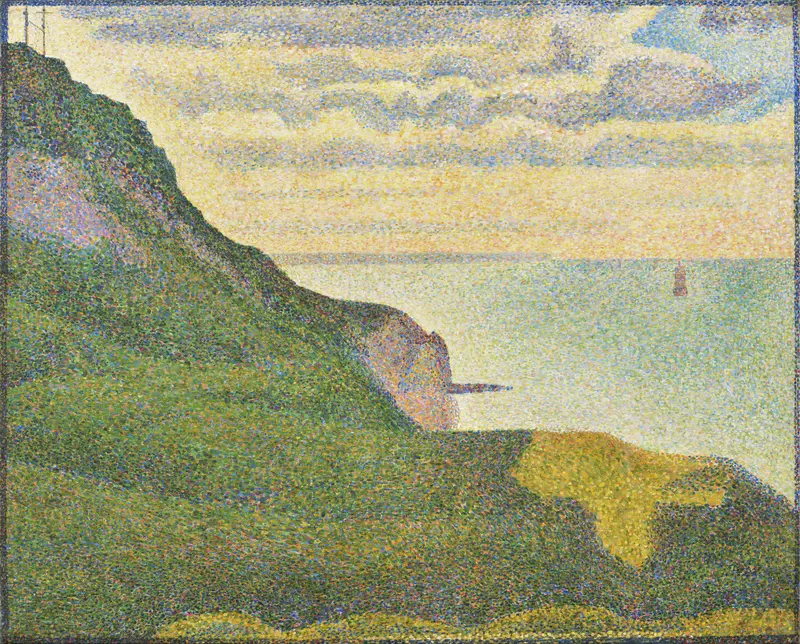
Seascape at Port-en-Bessin,Normandy
Georges Seurat
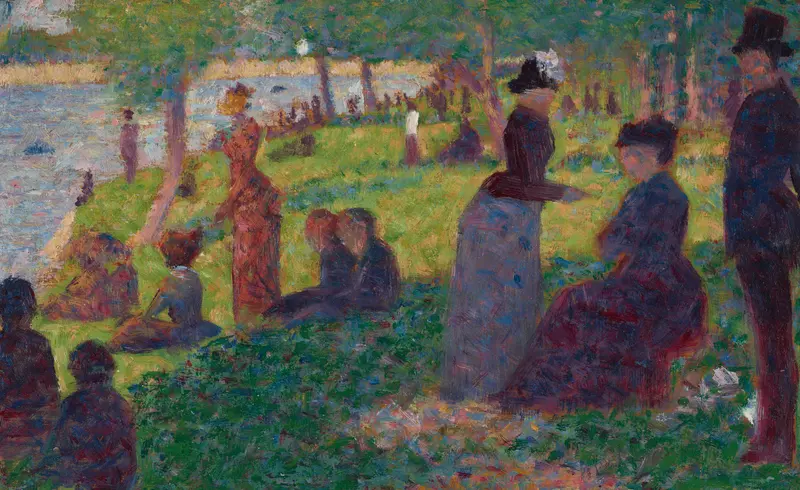
Oil Sketch for "A Sunday on La Grande Jatte — 1884"
Georges Seurat
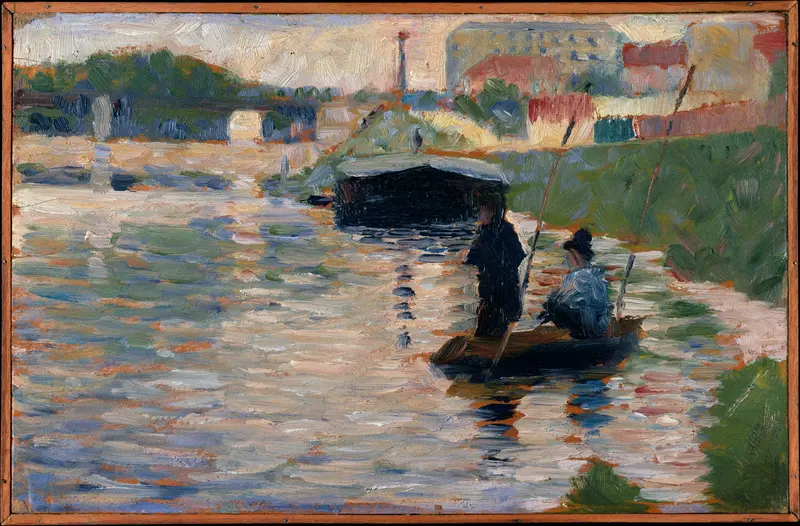
View of the Seine
Georges Seurat
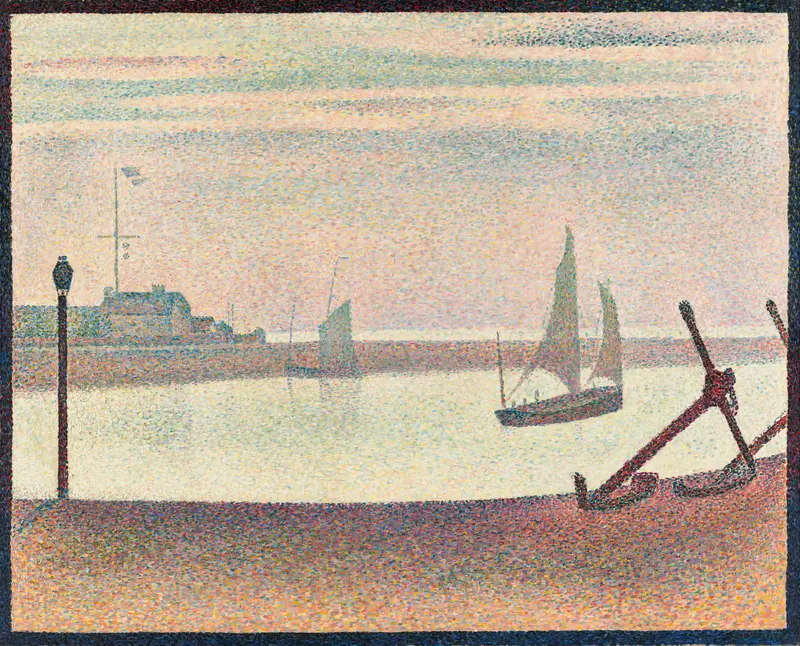
The Channel at Gravelines, Evening
Georges Seurat
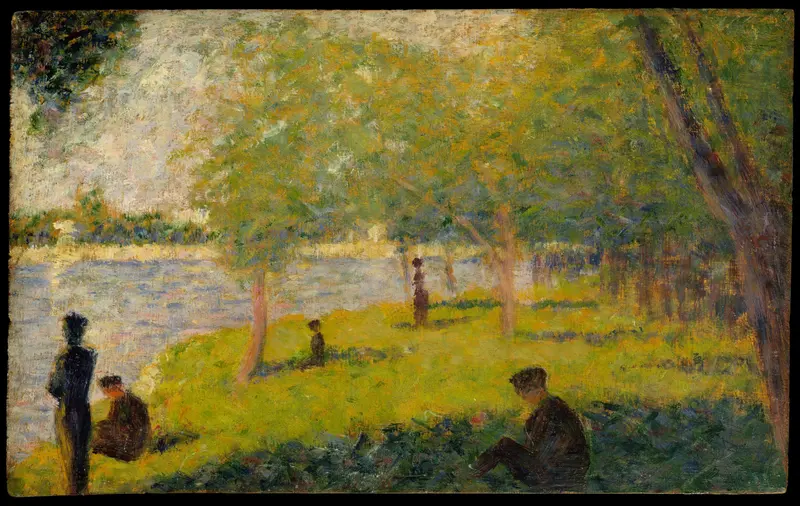
Study for ‘A Sunday on La Grande Jatte’
Georges Seurat
Study for A Sunday on La Grande Jatte
Georges Seurat
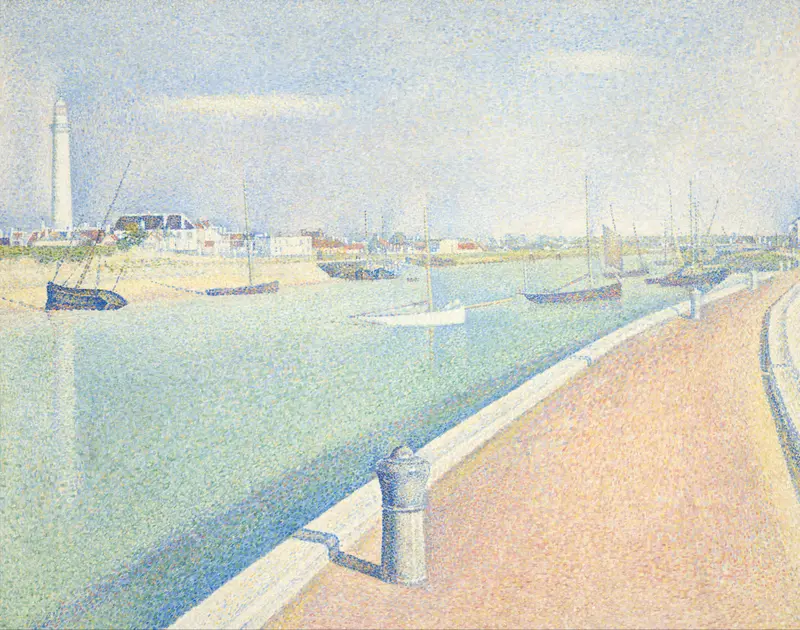
The Channel of Gravelines, Petit Fort Philippe
Georges Seurat
More Genre Scene Art

Banquet of the Officers of the St George Civic Guard
Frans Hals

Rembrandt and Saskia in the Scene of the Prodigal Son
Rembrandt van Rijn

Bal du moulin de la Galette
Pierre-Auguste Renoir

Quadrille at the Moulin Rouge
Henri de Toulouse-Lautrec

A Burial at Ornans
Gustave Courbet

When Will You Marry?
Paul Gauguin