Summer Garden, Plate 11 (Hortus Eystettensis) — History & Facts
What first draws the eye in Summer Garden, Plate 11 (Hortus Eystettensis) is the sheer abundance and intricacy of the blooms, each petal and leaf rendered with a clarity that feels almost botanical in its intent. The artist, Basilius Besler, has arranged the stems and blossoms so that they seem to tumble naturally across the page, yet every contour is carefully considered—light falls across the veins of each leaf, casting delicate shadows that suggest both volume and fragility. The flowers themselves, labeled Alcea Syriaca flore candido, are caught in various stages of bloom, from tightly furled buds to wide-open faces, their overlapping forms drawing the viewer into a quiet study of growth and transformation. This plate belongs to a world where science and art were beginning to entwine, as scholars and collectors sought to catalogue the wonders of nature with unprecedented precision.
Created in 1640, as noted in the source, this image is part of a celebrated tradition of botanical illustration that flourished in early modern Europe—an era when wealthy patrons commissioned lavish florilegia to document the rare and exotic plants cultivated in their gardens. The Hortus Eystettensis, from which this plate comes, is a landmark of this genre, capturing the ambition and curiosity of its age. While history has kept few traces of the individual journey of this particular sheet, its careful draftsmanship and scientific labeling invite the viewer to linger, searching the interplay of line and shadow for the secrets of a summer garden four centuries past.
More Artworks by Basilius Besler
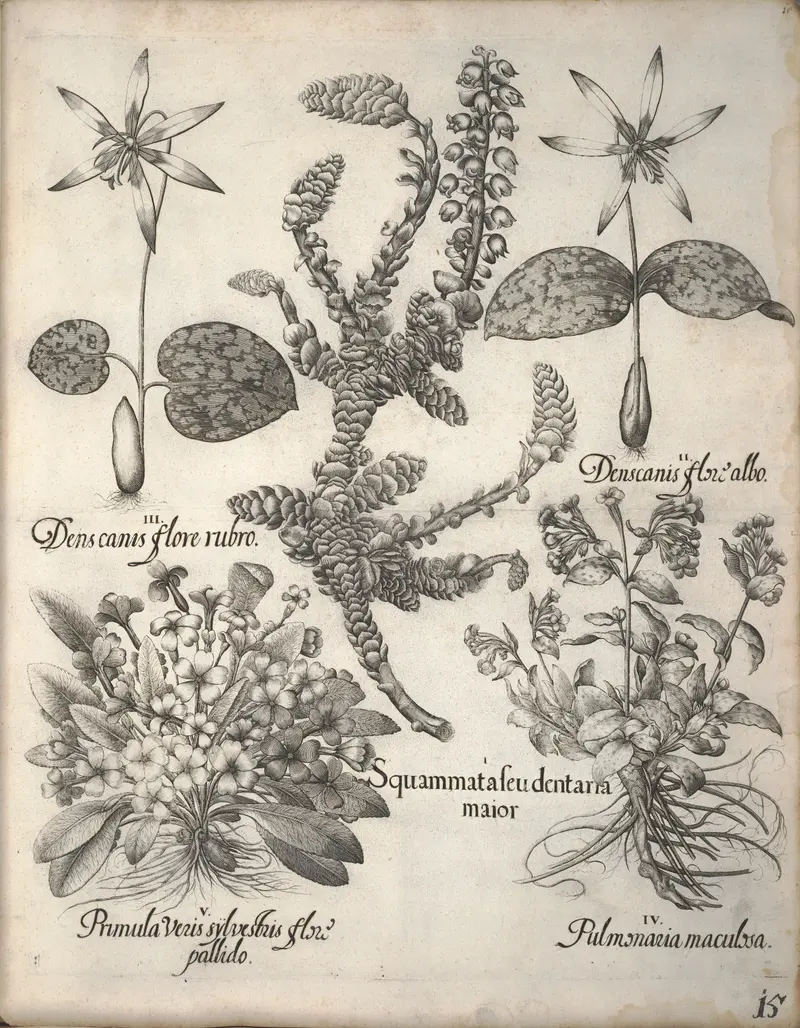
Spring Garden, Plate 15 (Hortus Eystettensis)
Basilius Besler
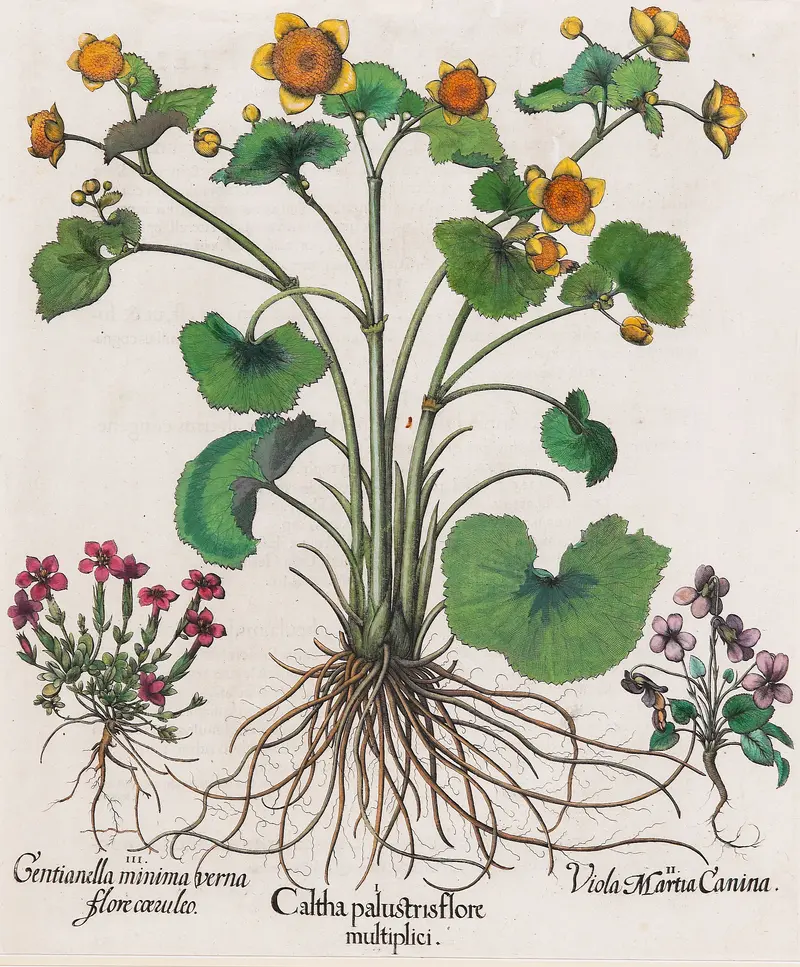
Marsh Marigold (Caltha palustris)
Basilius Besler

Tulips (Hortus Eystettensis)
Basilius Besler

Tulips II (Hortus Eystettensis)
Basilius Besler

Snapdragons (Antirrhinum)
Basilius Besler
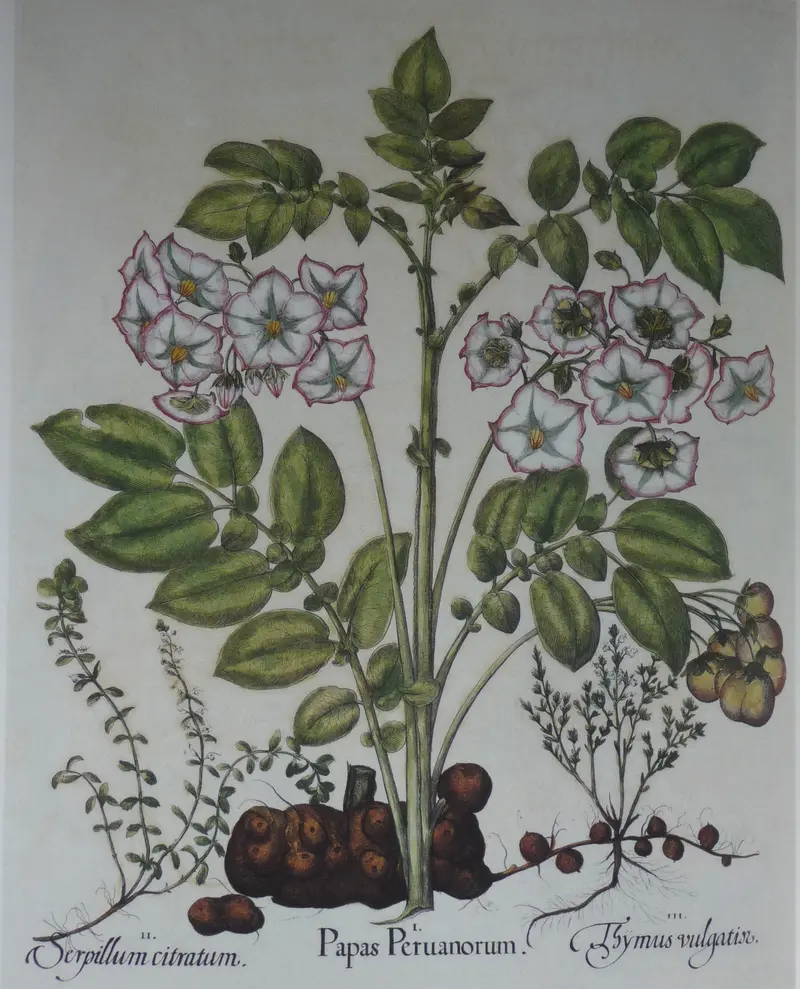
Peruvian Potato Flower (Papas Peruanorum)
Basilius Besler
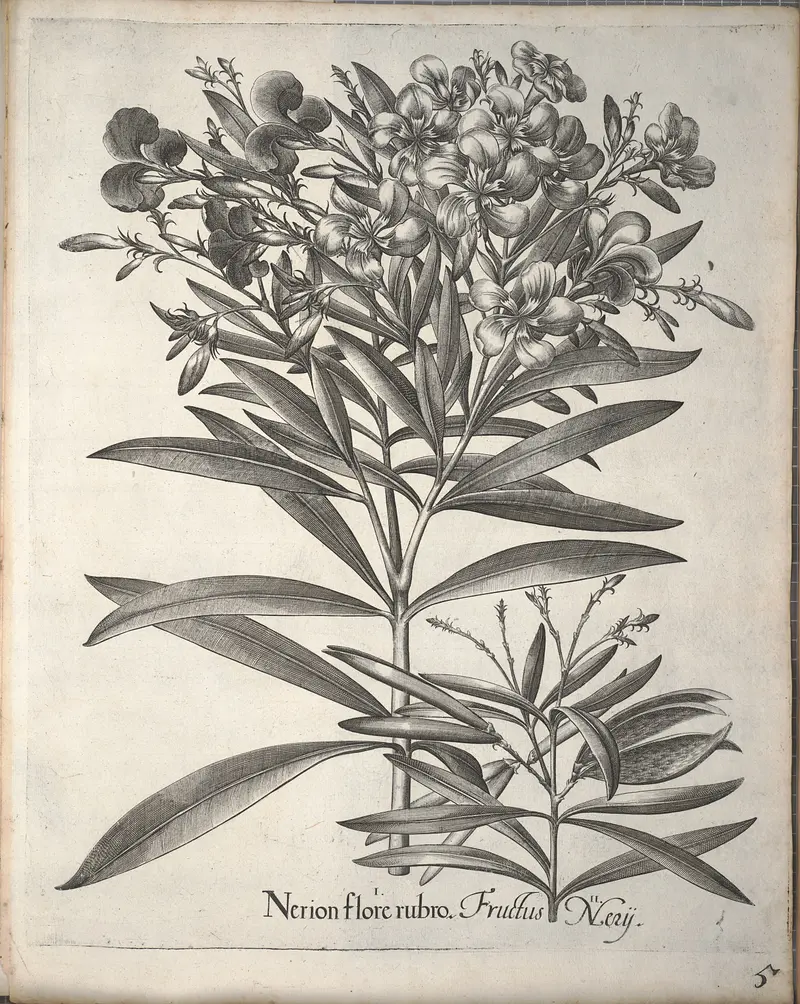
Summer Garden, Plate 5 (Hortus Eystettensis)
Basilius Besler
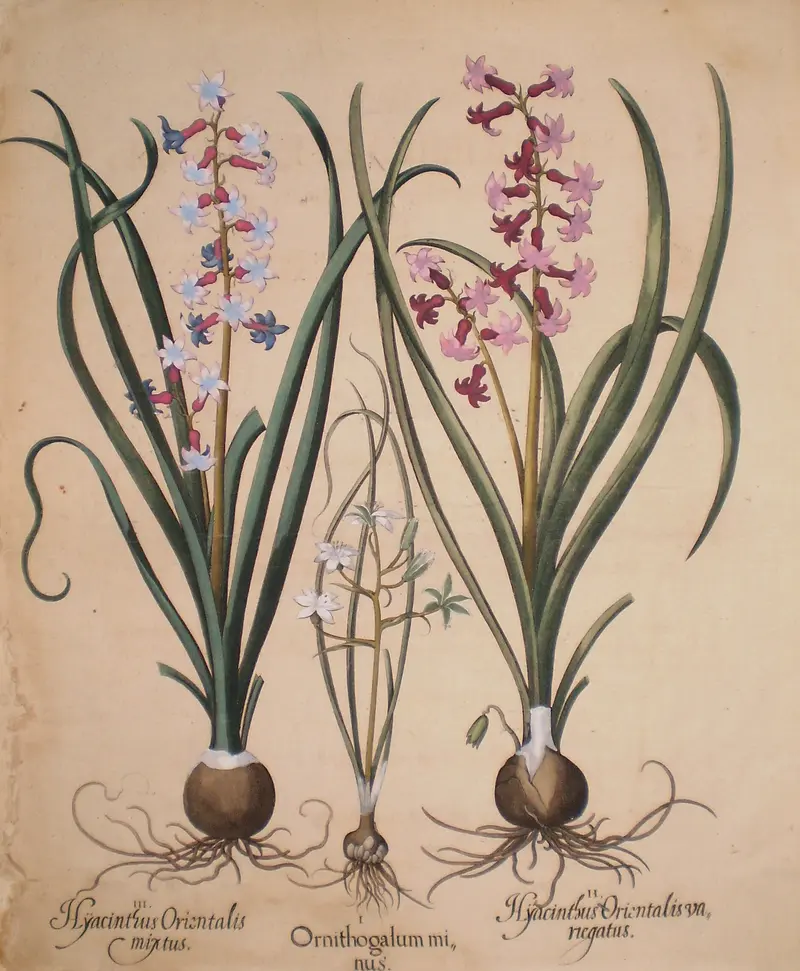
Hyacinths and Star-of-Bethlehem
Basilius Besler
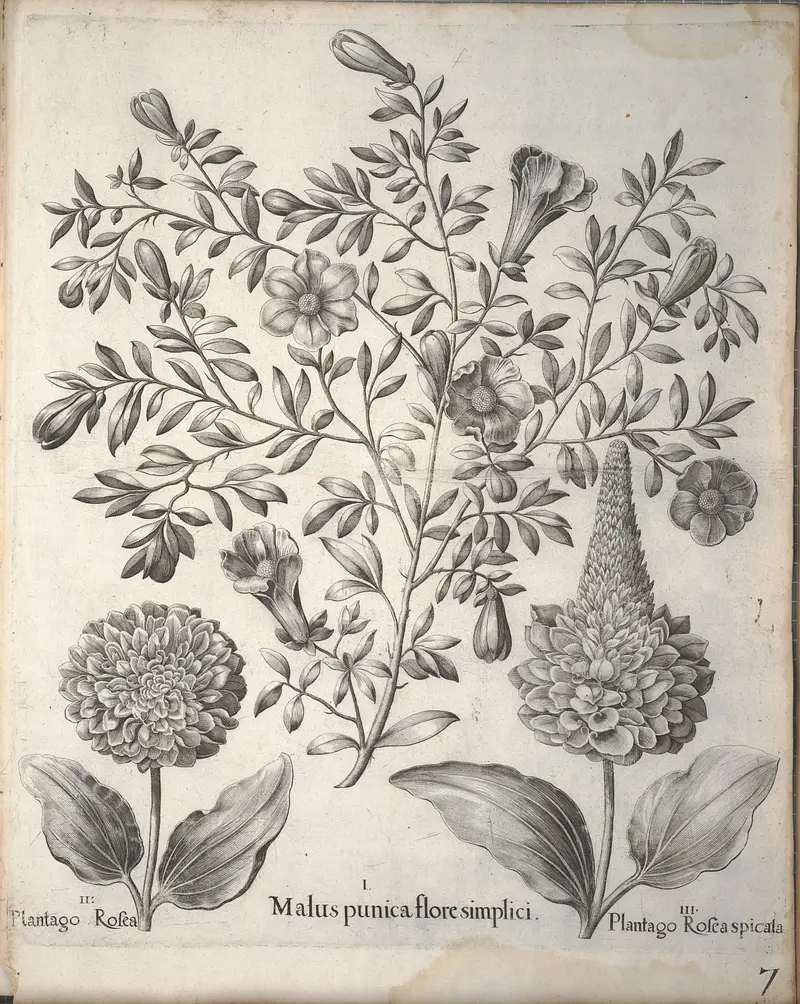
Summer Garden, Plate 7 (Hortus Eystettensis)
Basilius Besler
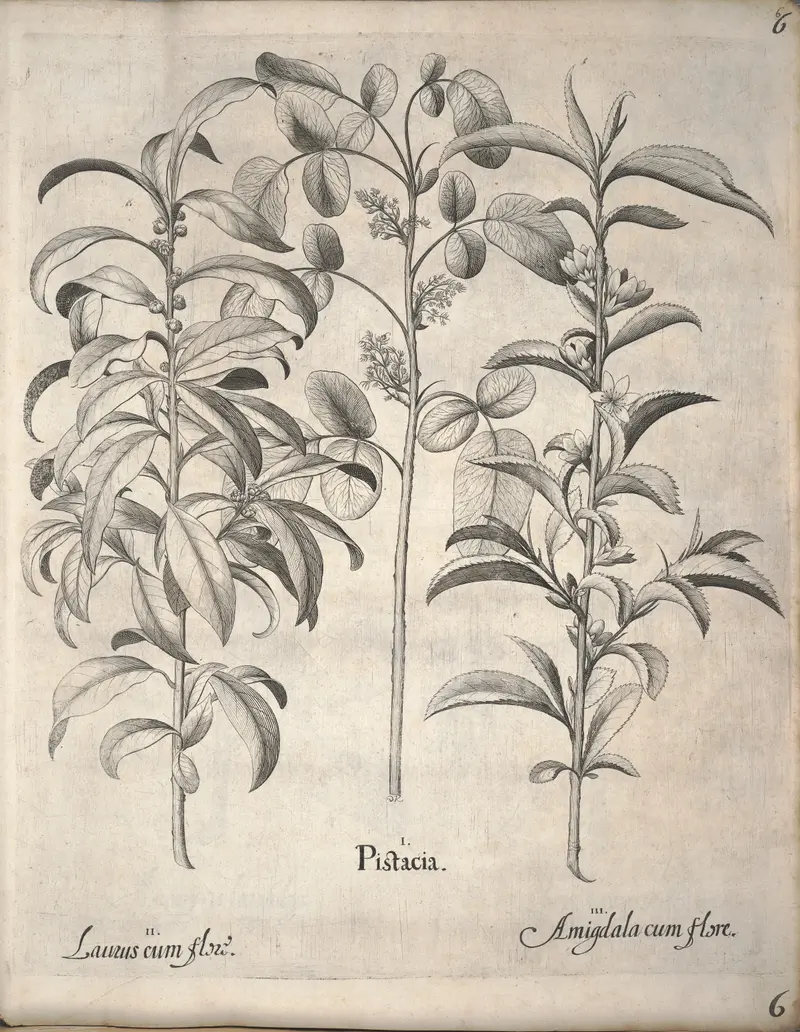
Spring Garden, Plate 6 (Hortus Eystettensis)
Basilius Besler