
Sunset on the Savannah — History & Facts
The first thing that seizes the viewer in Sunset on the Savannah is the audacity of its color: a sky ablaze with broad ribbons of orange and violet, rolling above a plain rendered in ochre and olive. The horizon cuts the panel almost in half, but it is the sky that commands attention, its drama heightened by the low, almost hesitant silhouettes of trees that seem to bow beneath its weight. The brushwork is brisk, almost impatient, as if the artist sought to capture the fleeting moment before dusk swallows the last light.
Each streak of color is purposeful—the deep blue at the base of the clouds hints at the cooling air, while the golden ground below glows with the memory of the day’s heat. The sparse vegetation is not merely decorative; it signals the vastness of the landscape and the smallness of life within it. Painted in 1909, this work by Akseli Gallen-Kallela belongs to a period when artists across Europe were breaking away from academic precision in favor of immediacy and sensation. Such landscapes were often painted for private patrons or as studies for larger compositions, capturing a sense of place for a world in flux.
The early twentieth century saw artists traveling further afield, inspired by new geographies and the changing light of distant continents. While history has kept few traces of the specific journey behind this painting, its presence in a Finnish collection today speaks to the restless curiosity of its era. The unfinished edges and visible ground invite you to imagine the artist at work, racing against the sun—look again, and see if you can feel the hush settling over the savannah.
More Artworks by Akseli Gallen-Kallela
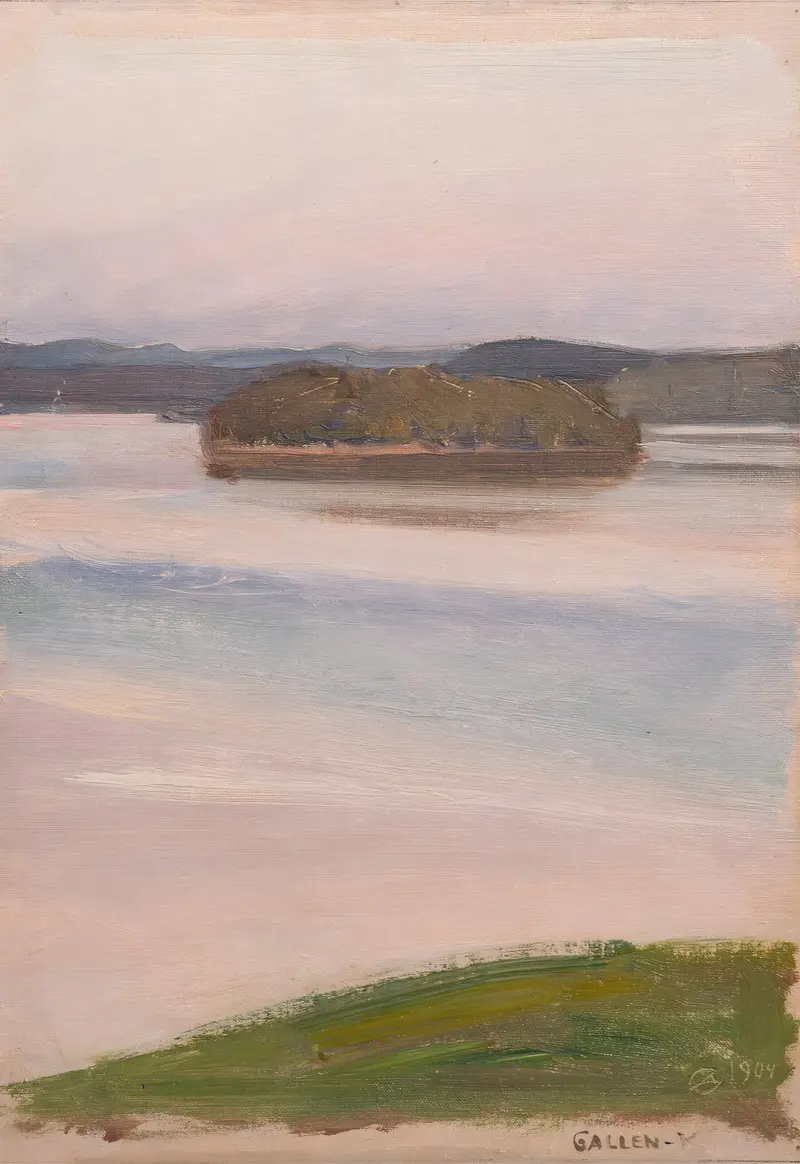
Lake Keitele
Akseli Gallen-Kallela
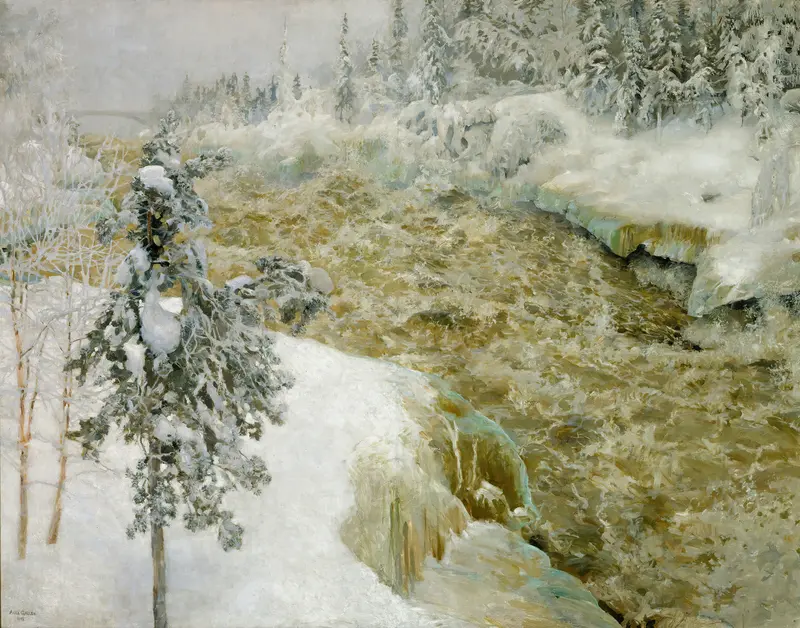
Imatra Falls in Snow ; Imatra in Winter
Akseli Gallen-Kallela
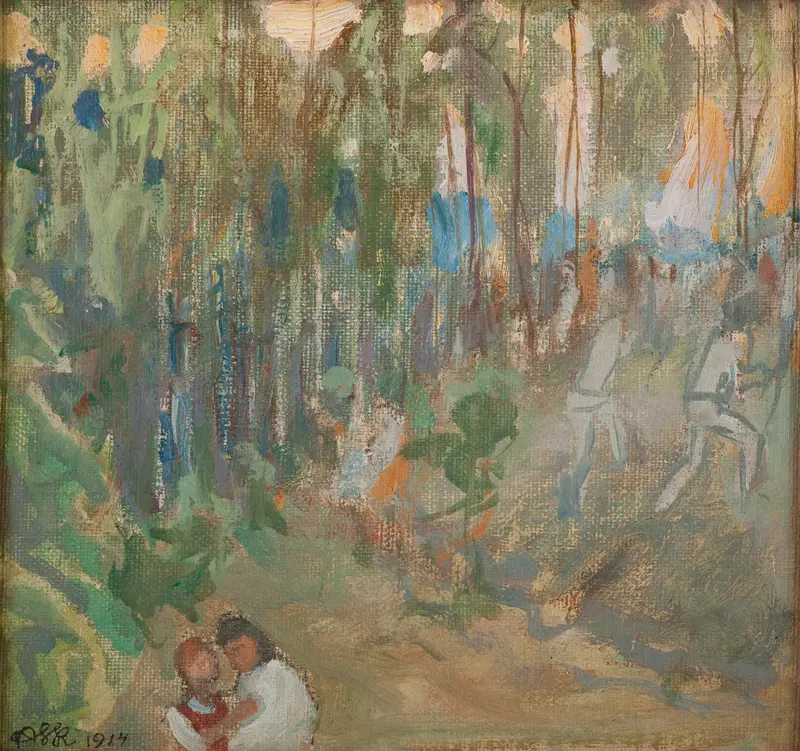
Vainovalkeat
Akseli Gallen-Kallela
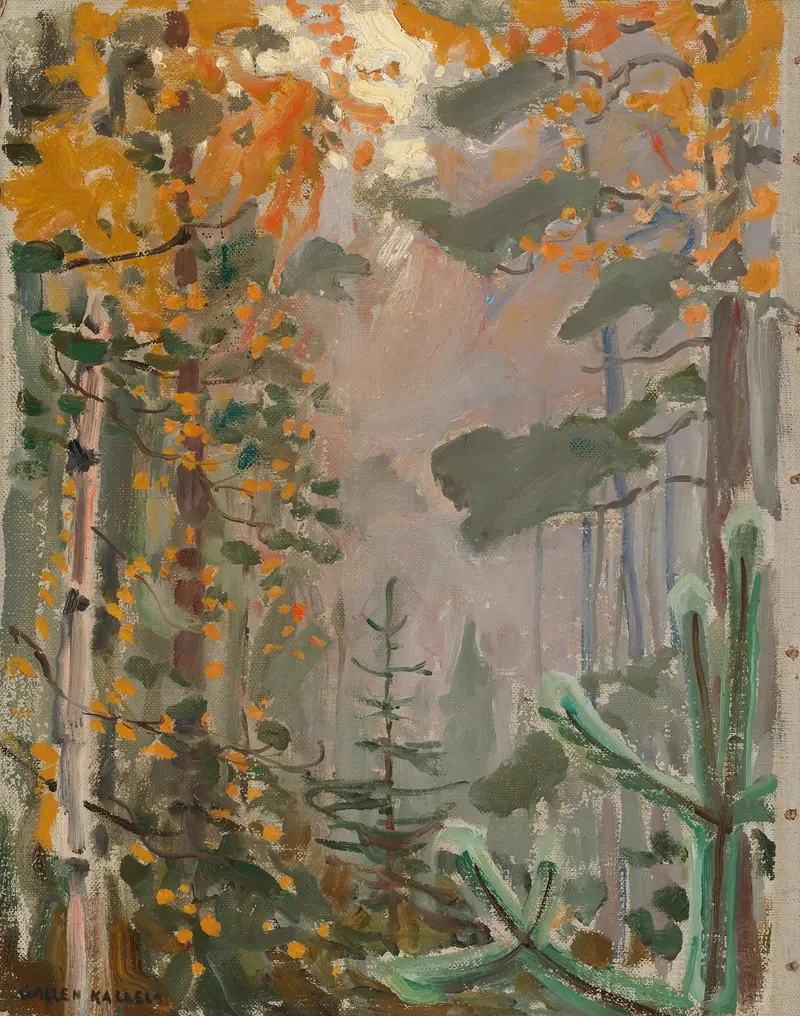
Autumn Landscape
Akseli Gallen-Kallela
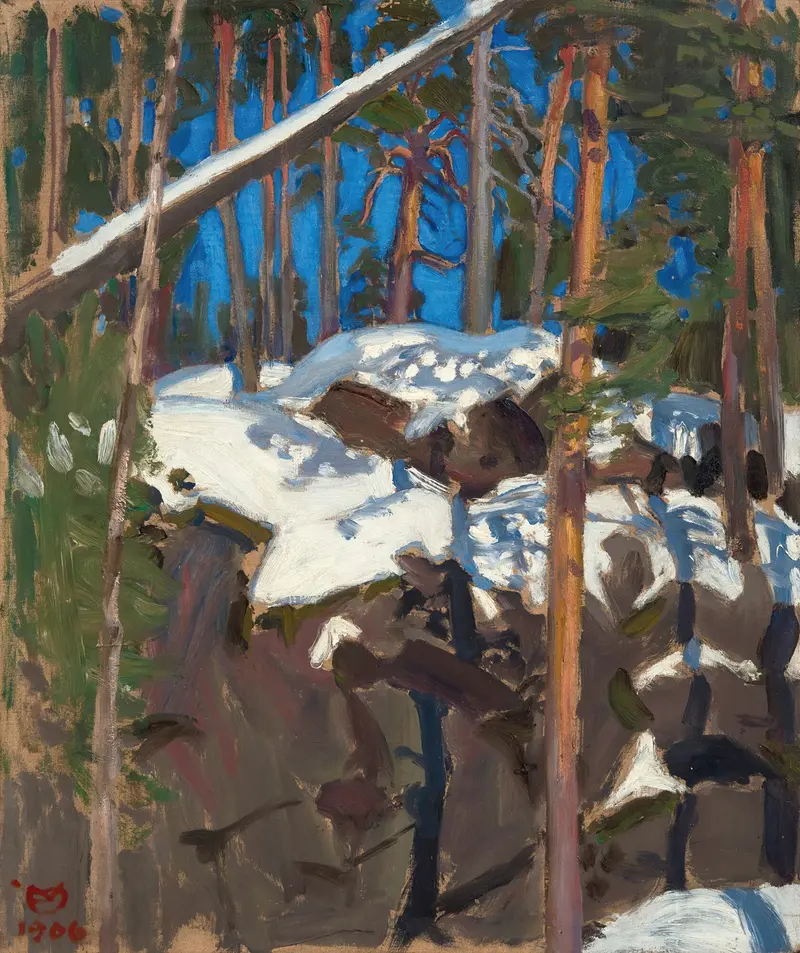
Spring Sun At Konginkangas
Akseli Gallen-Kallela
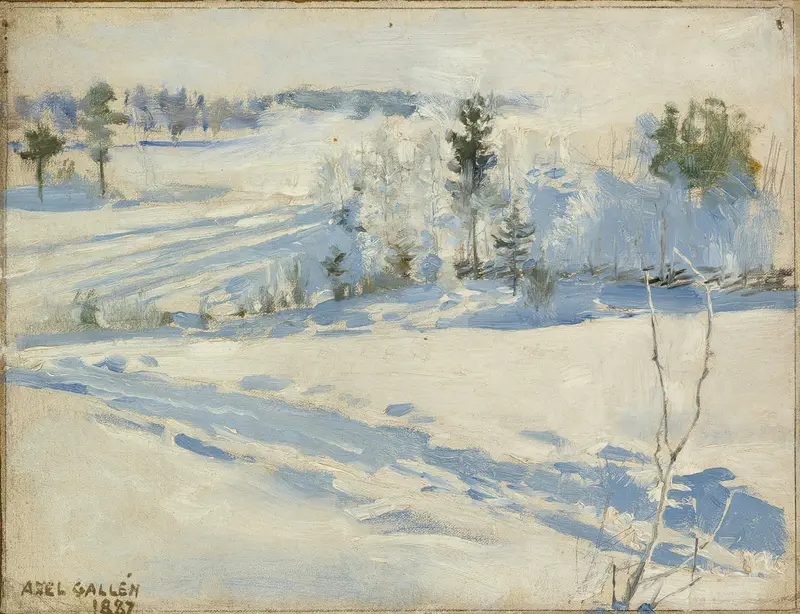
Winter Landscape
Akseli Gallen-Kallela

First Snow
Akseli Gallen-Kallela
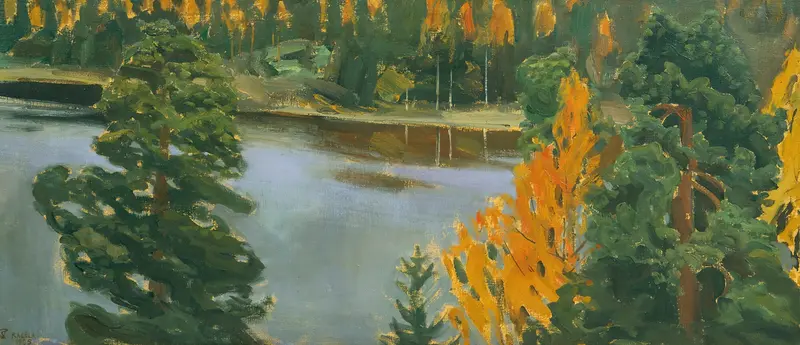
Lake View In Autumn
Akseli Gallen-Kallela
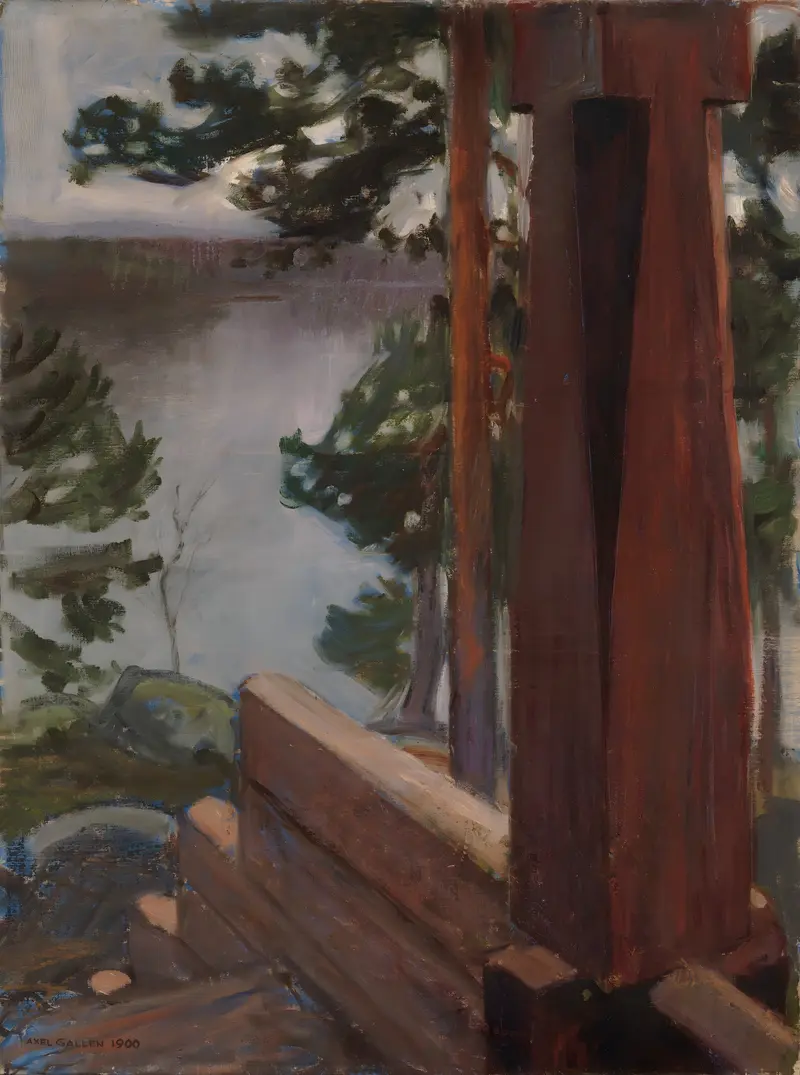
The Kalela Porch
Akseli Gallen-Kallela

Light Behind The Clouds
Akseli Gallen-Kallela
More Landscape Art

The Starry Night
Vincent van Gogh

View of Delft
Johannes Vermeer

Water Lilies
Claude Monet

The Grand Canal, Venice, looking north-west from the Ca' Corner to the Ca' Contarini degli Scrigni, with the campanile of Santa Maria della Carità
Canaletto

Windsor Castle
Canaletto

The Grand Canal looking North-East from the Palazzo Dolfin-Manin to the Rialto Bridge
Canaletto