
The choirboy — History & Facts
What first catches the eye in The choirboy is the way the boy’s gaze slips away from us, lost in shadow and thought, while his arms wrap protectively around a massive, battered choirbook. The paint itself seems to tremble with the tension of that embrace: the thick folds of his robe, rendered in rough, almost sculptural strokes, press in on the book as if it were a treasure or a shield. Light grazes his cheek and the edge of the parchment, pulling our attention to the contrast between the softness of youth and the worn, heavy object he clings to.
The palette is somber, but the orange-red of his vestment glows against the darkness, hinting at both the warmth of music and the weight of expectation. Painted in 1872, The choirboy belongs to a moment when artists like Antonio Mancini were drawn to scenes of everyday life, often with an undercurrent of hardship or longing. In Italy, the late nineteenth century saw a fascination with childhood, not as innocence alone, but as a state of vulnerability and resilience. Works like this were rarely grand commissions; instead, they found their way into private collections or smaller galleries, cherished for their intimacy and psychological depth.
Now part of The Mesdag Collection, this painting invites us to linger over the boy’s expression and wonder what song, or sorrow, he carries behind those downcast eyes.
More Artworks by Antonio Mancini

Portrait of a lady
Antonio Mancini
Self-Portrait
Antonio Mancini
The Flower Seller
Antonio Mancini
The Saltimbanco
Antonio Mancini
The sick child
Antonio Mancini
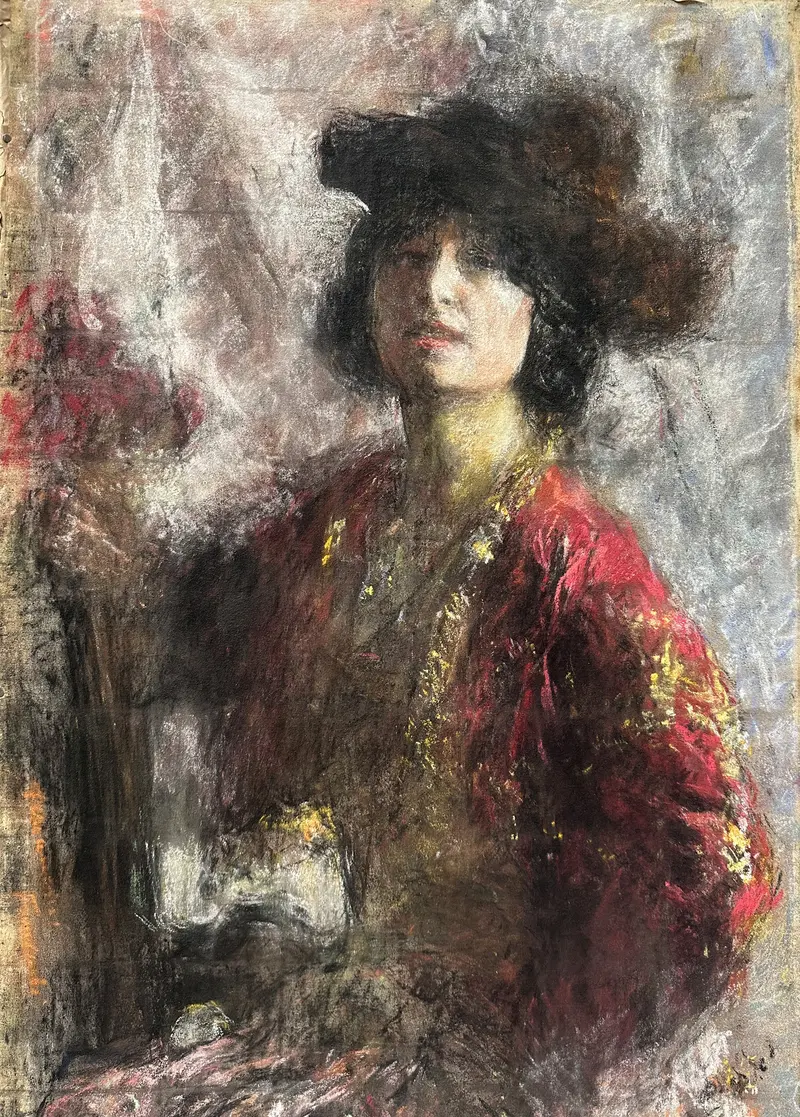
Bolero. Bullfighter
Antonio Mancini
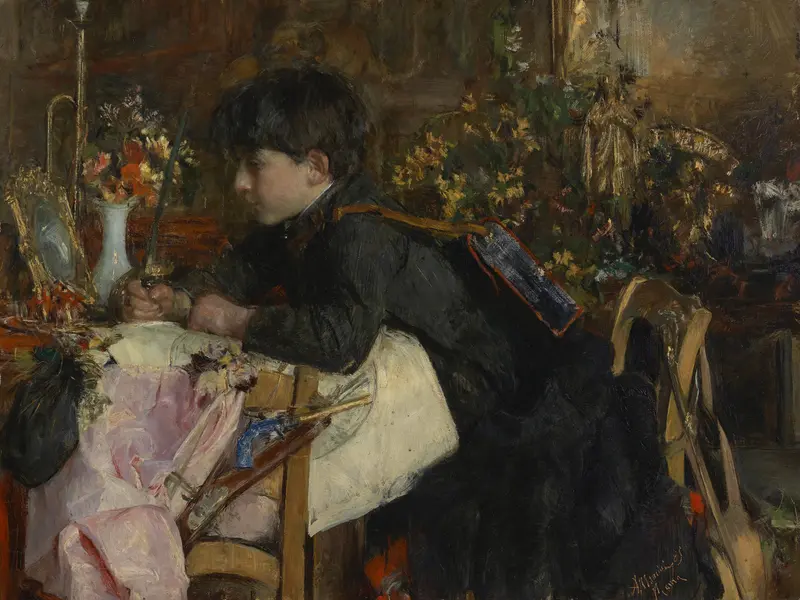
The birthday
Antonio Mancini
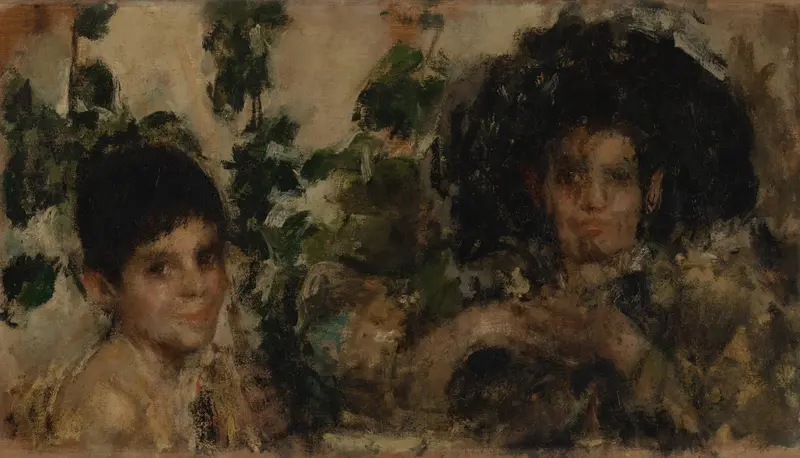
The brothers
Antonio Mancini
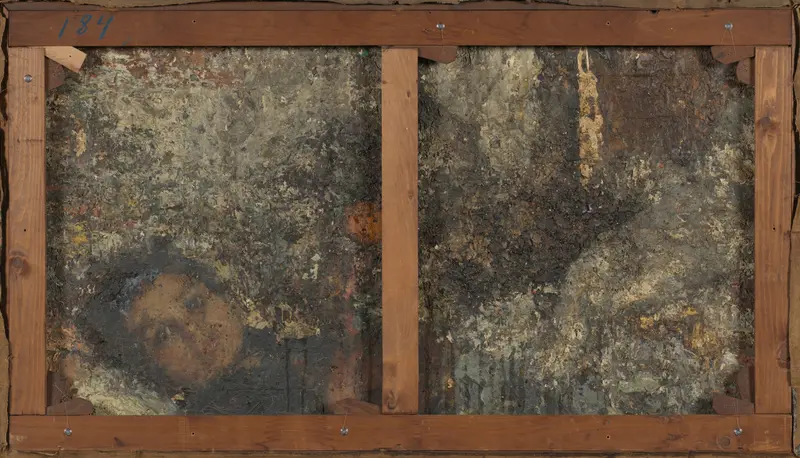
Liggend kind hwm0184v The Mesdag Collection
Antonio Mancini
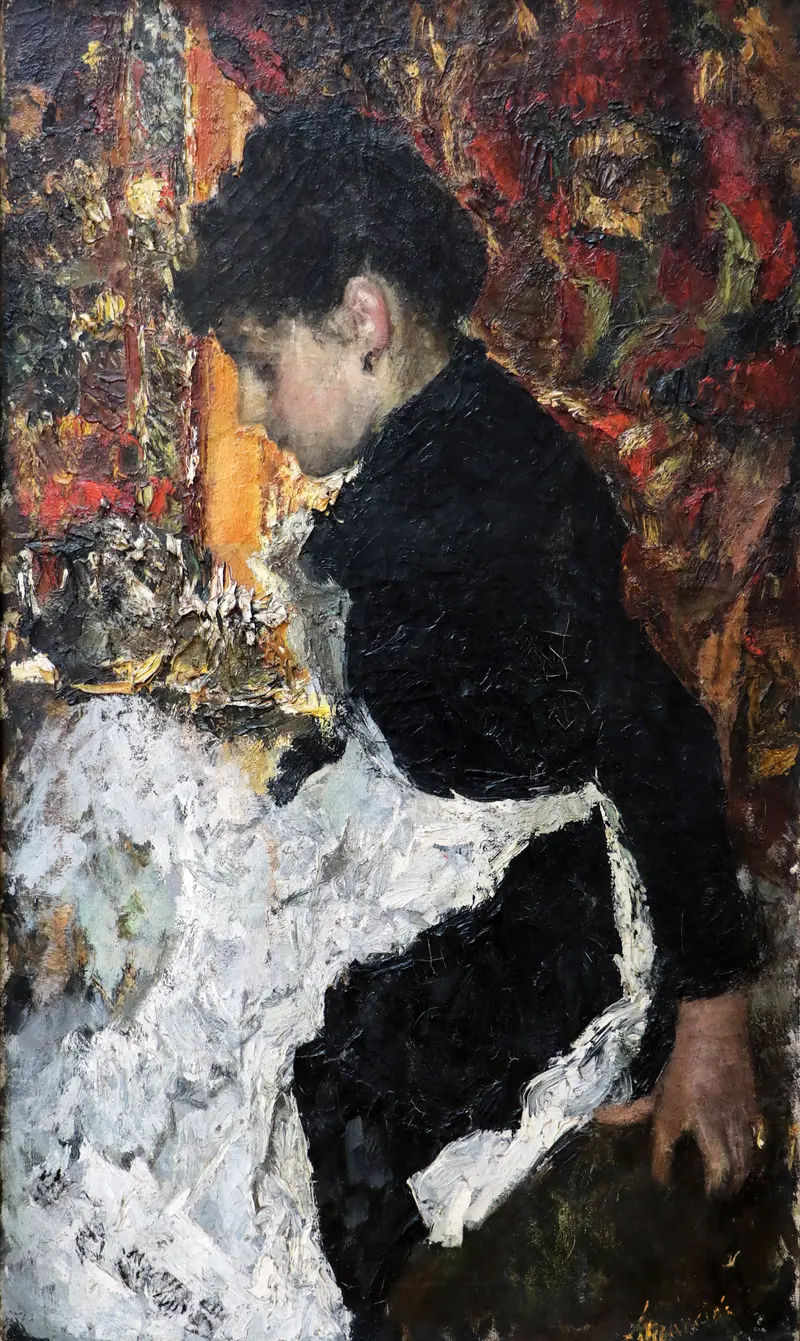
Servetta
Antonio Mancini
More Genre Scene Art

Banquet of the Officers of the St George Civic Guard
Frans Hals

Rembrandt and Saskia in the Scene of the Prodigal Son
Rembrandt van Rijn

Bal du moulin de la Galette
Pierre-Auguste Renoir

Quadrille at the Moulin Rouge
Henri de Toulouse-Lautrec

A Burial at Ornans
Gustave Courbet

When Will You Marry?
Paul Gauguin