
The Dialectician (Der Diaektforscher) — History & Facts
A riot of color and pattern draws the eye first, but it is the absurd earnestness of the scholar that lingers. In The Dialectician (Der Diaektforscher), Moriz Jung conjures a figure so engrossed in his pursuit of knowledge that he bends, quite literally, toward the horn of a gramophone, as if hoping to catch the very essence of dialects in mid-air. Every detail is in service of this comic devotion: the wild beard, the round spectacles, the splayed fingers pressed to his ear, the open book precariously balanced on his knee.
The tightly packed bookshelves form a riotous backdrop, their bright spines suggesting a world of theories and languages clamoring for attention, while the scholar’s body forms a bridge between the written and the spoken word. Created in 1911, this print belongs to a moment when the study of language and sound was being transformed by new technologies and a hunger for scientific classification. The gramophone, still a relatively novel device, stands in for the promise of modernity: the hope that even the most elusive elements of human culture might be captured, catalogued, and played back at will. Moriz Jung was active in the vibrant circles of early twentieth-century Vienna, where satire and innovation often went hand in hand.
Little is recorded about the journey of this particular print, now in the Metropolitan Museum of Art’s collection, but its wit and bold lines invite us to linger, to listen, and to wonder what the dialectician is truly hearing.
More Artworks by Moriz Jung
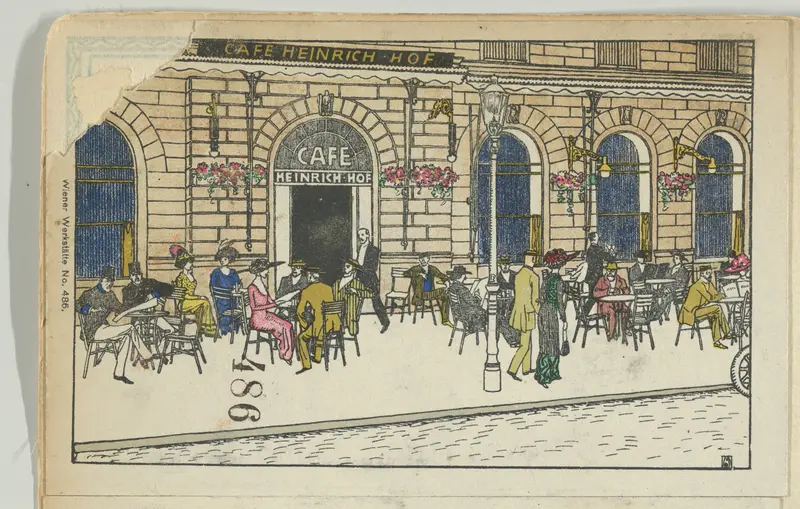
Café Heinrichhof
Moriz Jung

Moriz Jung Porträt
Moriz Jung
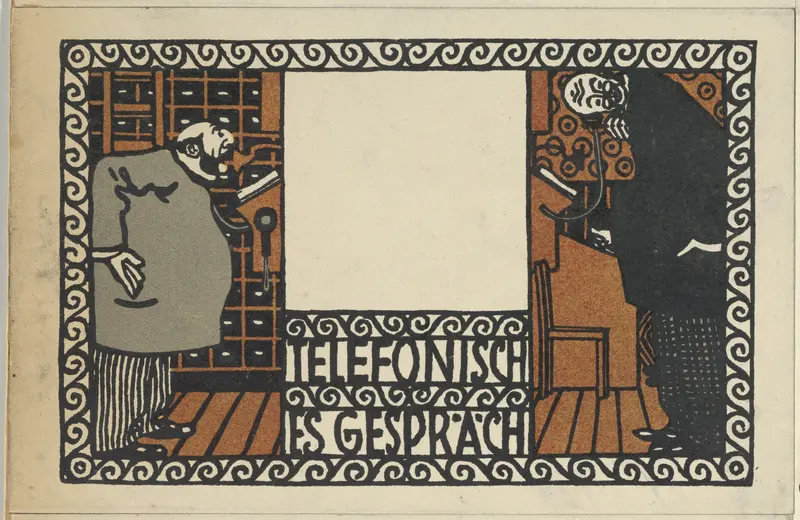
Telephone Conversation (Telefonisches Gespräch)
Moriz Jung
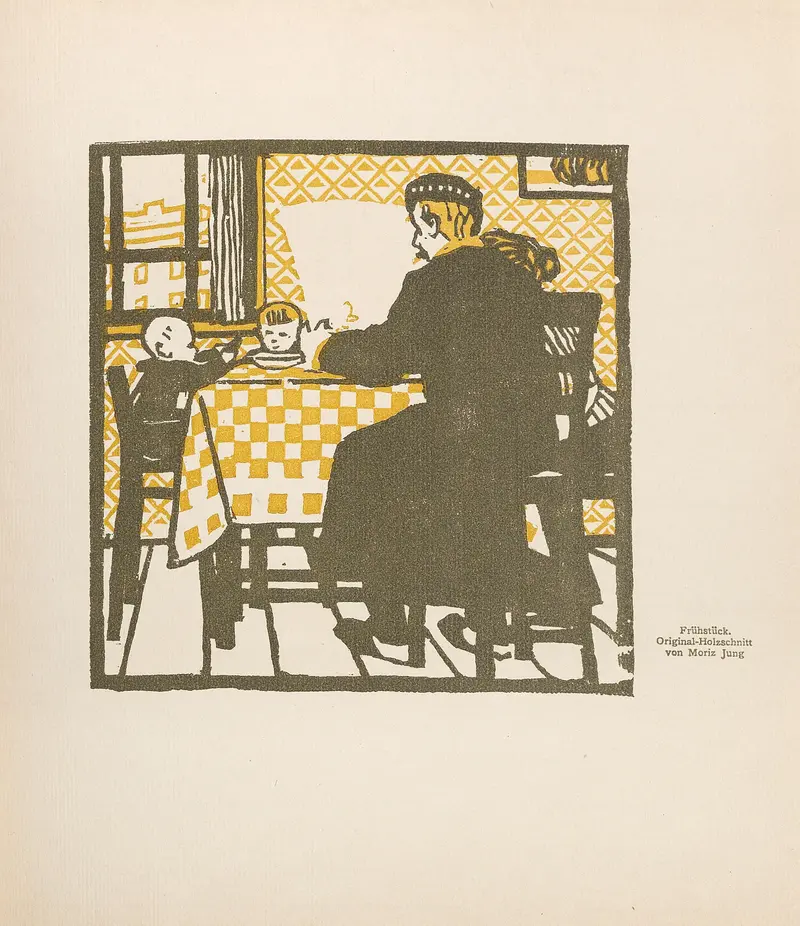
Moriz Jung Frühstück
Moriz Jung
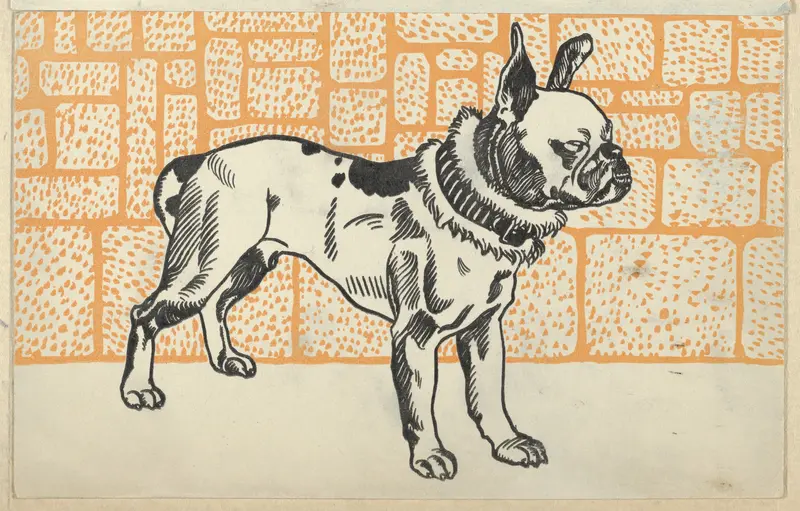
Pitbull Terrier
Moriz Jung
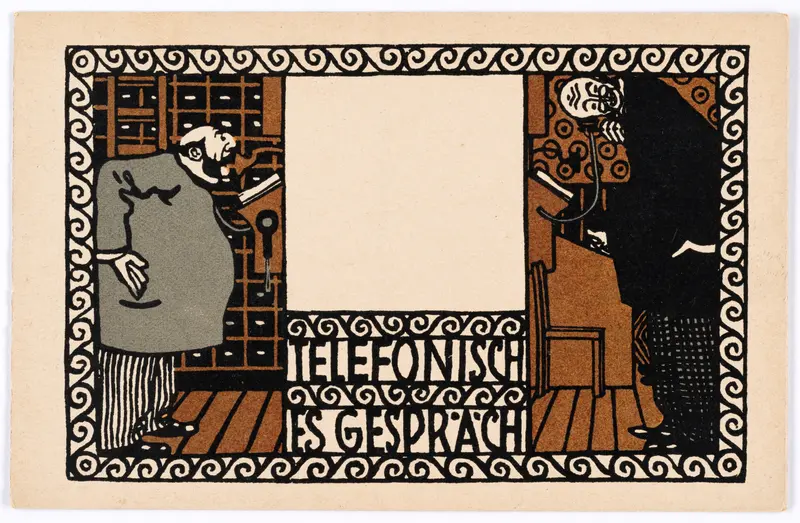
Postkarte der Wiener Werkstätte Nr. 58 - Telefonisches Gespräch
Moriz Jung
Postkarte der Wiener Werkstätte Nr. 58 - Telefonisches Gespräch - verso
Moriz Jung
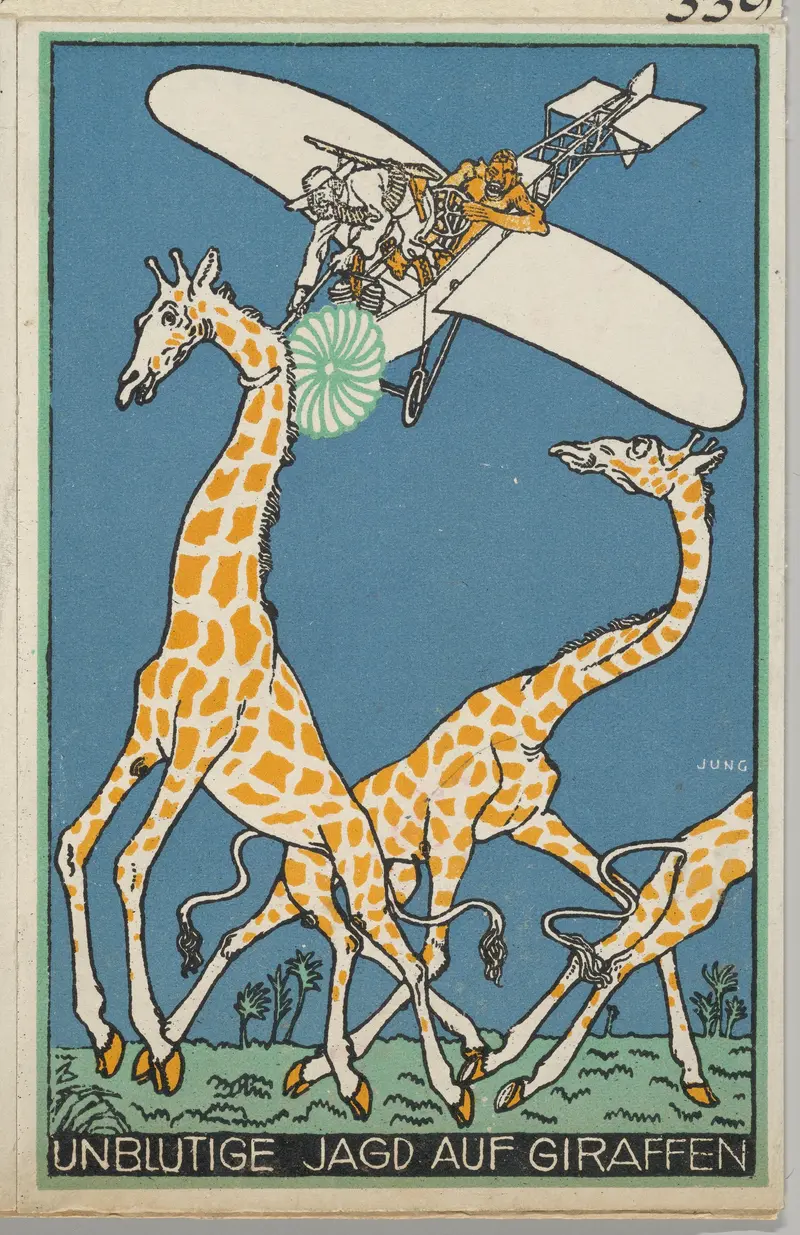
Bloodless Giraffe Hunt (Unblutige Jagd auf Giraffen)
Moriz Jung
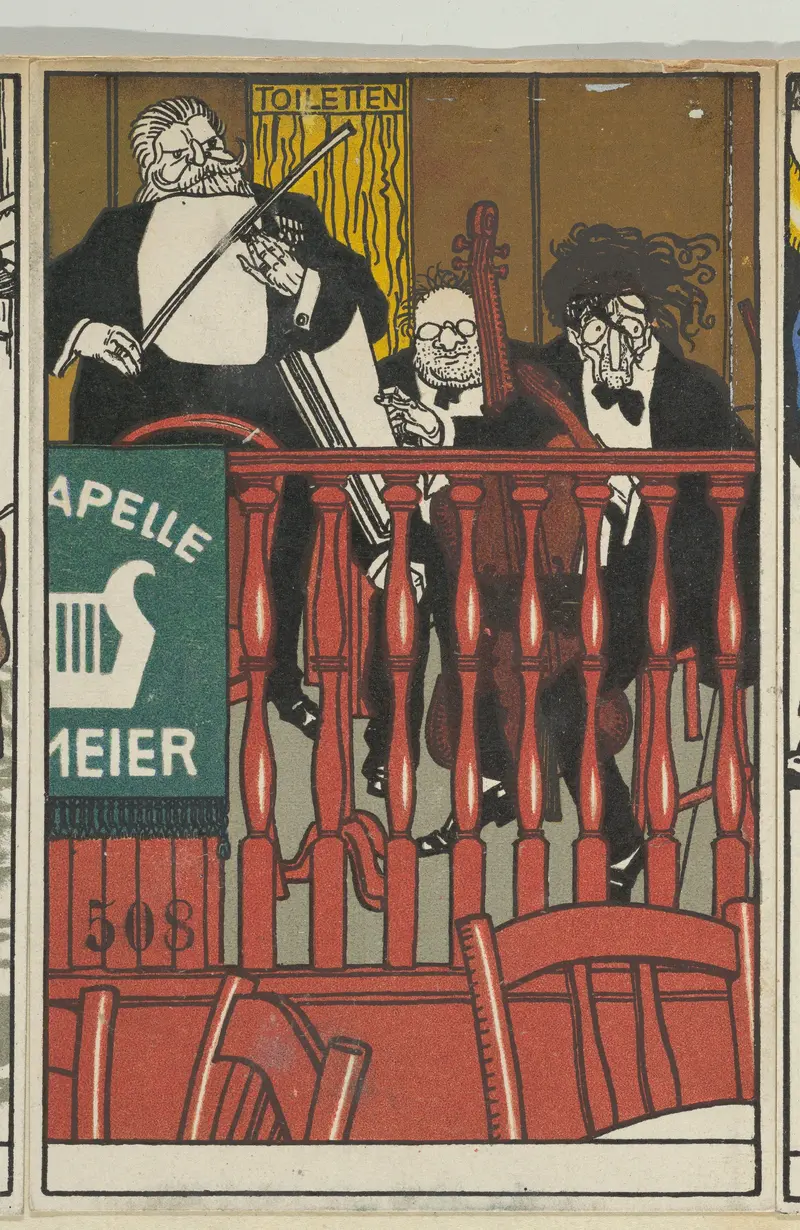
Salon Orchestra Meier
Moriz Jung
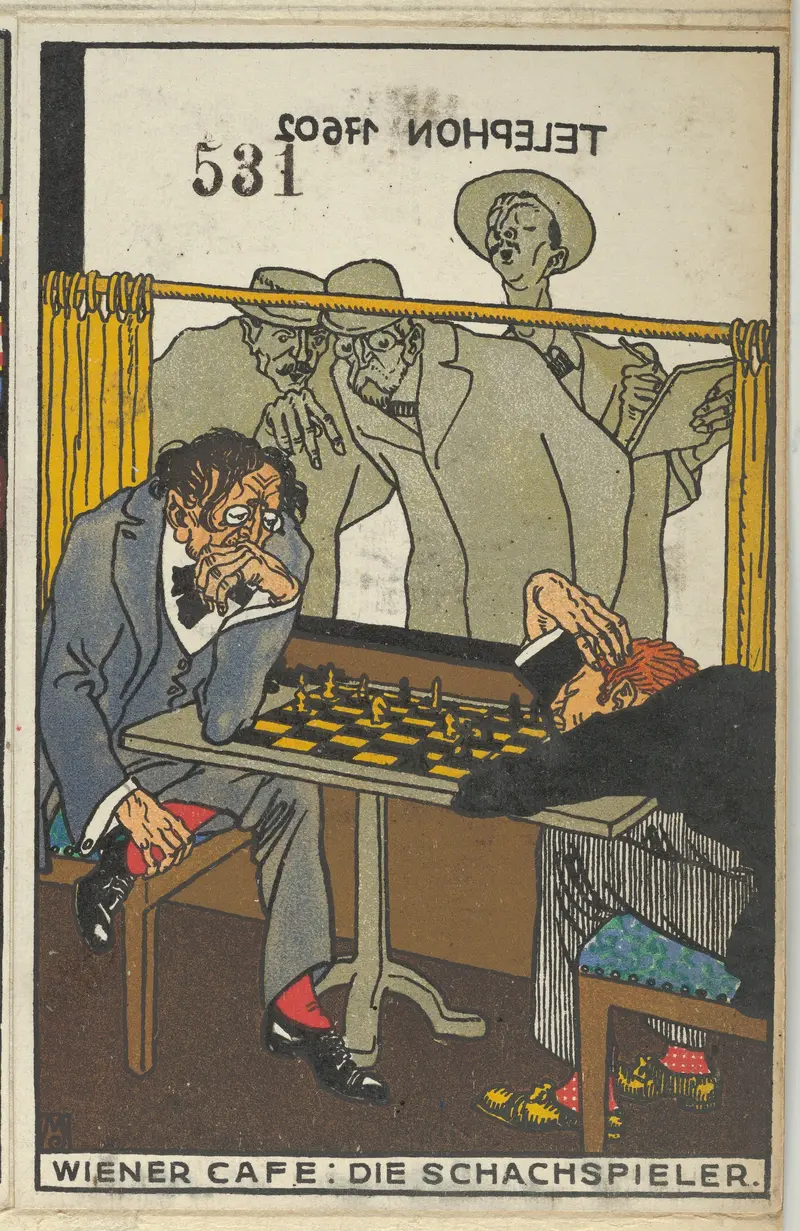
Wiener Café: Die Schachspieler
Moriz Jung
More Genre Scene Art

Banquet of the Officers of the St George Civic Guard
Frans Hals

Rembrandt and Saskia in the Scene of the Prodigal Son
Rembrandt van Rijn

Bal du moulin de la Galette
Pierre-Auguste Renoir

Quadrille at the Moulin Rouge
Henri de Toulouse-Lautrec

A Burial at Ornans
Gustave Courbet

When Will You Marry?
Paul Gauguin