
The Eastern Palace (Hansel and Gretel and Other Stories) — History & Facts
What first seizes the eye in Kay Nielsen’s The Eastern Palace (Hansel and Gretel and Other Stories) is the way light itself becomes a character, streaming in a golden diagonal that slices through the ornate gloom of the palace. The figure at its center, haloed and draped in a trailing gown, seems caught between worlds—her delicate profile turned toward the source of illumination as if drawn by a silent summons. Every detail in the architecture, from the checkerboard floor to the intricate latticework and columns, feels both stage-like and enchanted, inviting the viewer to linger over each patterned surface.
The trees outside brood in silhouette, their inky presence a reminder that this palace, for all its splendor, stands at the edge of a dark and mysterious forest. Created in 1921 as an illustration for a collection of Grimm tales, this work belongs to a moment when book illustration was undergoing a transformation, shaped by the influence of Art Nouveau and the emerging modernist sensibility. Artists like Nielsen were commissioned to bring fairy tales to life for a new generation of readers, their images serving both as visual delights and as portals into the uncanny logic of folklore. The lavish detail and theatrical composition here reflect the era’s fascination with the exotic and the decorative, while the dreamlike mood speaks to the uncertain boundary between fantasy and reality that defined early twentieth-century illustration.
In lingering over the interplay of shadow and ornament, one can almost hear the hush that falls when a story is about to begin.
More Artworks by Kay Nielsen
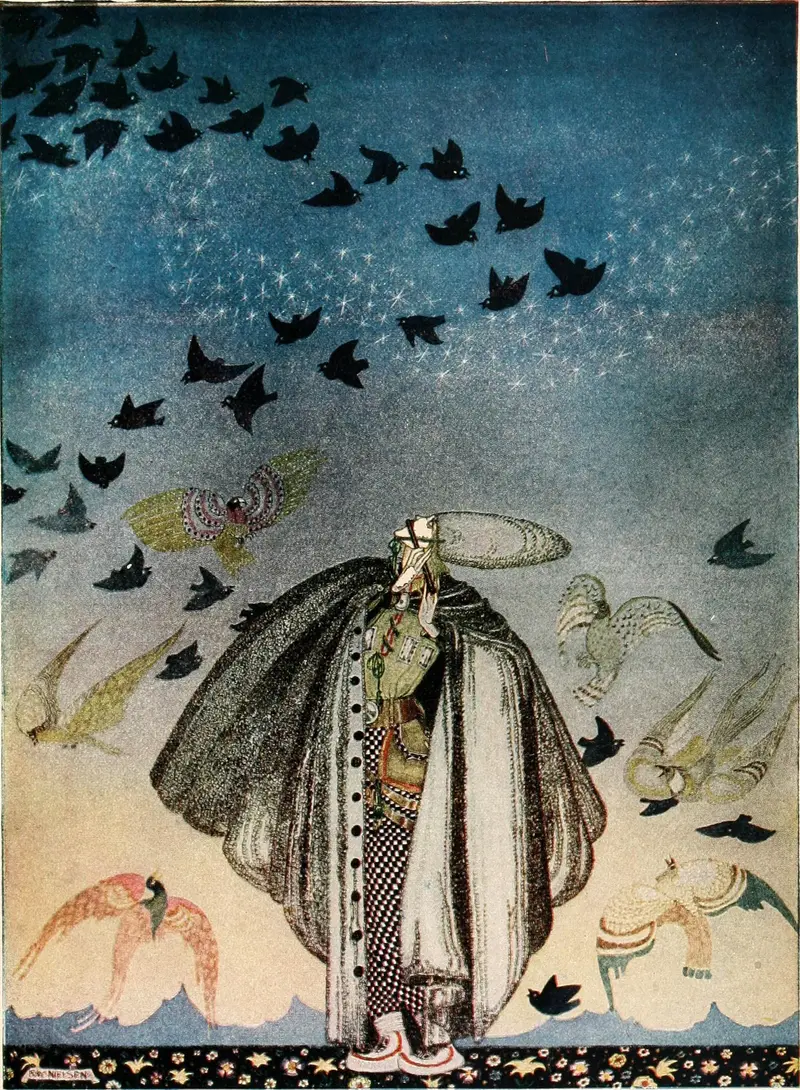
The Cloak of Black Birds (East of the Sun and West of the Moon)
Kay Nielsen

The Spirit at the Lighted Door (East of the Sun and West of the Moon)
Kay Nielsen
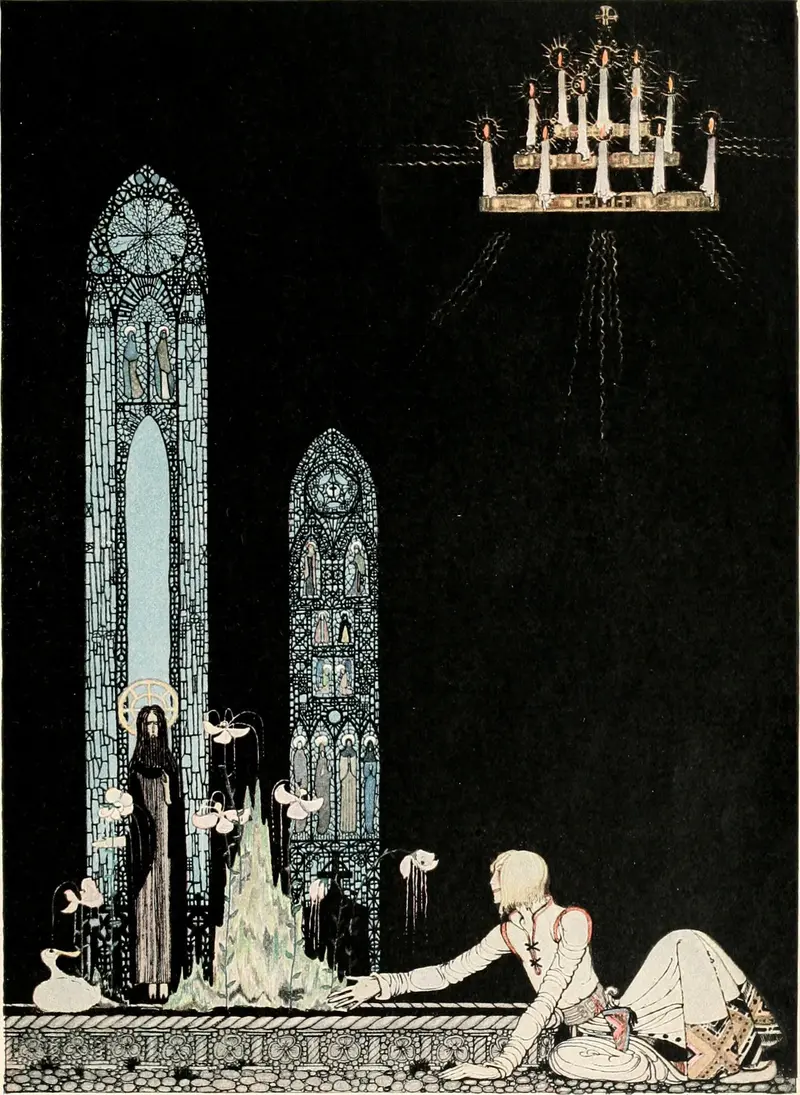
The Widow's Son and the Candles (East of the Sun and West of the Moon)
Kay Nielsen
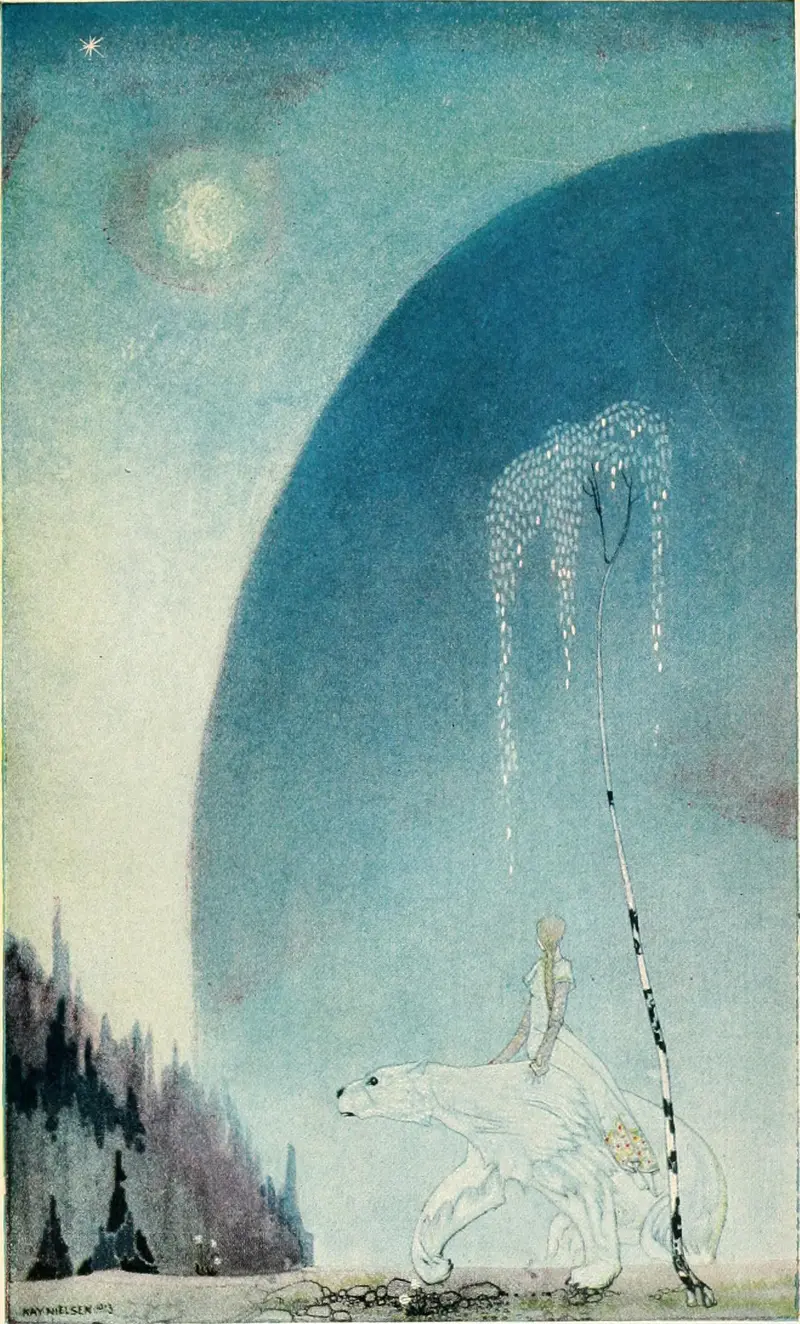
The White Goat Under the Moon (East of the Sun and West of the Moon)
Kay Nielsen

The Cloud Castle (Hansel and Gretel and Other Stories)
Kay Nielsen
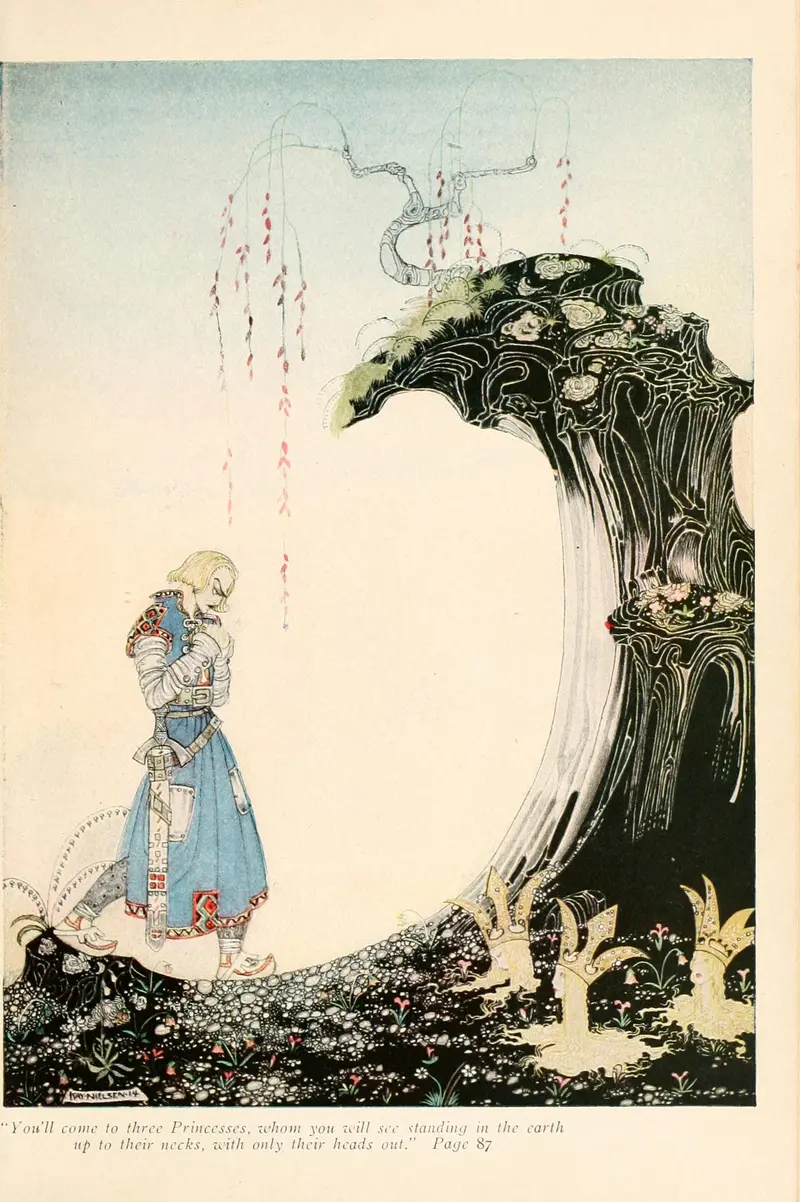
The Enchanted Wave (East of the Sun and West of the Moon)
Kay Nielsen
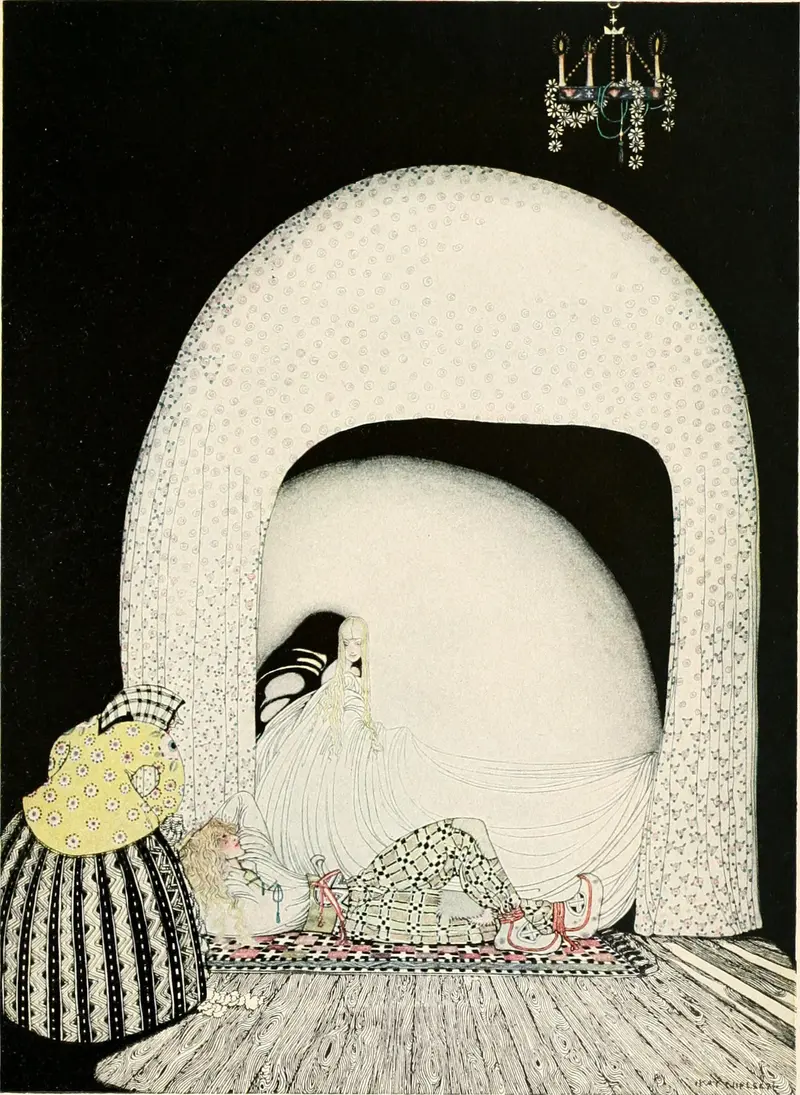
Beneath the White Canopy (East of the Sun and West of the Moon)
Kay Nielsen
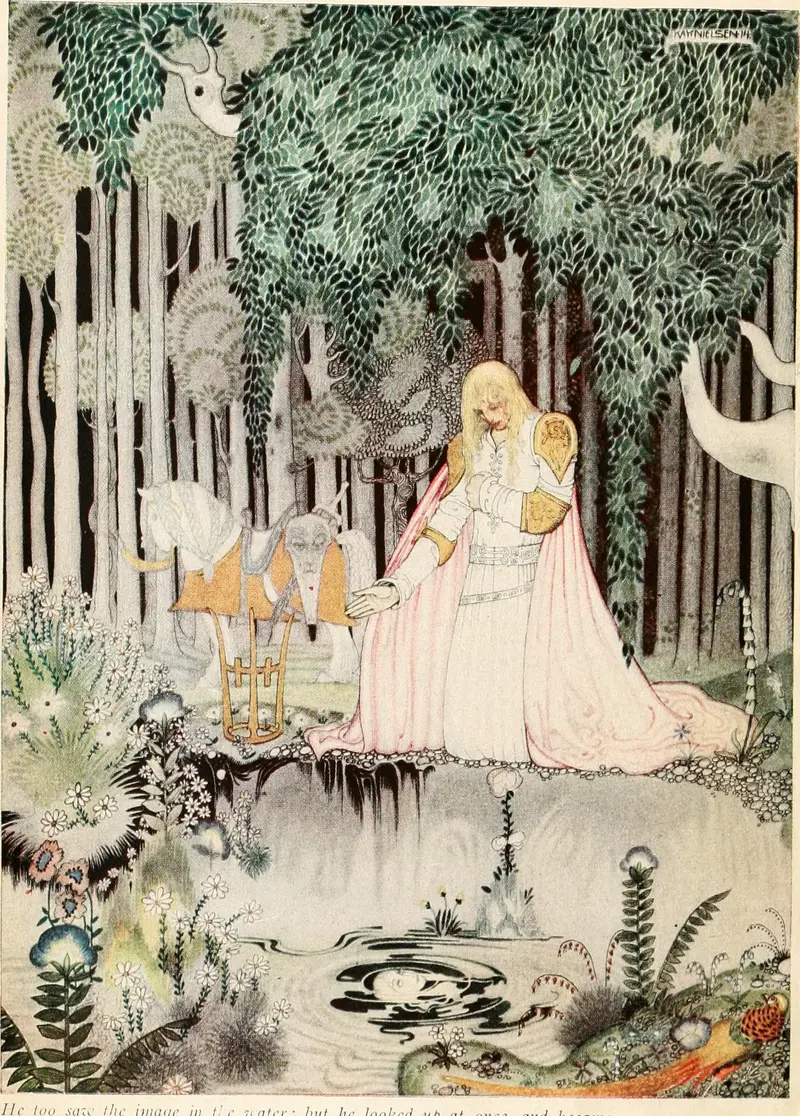
The Princess in the Moonlit Wood (East of the Sun and West of the Moon)
Kay Nielsen
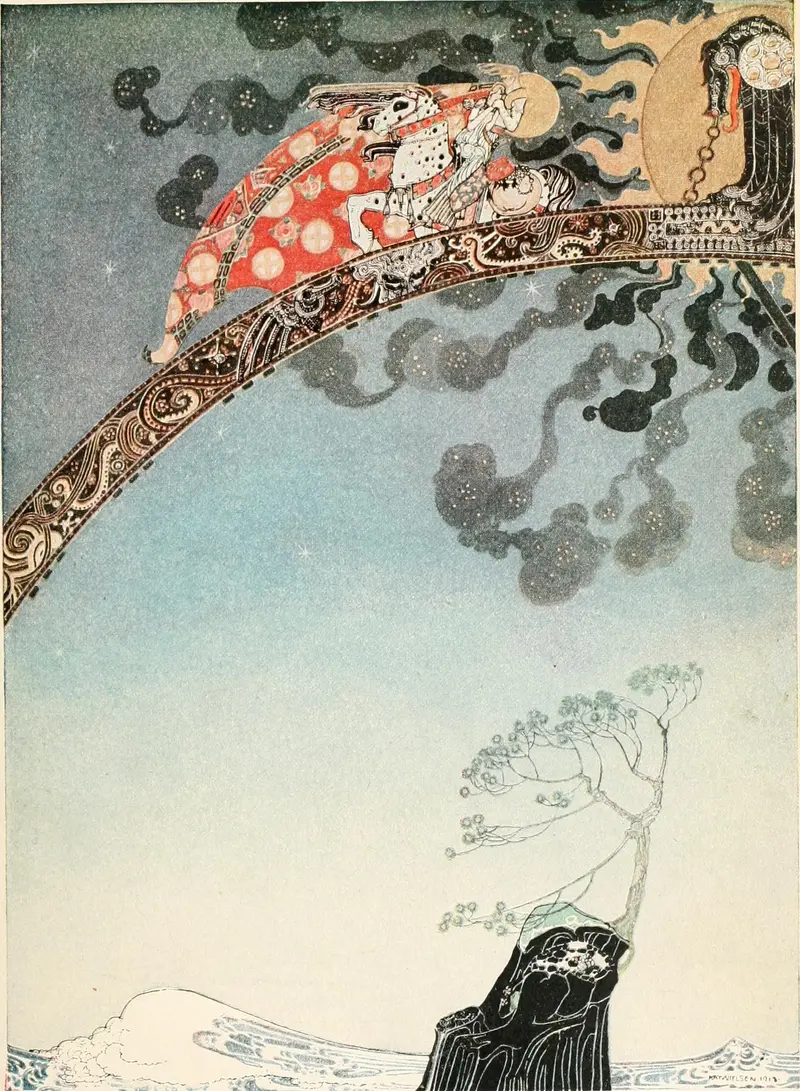
The Bridge Over the Sea (East of the Sun and West of the Moon)
Kay Nielsen
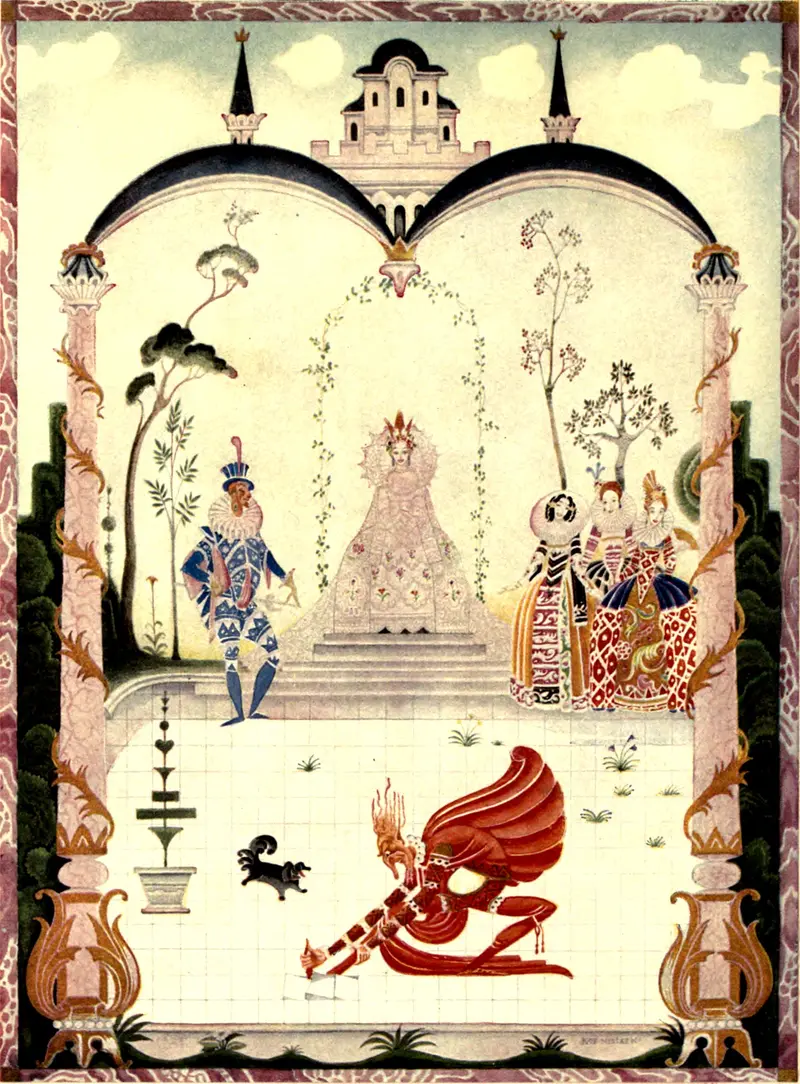
Frontispiece (Hansel and Gretel and Other Stories)
Kay Nielsen





