
The Farmers' Lunch — History & Facts
When The Farmers' Lunch entered the collection of the Museo del Prado, it was instantly recognized as one of the earliest surviving works by Diego Velázquez, painted when he was just nineteen. This youthful canvas is remarkable for its bold naturalism and the way it elevates an everyday scene to the level of art, a daring move in Seville around 1618. At a time when grand religious and mythological subjects dominated Spanish painting, Velázquez’s choice to focus on humble peasants was both innovative and controversial.
The painting is sometimes compared to the bodegón tradition, but its psychological intensity and attention to character set it apart. Here, three men gather around a modest meal—bread, fish, and wine—captured in a moment of animated conversation. The old man gestures with his hand, perhaps telling a joke or sharing a story, while the younger man listens, his eyes bright with amusement. The third figure, half in shadow, leans forward, caught mid-bite, his expression alert.
Velázquez’s sharp observation of textures—the roughness of the bread, the gleam of the glass jug—anchors the scene in reality. The strong, raking light singles out faces and hands, turning a simple lunch into a vivid drama of human interaction. Unlike the idealized peasants of Caravaggio, Velázquez’s figures are unvarnished, their individuality and dignity unmistakable. The exact patron of The Farmers' Lunch remains unknown, but it is likely the work was painted for the open market in Seville, where Velázquez was establishing his reputation.
The painting’s early history is obscure; it resurfaced in the 19th century and was acquired by the Prado in 1896. Today, it hangs among other early works by Velázquez, offering a glimpse of the artist before his move to Madrid and the royal court. In these formative years, Velázquez’s fascination with ordinary life and his technical brilliance were already clear, foreshadowing the psychological depth and realism that would define his later masterpieces.
More Artworks by Diego Velázquez

Las Meninas
Diego Velázquez

The Triumph of Bacchus
Diego Velázquez

Rokeby Venus
Diego Velázquez

Equestrian Portrait of Prince Balthasar Charles
Diego Velázquez

Bacchus
Diego Velázquez

Don Gaspar de Guzmán (1587–1645), Count-Duke of Olivares
Diego Velázquez
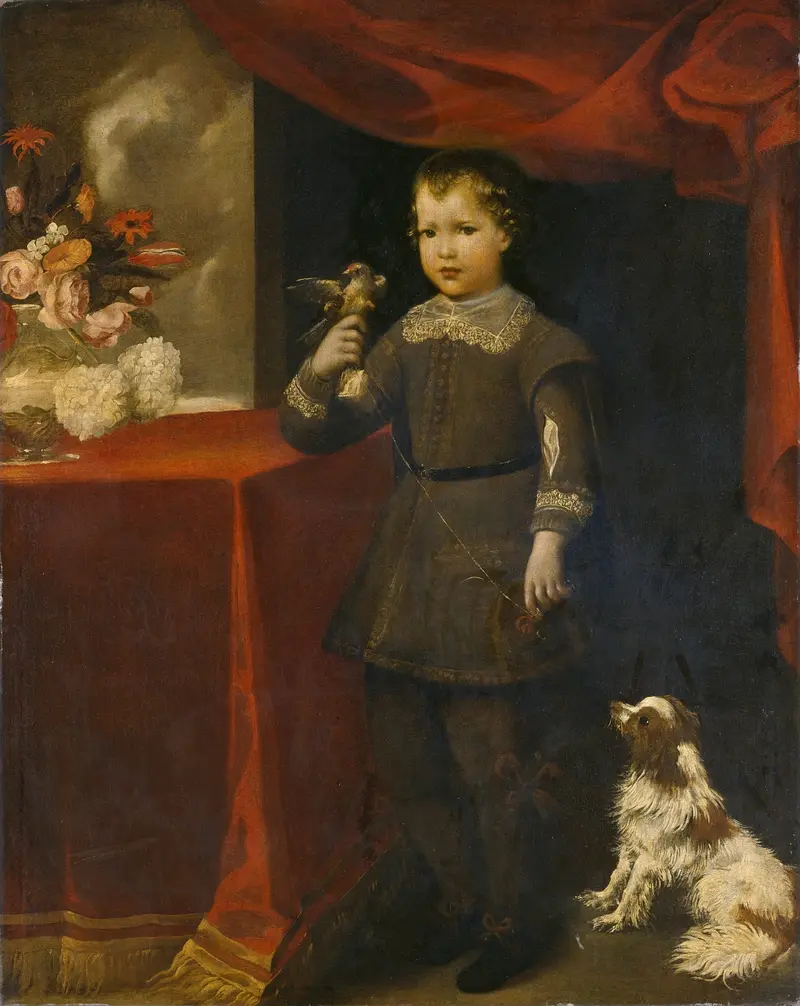
El príncipe Baltasar Carlos de Austria
Diego Velázquez

Equestrian Portrait of Philip III
Diego Velázquez

Equestrian Portrait of Margarita of Austria
Diego Velázquez
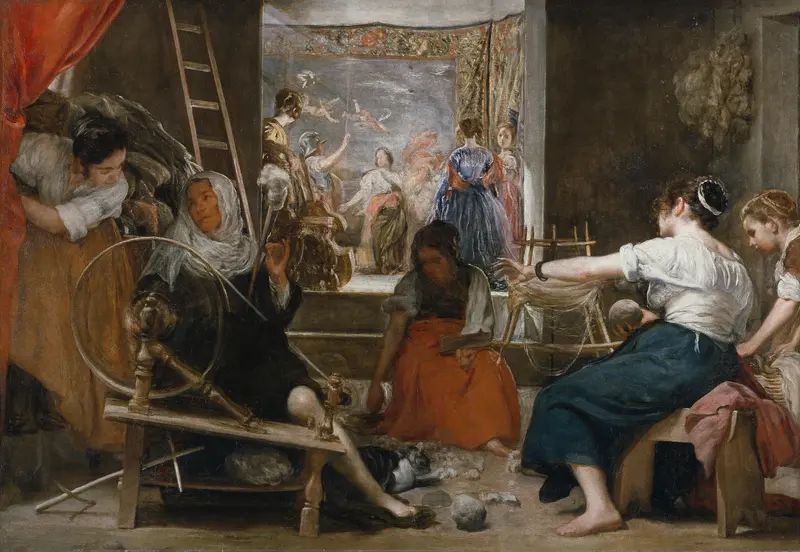
Las Hilanderas
Diego Velázquez
More Genre Scene Art

Banquet of the Officers of the St George Civic Guard
Frans Hals

Rembrandt and Saskia in the Scene of the Prodigal Son
Rembrandt van Rijn

Bal du moulin de la Galette
Pierre-Auguste Renoir

Quadrille at the Moulin Rouge
Henri de Toulouse-Lautrec

A Burial at Ornans
Gustave Courbet

When Will You Marry?
Paul Gauguin