
The Fishermen — History & Facts
The first thing that catches the eye in The Fishermen is not the act of fishing itself, but the way the figures are assembled—like a troupe of actors frozen mid-performance, their bodies rendered in sturdy, tubular forms. The scene is a puzzle of interlocking shapes and muted colors, with the fishermen’s faceless heads and blocky limbs echoing the mechanical age that so fascinated Fernand Léger in the early 1920s. The trees rise like green columns, framing the trio as if they are part of some industrial stage set, while the background dissolves into a rhythmic pattern of black-and-white fencing and distant, rounded forms.
Light glances off the pipes and tools in their hands, drawing attention to the labor and coordination at the heart of the composition, while the dog at their feet roots the scene in daily reality. Painted in 1921, this work belongs to a moment when artists across Europe were reimagining the world in the wake of the First World War. Léger, who had served at the front, was especially attuned to the relationship between man and machine, and his figures often seem both human and mechanical, as if built for a new, collective future. Works like this were rarely made for grand salons or aristocratic homes; instead, they spoke to a new public—urban, modern, and eager for images that reflected the rhythms of contemporary life.
While history has kept few traces of this specific painting’s journey, its bold geometry and communal energy place it squarely within the Modernist search for order and meaning in a rapidly changing world. Stand before it and let your eye wander: every shape is a clue, every gesture a fragment of a larger, ongoing story.
More Artworks by Fernand Léger

The Tugboat Bridge
Fernand Léger
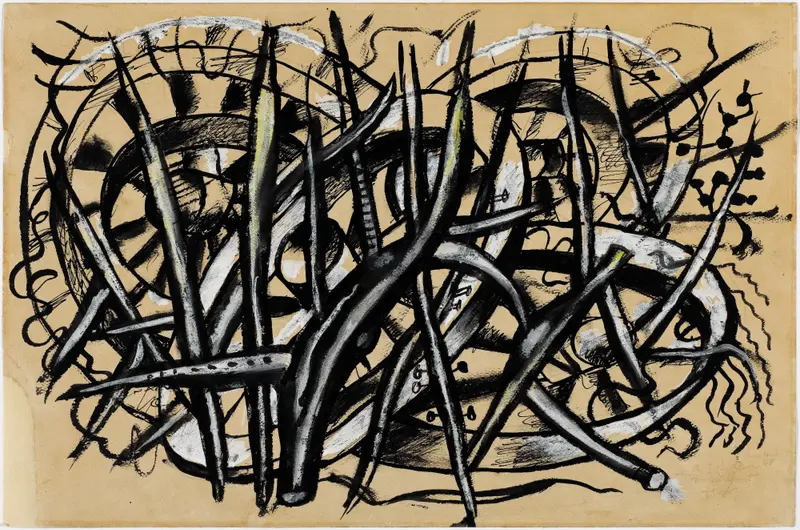
The Wheels
Fernand Léger

Le Cirque Médrano
Fernand Léger
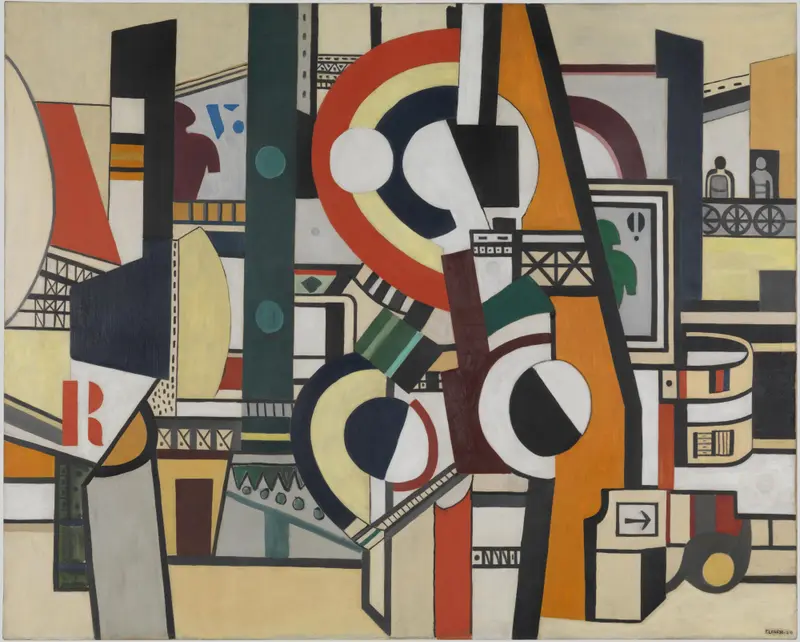
The Disks in the City
Fernand Léger
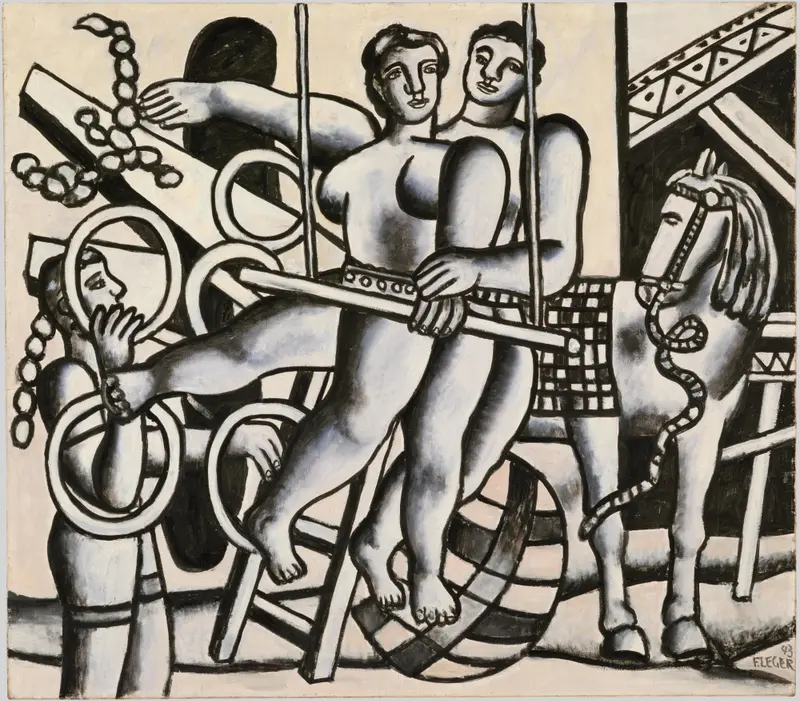
Le Jongleur et les acrobates
Fernand Léger
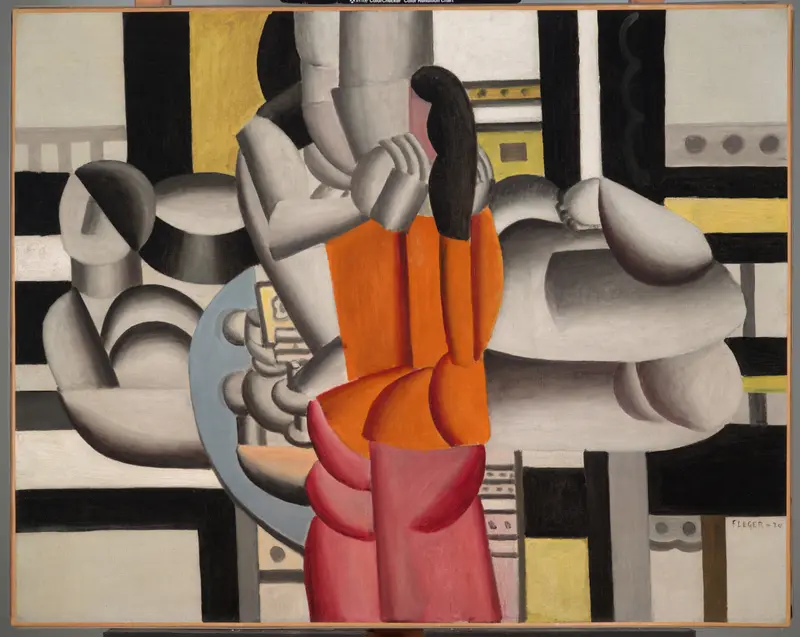
Three Women and Still Life (Déjeuner)
Fernand Léger
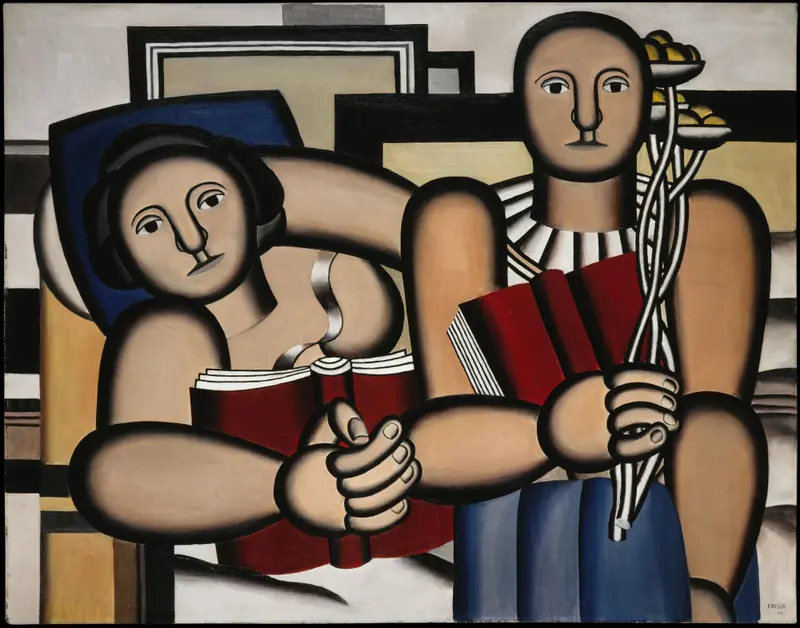
Reading
Fernand Léger
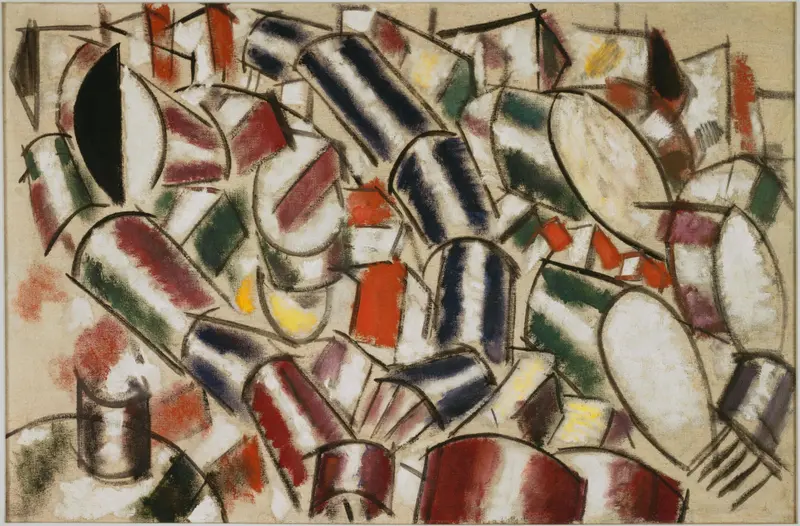
Femme couchée
Fernand Léger
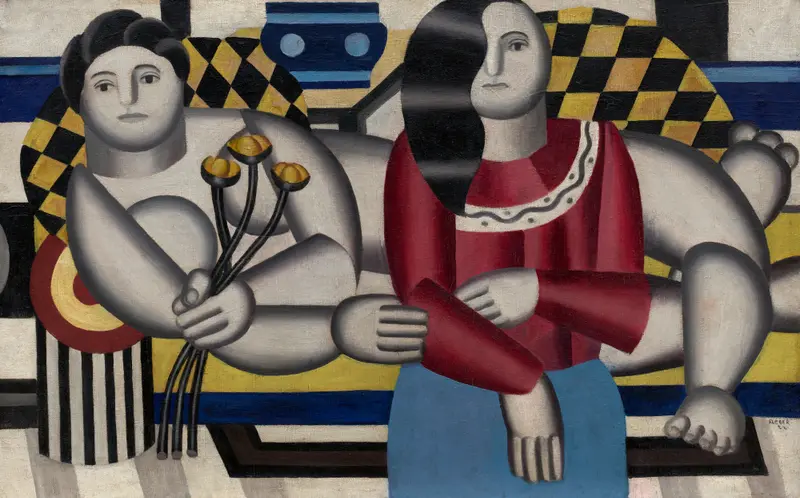
Woman holding flowers
Fernand Léger
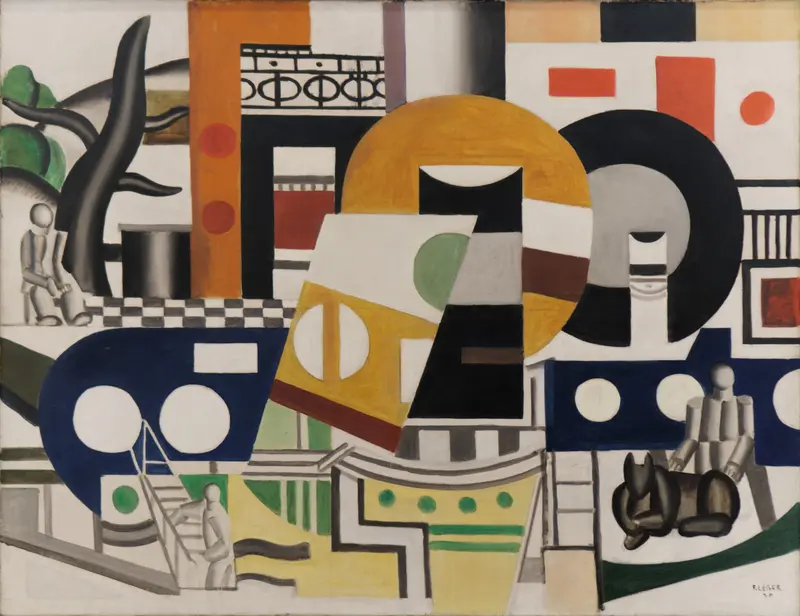
The Tug
Fernand Léger
More Genre Scene Art

Banquet of the Officers of the St George Civic Guard
Frans Hals

Rembrandt and Saskia in the Scene of the Prodigal Son
Rembrandt van Rijn

Bal du moulin de la Galette
Pierre-Auguste Renoir

Quadrille at the Moulin Rouge
Henri de Toulouse-Lautrec

A Burial at Ornans
Gustave Courbet

When Will You Marry?
Paul Gauguin