
The Four Seasons, Autumn Wood-cutting — History & Facts
A hush of late autumn fills this roundel, where the last leaves have already surrendered to the season and the work of wood-cutting becomes a communal ritual. The viewer’s eye is drawn first to the figures in the foreground, their bodies bent with effort—one man swings his axe, another saws, while a third tugs at a stubborn root. The palette is cool and earthy, the sky a pale, wintry blue, and the bare trees frame a village whose clustered roofs and distant church tower anchor the scene in a world both familiar and receding.
The light, soft and indirect, glows from the windows and guides us gently from the laborers to the quiet life of the town beyond. Every gesture is purposeful: the men’s red vests set them apart from the muted land, while the distant cart and bundled branches speak to the cycle of work and rest. Painted between 1610 and 1616, this work by Abel Grimmer belongs to a tradition that flourished in the Low Countries, where scenes of rural life and the turning year found eager patrons among urban merchants and burghers. Such images, often produced in series depicting the four seasons, were as much about marking time as celebrating the dignity of ordinary labor.
The circular format, unusual and intimate, invites the viewer to linger, as if peering through a window into another age. History has kept few traces of the specific journey of this painting, now in the Art UK collection, but its quiet rhythms and honest observation place it firmly within the world of early seventeenth-century Flemish art—an era when the everyday was newly worthy of attention. Look again, and notice how the season’s end is not an ending at all, but a preparation for what comes next.
More Artworks by Abel Grimmer

Flemish proverbs
Abel Grimmer
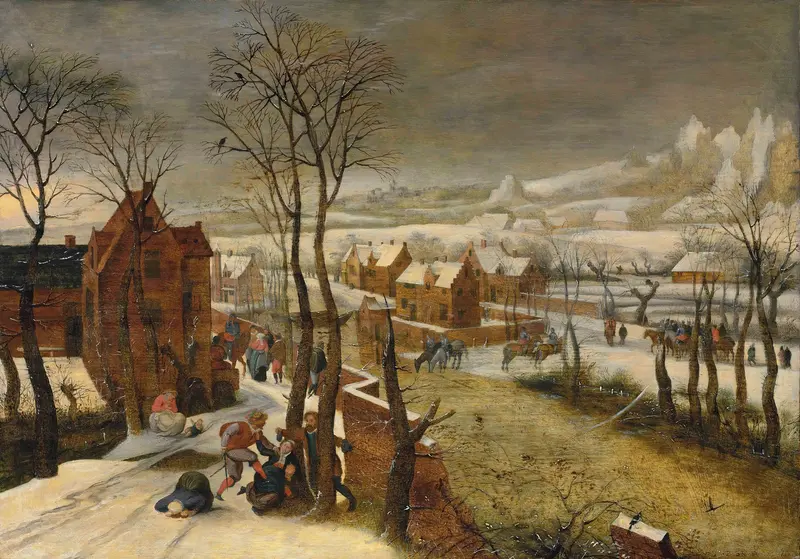
A Village Landscape In Winter With The Massacre Of The Innocents
Abel Grimmer
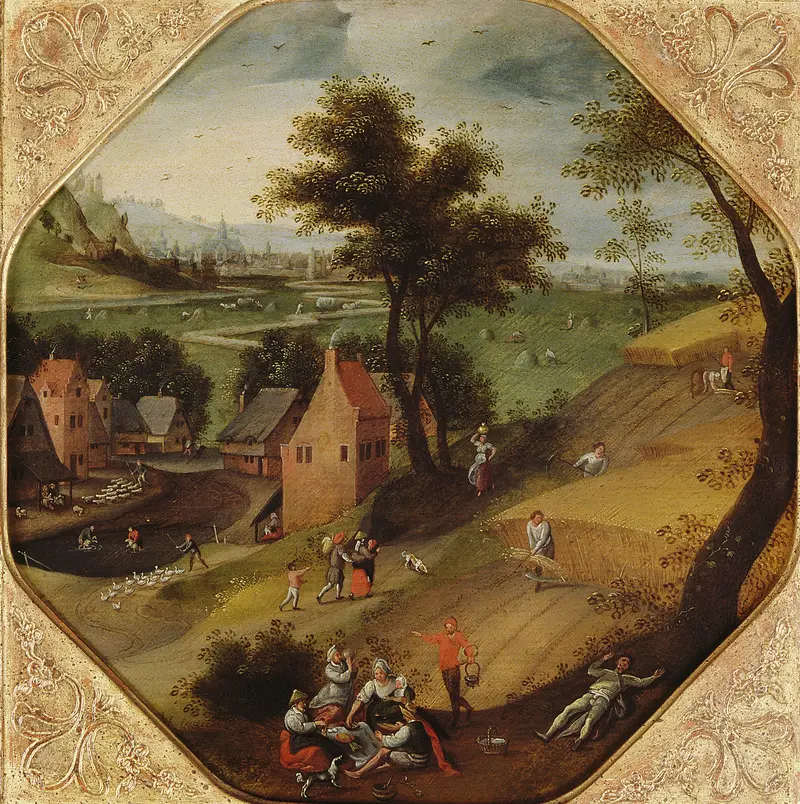
De Zomer
Abel Grimmer
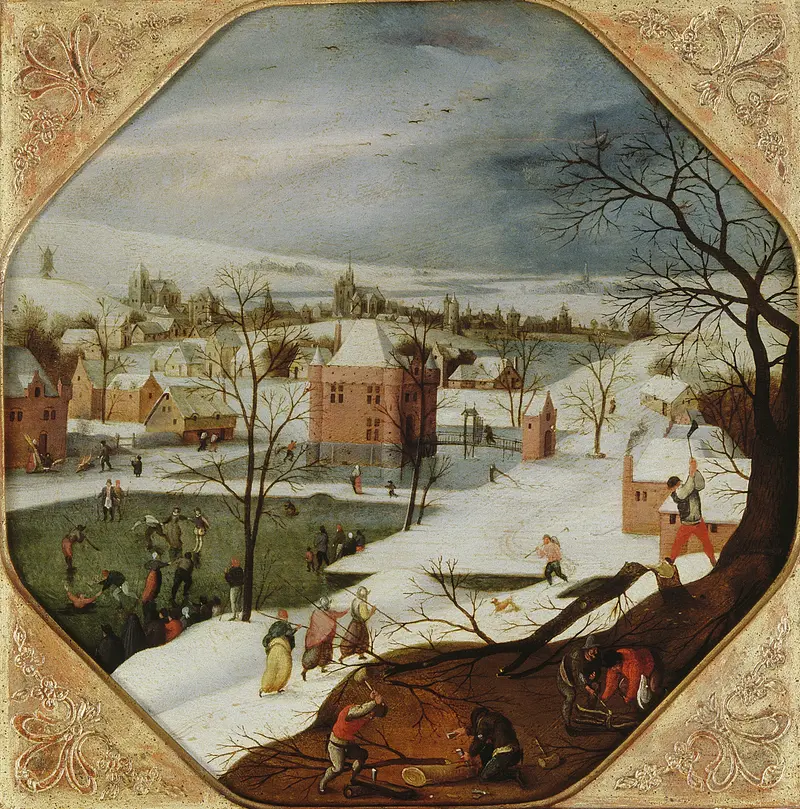
De Winter
Abel Grimmer
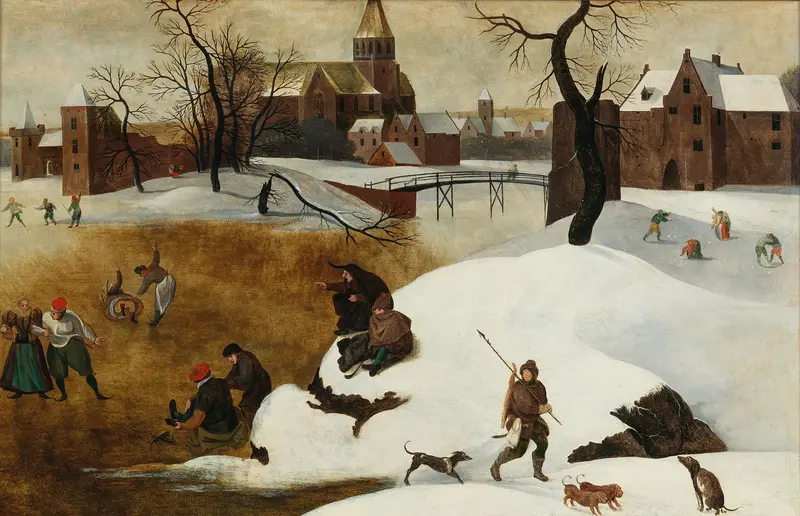
winter landscape with skaters
Abel Grimmer
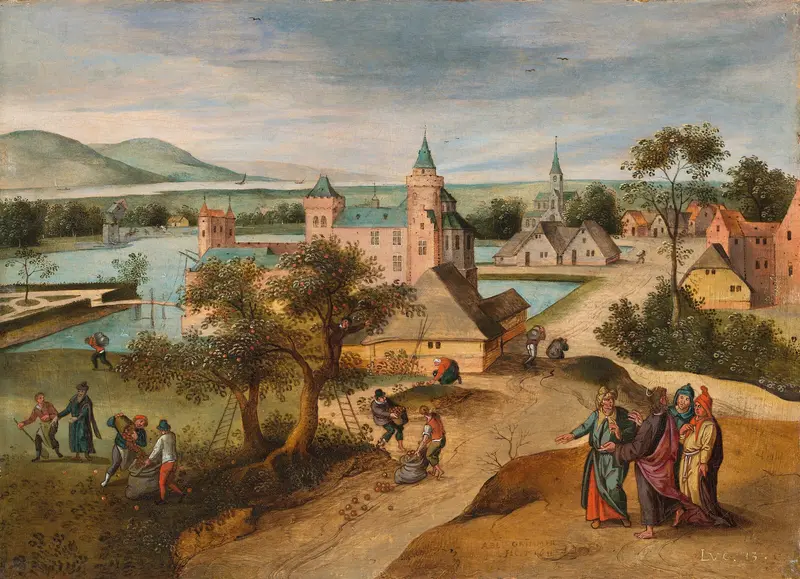
September – The Parable of the Barren Fig Tree
Abel Grimmer
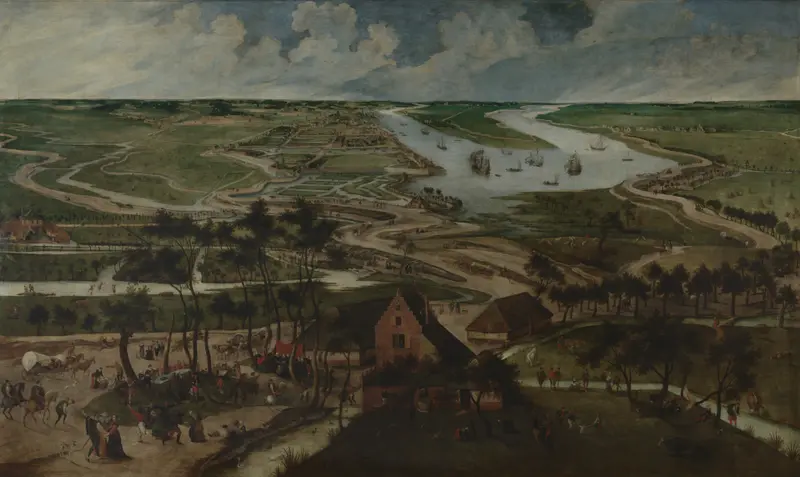
The Eel Huts in the Antwerp Polder outside the Lillo or Slijk Gate
Abel Grimmer
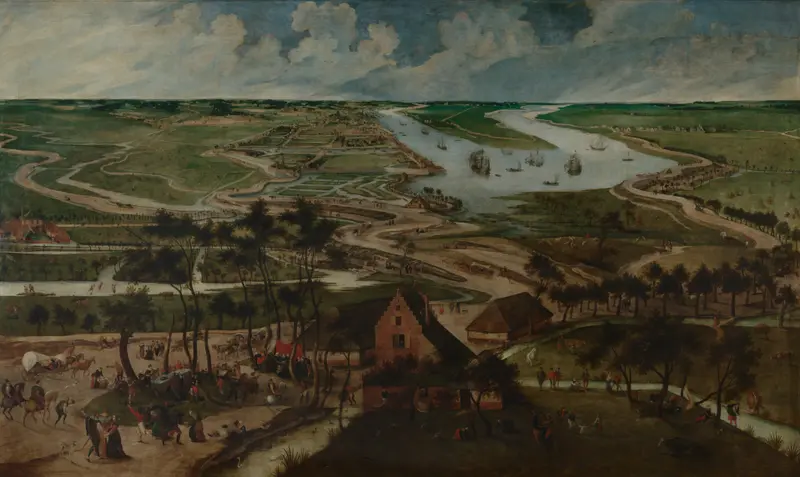
De Antwerpse polder en de Palinghuizen buiten de Slijk- of Lillopoort
Abel Grimmer
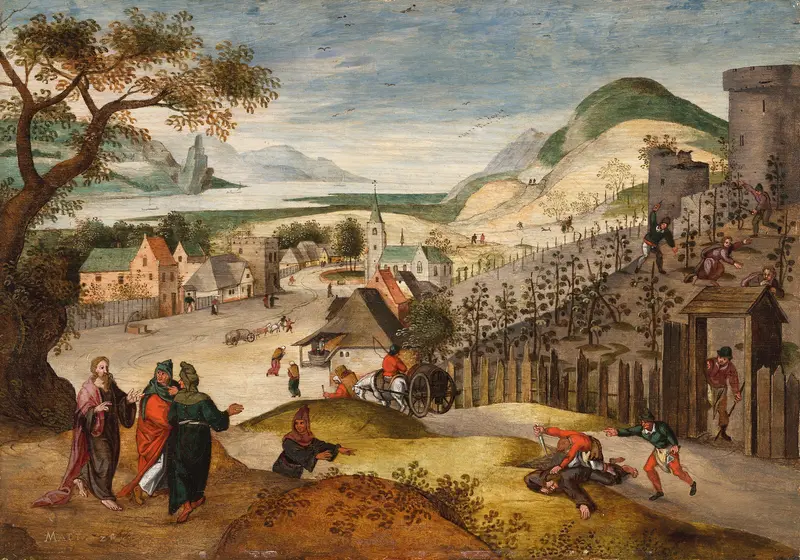
October – The Parable of the Vineyard
Abel Grimmer
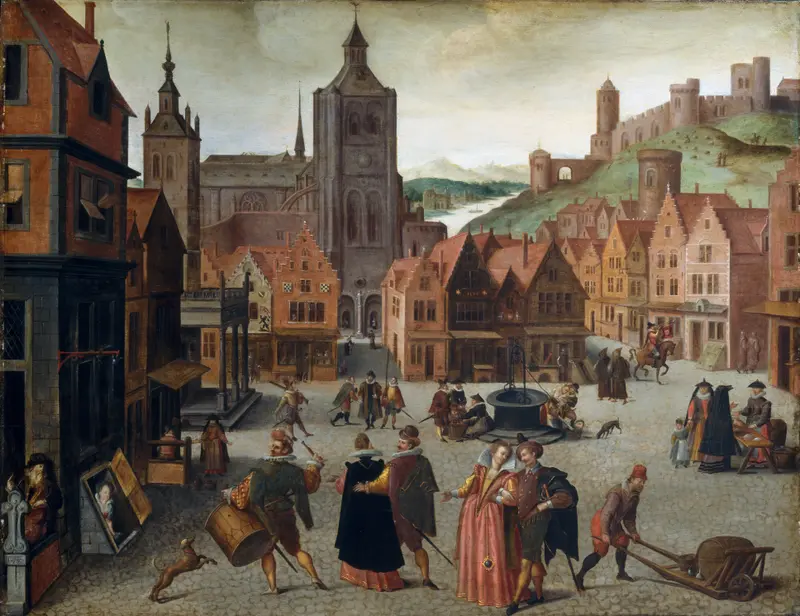
The Marketplace in Bergen op Zoom
Abel Grimmer
More Genre Scene Art

Banquet of the Officers of the St George Civic Guard
Frans Hals

Rembrandt and Saskia in the Scene of the Prodigal Son
Rembrandt van Rijn

Bal du moulin de la Galette
Pierre-Auguste Renoir

Quadrille at the Moulin Rouge
Henri de Toulouse-Lautrec

A Burial at Ornans
Gustave Courbet

When Will You Marry?
Paul Gauguin