
The Four Seasons: Ivlivs — History & Facts
A hush of golden light settles over the village, but the scene is anything but still. In The Four Seasons: Ivlivs, Abel Grimmer draws the viewer into a world bustling with the rhythms of summer labor and leisure. The eye is drawn first to the figures in the foreground: men wielding scythes, women gathering hay, and groups reclining in the grass, their postures relaxed, their faces turned toward one another in conversation.
The artist’s careful placement of figures—some bent in toil, others resting—captures the pulse of a community bound by the cycles of work and reward. The gentle haze in the sky hints at the warmth of July, while the deep greens and earthy reds anchor the scene in the fullness of the season. This kind of painting flourished in the late sixteenth and early seventeenth centuries, when Flemish artists like Abel Grimmer found eager patrons among the burgeoning merchant class. Such works were prized for their celebration of rural life and their subtle reminders of time’s passage—each season a chapter in the year’s unfolding story.
The painting now belongs to the Art UK collection, a fitting home for a scene that speaks as much to the rhythms of the past as to the universal pleasures of a summer’s day. Stand before it and you may find yourself listening for the hum of scythes, the laughter of villagers, and the quiet promise of harvest.
More Artworks by Abel Grimmer

Flemish proverbs
Abel Grimmer
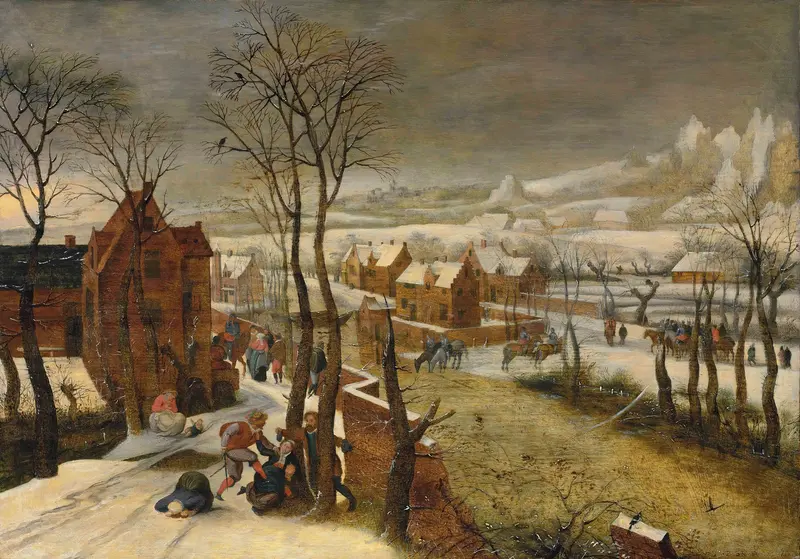
A Village Landscape In Winter With The Massacre Of The Innocents
Abel Grimmer
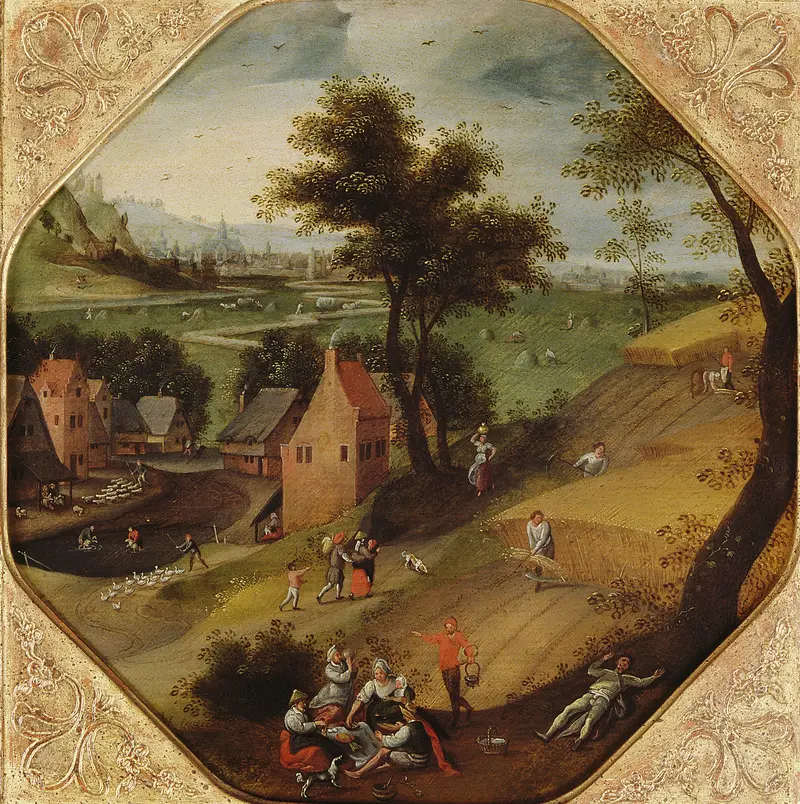
De Zomer
Abel Grimmer
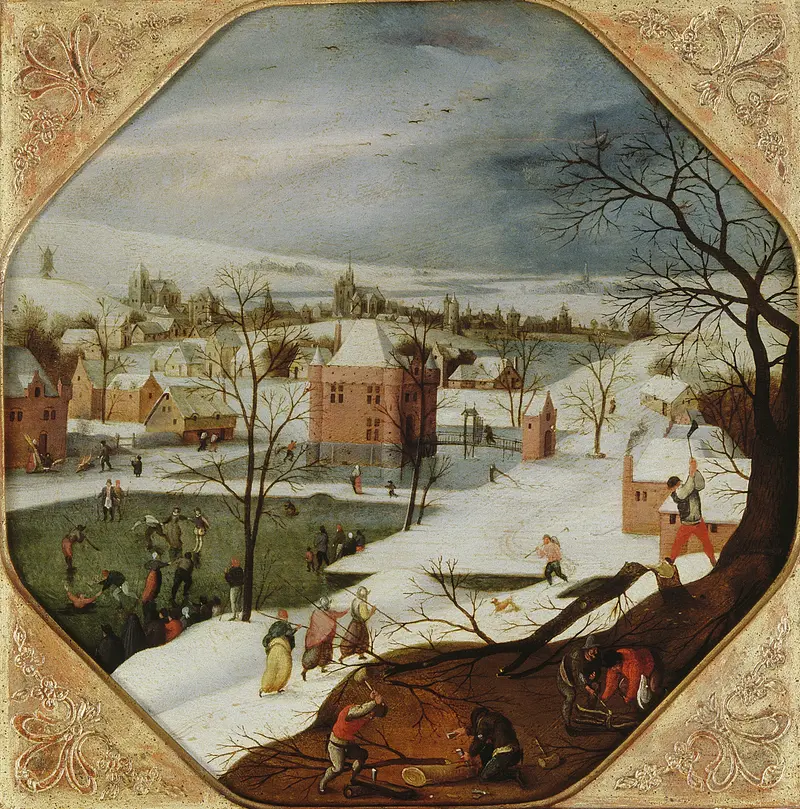
De Winter
Abel Grimmer
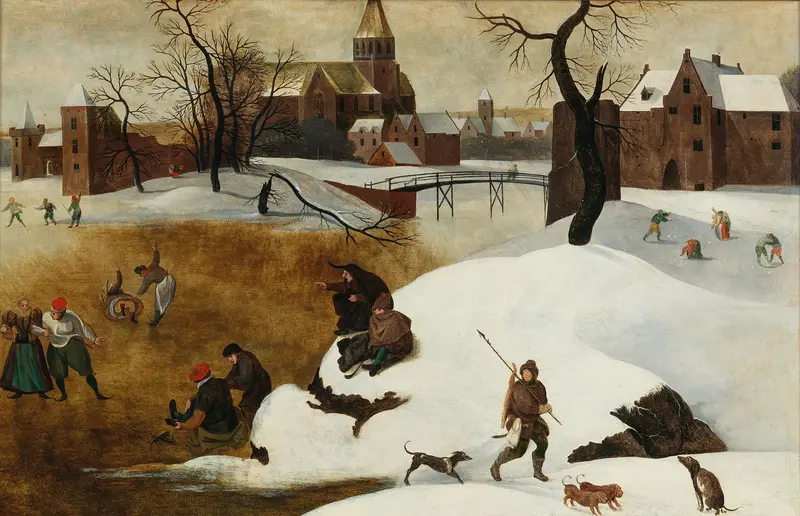
winter landscape with skaters
Abel Grimmer
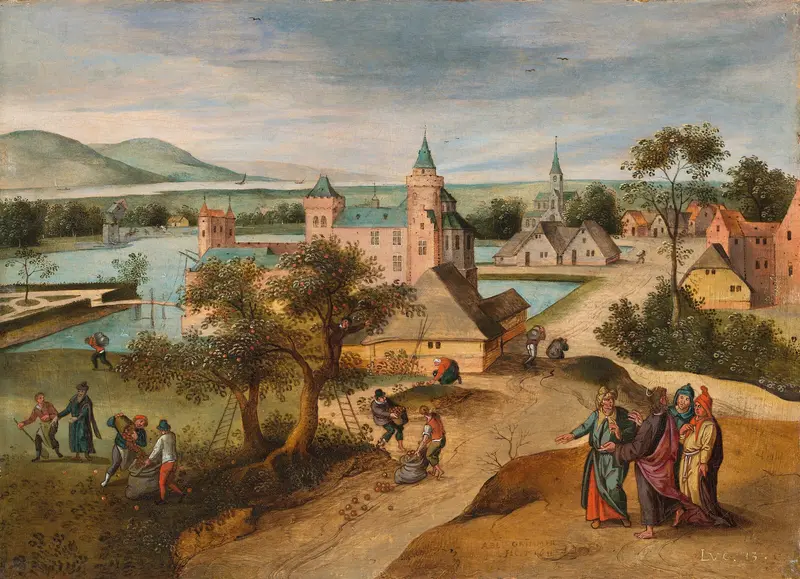
September – The Parable of the Barren Fig Tree
Abel Grimmer
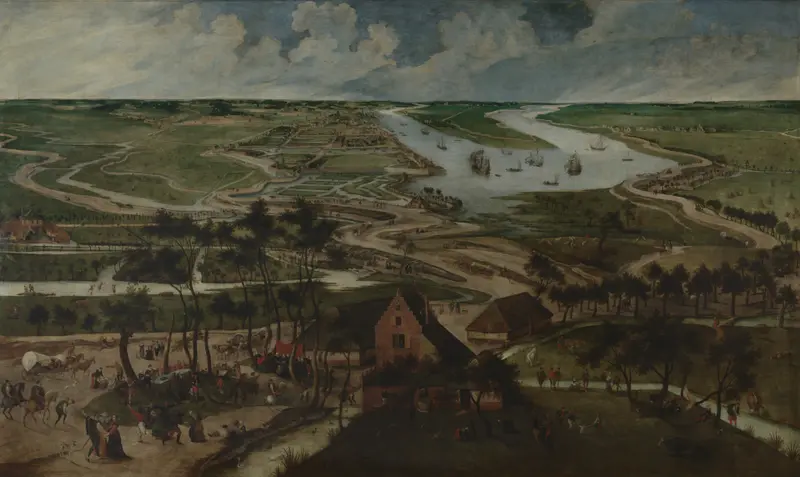
The Eel Huts in the Antwerp Polder outside the Lillo or Slijk Gate
Abel Grimmer
De Antwerpse polder en de Palinghuizen buiten de Slijk- of Lillopoort
Abel Grimmer
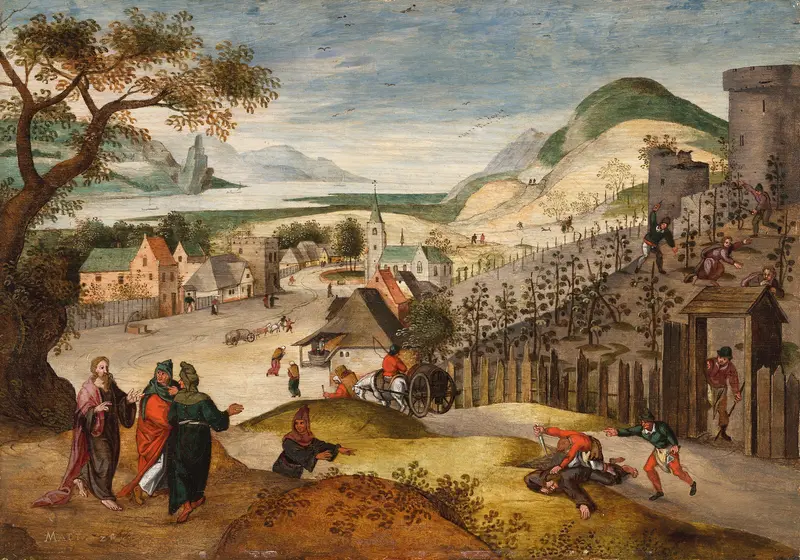
October – The Parable of the Vineyard
Abel Grimmer
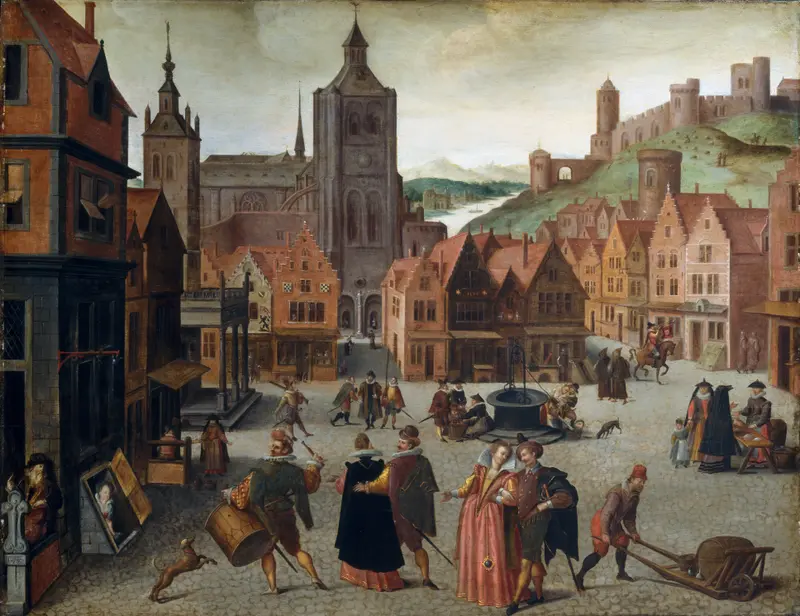
The Marketplace in Bergen op Zoom
Abel Grimmer
More Genre Scene Art

Banquet of the Officers of the St George Civic Guard
Frans Hals

Rembrandt and Saskia in the Scene of the Prodigal Son
Rembrandt van Rijn

Bal du moulin de la Galette
Pierre-Auguste Renoir

Quadrille at the Moulin Rouge
Henri de Toulouse-Lautrec

A Burial at Ornans
Gustave Courbet

When Will You Marry?
Paul Gauguin