
The fruit seller — History & Facts
What draws you in first is not the abundance of fruit, but the glint of mischief in the fruit seller’s eyes—a flash of personality that refuses to be overshadowed by the mountain of melons, gourds, and grapes crowding the foreground. The seller’s yellow blouse, rendered in thick, almost sculpted paint, catches the light and pulls your gaze upward from the rough, tactile heap of produce to her steady, knowing face. Her hand, firm and practical, cradles a watermelon as if offering it directly to the viewer, bridging the world of the painting and our own.
The dark, nearly black background isolates her and her wares, making the colors of the fruit and her blouse burn all the brighter, and turning an everyday market scene into something intimate and theatrical. Painted before 1899, The fruit seller by Antonio Mancini belongs to a world where the market was not just a place of commerce but of performance, negotiation, and daily ritual. In the late nineteenth century, artists across Europe became fascinated by working people, capturing the dignity and individuality of street vendors, laborers, and artisans. Mancini, known for his expressive brushwork and psychological insight, here gives the fruit seller a quiet authority.
The painting now resides in the Dordrechts Museum, a reminder of a time when such scenes were both common and worthy of close, painterly attention. Look again at the seller’s face—the story of her day, and perhaps her life, is there for the reading.
More Artworks by Antonio Mancini

Portrait of a lady
Antonio Mancini
Self-Portrait
Antonio Mancini
The Flower Seller
Antonio Mancini
The Saltimbanco
Antonio Mancini
The sick child
Antonio Mancini
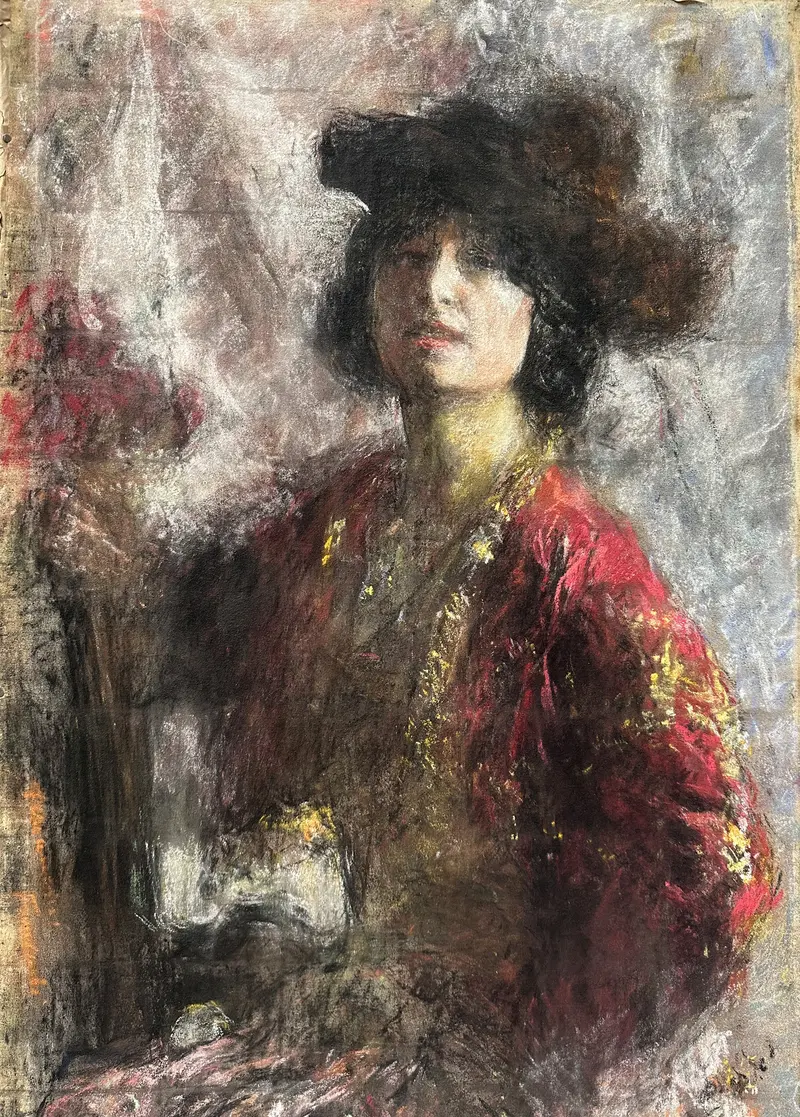
Bolero. Bullfighter
Antonio Mancini
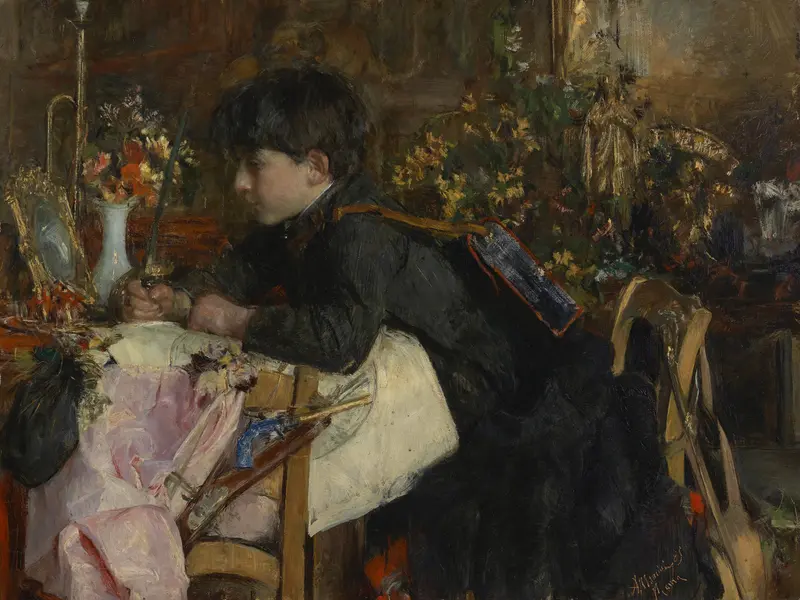
The birthday
Antonio Mancini
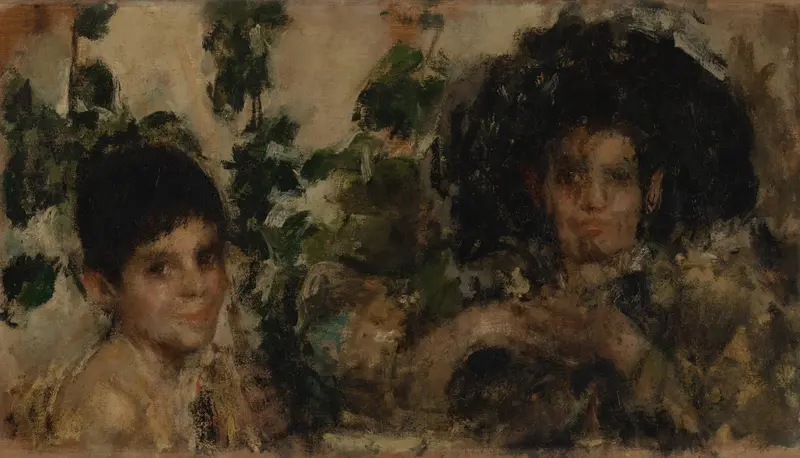
The brothers
Antonio Mancini
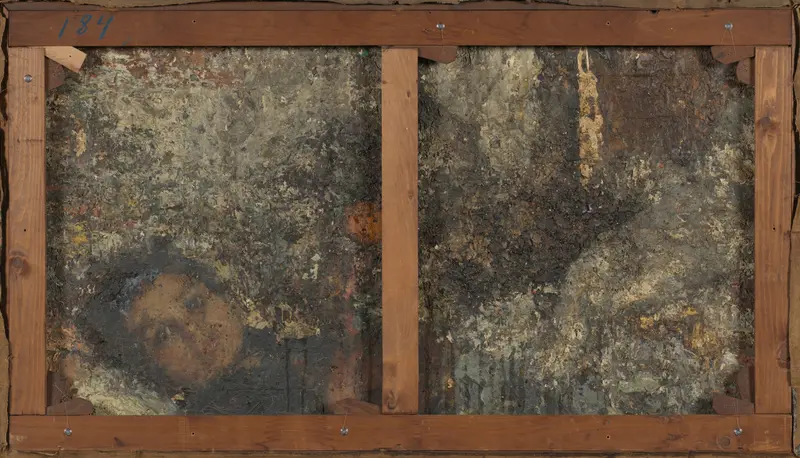
Liggend kind hwm0184v The Mesdag Collection
Antonio Mancini
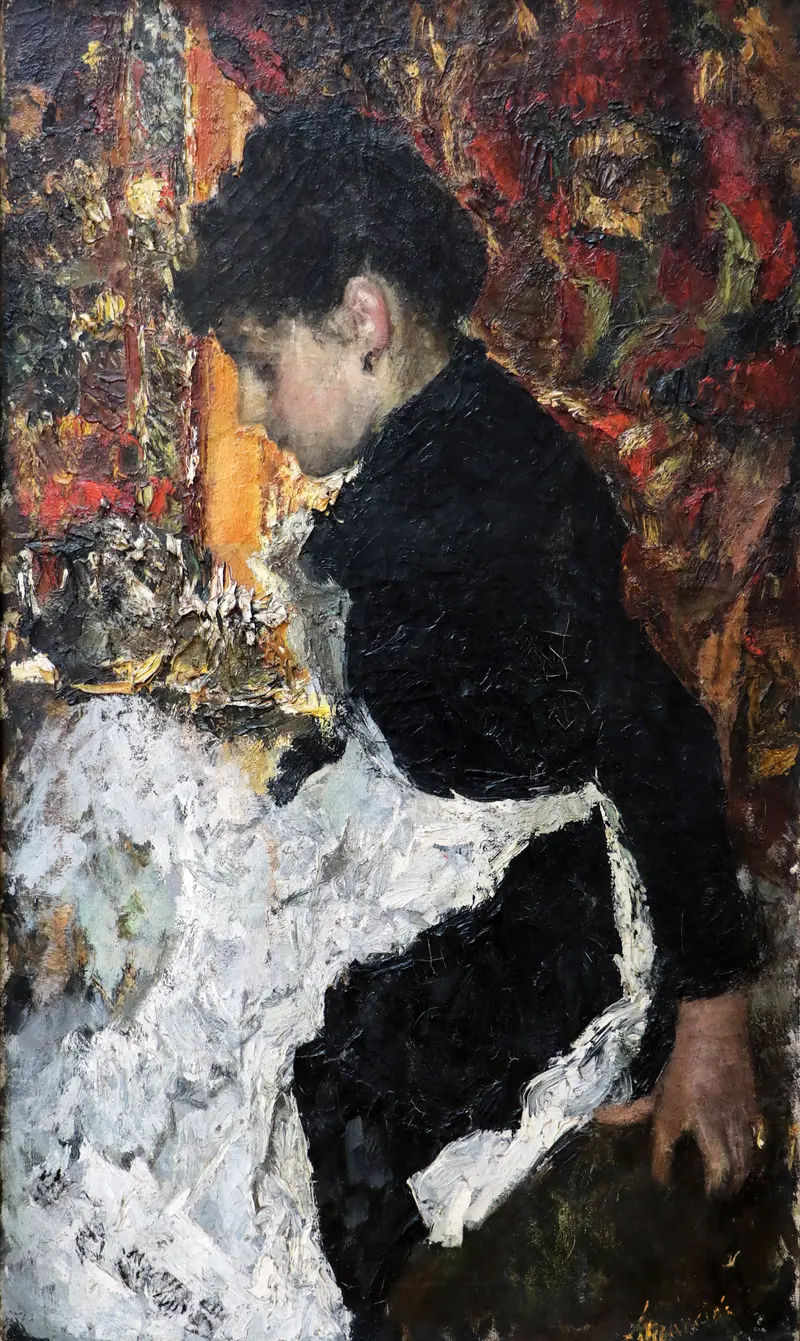
Servetta
Antonio Mancini
More Genre Scene Art

Banquet of the Officers of the St George Civic Guard
Frans Hals

Rembrandt and Saskia in the Scene of the Prodigal Son
Rembrandt van Rijn

Bal du moulin de la Galette
Pierre-Auguste Renoir

Quadrille at the Moulin Rouge
Henri de Toulouse-Lautrec

A Burial at Ornans
Gustave Courbet

When Will You Marry?
Paul Gauguin