
The Funeral and wedding. — History & Facts
A single crowd splits into two currents, and the eye is caught between the somber and the celebratory. In The Funeral and wedding. by Aleksander Kotsis, the painter sets the drama not in a single event, but in the collision of opposites: a wedding procession, crowned with flowers and pale garments, brushes past a funeral, marked by black flags and bowed heads. The palette is earthy, the sky heavy, but the white of the wedding clothes and the fluttering banners draw the viewer’s gaze to the living heart of the scene.
Each face is painted with care, some turned inward in grief, others forward in hope or curiosity—together, they form a tapestry of rural life where joy and sorrow are never far apart. Painted in 1864, this work belongs to a moment in Polish art when painters like Kotsis turned to the customs and rituals of village life, capturing the rhythms that shaped their own world. Such genre scenes were often commissioned or collected by a rising urban class, eager to preserve or romanticize the traditions of the countryside in a time of political upheaval and rapid change. Today, The Funeral and wedding. is held by the National Museum in Warsaw—a fitting home for a painting that weaves together the public and the personal, the festive and the mournful, in a single, unforgettable encounter.
The crowd’s restless energy invites you to linger, to search for your own place among the faces, and to wonder at the stories that pass each other on the road.
More Artworks by Aleksander Kotsis

Trip in the Tatra Mountains
Aleksander Kotsis

Fair in Nowy Targ
Aleksander Kotsis
Pastoral Scene
Aleksander Kotsis
In the farmyard
Aleksander Kotsis
Haggling over a Calf
Aleksander Kotsis
Heads of Two Young Girls
Aleksander Kotsis
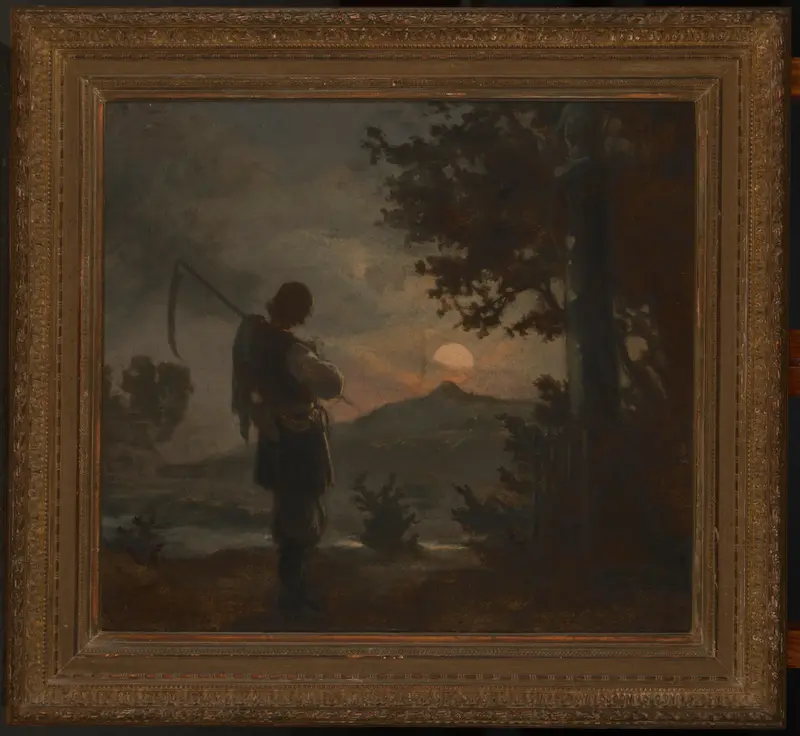
Haymaker
Aleksander Kotsis
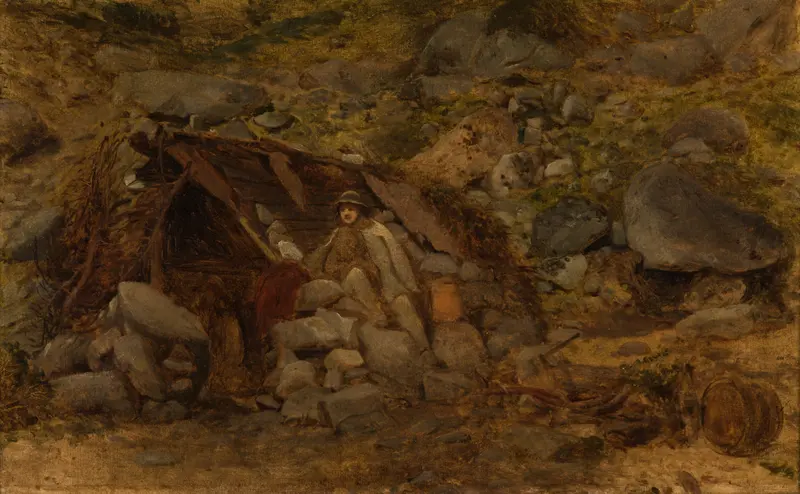
Highlander in Front of a Hut
Aleksander Kotsis
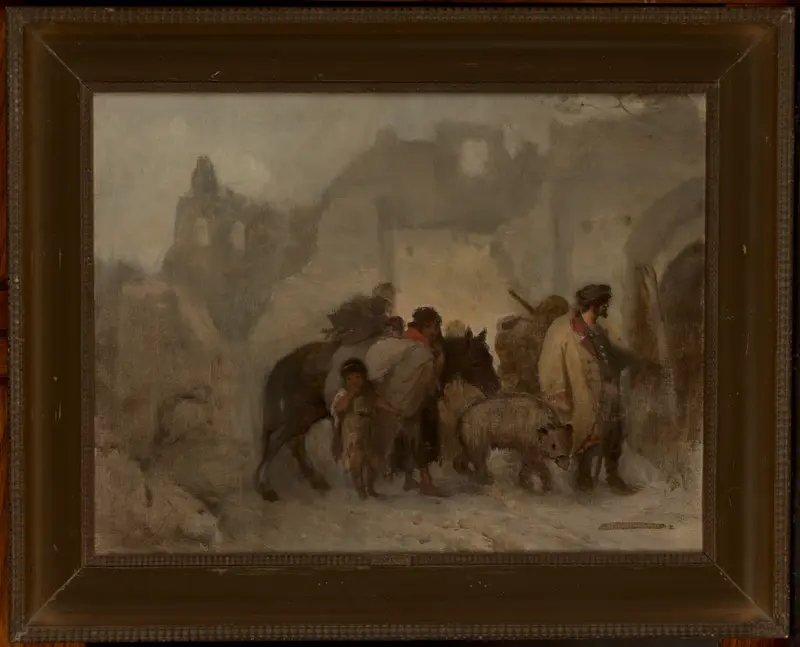
Gypsies
Aleksander Kotsis
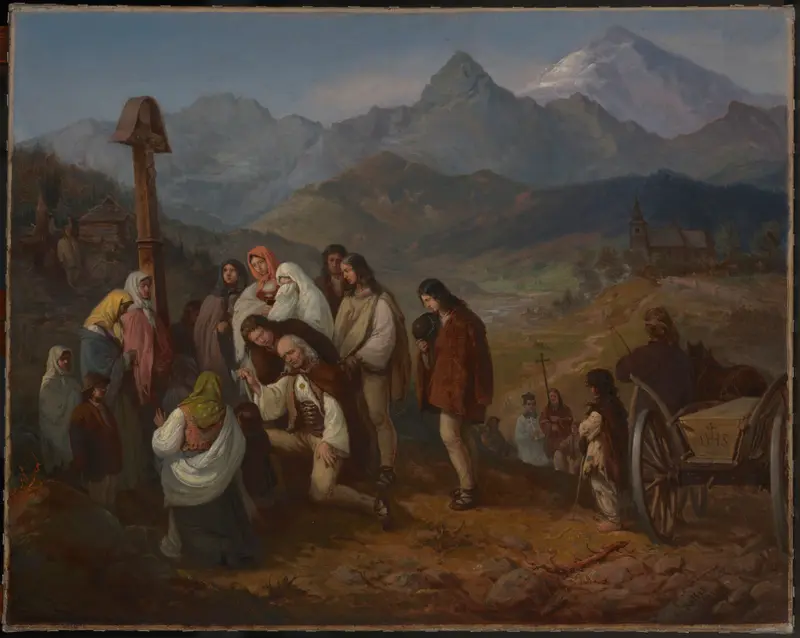
A Highlander's Funeral
Aleksander Kotsis
More Genre Scene Art

Banquet of the Officers of the St George Civic Guard
Frans Hals

Rembrandt and Saskia in the Scene of the Prodigal Son
Rembrandt van Rijn

Bal du moulin de la Galette
Pierre-Auguste Renoir

Quadrille at the Moulin Rouge
Henri de Toulouse-Lautrec

A Burial at Ornans
Gustave Courbet

When Will You Marry?
Paul Gauguin