
The Gateway to a Town — History & Facts
A curious mystery lingers over The Gateway to a Town by Abraham Bloemaert: despite its assured hand and lively composition, neither the date of its creation nor the circumstances of its commission are known. This uncertainty has made the painting a subject of ongoing scholarly interest, as experts attempt to place it within the shifting landscape of Dutch art in the late sixteenth and early seventeenth centuries. What is certain is that Bloemaert, a central figure in the Utrecht school, was renowned for his ability to blend Northern realism with Italianate elegance—a quality that pulses through this enigmatic work.
The painting stands as a testament to Bloemaert’s fascination with the everyday drama of city life, filtered through his keen eye for architectural detail. At the heart of the image, a fortified gate dominates the scene, its archway framing a bustling threshold between countryside and town. Figures gather at the entrance: a merchant haggling with a guard, children playing, a woman balancing a basket. The gate itself, rendered with weathered stone and careful perspective, serves as both a literal and symbolic boundary—dividing the ordered world within from the unpredictable world beyond.
The light falls unevenly, illuminating the faces and gestures of those who linger at the edge, suggesting a narrative of transition and encounter. Unlike the grand, ceremonial city gates painted by Jan van der Heyden, Bloemaert’s gateway is alive with the small, daily negotiations of ordinary people. The physical history of The Gateway to a Town is as elusive as its subject is immediate. No record survives of its first owner or the early chapters of its journey, though works of this type were often destined for the homes of prosperous burghers or civic buildings in the Dutch Republic.
Today, it is recognized as a fine example of Bloemaert’s mature style, bridging the gap between the Mannerist complexity of his early years and the more naturalistic approach of his later period. The painting’s survival and continued appreciation underscore Bloemaert’s enduring importance in Dutch art, even as many details of its own past remain tantalizingly out of reach.
More Artworks by Abraham Bloemaert

Adam and Eve
Abraham Bloemaert
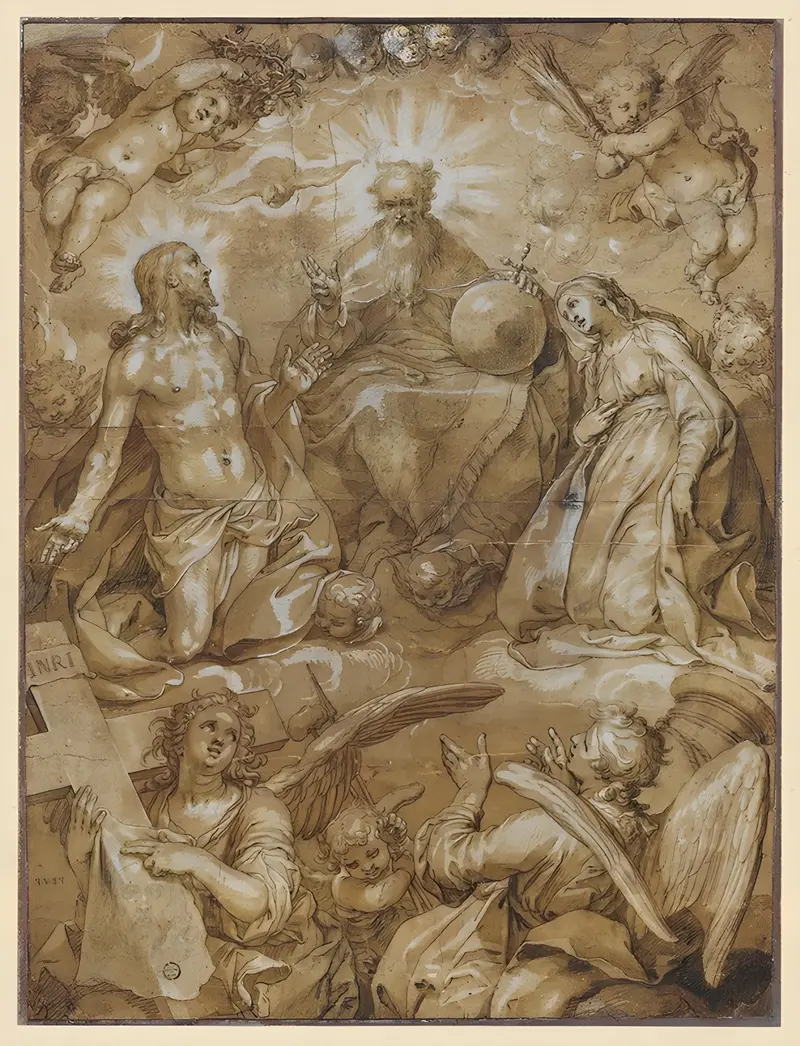
Intercession of Christ and Mary before God the Father
Abraham Bloemaert
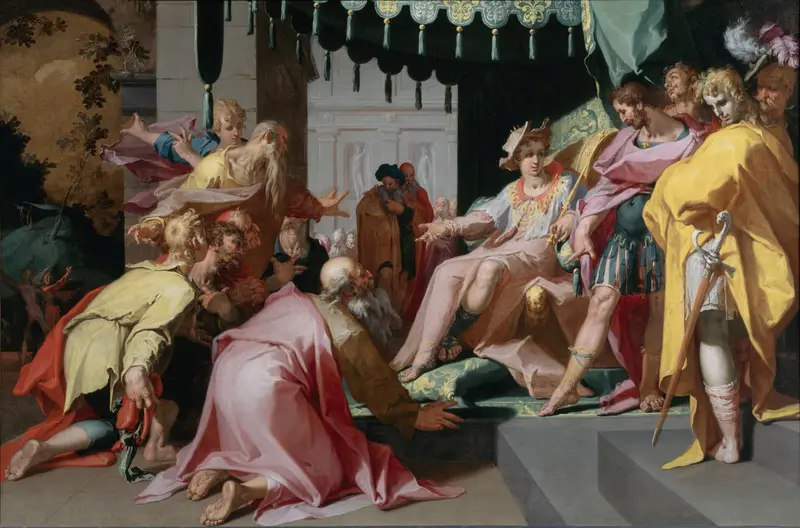
Joseph and his Brothers
Abraham Bloemaert
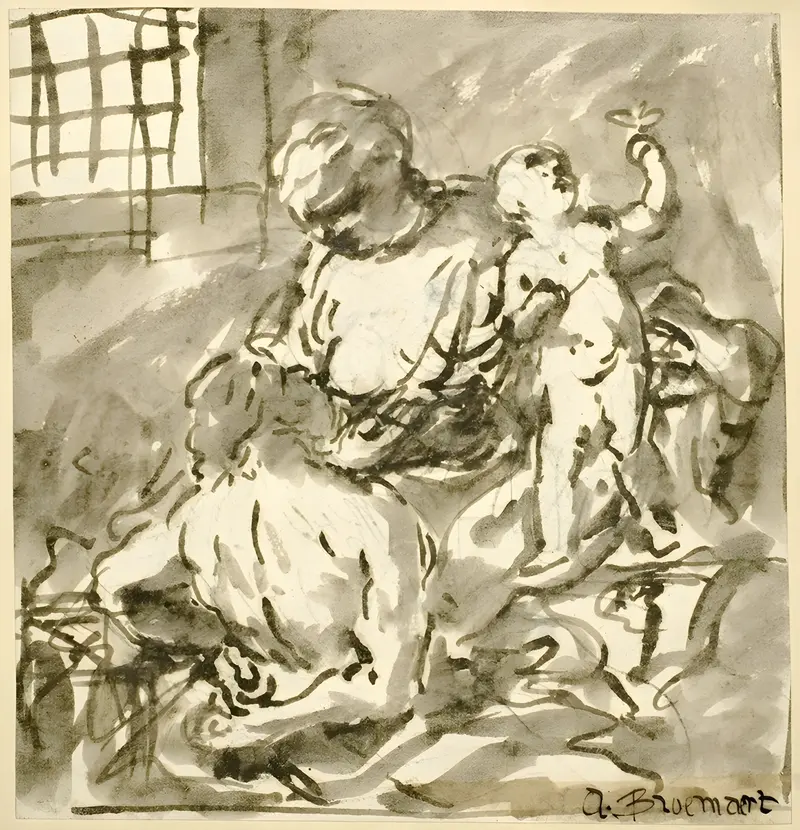
Caritas Romana
Abraham Bloemaert
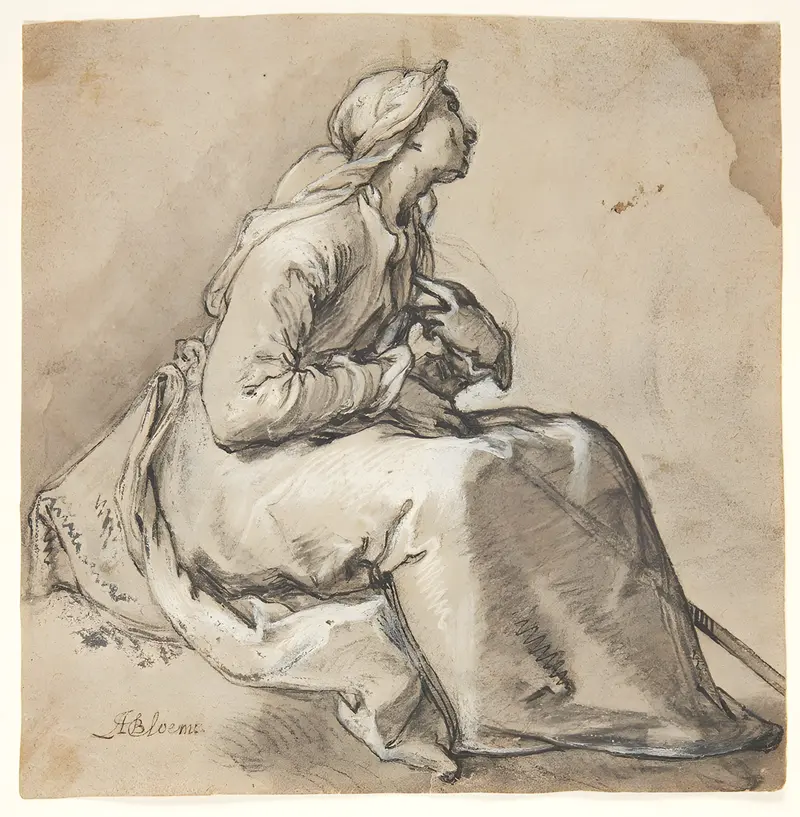
A seated woman facing right
Abraham Bloemaert
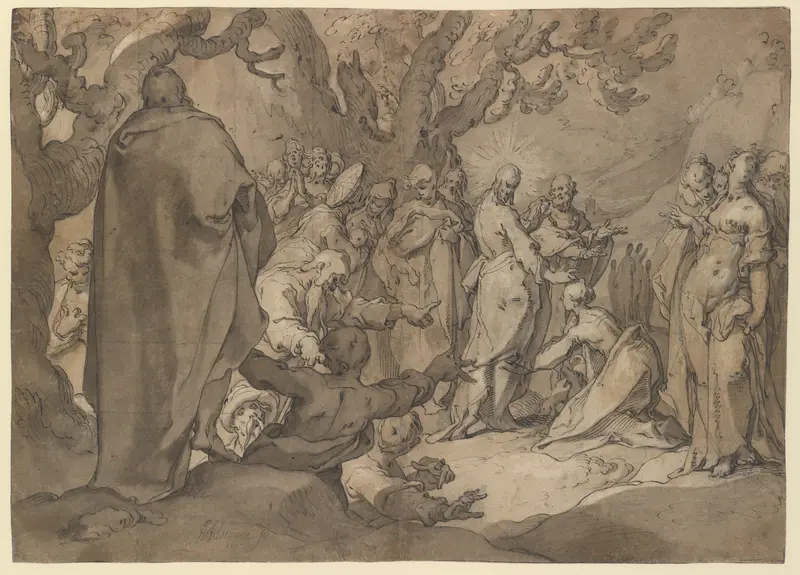
Christ and the Canaanite Women
Abraham Bloemaert
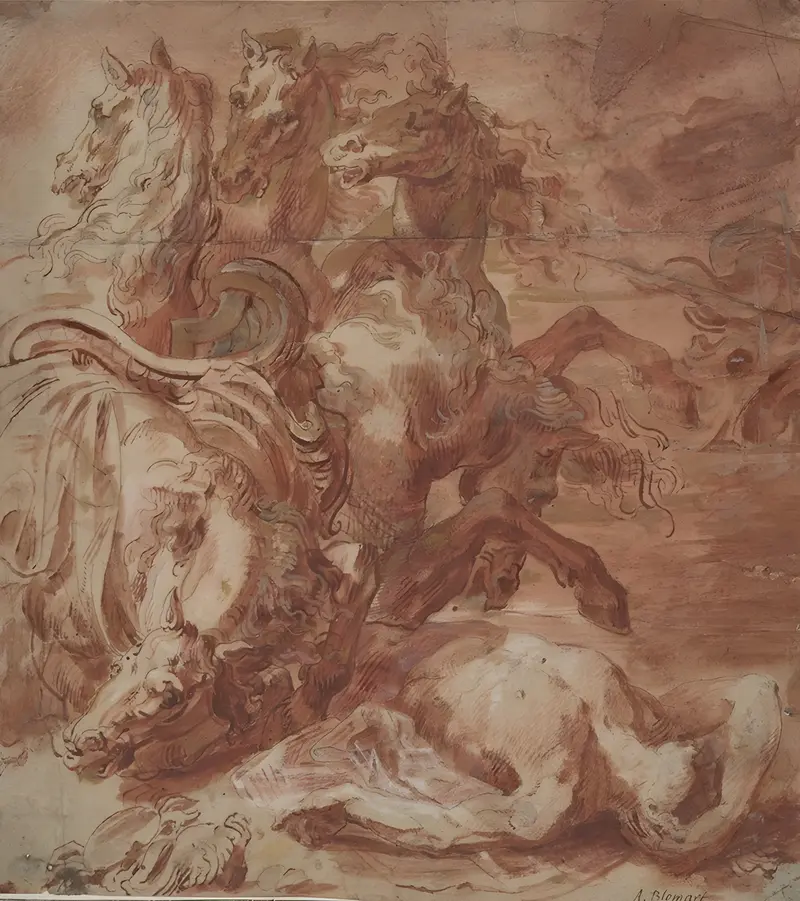
Hippolytus
Abraham Bloemaert
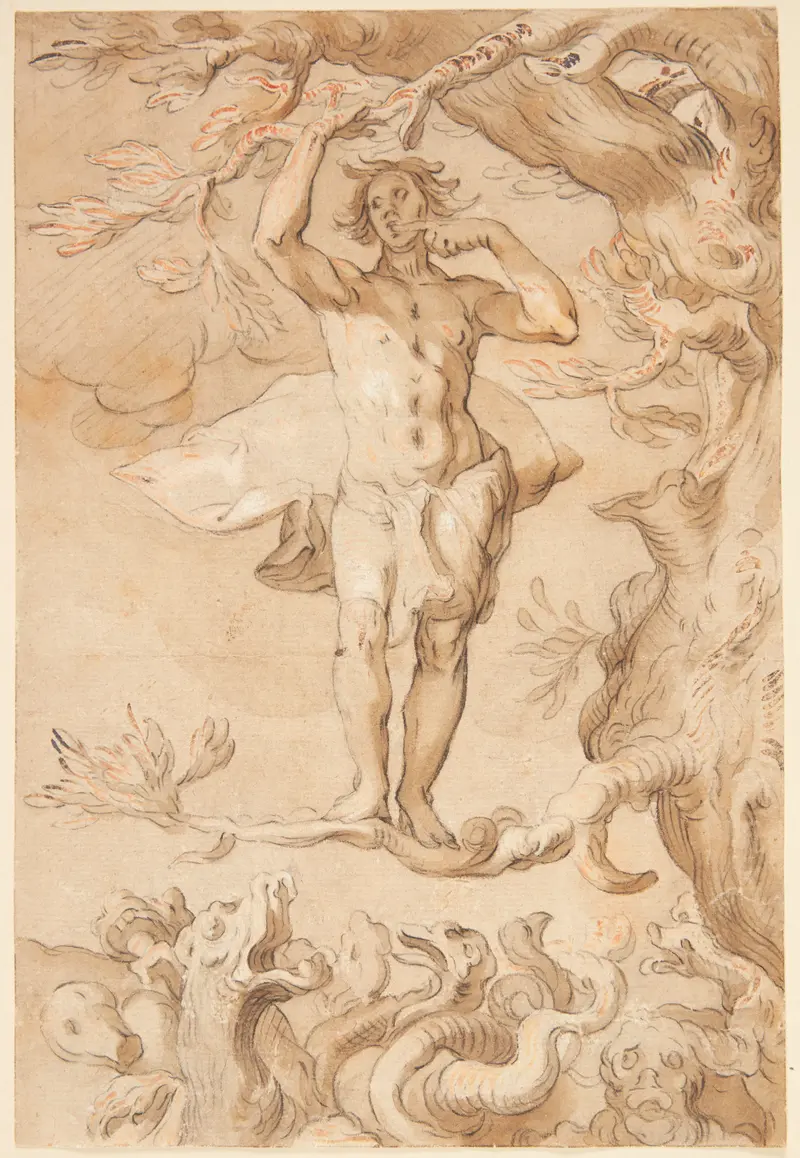
Den menneskelige glædes skrøbelighed En mand, der jages af en drage, klynger sig til en gren, mens han slikker honning af sin finger
Abraham Bloemaert

Moses Striking the Rock
Abraham Bloemaert
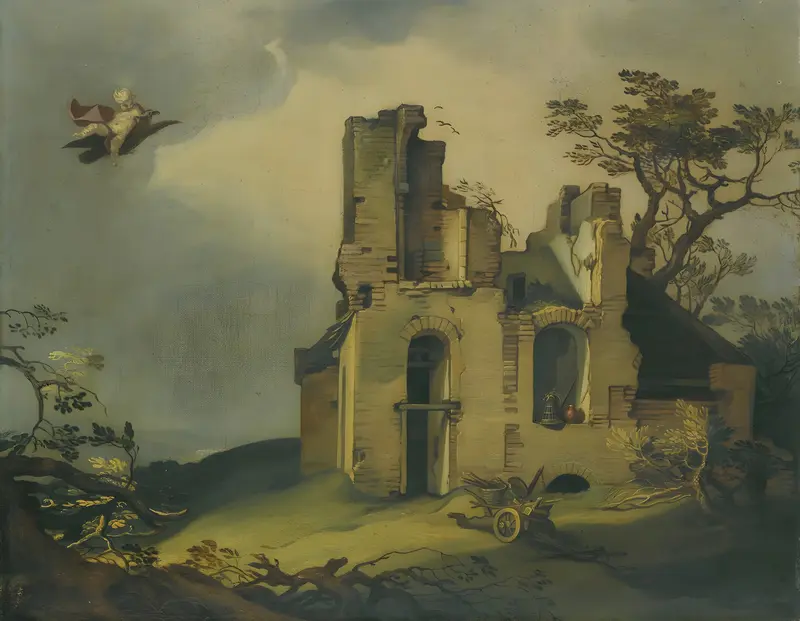
A Landscape With Ruins, With The Rape Of Ganymede
Abraham Bloemaert
More Genre Scene Art

Banquet of the Officers of the St George Civic Guard
Frans Hals

Rembrandt and Saskia in the Scene of the Prodigal Son
Rembrandt van Rijn

Bal du moulin de la Galette
Pierre-Auguste Renoir

Quadrille at the Moulin Rouge
Henri de Toulouse-Lautrec

A Burial at Ornans
Gustave Courbet

When Will You Marry?
Paul Gauguin