
The harvest — History & Facts
When The harvest was first exhibited in 1865, it quickly became one of Jules Breton’s most admired rural scenes, praised for its dignified portrayal of French peasant life. Breton, himself the son of a landowner from northern France, was known for returning again and again to the theme of the harvest, capturing the changing rhythms of rural labor at a time when industrialization was transforming the countryside. The painting’s popularity was such that Breton produced several variations on the subject, but this version is often singled out for its scale and the quiet monumentality of its figures. At the heart of The harvest stands a group of women pausing from their work, the golden fields stretching behind them under a vast sky.
Breton chooses the moment of rest, rather than toil, allowing viewers to meet the gaze of the harvesters as they lean on their sickles and bind sheaves. The careful rendering of their sunburnt skin, worn clothing, and sturdy hands speaks to both hardship and pride. The light, warm and low, bathes the scene in late-afternoon gold, suggesting both the end of a day’s labor and the cycle of the seasons.
Unlike Jean-François Millet’s more somber The Gleaners, Breton’s harvesters are portrayed with a sense of dignity and collective strength, their presence monumental against the landscape. The exact early history of this particular version of The harvest is not fully documented, but works of this type were often exhibited at the Paris Salon and acquired by collectors interested in the new realism of rural France. Breton’s reputation grew steadily through the 1860s, and he became a leading figure in the movement sometimes called Naturalism. Today, The harvest stands as a testament to Breton’s commitment to portraying the rural poor with empathy and respect.
Its current location is in keeping with many of Breton’s major works, which are found in both French and international museum collections, though the specific provenance of this canvas remains a subject for further research.
More Artworks by Jules Breton

The Song of the Lark
Jules Breton
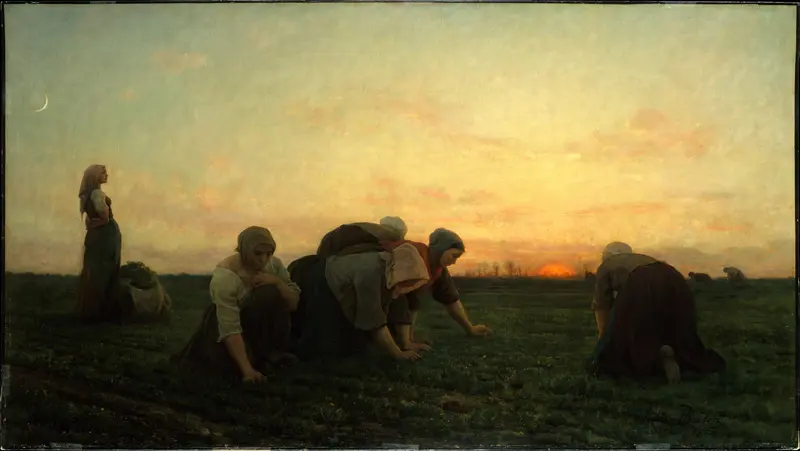
The Weeders
Jules Breton
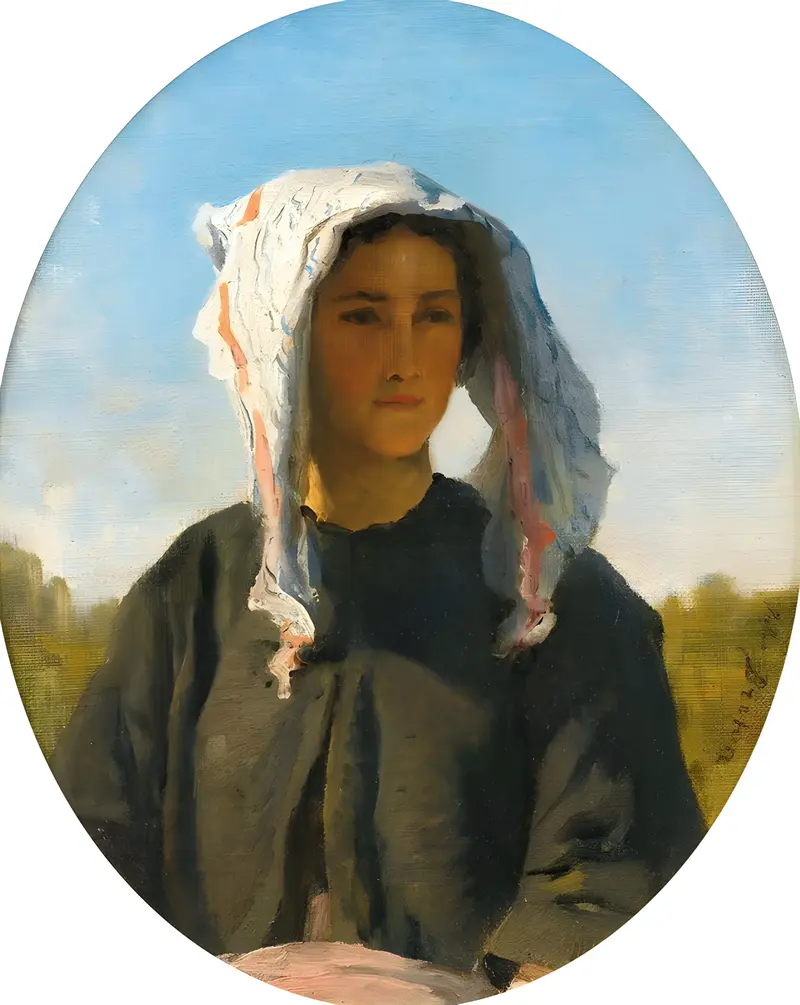
Portrait de jeune Paysanne Bordelaise
Jules Breton
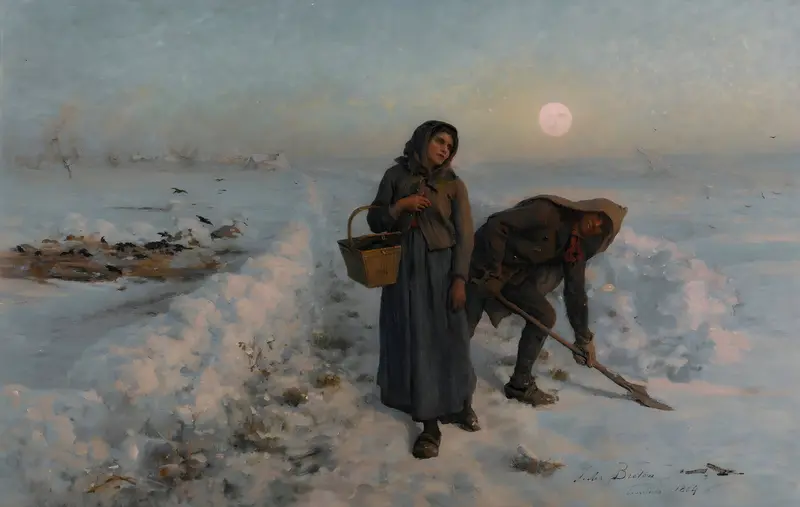
Sur la route en hiver; artois
Jules Breton
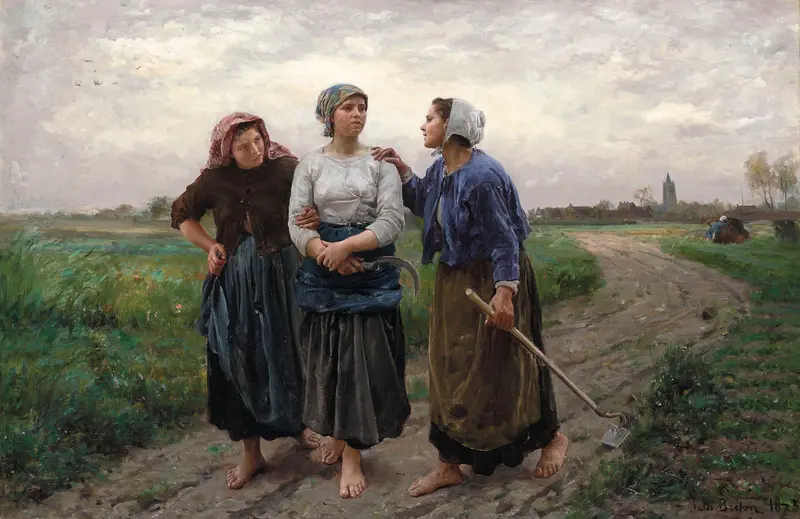
Les amies
Jules Breton
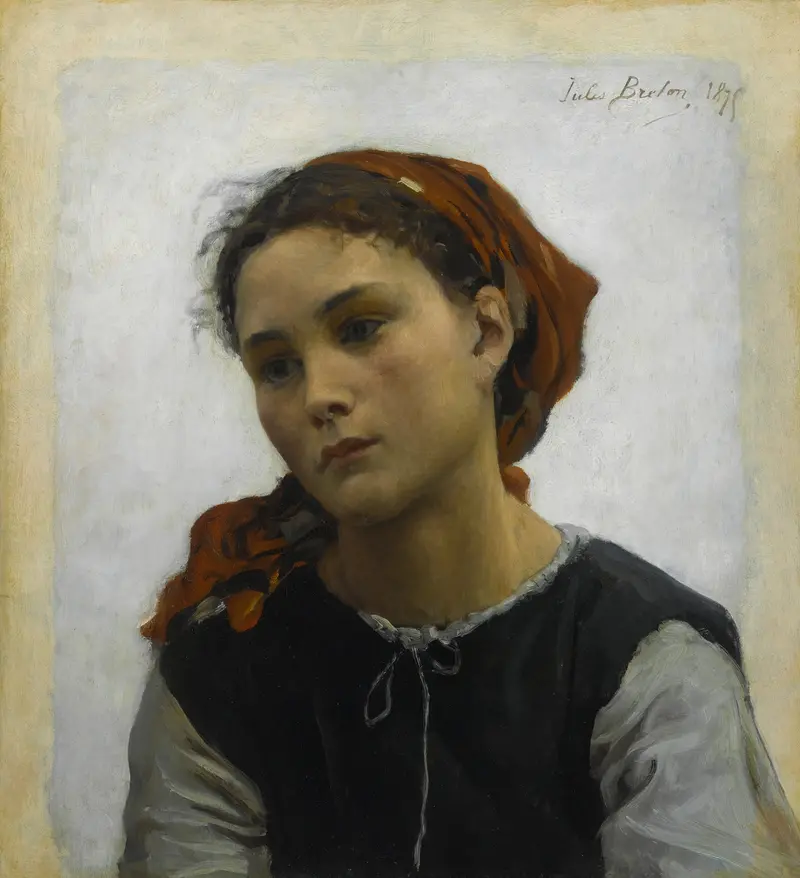
Innocente
Jules Breton
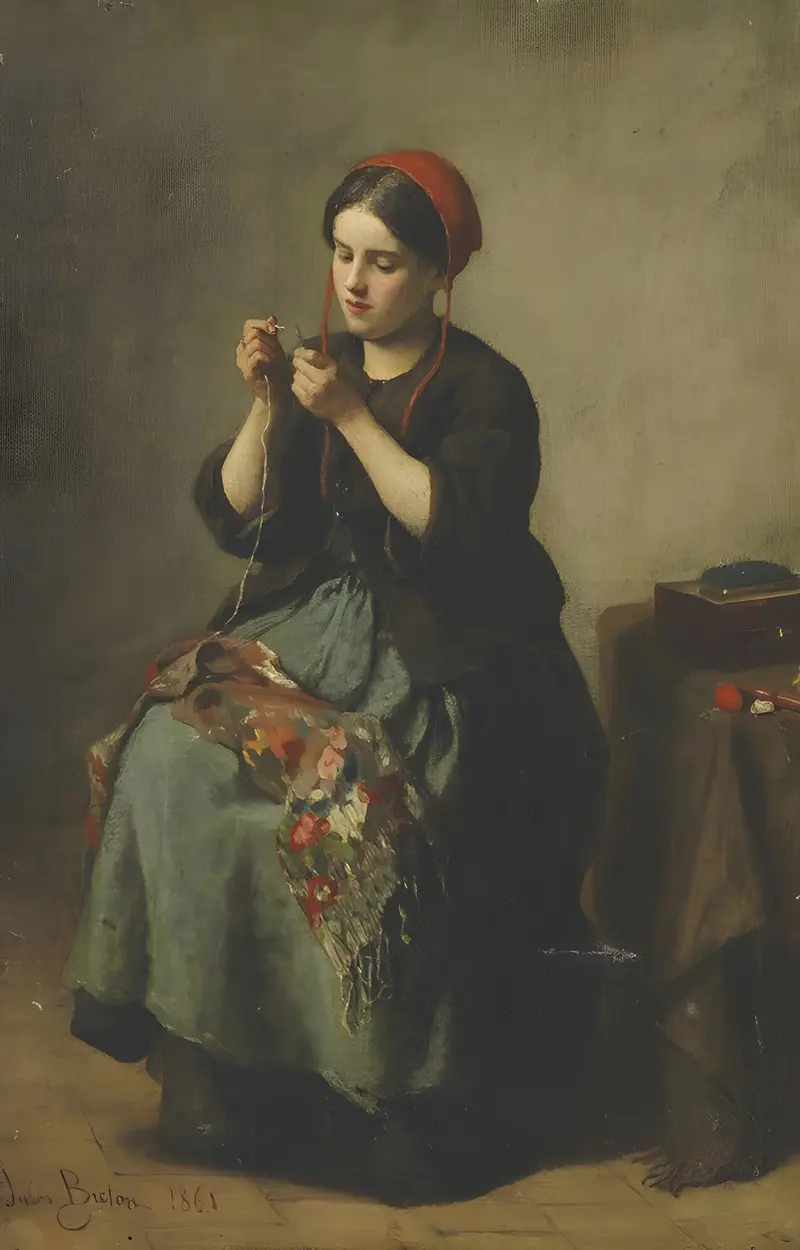
Peasant woman threading a needle
Jules Breton
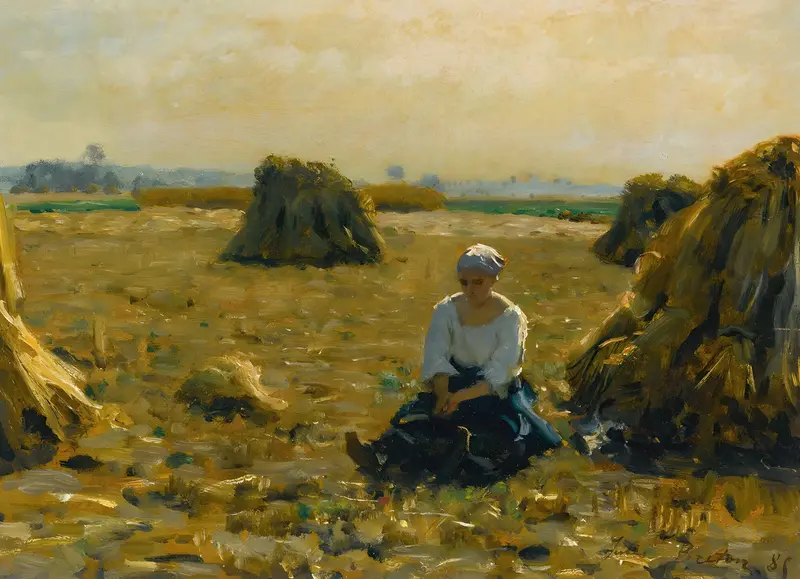
Jeune femme dans les champs
Jules Breton
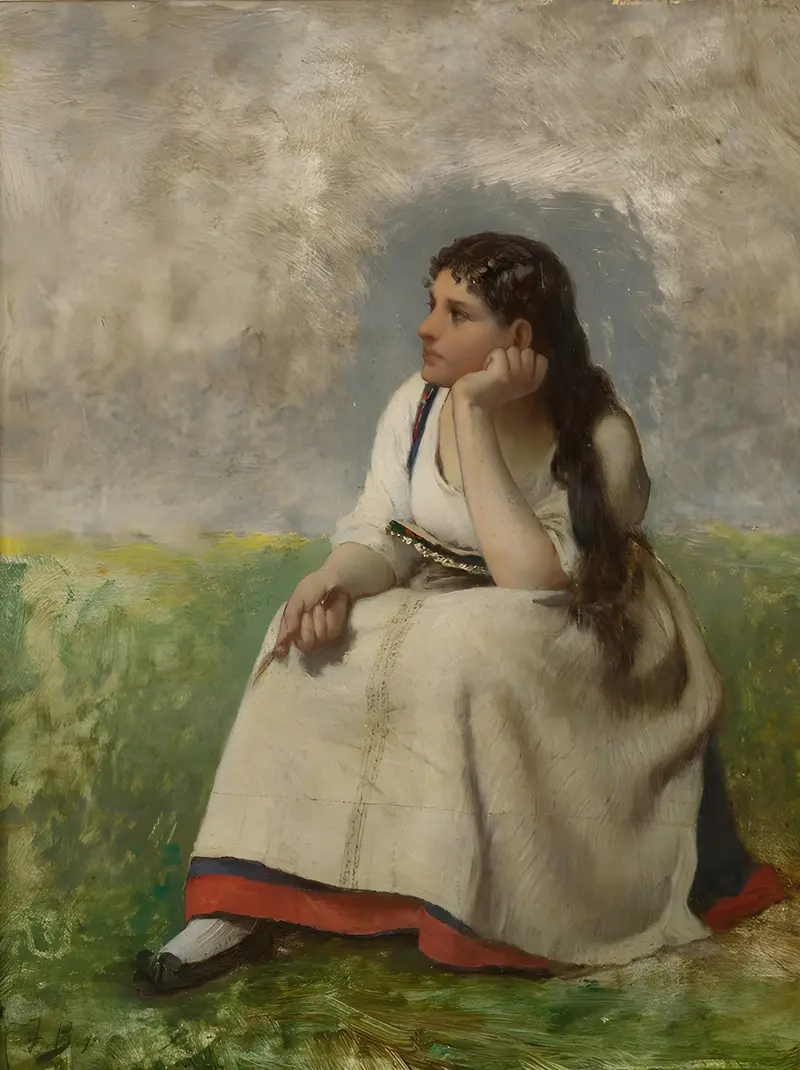
Jeune Fille Pensive
Jules Breton
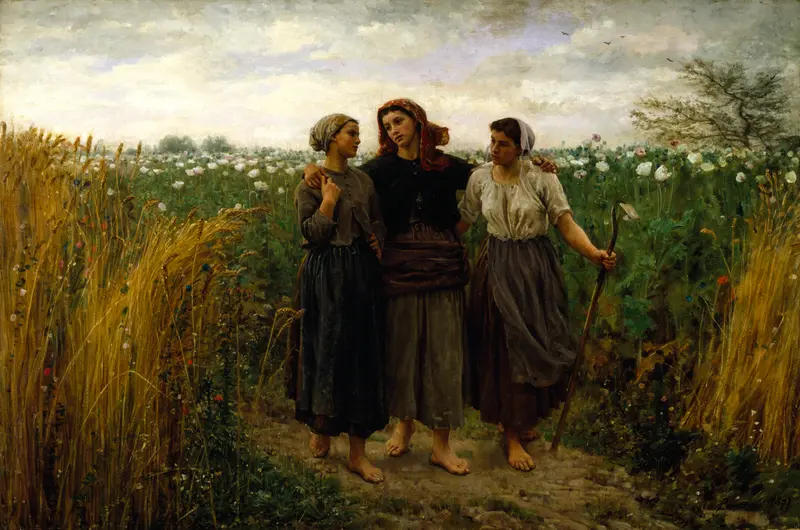
Returning from the Fields
Jules Breton
More Genre Scene Art

Banquet of the Officers of the St George Civic Guard
Frans Hals

Rembrandt and Saskia in the Scene of the Prodigal Son
Rembrandt van Rijn

Bal du moulin de la Galette
Pierre-Auguste Renoir

Quadrille at the Moulin Rouge
Henri de Toulouse-Lautrec

A Burial at Ornans
Gustave Courbet

When Will You Marry?
Paul Gauguin