
The Holy Family With a Palm Tree — History & Facts
When Raphael painted The Holy Family With a Palm Tree in 1506, he was just twenty-three, yet already the subject of rivalry and admiration in Florence. This painting is one of a small handful of versions Raphael created on the theme of the Holy Family during this period, each subtly different, and scholars have long debated which came first and for whom they were made. The palm tree in the background is not merely a picturesque detail—it is rare in depictions of the Flight into Egypt, and has prompted much discussion about its symbolic intent.
The painting’s composition, with the Virgin, Child, and Joseph grouped in a gentle triangle, would become a template for later artists. Its fame was such that early copies and engravings spread its design across Europe. At the heart of the scene is a pause during the Holy Family’s flight into Egypt, as recounted in the Gospel of Matthew. The Virgin Mary sits serenely, cradling the infant Christ, while Joseph stands protectively behind them, his gaze attentive.
The palm tree, arching gracefully above, alludes to martyrdom and victory—a sign of Christ’s future sacrifice. The tender interaction between mother and child, the careful placement of hands, and the luminous landscape all point to Raphael’s Florentine influences, especially the soft modeling of Leonardo da Vinci. Unlike Michelangelo’s more muscular Holy Families, Raphael’s figures radiate calm and approachable humanity. The precise origins of The Holy Family With a Palm Tree remain somewhat mysterious, as records of its early ownership are lost.
It is generally agreed that the painting was created during Raphael’s formative years in Florence, before his move to Rome, and it reflects his synthesis of local artistic innovations. Over the centuries, the painting has passed through various collections, sometimes attributed to other hands, but always admired for its harmony and grace. Today, it is housed in the Museo del Prado, where it stands as a testament to Raphael’s early genius and the enduring appeal of his vision of the Holy Family.
More Artworks by Raphael

Madonna of the Goldfinch
Raphael

Madonna with the Fish
Raphael
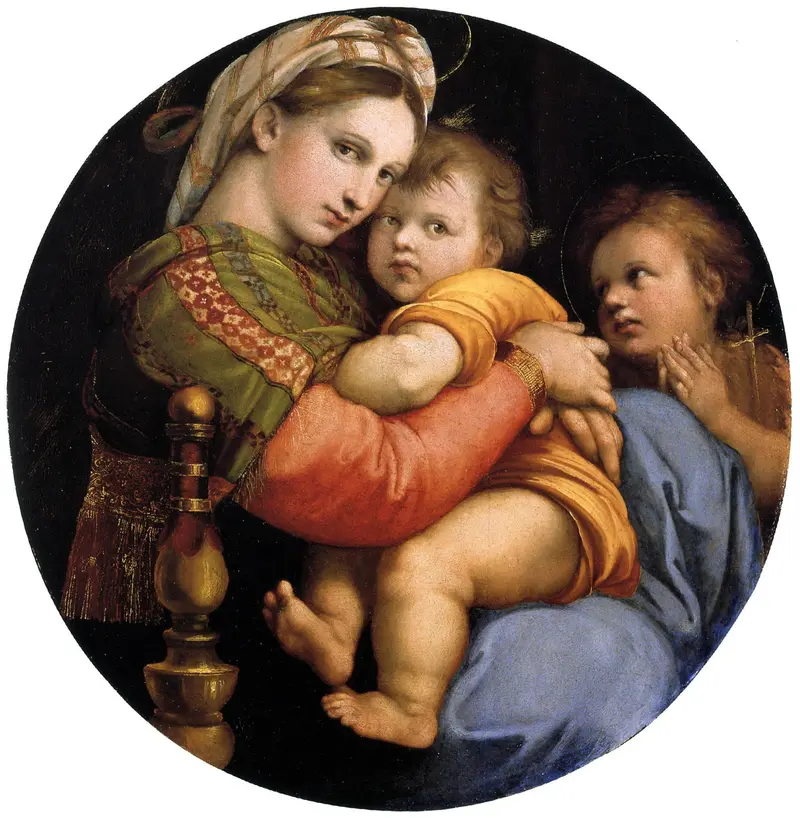
Madonna and Child (Madonna della Seggiola)
Raphael
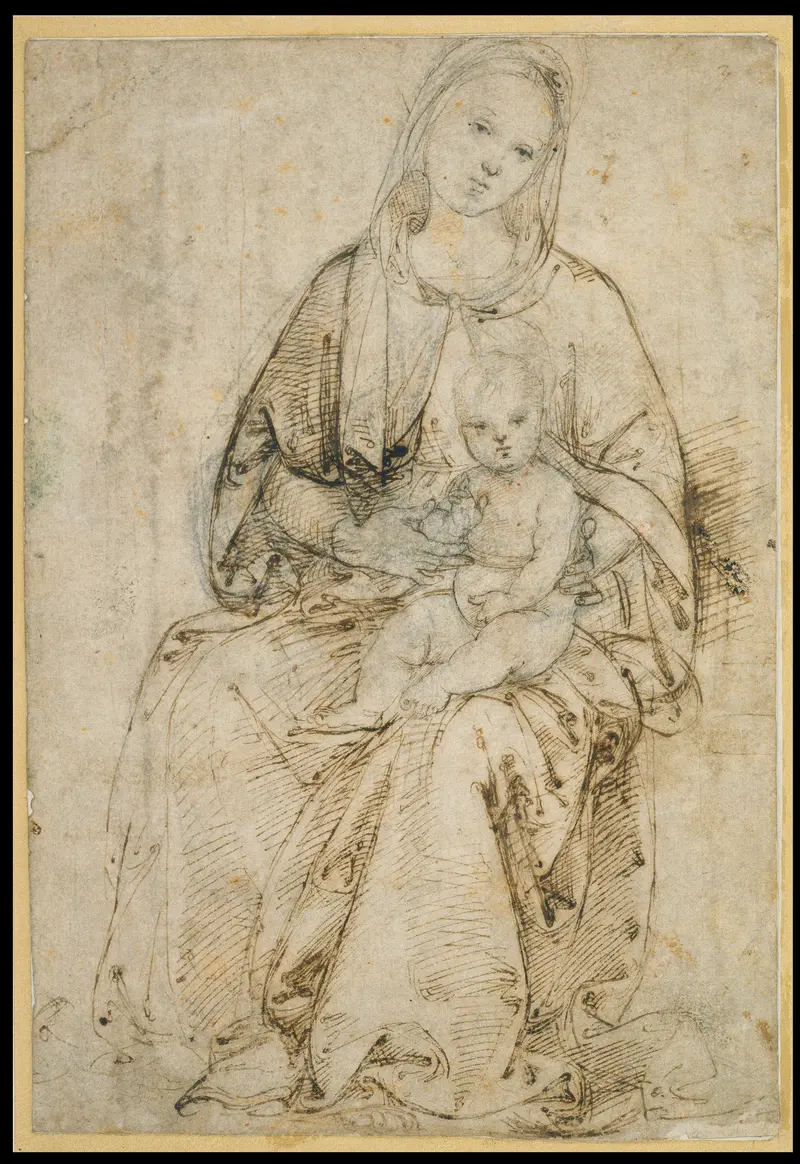
Seated Madonna and Child
Raphael
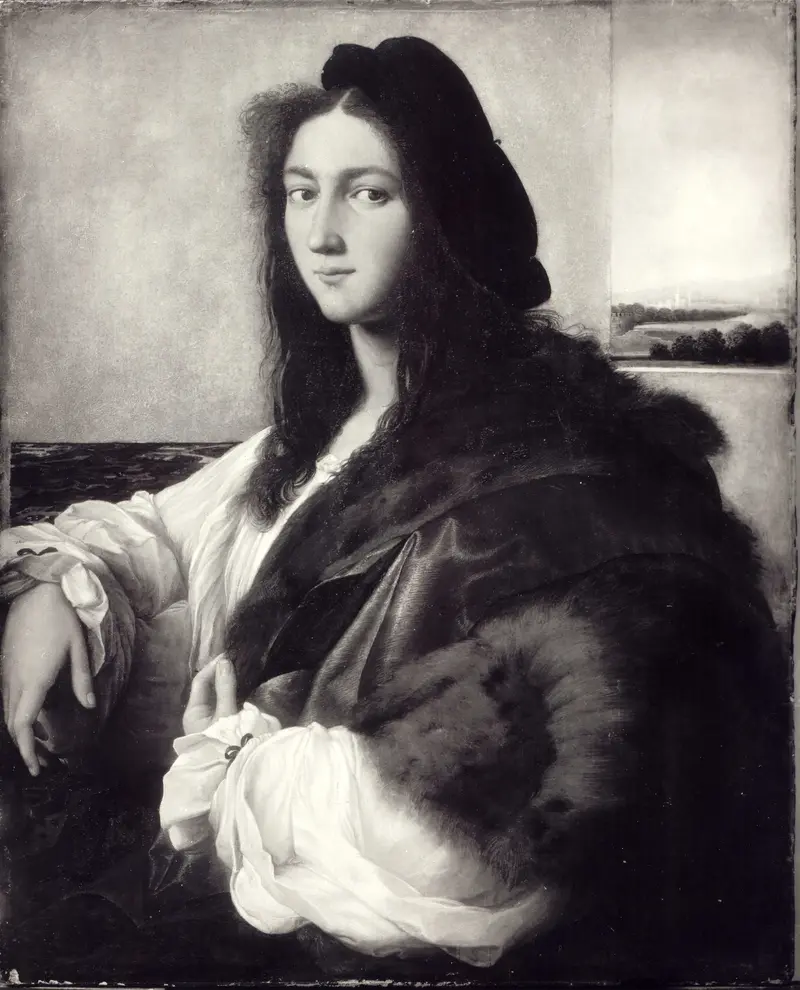
Portrait of a Young Man
Raphael
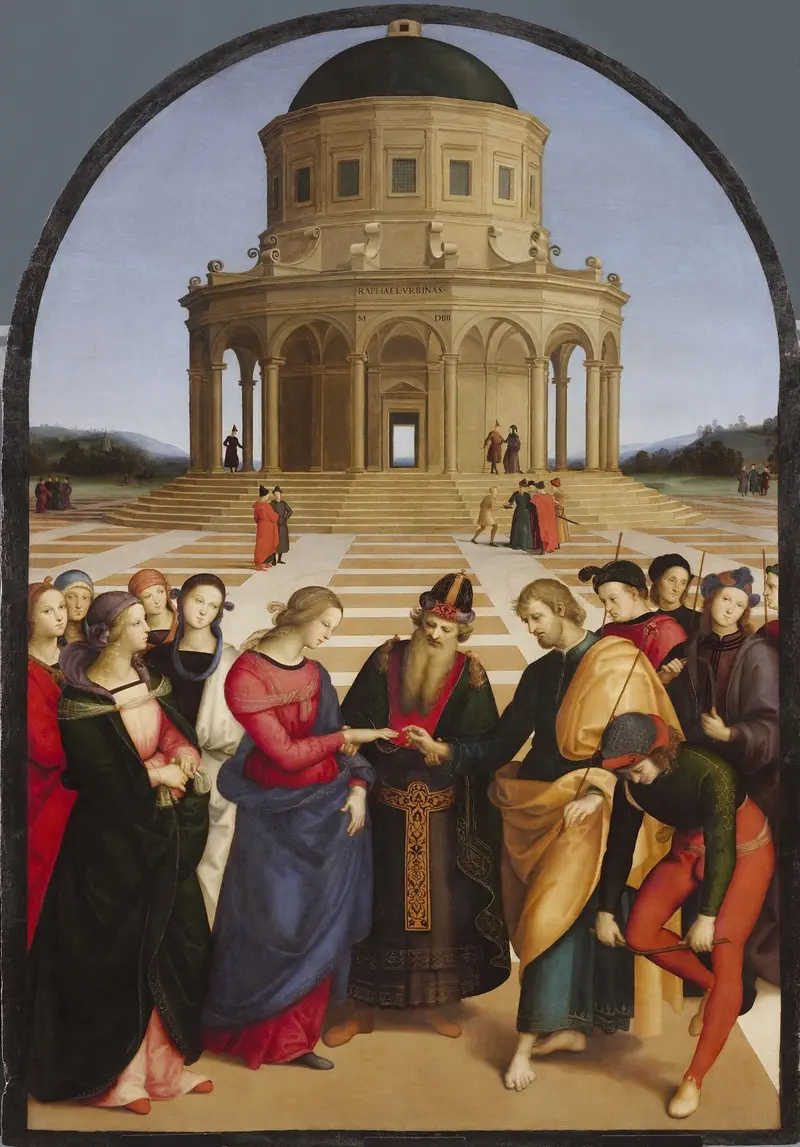
The Marriage of the Virgin
Raphael
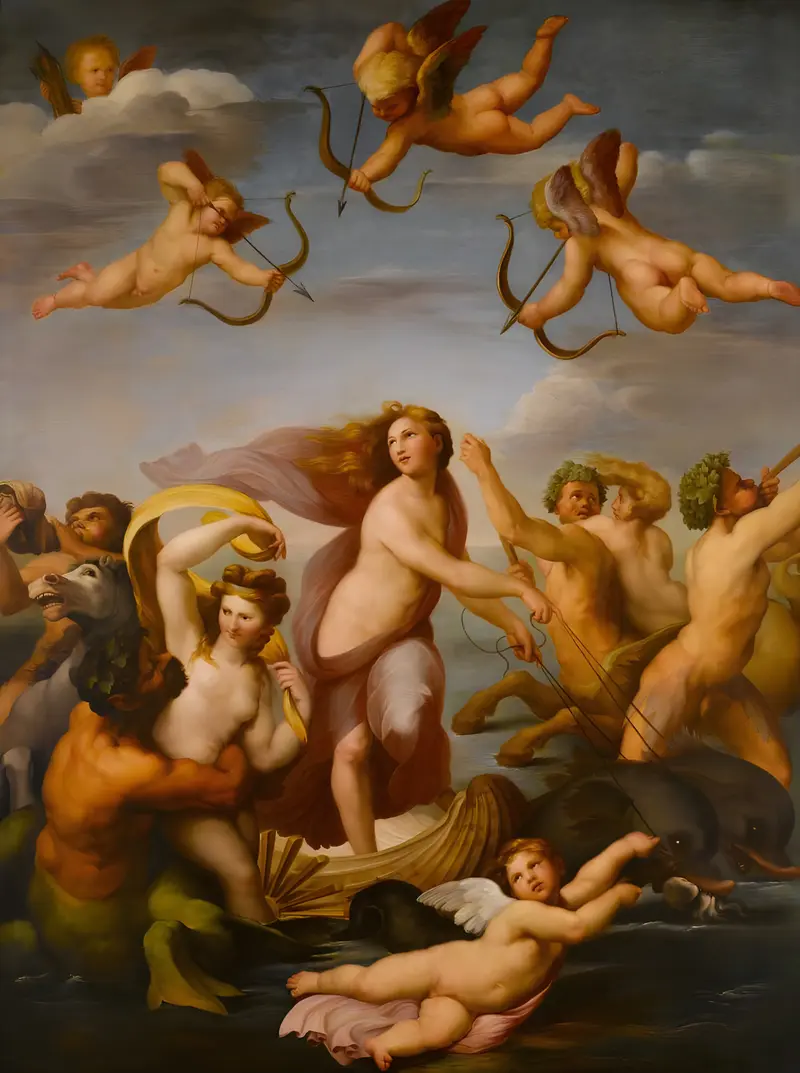
The Triumph of Galatea (copy after Raphael)
Raphael
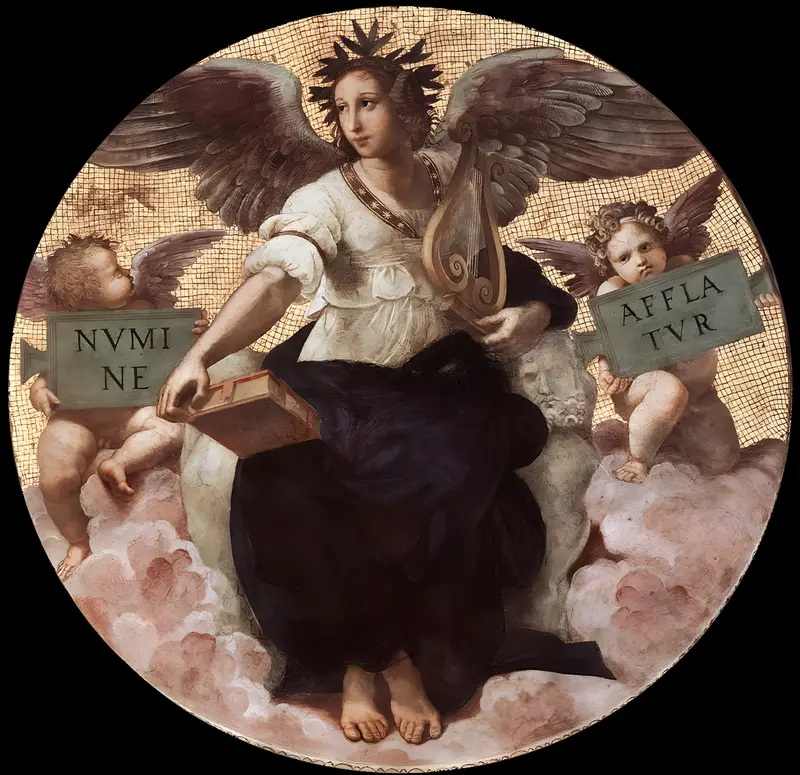
Poetry
Raphael
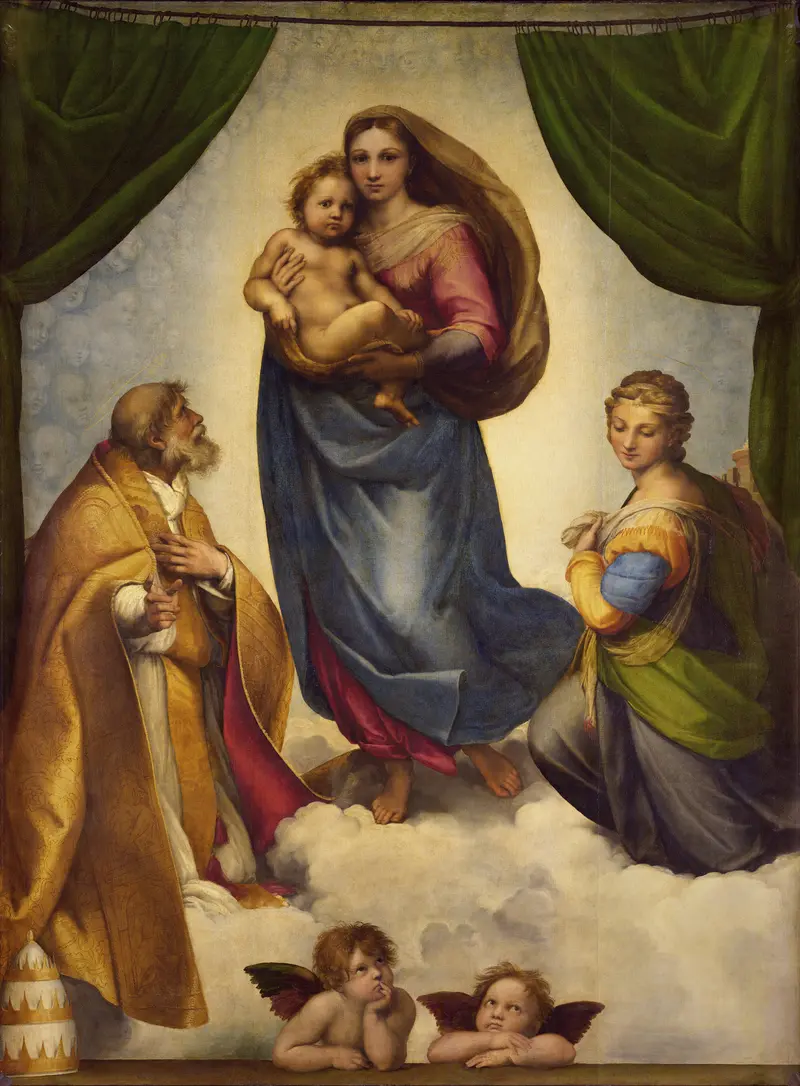
Sistine Madonna
Raphael
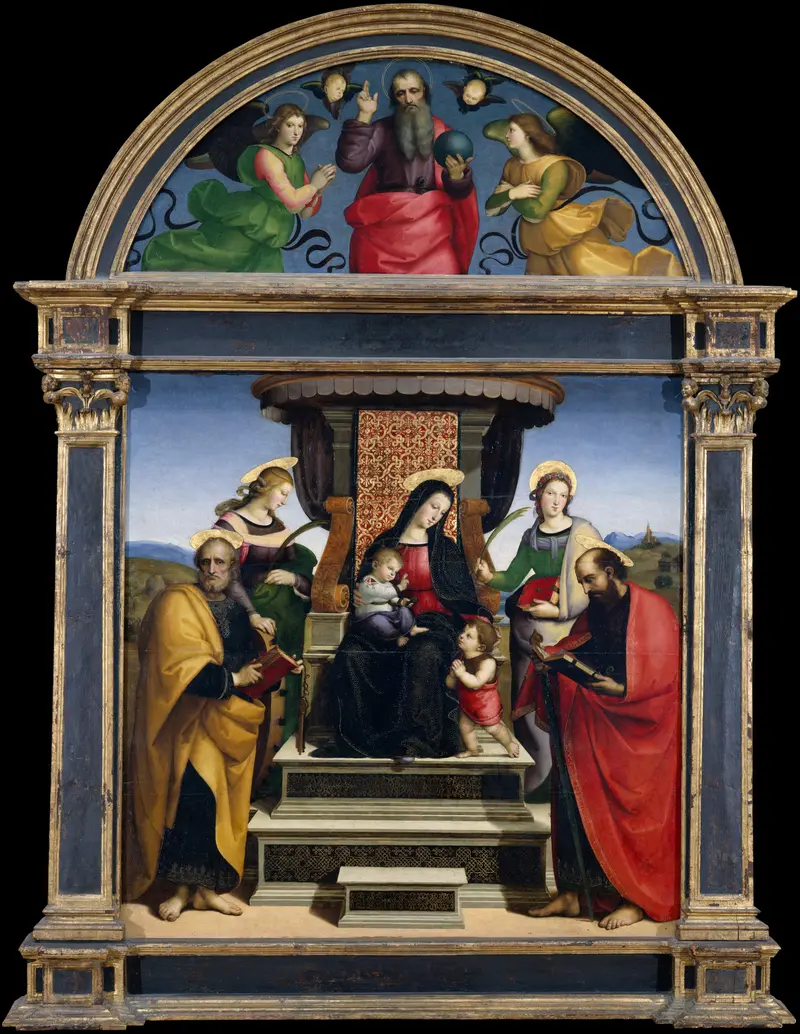
Madonna and Child Enthroned with Saints
Raphael




