
The Last Gleanings — History & Facts
When The Last Gleanings was first exhibited in 1895, it marked one of the final times that Jules Breton—already celebrated for his rural scenes—would return to the theme of gleaners, a subject he had explored for nearly four decades. By then, the practice of gleaning, where the rural poor gathered leftover crops after the harvest, was rapidly vanishing from the French countryside, a casualty of modern agriculture and changing laws. Breton’s painting thus became not just an image, but a quiet memorial to a way of life on the brink of disappearance.
Critics of the time recognized this sense of farewell; one wrote, “Breton paints not just the field, but the last breath of its tradition.” In the fading light of a late summer day, a lone woman bends to gather the final sheaves left behind, her figure silhouetted against the golden stubble. The artist’s attention to the rough fabric of her dress, the worn basket at her side, and the heavy sky above all speak to the dignity and hardship of rural labor. Unlike Jean-François Millet’s more famous The Gleaners, which shows a trio of women, Breton isolates his subject, heightening the sense of solitude and the end of an era.
The low horizon and wide sweep of the field emphasize her smallness, while the soft, almost melancholy light underscores the painting’s elegiac mood. The precise medium of The Last Gleanings remains uncertain—oil on canvas is likely, given Breton’s usual practice—but its exhibition at the Salon of 1895 is well documented. The painting was not a commission, but rather a personal project, reflecting Breton’s lifelong attachment to his native Pas-de-Calais and its people. Over the years, the work has passed through private collections and has been reproduced in numerous publications on 19th-century French art.
Today, it stands as a testament to Breton’s role in the Realist movement, capturing the dignity of rural life even as it faded from view.
More Artworks by Jules Breton

The Song of the Lark
Jules Breton
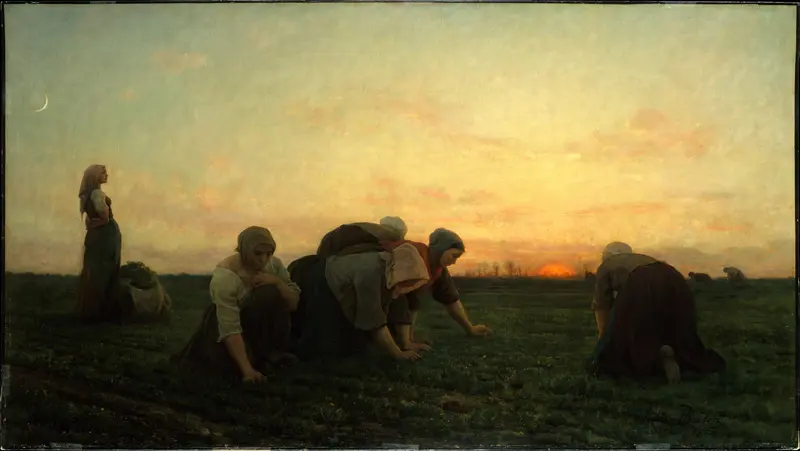
The Weeders
Jules Breton
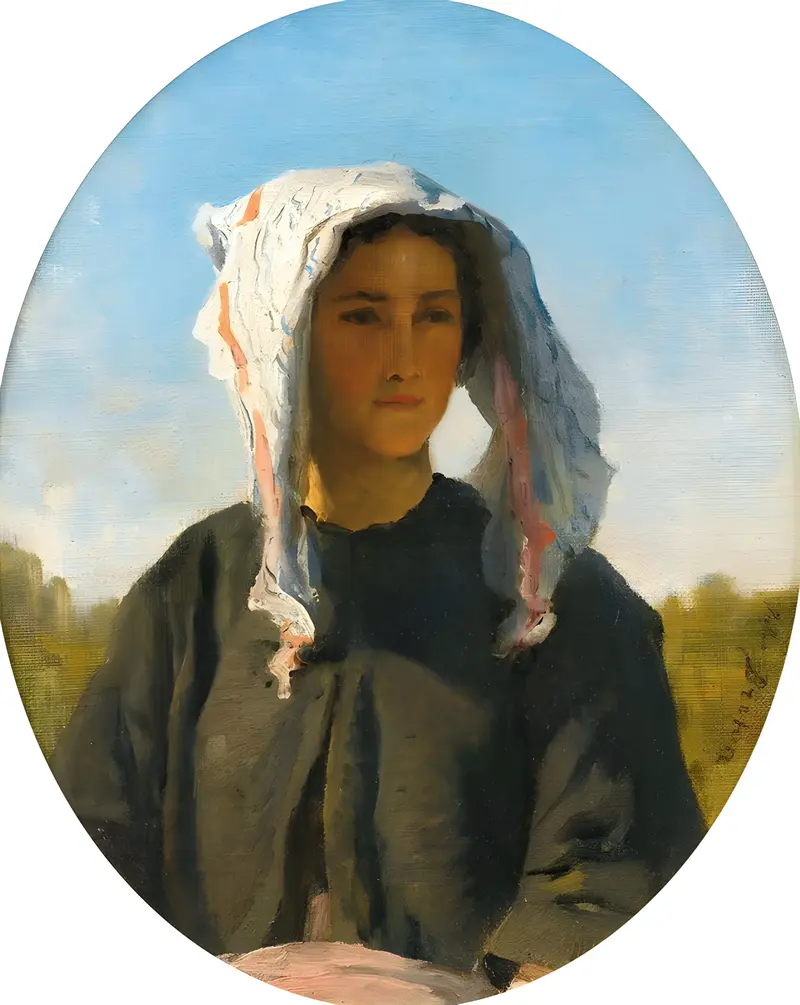
Portrait de jeune Paysanne Bordelaise
Jules Breton
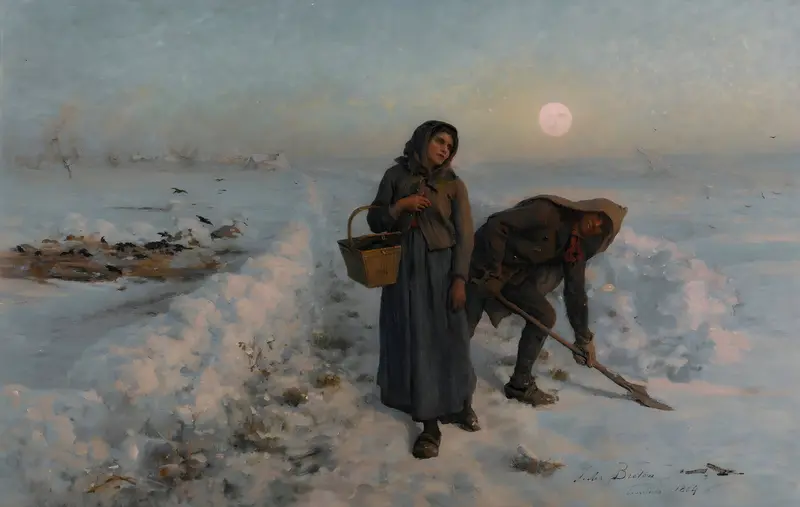
Sur la route en hiver; artois
Jules Breton
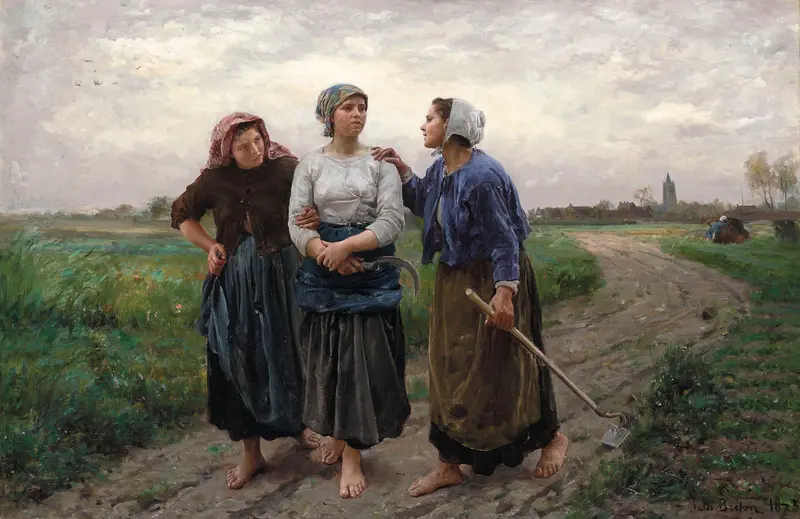
Les amies
Jules Breton
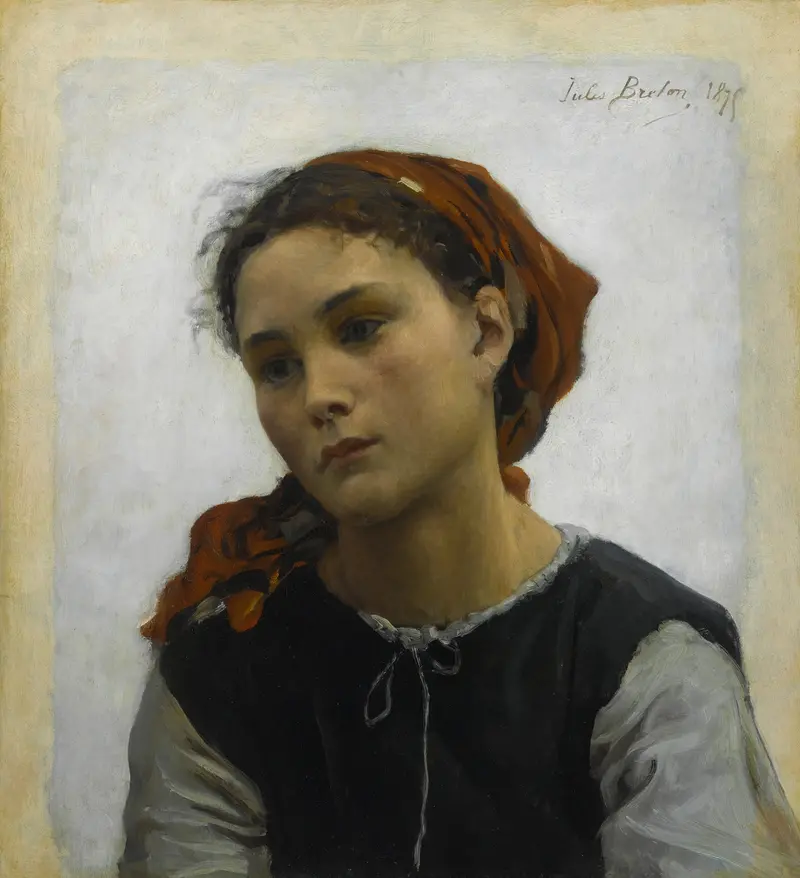
Innocente
Jules Breton
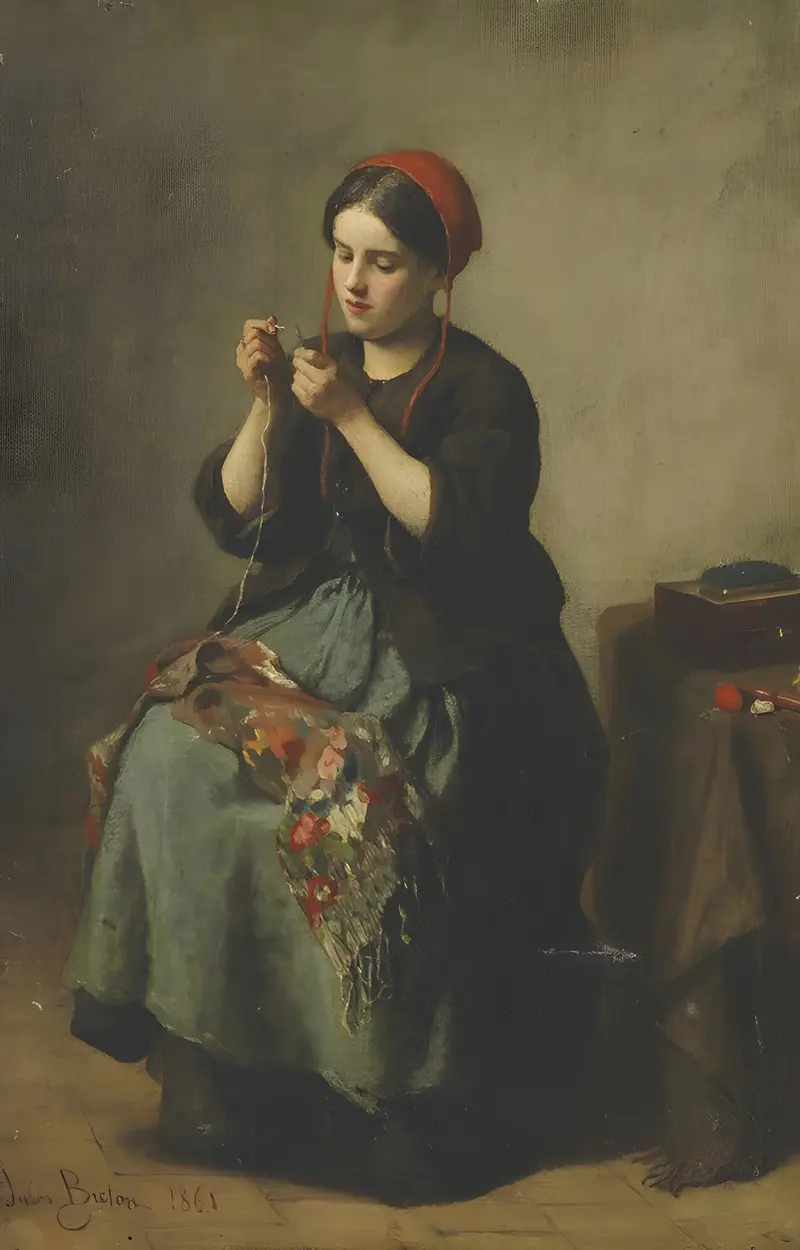
Peasant woman threading a needle
Jules Breton
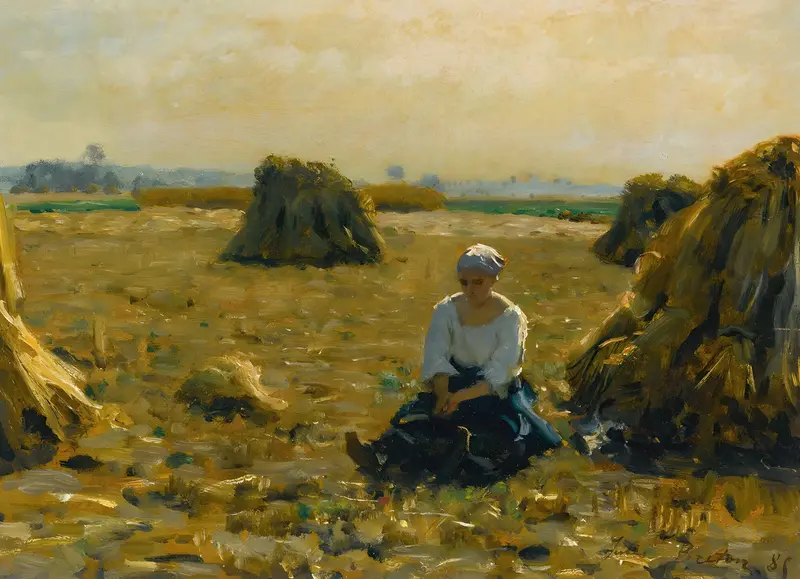
Jeune femme dans les champs
Jules Breton
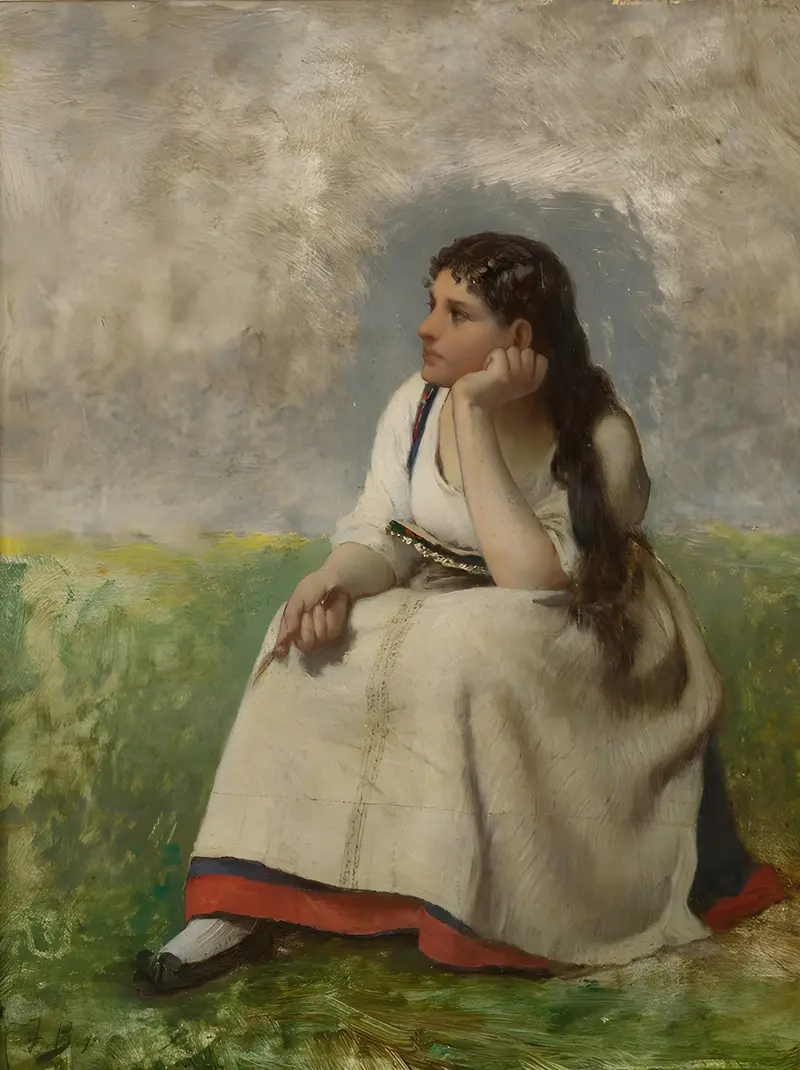
Jeune Fille Pensive
Jules Breton
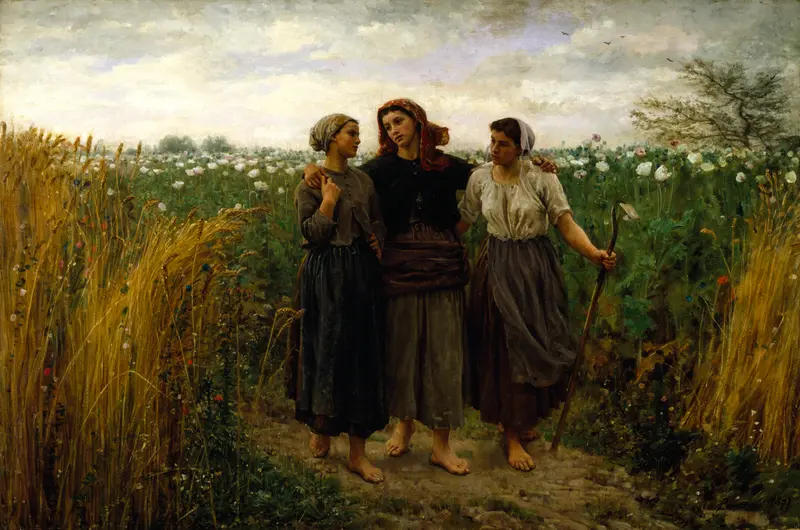
Returning from the Fields
Jules Breton
More Genre Scene Art

Banquet of the Officers of the St George Civic Guard
Frans Hals

Rembrandt and Saskia in the Scene of the Prodigal Son
Rembrandt van Rijn

Bal du moulin de la Galette
Pierre-Auguste Renoir

Quadrille at the Moulin Rouge
Henri de Toulouse-Lautrec

A Burial at Ornans
Gustave Courbet

When Will You Marry?
Paul Gauguin