
The Mice Are Burying the Cat — History & Facts
The Mice Are Burying the Cat is an early 18th-century Russian hand-coloured woodcut, known as a lubok, by an unknown artist. The print dates to around 1725 and presents a popular satirical plot from Russian folk tradition. The composition is divided into two panels, each densely populated with anthropomorphic mice performing the roles of pallbearers, musicians, and mourners in a mock funeral procession for a cat. The image features numerous mice engaged in various activities: some pull a cart carrying the cat’s body, others play musical instruments, and a few are shown carrying banners or leading the procession.
The cat, depicted lying on its back with paws up, is the central figure, while the surrounding mice are rendered in a simplified, almost cartoon-like style typical of lubok prints. The palette is dominated by black, yellow, and red, with strong outlines and flat areas of colour. Russian text is interspersed throughout the image, including a caption above the cat that parodies the titles of Russian Czars: "The Cat of Kazan, the Mind of Astrakhan, the Wisdom of Siberia." This lubok reflects the tradition of carnival inversion—turning the world upside down—common in Russian popular art of the period.
Although it has often been interpreted as a satirical commentary on the death of Peter the Great, modern scholarship suggests it is more likely a generic example of social and symbolic reversal, rather than a direct political caricature. The work is representative of early 18th-century Russian print culture, characterized by bold imagery and accessible storytelling.
More Artworks by Unknown Artist

The Tale of Genji Scroll: Yadorigi
Unknown Artist
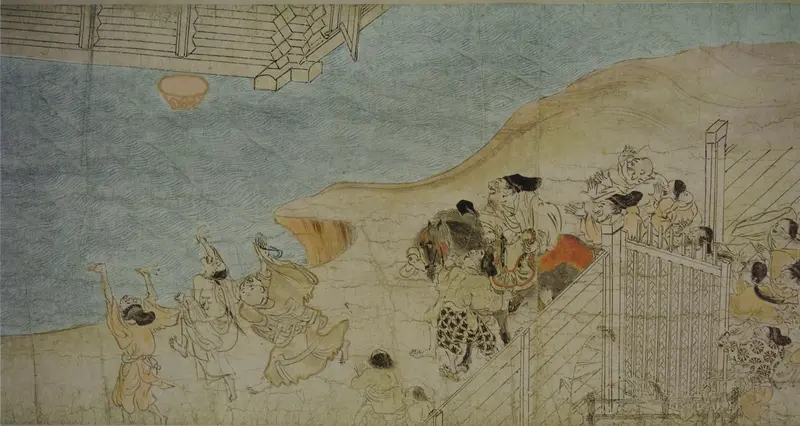
Legends of Mount Shigi: The Flying Granary
Unknown Artist
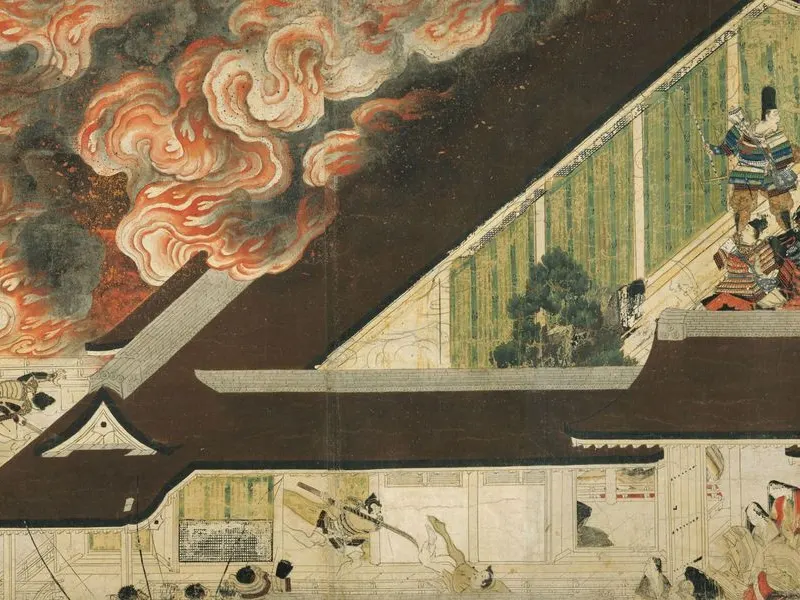
Night Attack on the Sanjō Palace
Unknown Artist
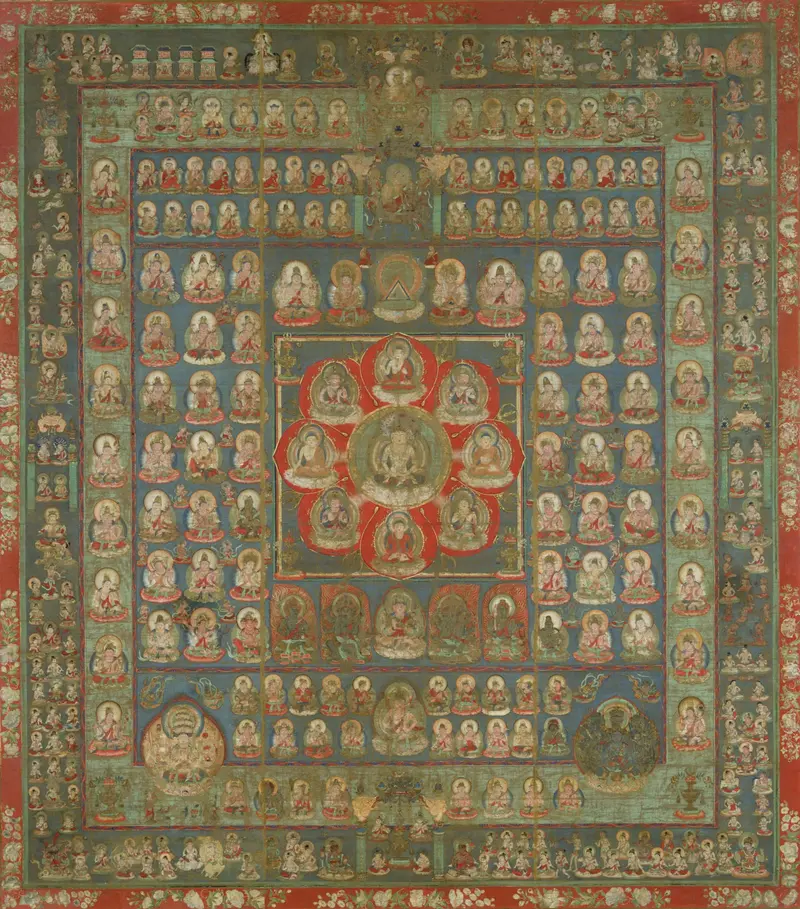
Womb World Mandala (Mandala of the Two Realms)
Unknown Artist
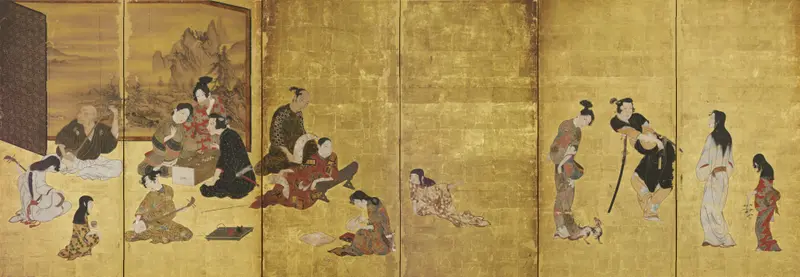
Hikone Screen
Unknown Artist
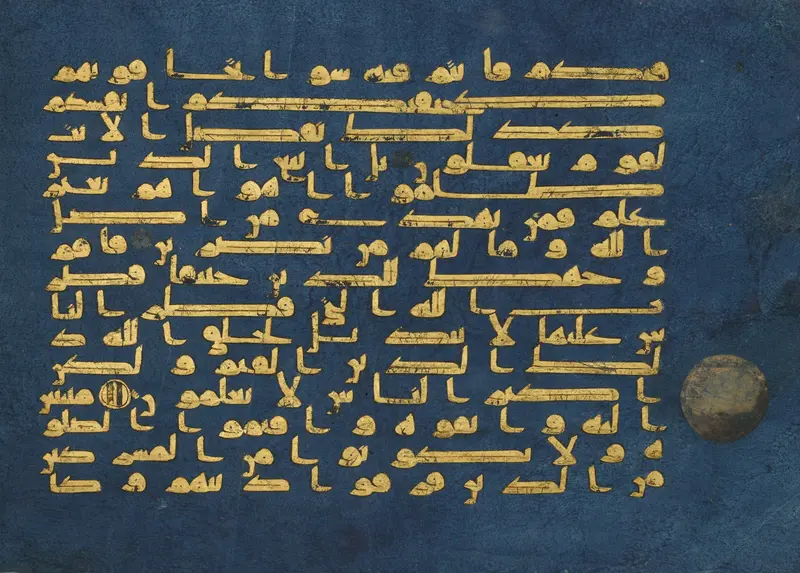
Folio from the Blue Qur'an
Unknown Artist
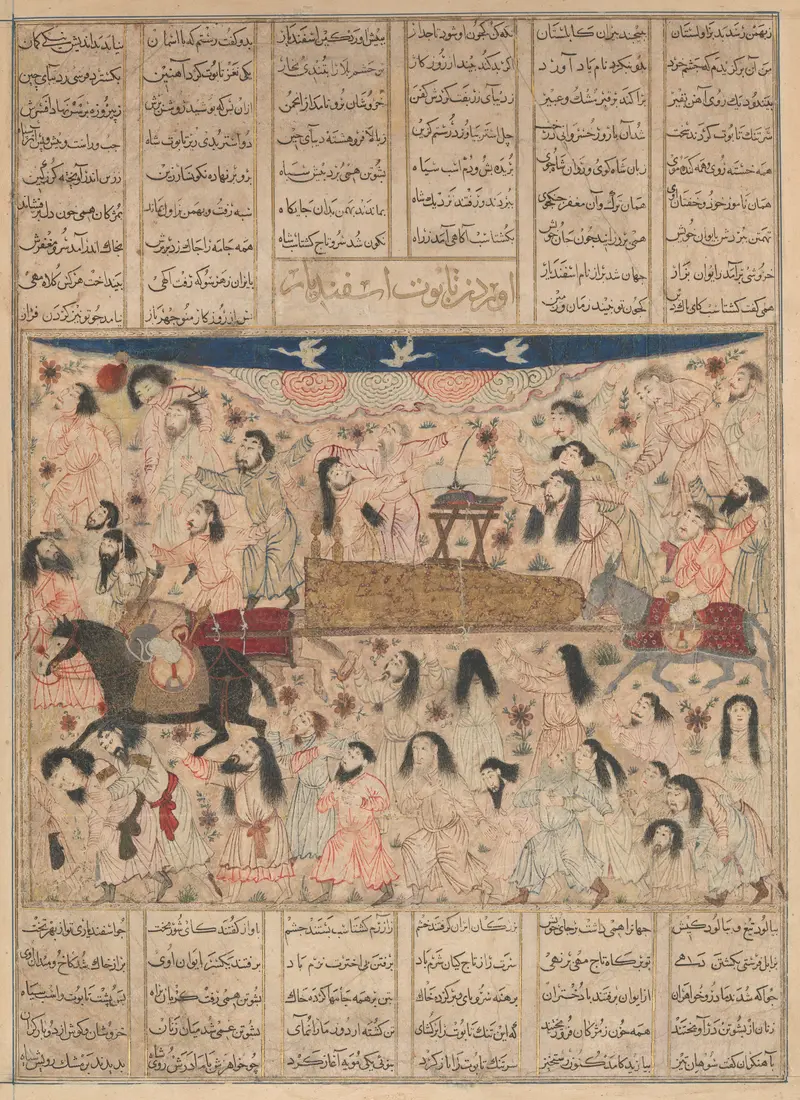
The Funeral of Isfandiyar (Great Mongol Shahnama)
Unknown Artist

The Ideal City
Unknown Artist
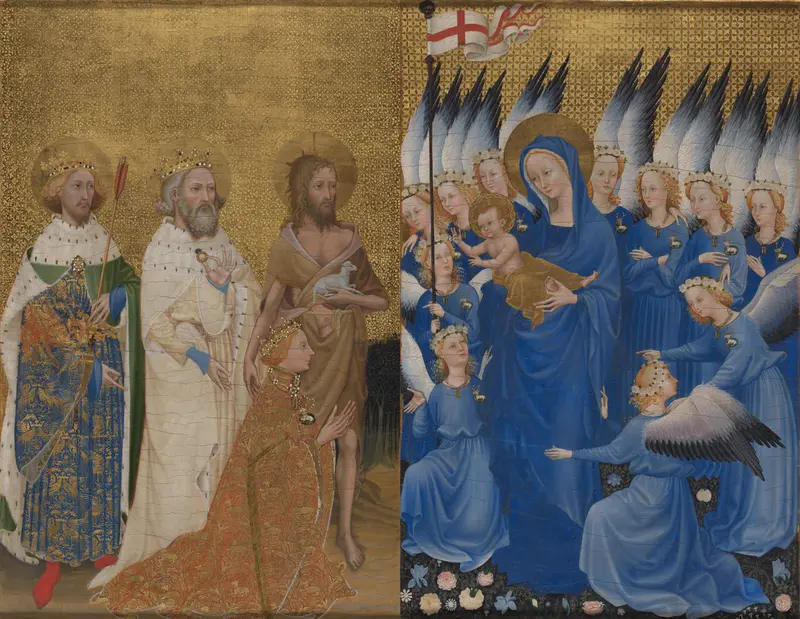
The Wilton Diptych
Unknown Artist

Ridder, Dood en Duivel
Unknown Artist




