
The Concert — History & Facts
No painting by Johannes Vermeer has vanished with more intrigue than The Concert. Stolen from the Isabella Stewart Gardner Museum in Boston in 1990, this work remains missing, its empty frame a silent witness to the largest art theft in modern history. The mystery of its whereabouts has only added to its legend, making it one of the most sought-after lost treasures in the world.
Its disappearance has inspired countless theories, but no confirmed sightings. This sense of absence haunts every discussion of the painting today. Within the scene, three figures gather around a harpsichord: a young woman plays, another sings, and a gentleman accompanies them on the lute. Vermeer arrests the moment just as music unites the trio, their concentration and subtle gestures weaving a quiet intimacy.
The light, so typical of Vermeer, pours in from the left, illuminating the patterned carpet on the table and the gleam of the instruments. A painting-within-the-painting hangs on the back wall—thought to be a landscape by Dirck van Baburen, a nod to the theme of music as both pleasure and moral lesson. Unlike the lively, sometimes chaotic music scenes of Jan Steen, Vermeer’s The Concert is hushed, its mood contemplative and private. Little is known about the early history of The Concert, including its original patron or how it left Vermeer’s Delft.
The painting resurfaced in the 19th century and eventually entered the collection of Isabella Stewart Gardner, who displayed it in her Boston museum from 1903. Its theft in 1990, along with twelve other works, stunned the art world and remains unsolved despite decades of investigation. Today, The Concert is remembered both as a highlight of Vermeer’s mature period—when his interest in music, domestic interiors, and the play of light reached new heights—and as a symbol of loss, its absence felt as keenly as its presence once was.
More Artworks by Johannes Vermeer

View of Delft
Johannes Vermeer

Girl with a Pearl Earring
Johannes Vermeer
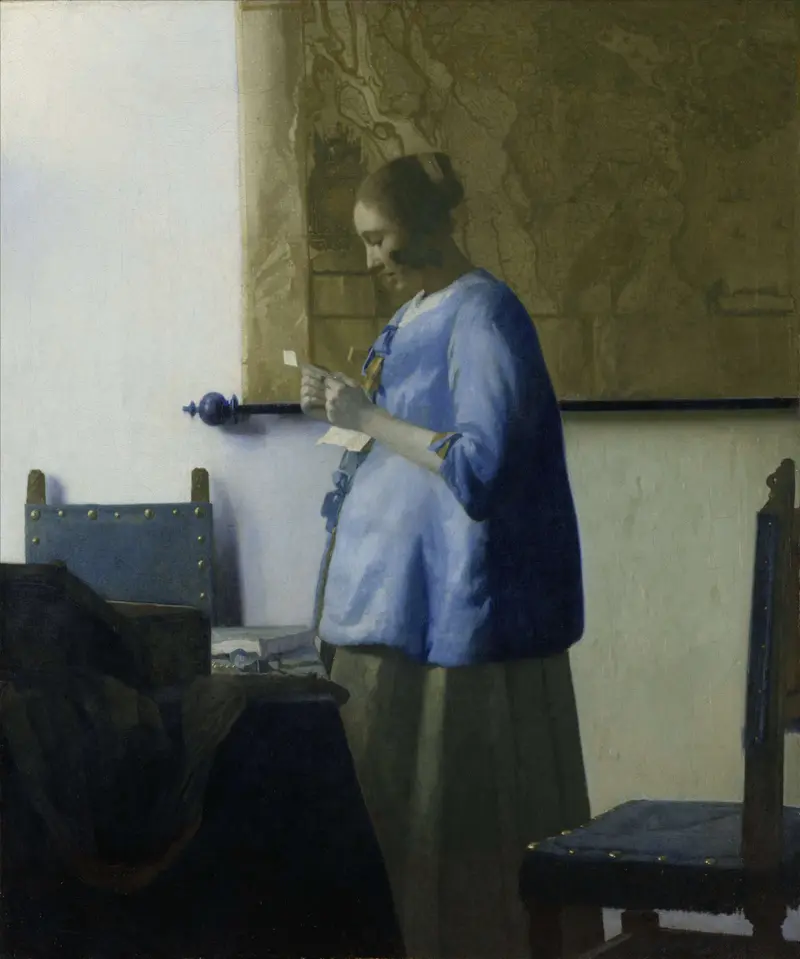
Woman in Blue Reading a Letter
Johannes Vermeer
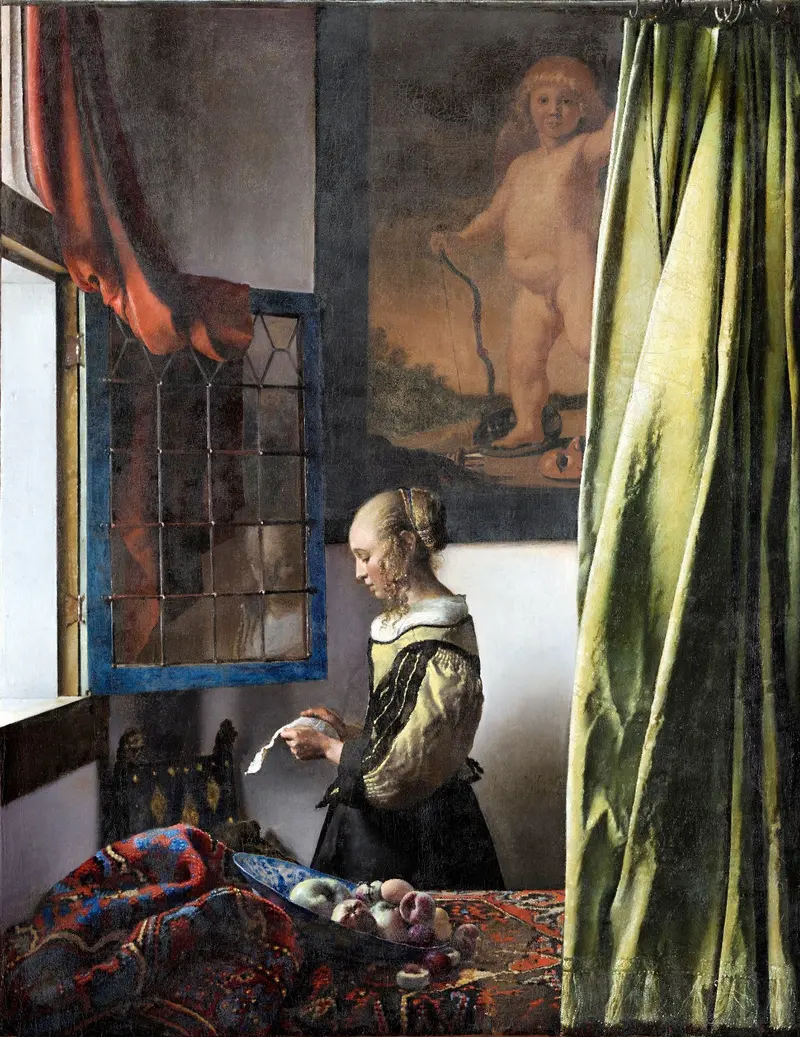
Girl Reading a Letter at an Open Window
Johannes Vermeer
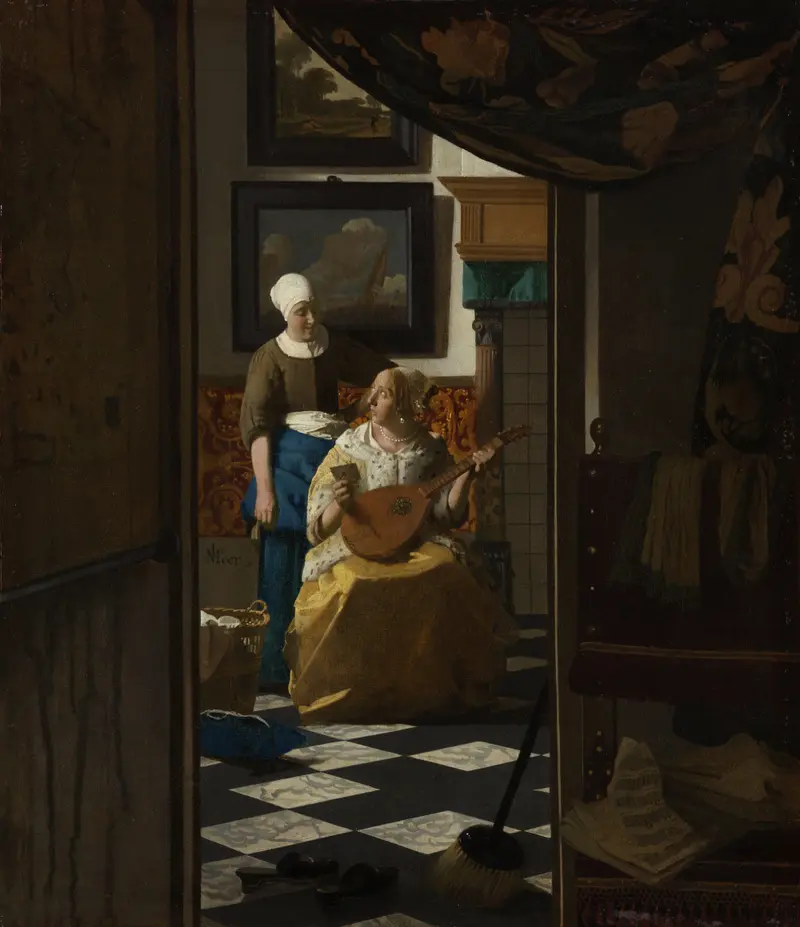
The Love Letter
Johannes Vermeer

The Music Lesson
Johannes Vermeer

A Girl Asleep
Johannes Vermeer
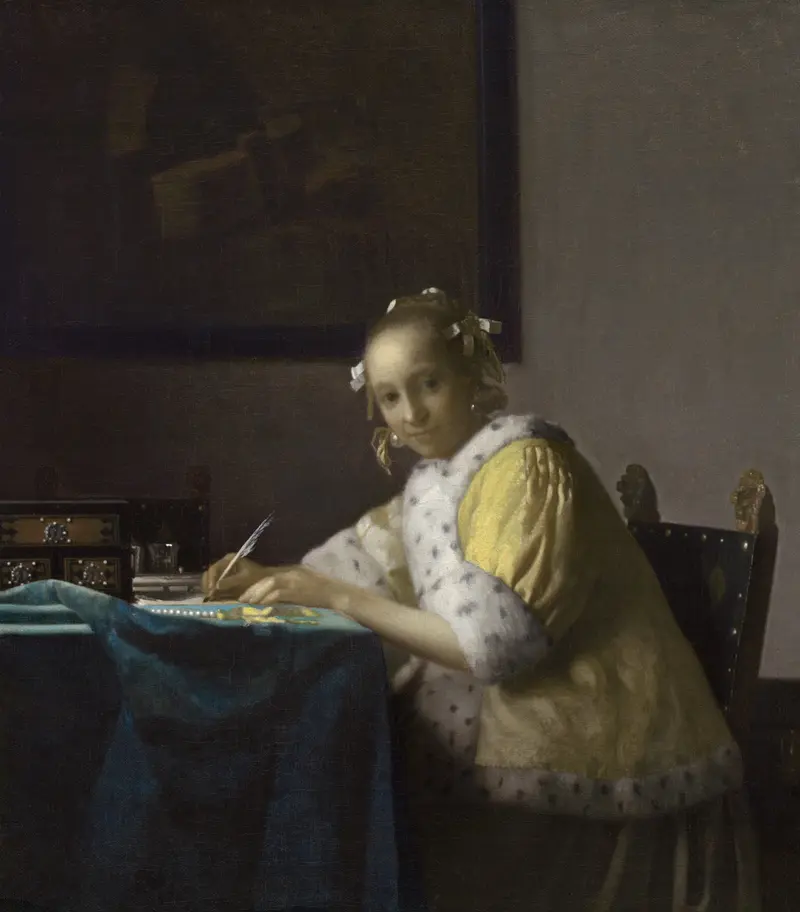
A Lady Writing a Letter
Johannes Vermeer
The Astronomer
Johannes Vermeer
The Lacemaker
Johannes Vermeer
More Genre Scene Art

Banquet of the Officers of the St George Civic Guard
Frans Hals

Rembrandt and Saskia in the Scene of the Prodigal Son
Rembrandt van Rijn

Bal du moulin de la Galette
Pierre-Auguste Renoir

Quadrille at the Moulin Rouge
Henri de Toulouse-Lautrec

A Burial at Ornans
Gustave Courbet

When Will You Marry?
Paul Gauguin