
The Mirror — History & Facts
A single figure commands the scene, her gaze both distant and inward, as if the mirror she holds is less a tool for vanity than a portal for contemplation. The light, cool and marble-bright, traces the delicate folds of her translucent gown, revealing the form beneath with a frankness that is neither coy nor brazen. Every detail is a study in contrasts: the softness of her flesh against the hard, veined stone; the casual drape of colored fabrics beside the rigid, sculpted caryatids that flank her.
The yellow sash at her waist draws the eye to the center, anchoring her in this imagined classical world, while her raised arm and tilted head suggest a moment suspended between self-awareness and reverie. Painted in 1899 by John William Godward, this work belongs to a world enamored with the idealized past. The late nineteenth century saw a resurgence of interest in Greco-Roman themes, especially among British artists who, like Godward, were inspired by the archaeological discoveries and neoclassical tastes of their age. Such paintings were often commissioned by wealthy patrons eager to display both their taste and their learning, filling their homes with visions of marble, myth, and beauty.
Now held by the Art Renewal Center Museum, The Mirror stands as a testament to an era that sought escape in antiquity even as it teetered on the edge of modernity. The longer you look, the more the boundaries between past and present, reality and reflection, seem to dissolve.
More Artworks by John William Godward

Eighty and eighteen
John William Godward
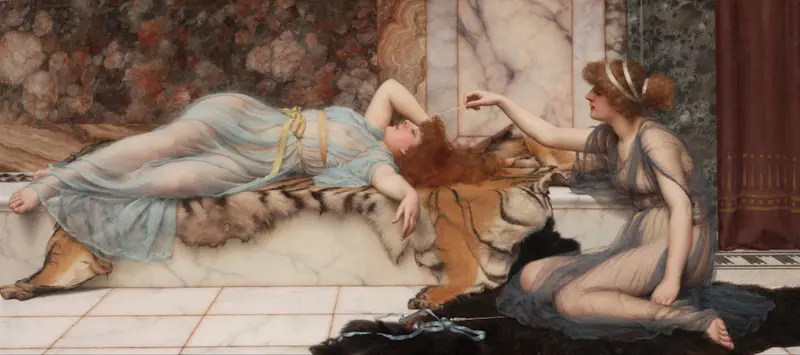
Mischief and Repose
John William Godward
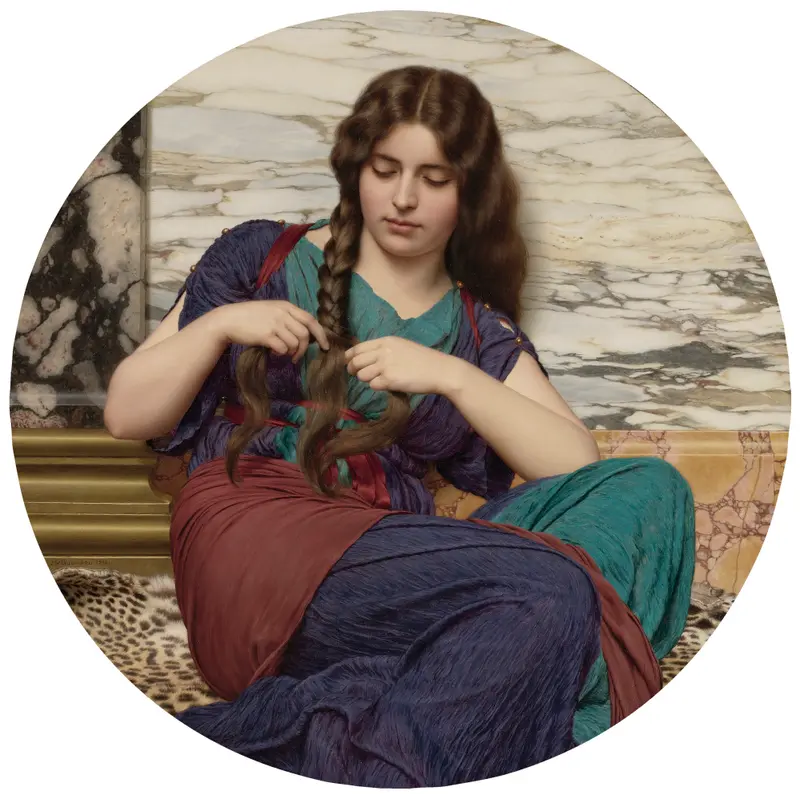
A Congenial Task
John William Godward
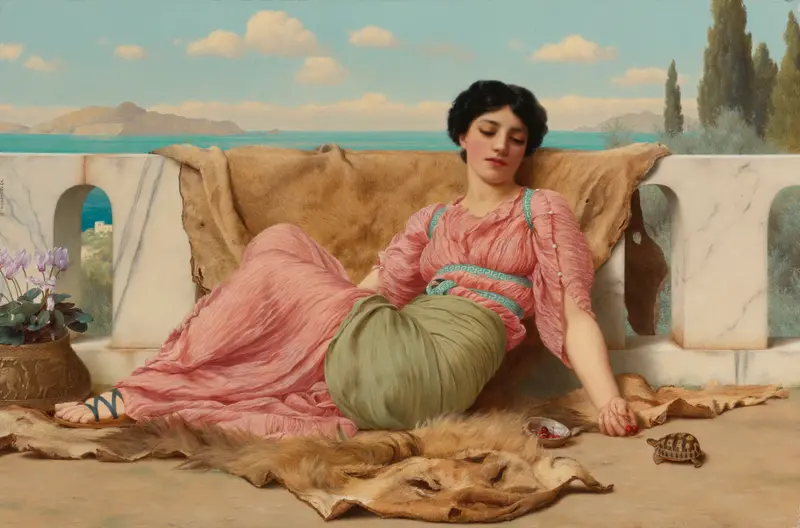
The Quiet Pet
John William Godward
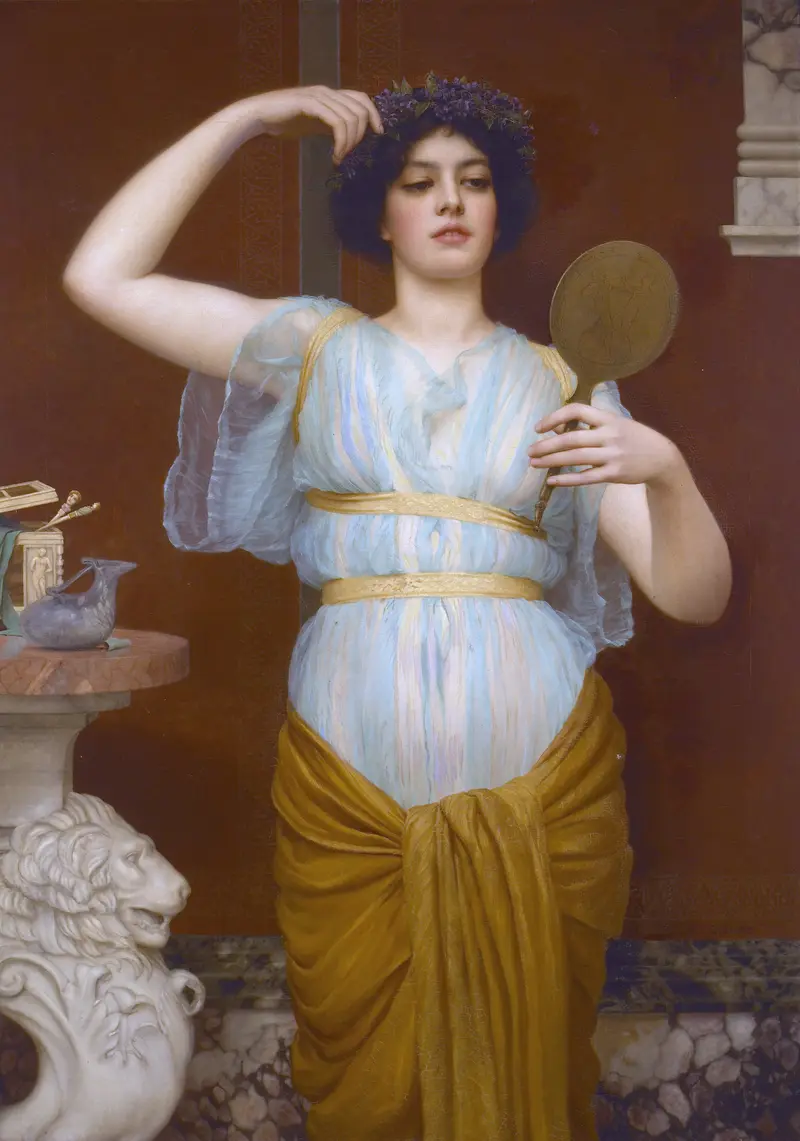
Ione
John William Godward
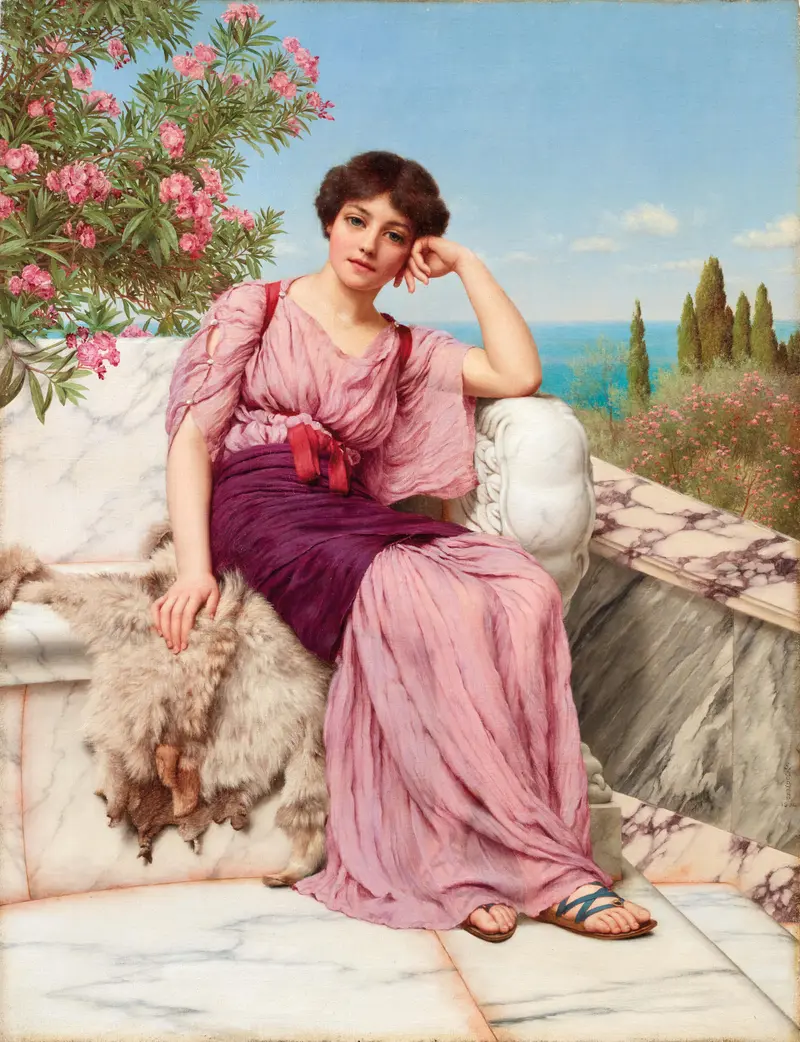
Sweet Dreams
John William Godward
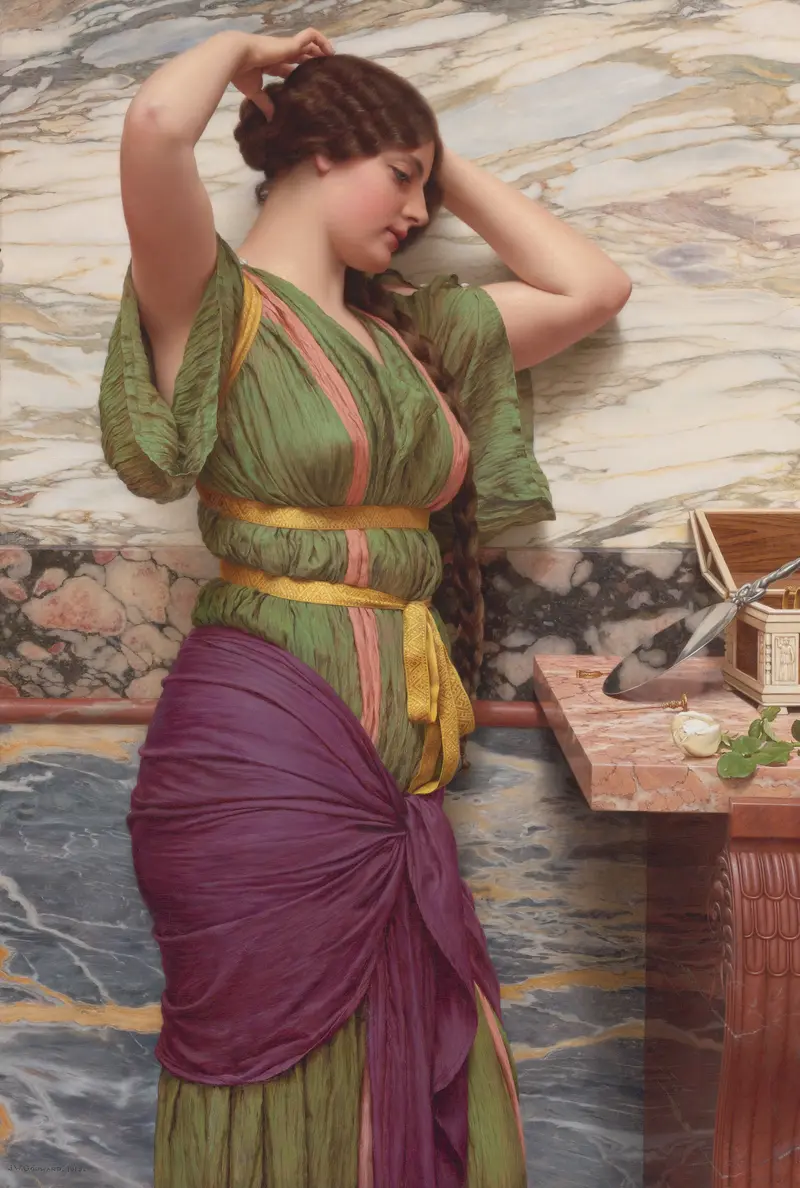
A Fair Reflection
John William Godward
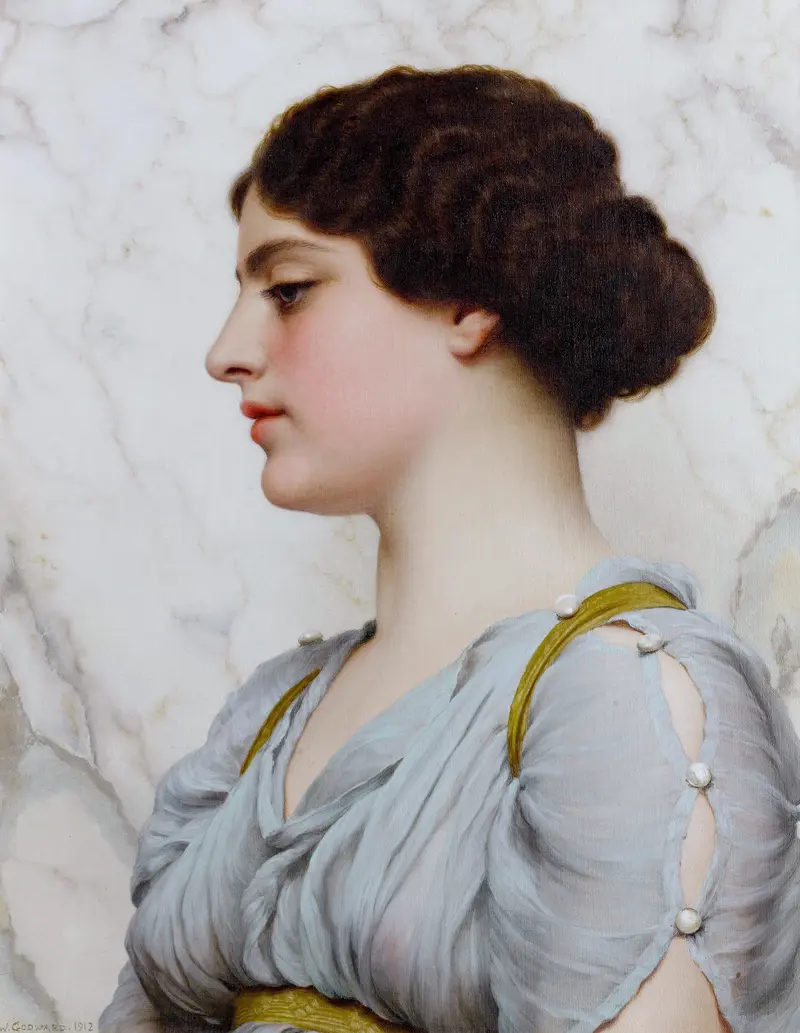
A Roman Beauty
John William Godward
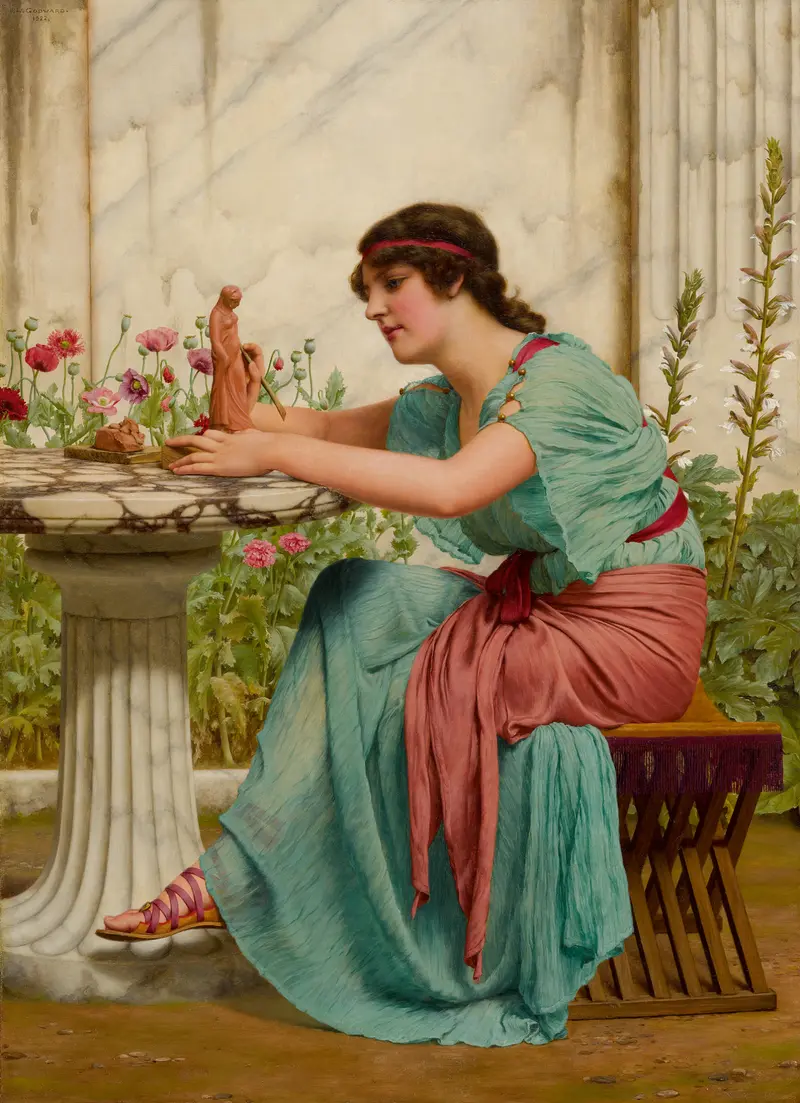
A Dilettante
John William Godward
Reverie
John William Godward



