
The Nun Jerónima de la Fuente — History & Facts
When Diego Velázquez painted The Nun Jerónima de la Fuente in 1620, he was just twenty-one and had never before painted a portrait of such a formidable woman. Sister Jerónima was already a legend in her own lifetime: in 1620, at the age of 66, she embarked from Seville for Manila to found a convent, braving a perilous journey across the Atlantic and Pacific. The commission was urgent—intended as a devotional image to accompany her to the Philippines, a visual anchor for her spiritual authority far from home.
This was not a portrait for a Spanish salon, but a tool of mission and memory, created on the eve of an extraordinary voyage. Velázquez captures Sister Jerónima at the threshold of her adventure, standing upright in her austere habit, her face weathered but resolute. Her right hand grips a large wooden crucifix, not as a passive emblem but as a weapon of faith, echoing her reputation for severity and self-mortification. The light falls sharply across her features, emphasizing the deep lines carved by age and discipline, while the dark background isolates her, intensifying the sense of spiritual focus.
Unlike the idealized saints of El Greco, Velázquez insists on the reality of flesh and bone, making her sanctity a matter of endurance rather than ecstasy. The painting’s stark realism was unusual for its time, marking a departure from the softer, more flattering convent portraits of the era. The original painting’s journey is as remarkable as its subject’s. Commissioned by the Franciscan order, it was intended to travel with Sister Jerónima to the Philippines, though it is not clear if it ever left Spain.
Today, the work is housed in the Museo del Prado, where it stands as one of Velázquez’s earliest surviving portraits. Its unflinching honesty foreshadows the psychological depth that would define his later masterpieces. For Velázquez, this portrait was a bold step—his first encounter with a living legend, and a sign of the new realism he would bring to Spanish painting.
More Artworks by Diego Velázquez

Las Meninas
Diego Velázquez

The Triumph of Bacchus
Diego Velázquez

Rokeby Venus
Diego Velázquez

Equestrian Portrait of Prince Balthasar Charles
Diego Velázquez

Bacchus
Diego Velázquez

Don Gaspar de Guzmán (1587–1645), Count-Duke of Olivares
Diego Velázquez
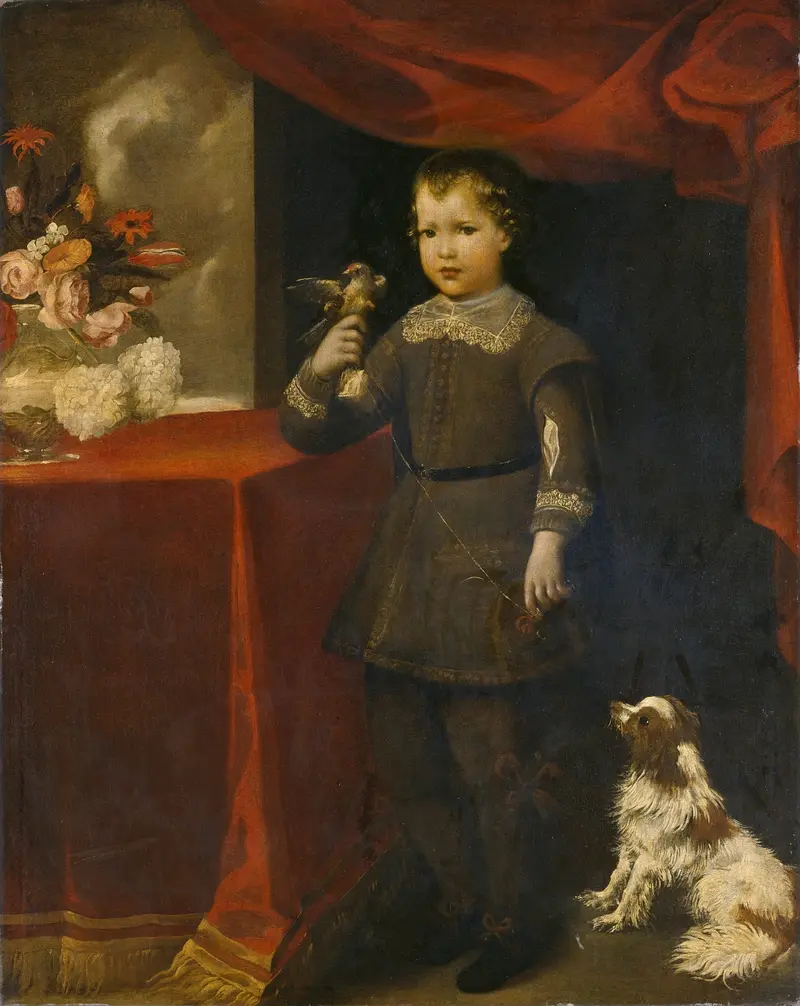
El príncipe Baltasar Carlos de Austria
Diego Velázquez

Equestrian Portrait of Philip III
Diego Velázquez

Equestrian Portrait of Margarita of Austria
Diego Velázquez
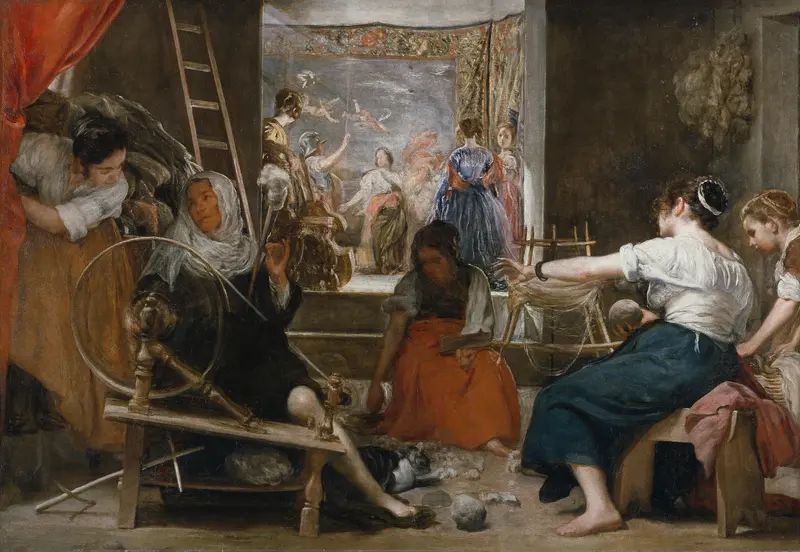
Las Hilanderas
Diego Velázquez




