
The Quack — History & Facts
A feathered hat, a theatrical pose, and a crowd caught between curiosity and suspicion: what draws the eye first in The Quack by Adriaen Brouwer is not just the central figure’s flamboyance, but the way every face in the crowd seems to tell its own story of hope, doubt, or distraction. The quack stands atop a barrel, elevated both physically and socially for this brief moment, his hand raised as if mid-speech, selling his wares or cures to the gathered villagers. The light falls most directly on his ornate costume and expressive face, marking him as the actor in this rural drama, while the crowd bends forward, some peering at the goods, others turning away, a few children distracted by the dirt at their feet.
The palette is earthy and muted, anchoring the scene in everyday life, while the sky above churns with the threat of weather, echoing the uncertainty of the promises being sold below. Painted in 1630, this work belongs to a world where itinerant healers, performers, and tricksters were a familiar sight in village squares across the Low Countries. Scenes like this were a favorite subject for genre painters of the Dutch and Flemish Baroque, who delighted in exposing folly and vice with humor and sharp observation. Adriaen Brouwer was celebrated in his own time for capturing the rough wit and raw humanity of peasant life, often painting on a small scale for collectors who prized these glimpses into the everyday.
Today, the painting resides in the Staatliche Kunsthalle Karlsruhe, a reminder of an age when skepticism and credulity mingled in the marketplace, and art found its richest material in the spectacle of ordinary people watching, doubting, and believing. Look again at the faces in the crowd: each one is a different answer to the quack’s pitch.
More Artworks by Adriaen Brouwer

The Smokers
Adriaen Brouwer
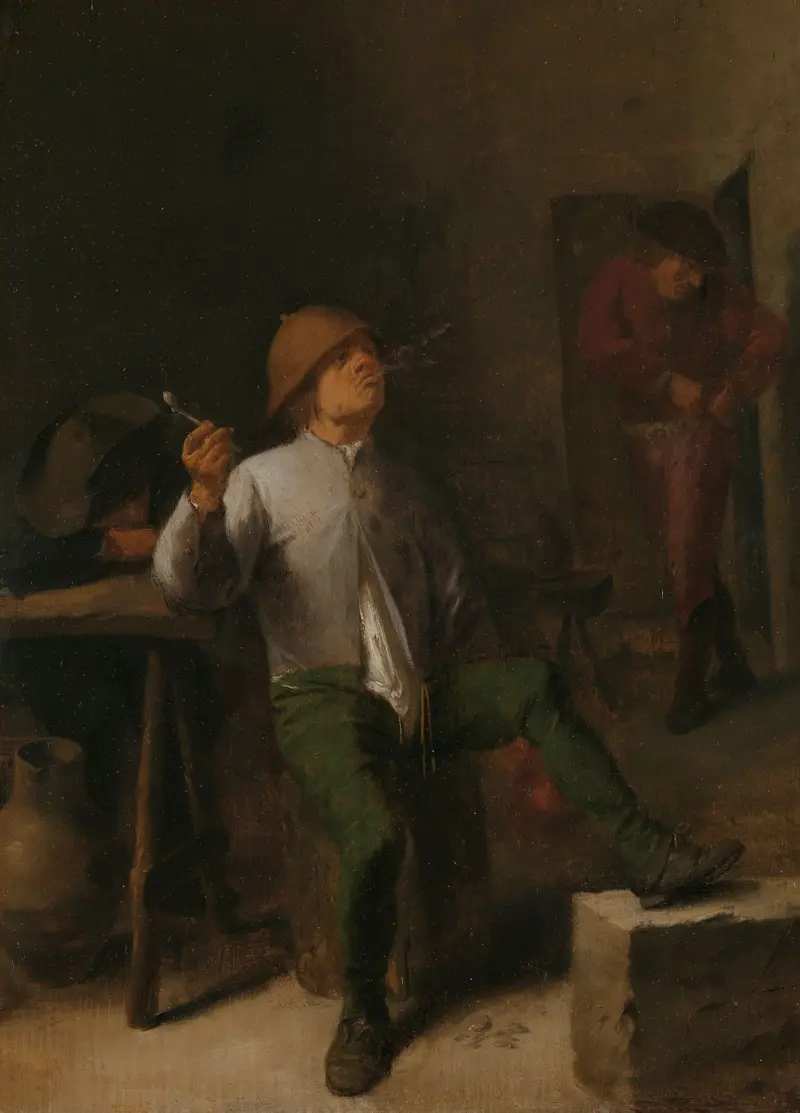
The Smoker
Adriaen Brouwer
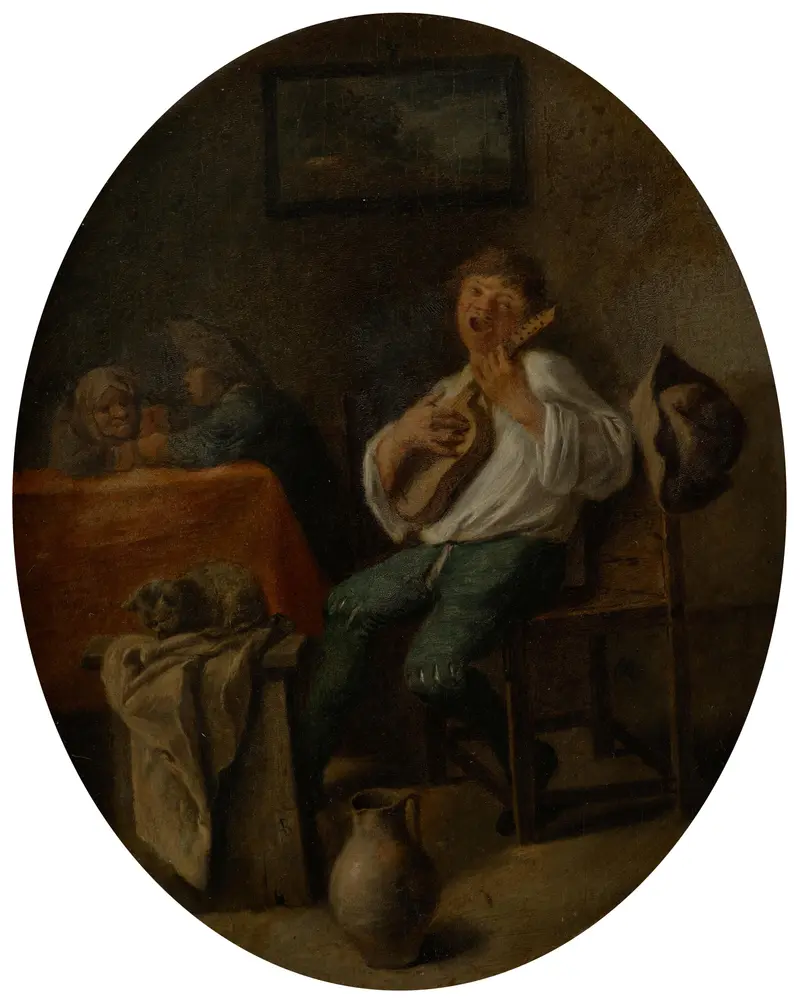
The Guitar Player
Adriaen Brouwer
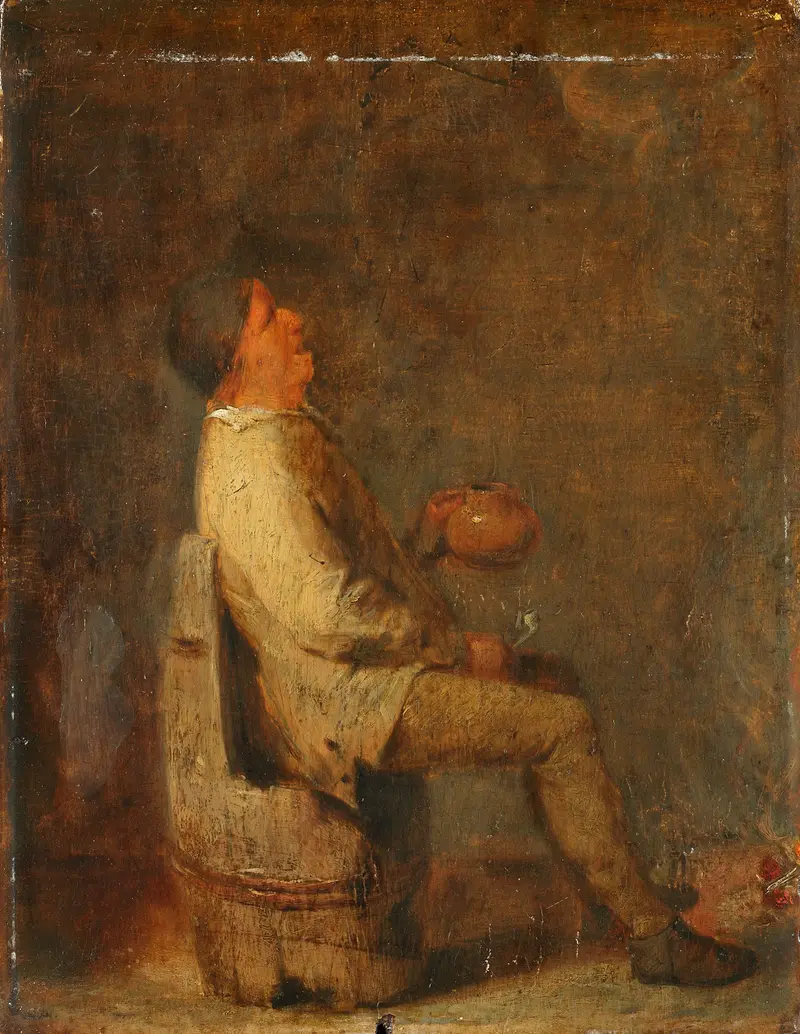
A Peasant Singing
Adriaen Brouwer
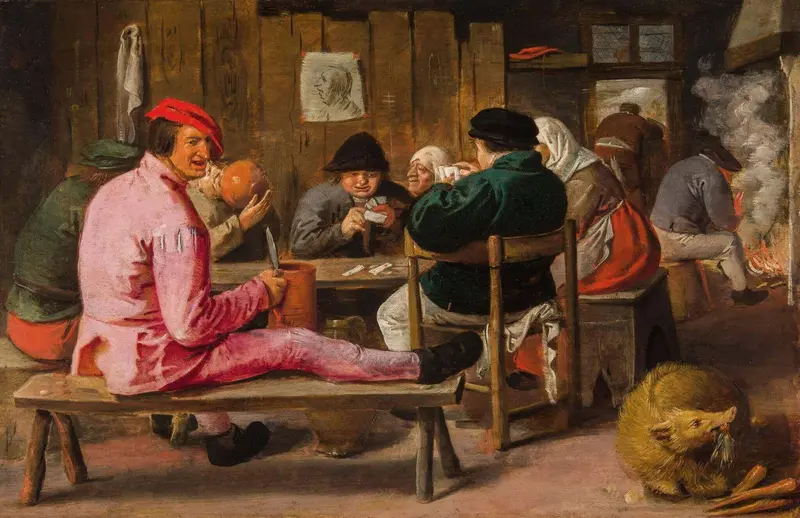
Merry Peasants in an Inn
Adriaen Brouwer
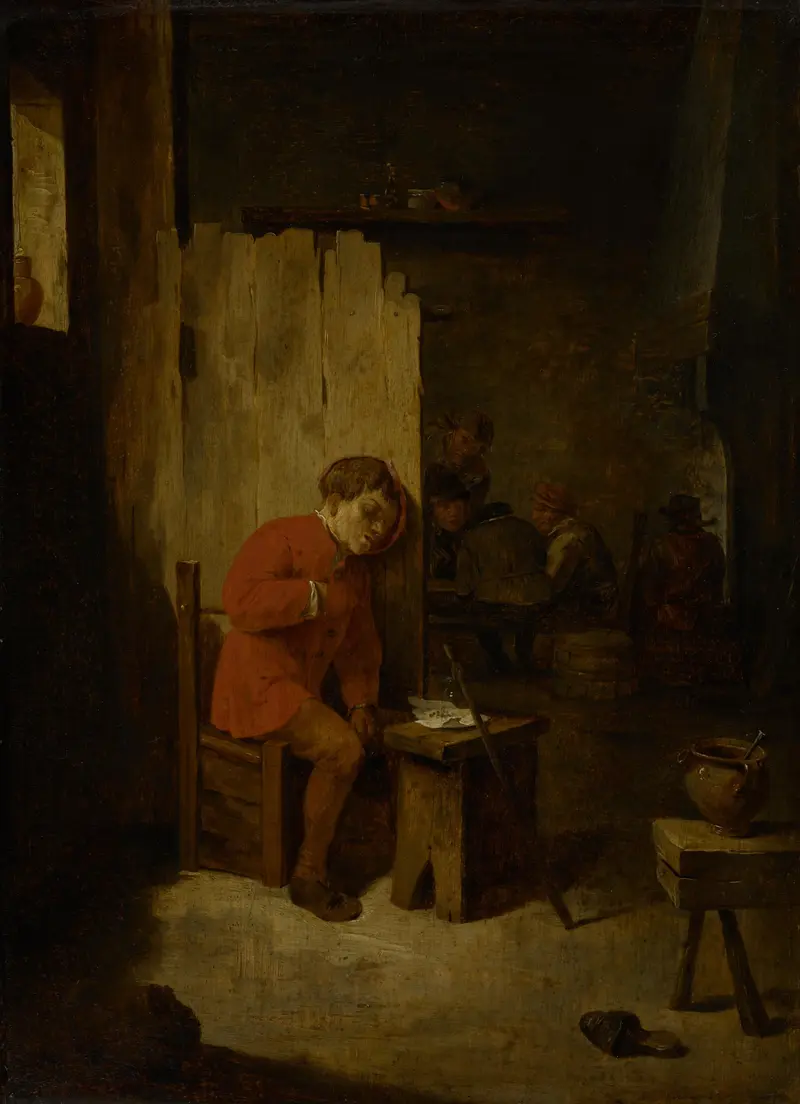
Nachahmer, Schlafender Bauer 853G Gemäldegalerie
Adriaen Brouwer
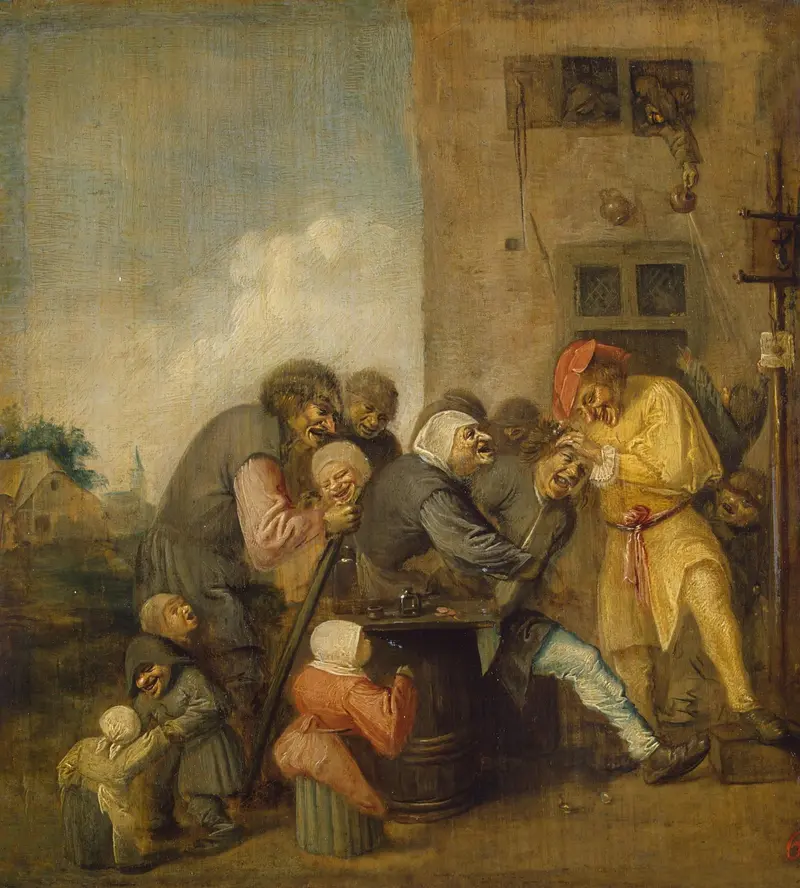
Village Charlatan (The Operation for Stone in the Head)
Adriaen Brouwer
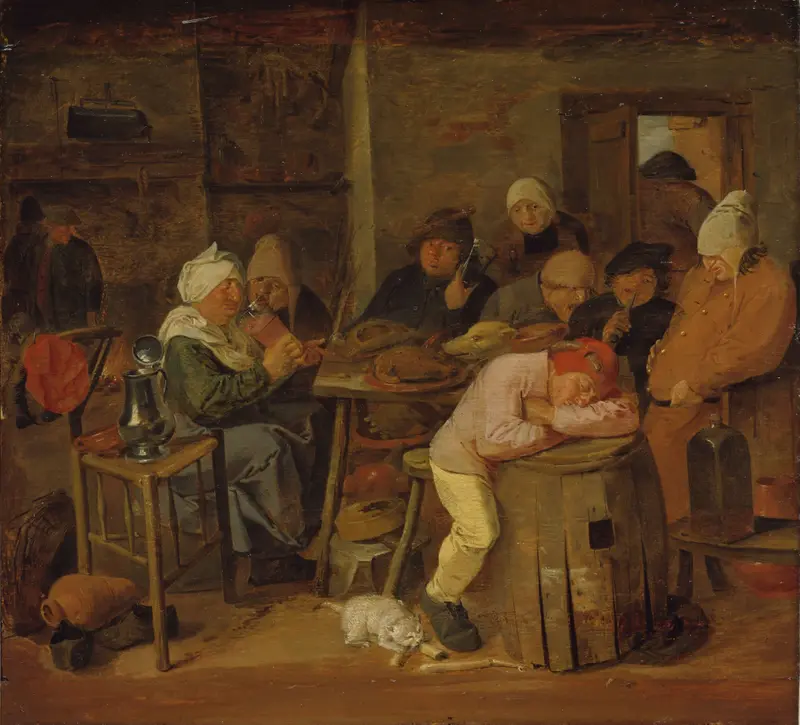
Peasants in an interior (The slaughter feast)
Adriaen Brouwer
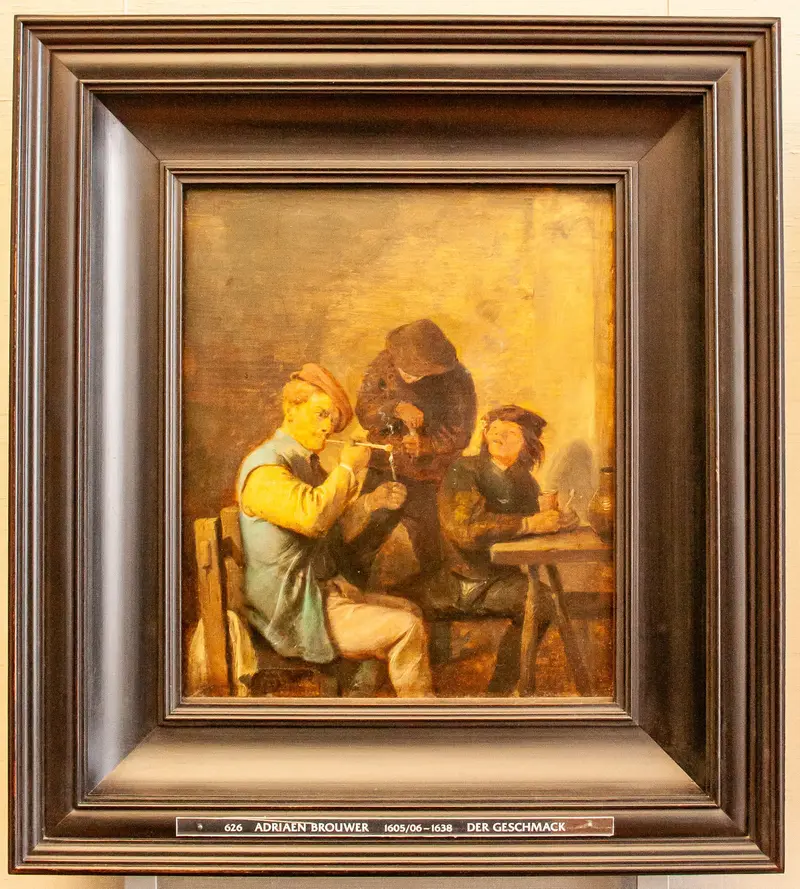
The Taste
Adriaen Brouwer
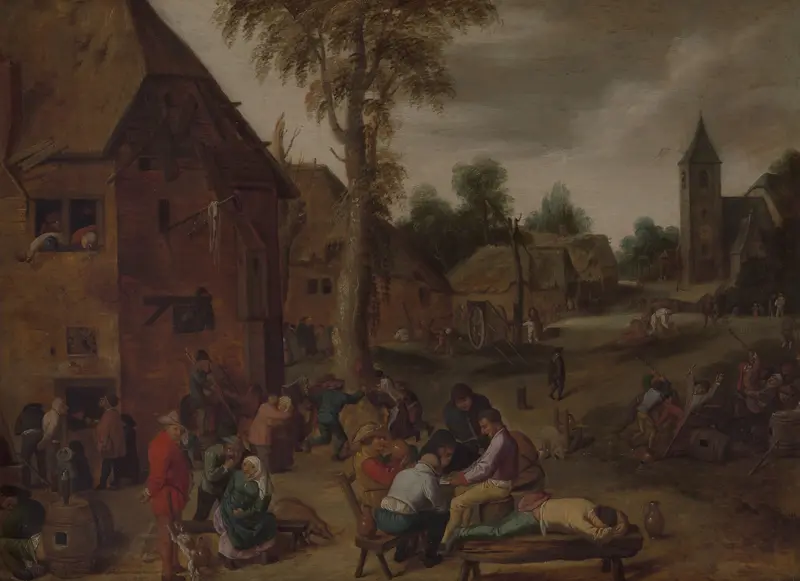
A Fair
Adriaen Brouwer
More Genre Scene Art

Banquet of the Officers of the St George Civic Guard
Frans Hals

Rembrandt and Saskia in the Scene of the Prodigal Son
Rembrandt van Rijn

Bal du moulin de la Galette
Pierre-Auguste Renoir

Quadrille at the Moulin Rouge
Henri de Toulouse-Lautrec

A Burial at Ornans
Gustave Courbet

When Will You Marry?
Paul Gauguin