
The Raising of Lazarus — History & Facts
What grips the viewer first in The Raising of Lazarus by Alessandro Magnasco is not the miracle itself, but the swirling chaos of human emotion that erupts around it. The painting draws the eye to a figure at the center, arms flung wide in a gesture that seems to split the air between terror and awe. Light pours in from above, illuminating the pale, almost spectral body of Lazarus as he is pulled from the tomb, while every surrounding figure twists in shock, disbelief, or desperate hope.
The drama is heightened by Magnasco’s feverish brushwork, which blurs the boundaries between flesh, fabric, and shadow, making the scene feel as if it is caught in the very moment of transformation. Created between 1715 and 1740, this work belongs to a world where religious painting was expected to do more than recount a story—it was meant to jolt the senses and stir the soul. In the early eighteenth century, artists like Magnasco were commissioned by churches and private patrons to bring biblical episodes to life with a new intensity. Theatrical gestures, bold contrasts of light and dark, and a crowded, almost frantic composition all mark this painting as a product of its time, when faith and spectacle often marched hand in hand.
Now part of the Rijksmuseum collection, this painting stands as a testament to an era when the boundary between the miraculous and the everyday seemed as thin as a brushstroke—an invitation to step closer and let the tumult of the scene spill into the present.
More Artworks by Alessandro Magnasco

The Synagogue
Alessandro Magnasco
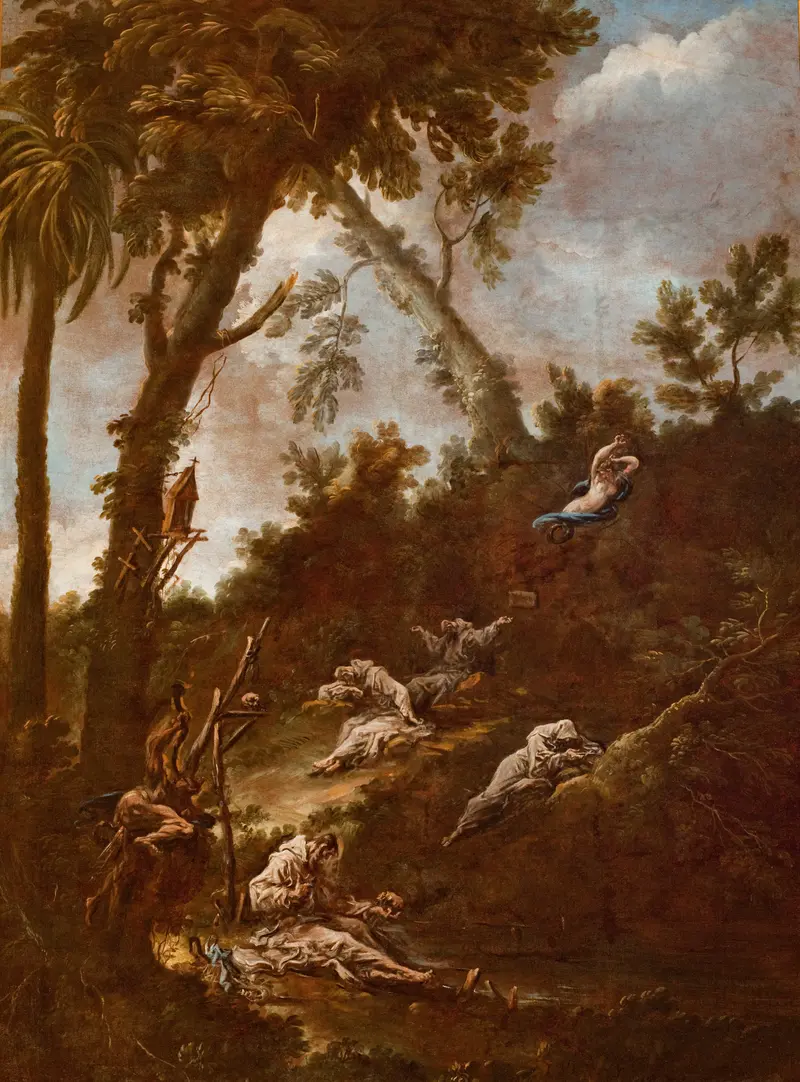
Hermits (Anachorets)
Alessandro Magnasco
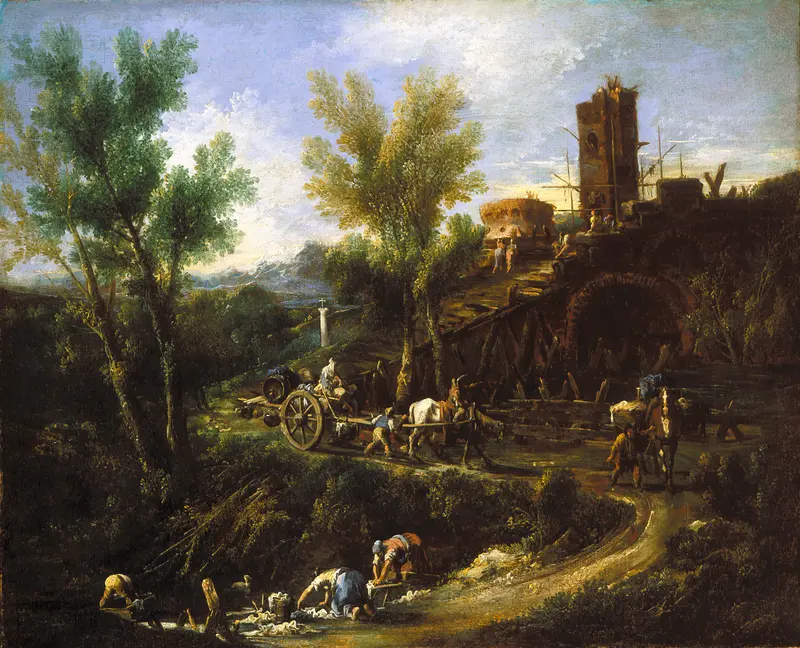
Landscape with Gypsies and Washerwomen
Alessandro Magnasco
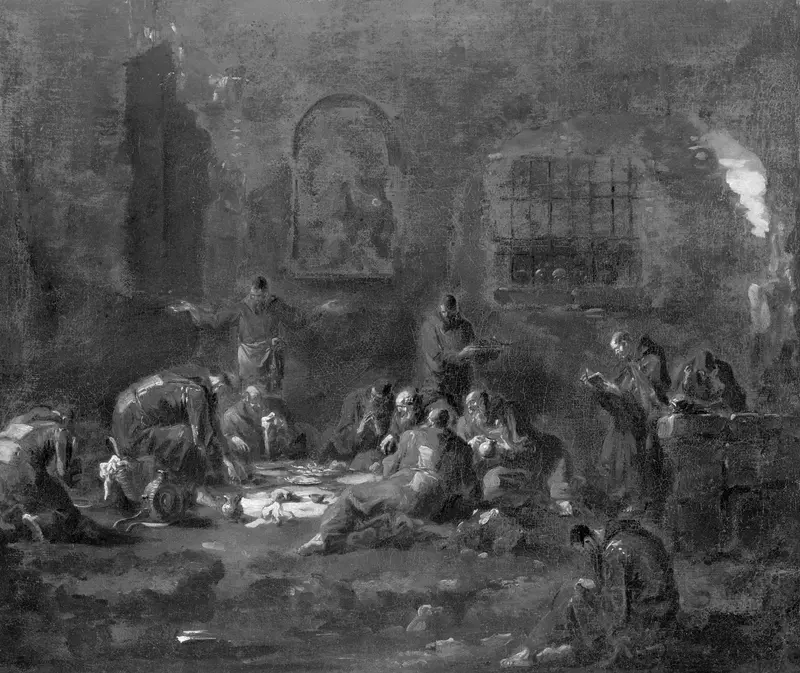
Monks at Supper
Alessandro Magnasco
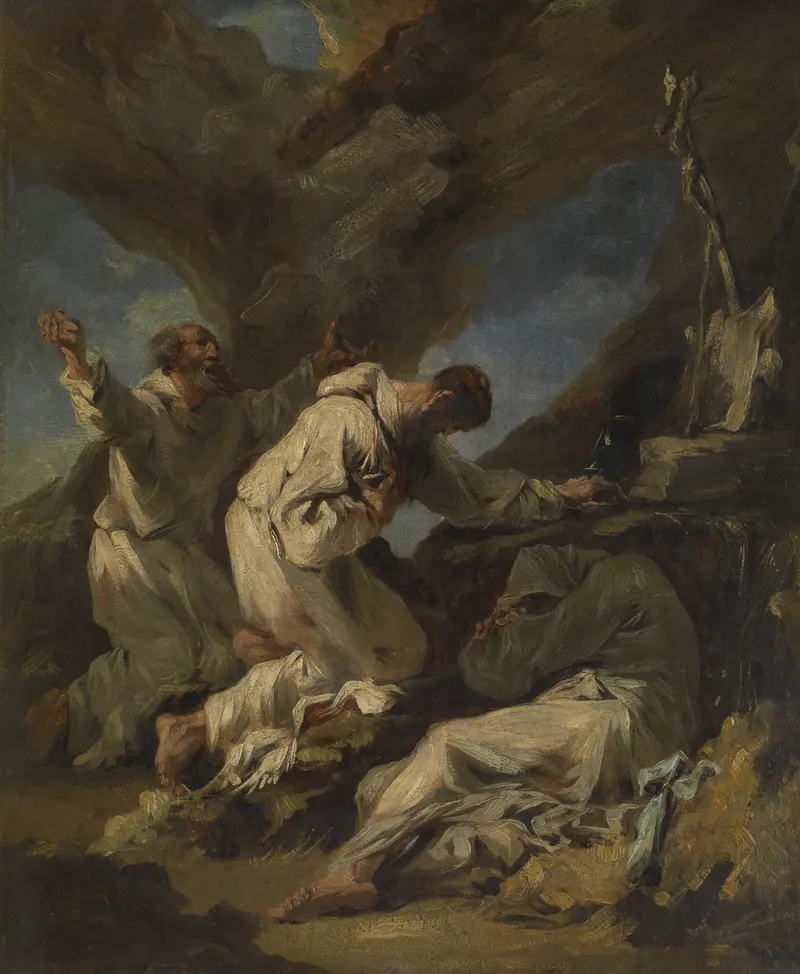
Praying Monks
Alessandro Magnasco
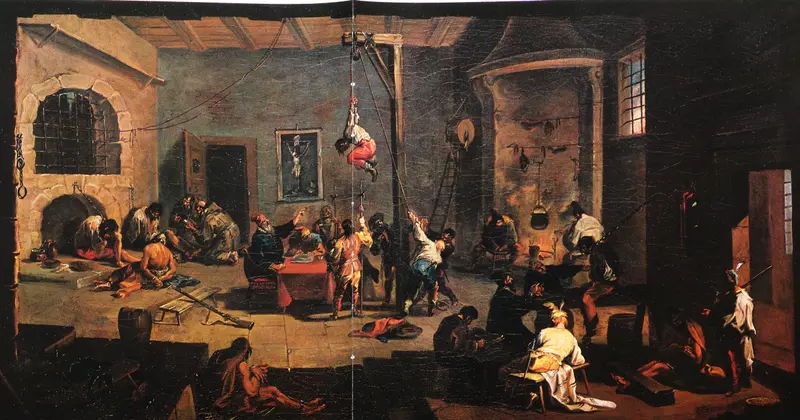
Torture Scene
Alessandro Magnasco
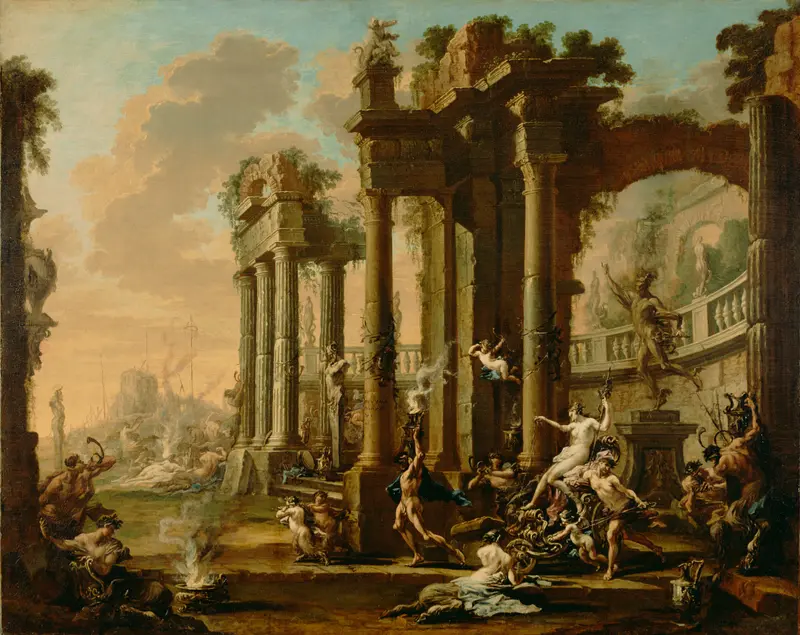
The Triumph of Venus
Alessandro Magnasco
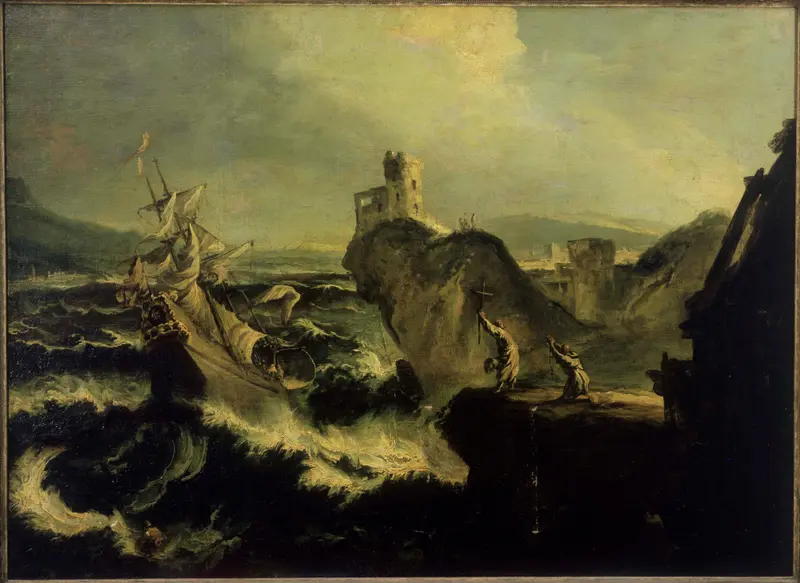
The Shipwreck
Alessandro Magnasco
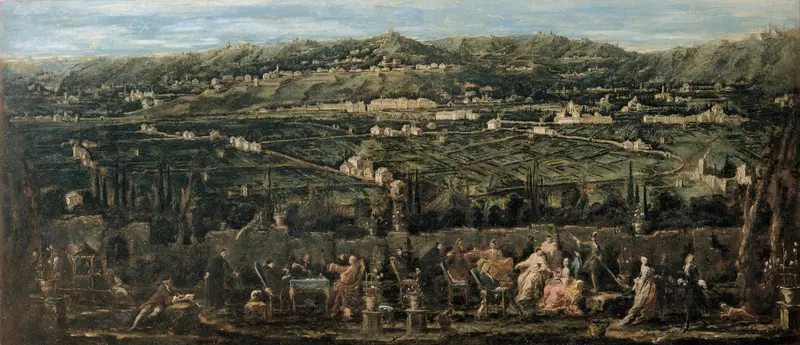
Garden Party in Albaro
Alessandro Magnasco
Monks Praying in a Grotto
Alessandro Magnasco





