
The Riverbanks — History & Facts
When Georges Seurat first exhibited The Riverbanks in 1883, critics were startled by his radical approach to landscape. Painted while he was still in his early twenties, this work marks one of the earliest public glimpses of the technique that would later define Seurat’s career: the systematic application of small, distinct touches of color. Though not yet the fully developed pointillism of his later masterpieces, The Riverbanks already hints at the scientific rigor and patient observation that would become his hallmark.
The painting’s quiet innovation did not go unnoticed—contemporary artists such as Paul Signac would soon be drawn into Seurat’s orbit, helping to shape the Neo-Impressionist movement. In this tranquil scene, Seurat captures the gentle curve of a riverbank beneath a pale sky, where the water’s surface softly reflects the light of a late afternoon. The eye is drawn first to the broad sweep of the river, then to the grassy bank dotted with subtle, deliberate strokes of green and ochre. Figures, if present, are rendered with minimal detail, almost dissolving into their surroundings, emphasizing the unity of landscape and human presence.
Unlike the bustling riverside crowds of his later Bathers at Asnières, here Seurat’s focus is on solitude and the silent interplay of light and color. The careful modulation of tones, achieved through countless tiny brushstrokes, invites the viewer to linger and observe the world with the same patience as the artist. The exact provenance of The Riverbanks remains somewhat obscure, as is often the case with Seurat’s early works, which changed hands quietly among Parisian collectors before the artist’s meteoric rise. Today, the painting is recognized as an important stepping stone in the development of Neo-Impressionism, bridging the gap between the loose brushwork of Impressionism and the calculated technique Seurat would later perfect.
Its survival and current place in a major museum collection attest to its significance, both as a record of Seurat’s artistic evolution and as a testament to a moment when the course of modern painting was quietly, but decisively, being altered.
More Artworks by Georges Seurat
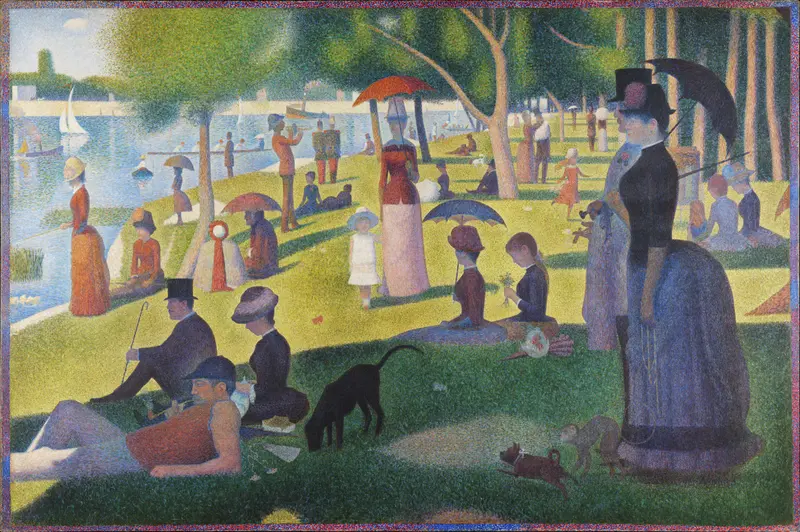
A Sunday Afternoon on the Island of La Grande Jatte
Georges Seurat
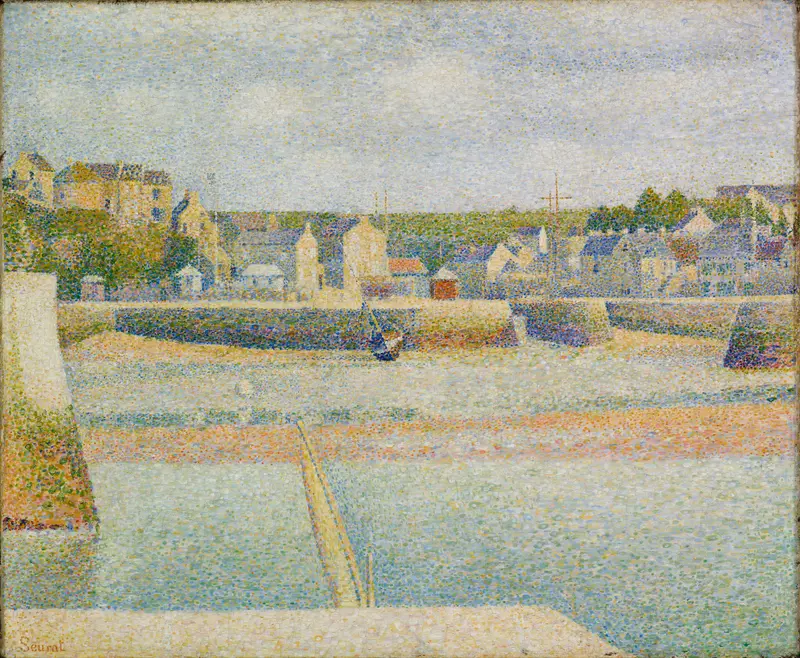
Port-en-Bessin, The Outer Harbor (Low Tide)
Georges Seurat
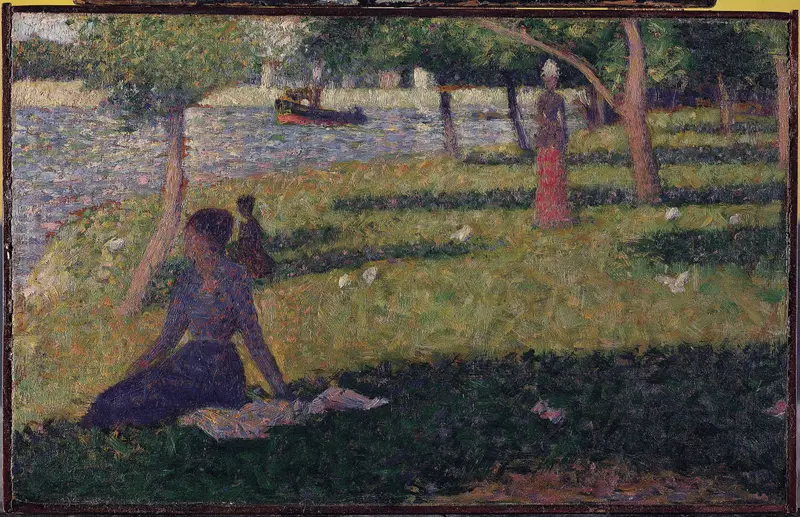
Étude pour ‘La Grande Jatte’ (Study for ‘La Grande Jatte’)
Georges Seurat
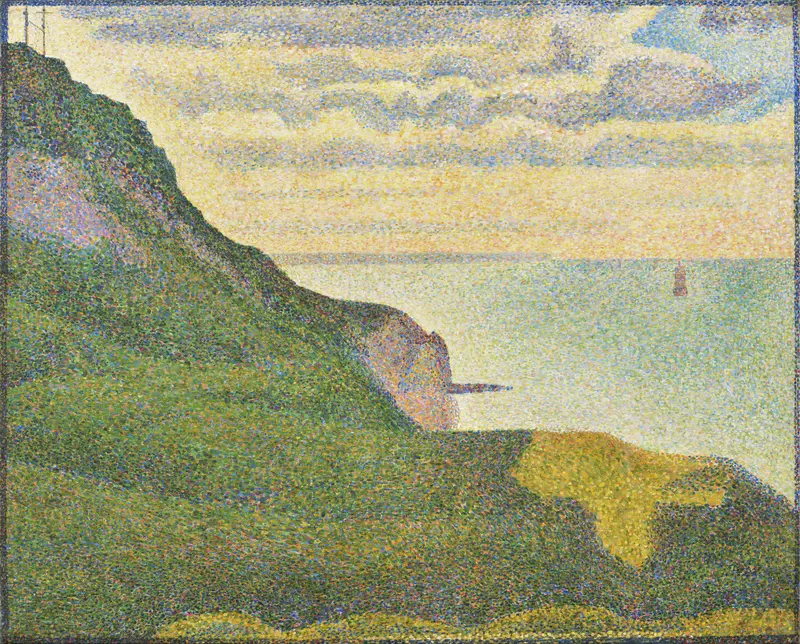
Seascape at Port-en-Bessin,Normandy
Georges Seurat
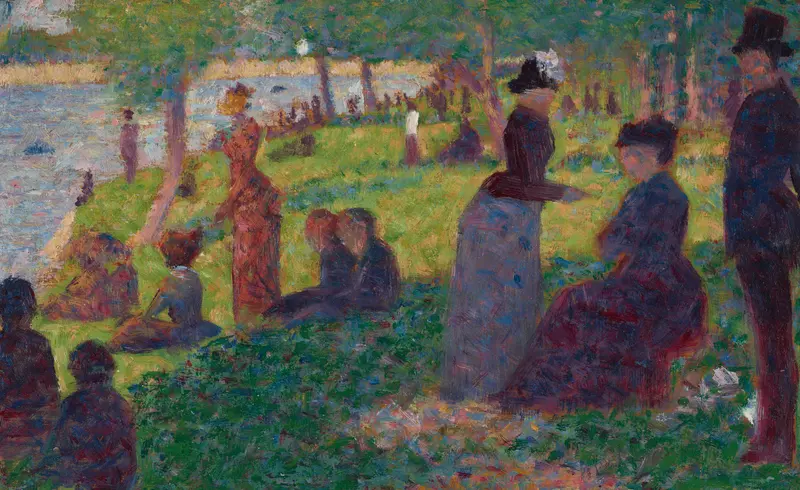
Oil Sketch for "A Sunday on La Grande Jatte — 1884"
Georges Seurat
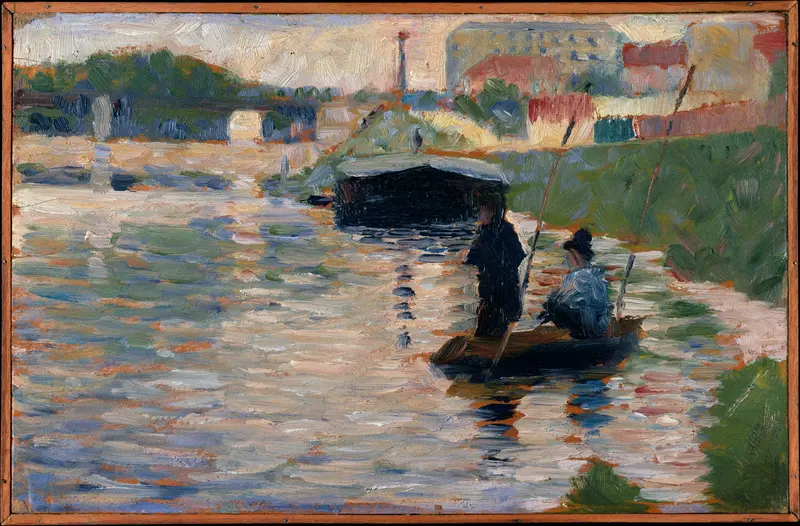
View of the Seine
Georges Seurat
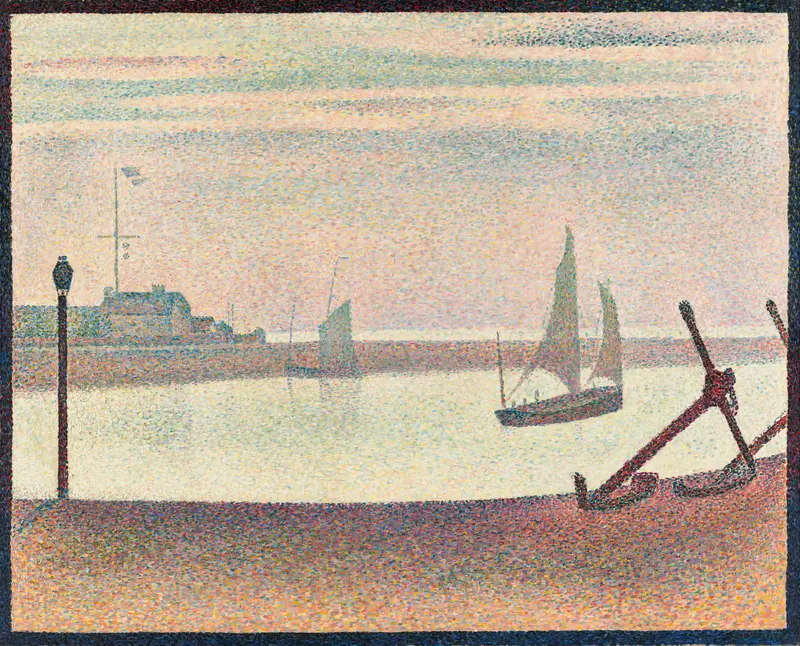
The Channel at Gravelines, Evening
Georges Seurat
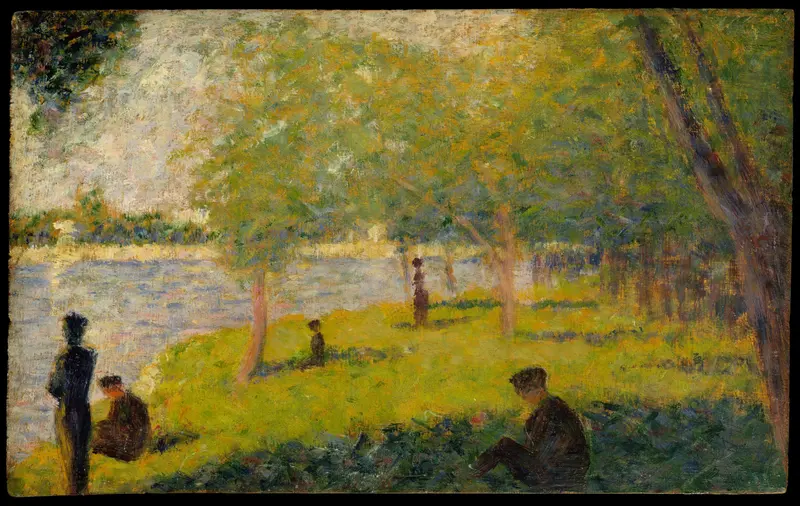
Study for ‘A Sunday on La Grande Jatte’
Georges Seurat
Study for A Sunday on La Grande Jatte
Georges Seurat
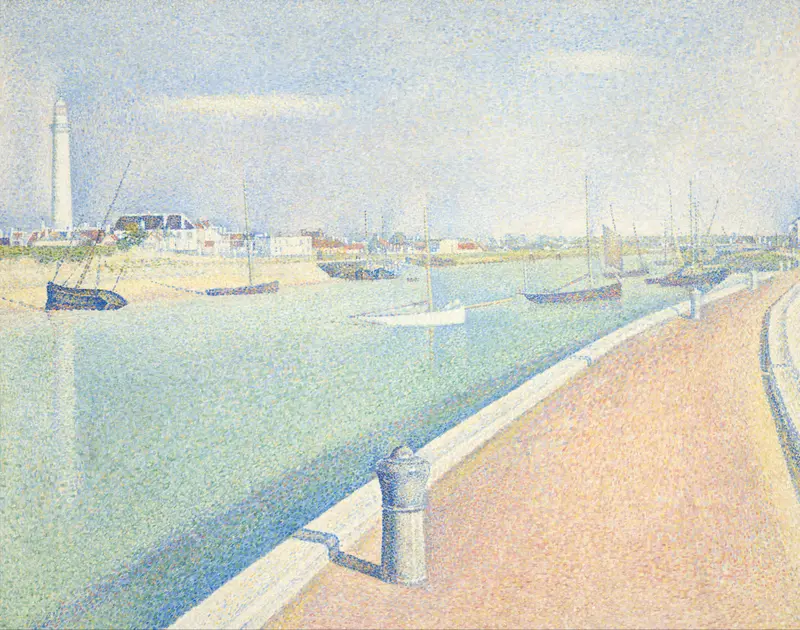
The Channel of Gravelines, Petit Fort Philippe
Georges Seurat
More Landscape Art

The Starry Night
Vincent van Gogh

View of Delft
Johannes Vermeer

Water Lilies
Claude Monet

The Grand Canal, Venice, looking north-west from the Ca' Corner to the Ca' Contarini degli Scrigni, with the campanile of Santa Maria della Carità
Canaletto

Windsor Castle
Canaletto

The Grand Canal looking North-East from the Palazzo Dolfin-Manin to the Rialto Bridge
Canaletto