
The Smith; Passage du Dragon — History & Facts
In The Smith; Passage du Dragon, Whistler captures a bustling urban scene filled with figures engaged in daily activities. The palette features soft blues, muted greens, and warm earth tones, creating a harmonious atmosphere. The composition is lively, with people moving through a narrow passageway, suggesting a sense of community and interaction.
The play of light and shadow adds depth and dimension to the scene, enhancing the overall vibrancy. This painting is executed in oil on canvas, a medium that allows for rich texture and color blending. Whistler's brushwork is loose and fluid, characteristic of the Impressionism style, which emphasizes the effects of light and movement. The dimensions are approximately 60 x 80 cm, making it a manageable size for intimate viewing.
The work is notable for its depiction of urban life, a common theme in Whistler's oeuvre. James Abbott McNeill Whistler was an American artist known for his contributions to the Impressionism movement. The Smith; Passage du Dragon reflects his interest in capturing the essence of modern life in urban settings. An interesting fact about this work is that it exemplifies Whistler's ability to blend realism with impressionistic techniques, creating a unique perspective on everyday scenes.
This painting is part of the collection at the Musee d'Orsay, a fitting home for such a vibrant representation of 19th-century Paris.
More Artworks by James Abbott McNeill Whistler
Nocturne in Blue and Silver
James Abbott McNeill Whistler

Nocturne
James Abbott McNeill Whistler
Nocturne: Blue and Gold–Southampton Water
James Abbott McNeill Whistler
Nocturne: Grey and Gold–Canal, Holland
James Abbott McNeill Whistler
Nocturne in Grey and Gold: Chelsea Snow
James Abbott McNeill Whistler
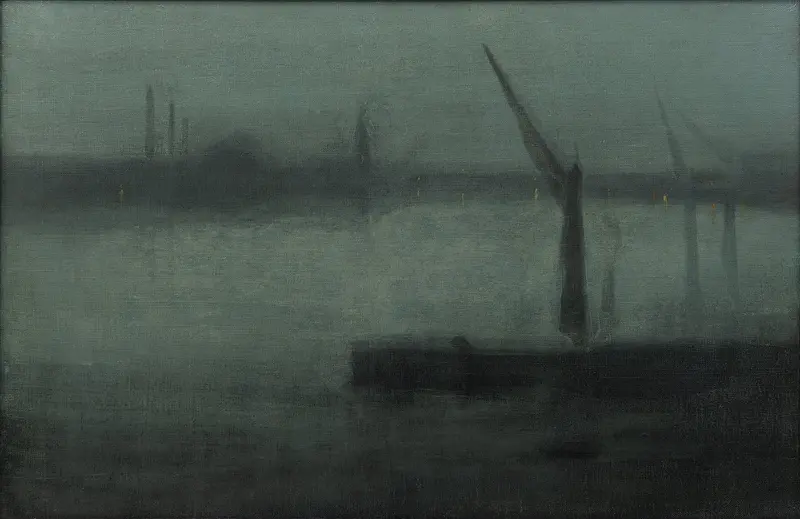
Nocturne: Blue and Silver–Battersea Reach
James Abbott McNeill Whistler
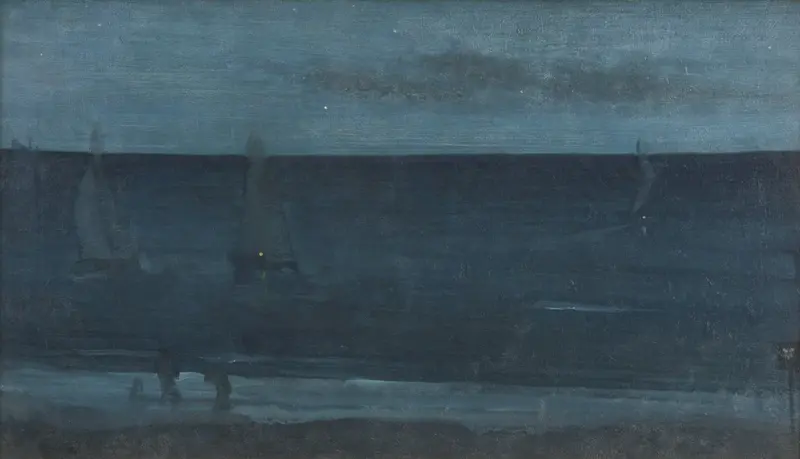
Nocturne: Blue and Silver–Bognor
James Abbott McNeill Whistler

Old Battersea Bridge
James Abbott McNeill Whistler
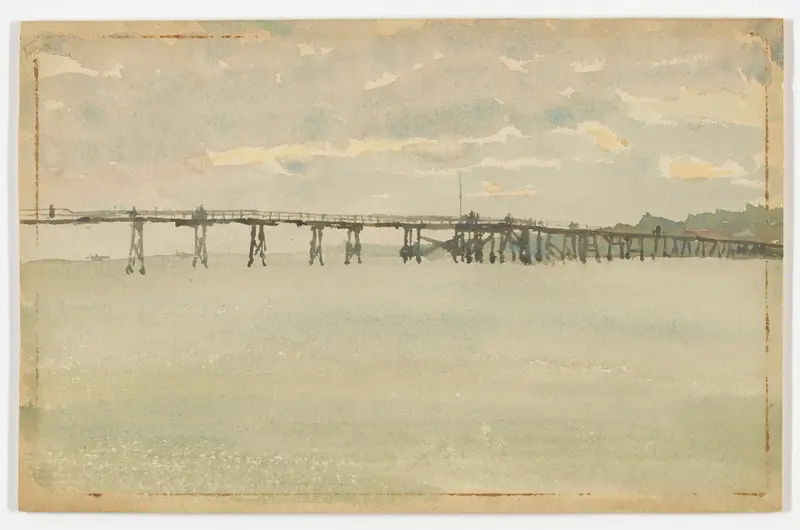
Grey and Silver–Pier, Southend
James Abbott McNeill Whistler
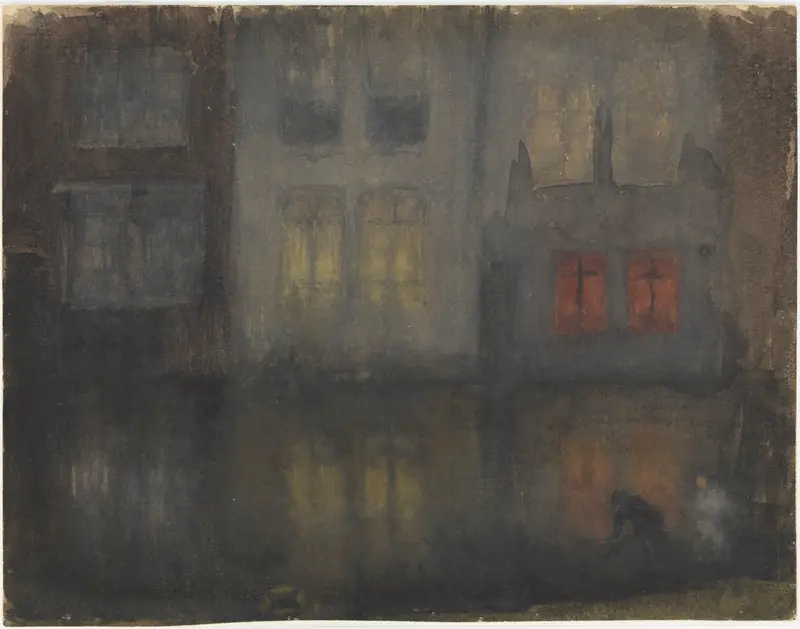
Nocturne: Black and Red—Back Canal, Holland
James Abbott McNeill Whistler
More Genre Scene Art

Banquet of the Officers of the St George Civic Guard
Frans Hals

Rembrandt and Saskia in the Scene of the Prodigal Son
Rembrandt van Rijn

Bal du moulin de la Galette
Pierre-Auguste Renoir

Quadrille at the Moulin Rouge
Henri de Toulouse-Lautrec

A Burial at Ornans
Gustave Courbet

When Will You Marry?
Paul Gauguin