
The statue seller — History & Facts
What first catches the eye in The statue seller is the languid, almost feline pose of the young boy, his gaze meeting ours with a mixture of innocence and knowingness. He reclines among a riot of loosely brushed greens and ochres, his body forming a gentle arc that draws the viewer’s attention toward the small statuette he cradles in his hand. The boy’s dark, expressive eyes seem to ask a question we cannot quite answer, while the necklace he toys with adds a note of quiet introspection.
The scattered statuettes on the shelf behind him—rendered with quick, impressionistic strokes—hint at a world of commerce and play, their forms just distinct enough to suggest the trade that gives the painting its name. Painted in 1885, this work by Antonio Mancini belongs to a period when artists across Europe were drawn to scenes of everyday life, often focusing on children and the urban poor. Italian painters like Mancini found both poetry and hardship in the streets of Rome and Naples, using loose brushwork and earthy palettes to capture fleeting moods. At the time, such works were collected by new patrons eager for images that felt modern and immediate, even as they nodded to classical traditions.
Now part of The Mesdag Collection, The statue seller stands as a testament to a moment when art turned its gaze to the small dramas of daily existence—inviting us to linger over the mysteries in a child’s eyes, and to wonder about the world just beyond the frame.
More Artworks by Antonio Mancini

Portrait of a lady
Antonio Mancini
Self-Portrait
Antonio Mancini
The Flower Seller
Antonio Mancini
The Saltimbanco
Antonio Mancini
The sick child
Antonio Mancini
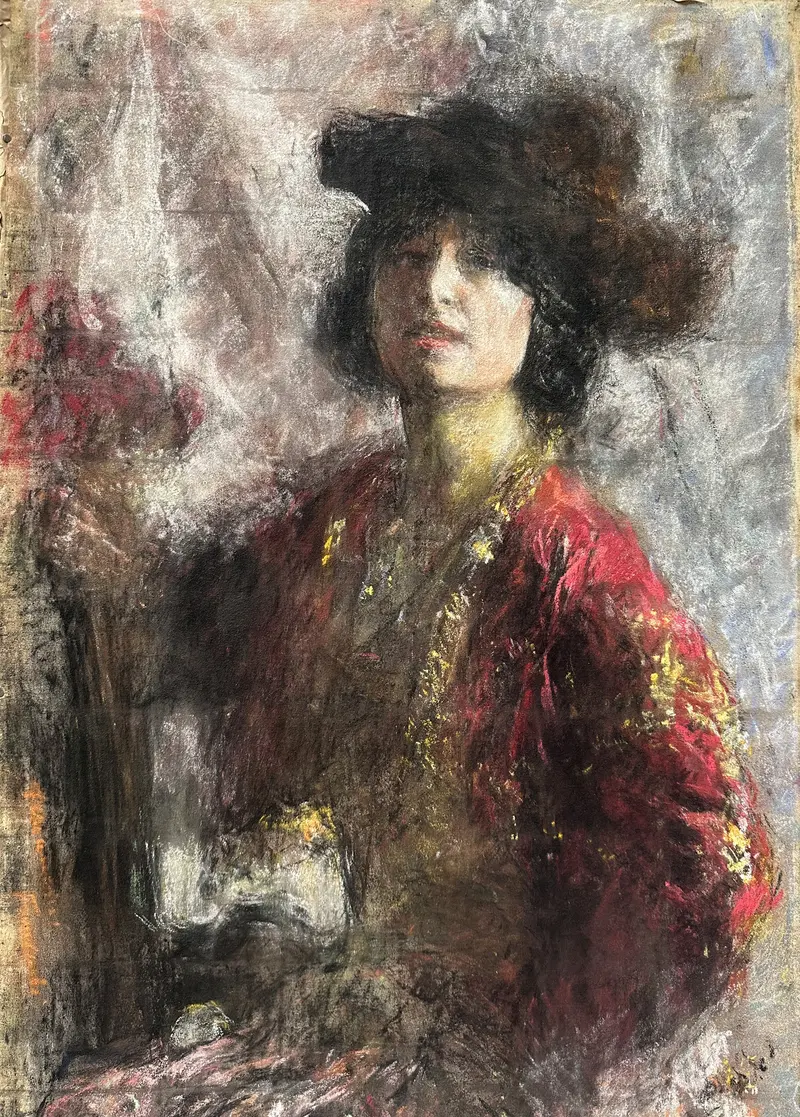
Bolero. Bullfighter
Antonio Mancini
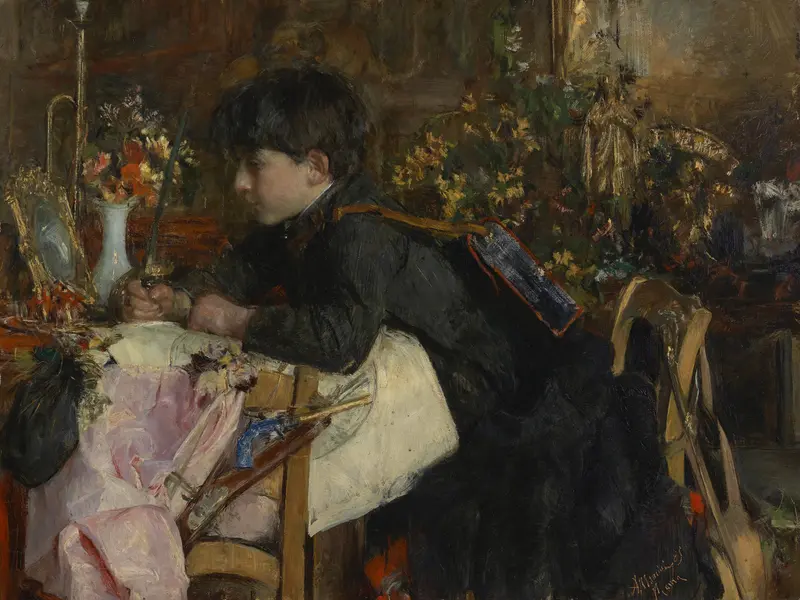
The birthday
Antonio Mancini
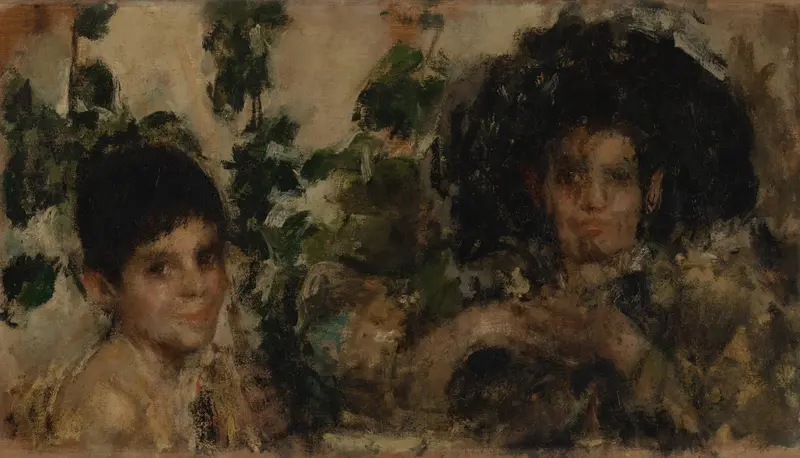
The brothers
Antonio Mancini
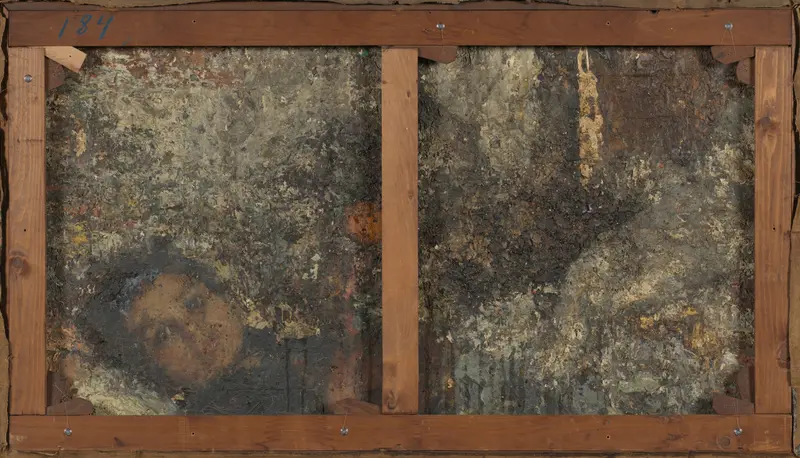
Liggend kind hwm0184v The Mesdag Collection
Antonio Mancini
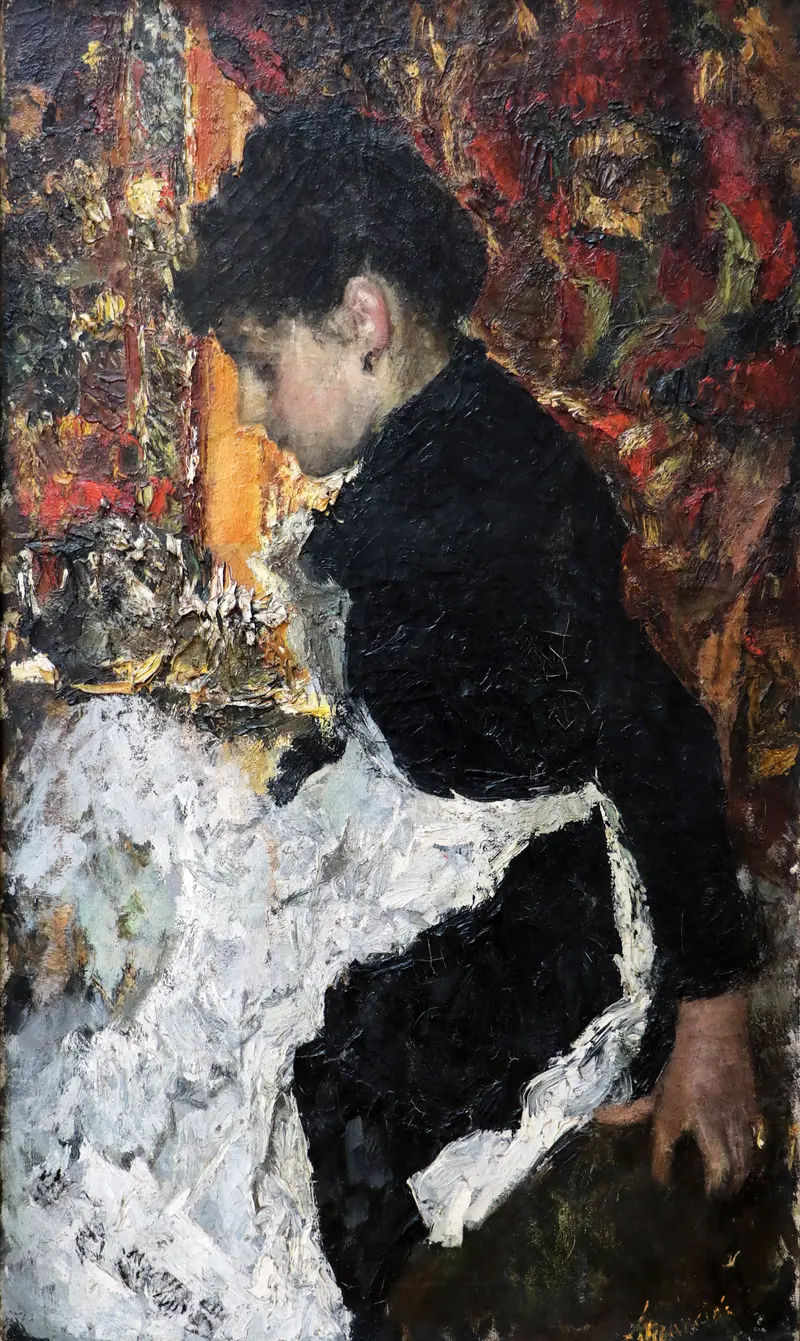
Servetta
Antonio Mancini
More Genre Scene Art

Banquet of the Officers of the St George Civic Guard
Frans Hals

Rembrandt and Saskia in the Scene of the Prodigal Son
Rembrandt van Rijn

Bal du moulin de la Galette
Pierre-Auguste Renoir

Quadrille at the Moulin Rouge
Henri de Toulouse-Lautrec

A Burial at Ornans
Gustave Courbet

When Will You Marry?
Paul Gauguin