
The Story of the Cross — History & Facts
Few works by Albert Pinkham Ryder have sparked as much curiosity as The Story of the Cross, not least because its very medium remains uncertain to this day. Ryder, a singular figure in American art, was notorious for his experimental techniques and for reworking his paintings over many years. This particular piece, created around 1890, sits at a crossroads in his career—when Ryder was withdrawing from society and producing works marked by an intense, almost visionary focus.
The painting’s elusive surface, which has resisted easy analysis by conservators, only adds to its mystique and the ongoing debates about Ryder’s methods. Ryder chooses to freeze the narrative at a moment of profound stillness: the Cross, central and looming, dominates a darkened landscape, while faint, spectral figures gather at its base. The drama is not in the depiction of Christ’s suffering, but in the aftermath—a hush that envelops the scene as witnesses grapple with the enormity of what has occurred. The heavy, swirling brushwork and muted palette create an atmosphere of weight and sorrow, where the Cross itself glows with an uncanny light, suggesting both burden and redemption.
Unlike the precise realism of Jean-Léon Gérôme or the theatricality of Tintoretto’s Crucifixions, Ryder’s vision is inward, almost dreamlike, inviting the viewer to contemplate the emotional and spiritual resonance of the event rather than its physical details. The journey of The Story of the Cross as an object is as enigmatic as its making. Unlike Ryder’s more famous The Race Track (Death on a Pale Horse), this painting was not widely exhibited in his lifetime, and records of its early ownership are scarce. It has passed through private collections, often misattributed or misunderstood, before finding its way into public view.
Today, it stands as a testament to Ryder’s idiosyncratic genius and to the restless experimentation of late 19th-century American painting—a work as mysterious in its material presence as in its spiritual intent.
More Artworks by Albert Pinkham Ryder

The Toilers of the Sea
Albert Pinkham Ryder
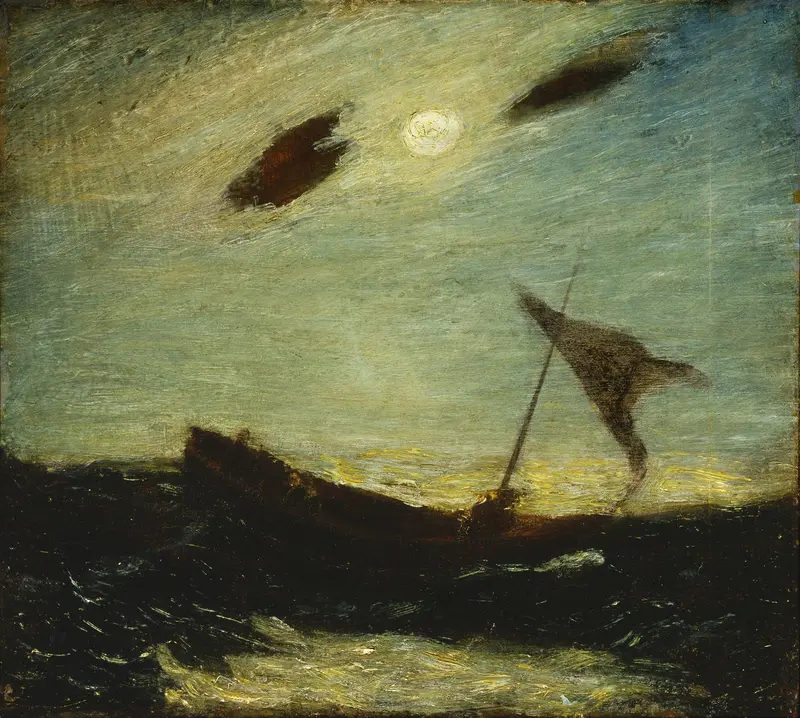
Moonlight
Albert Pinkham Ryder
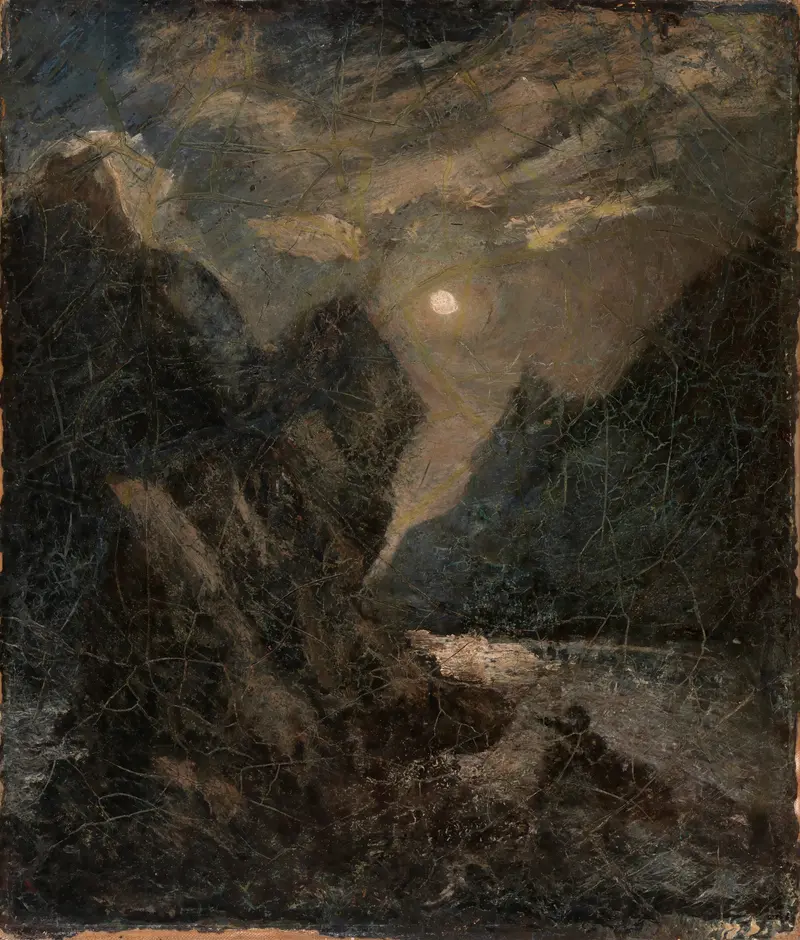
The Lorelei
Albert Pinkham Ryder
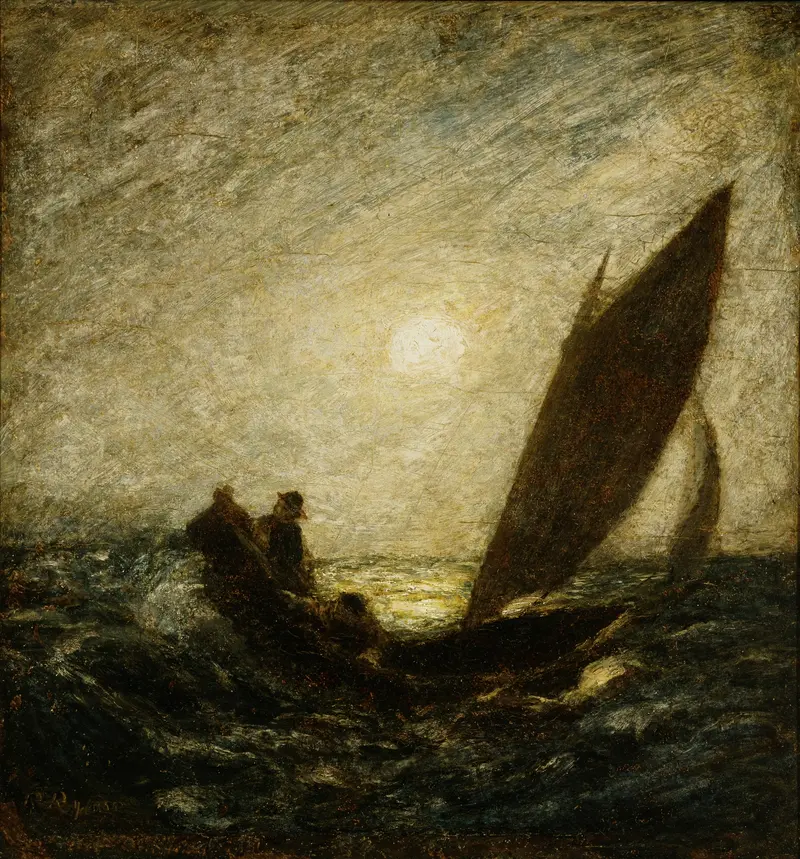
With Sloping Mast And Dipping Prow
Albert Pinkham Ryder
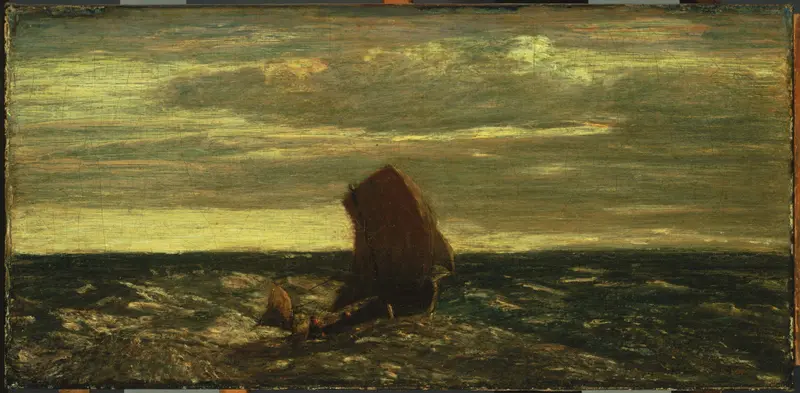
Homeward Bound
Albert Pinkham Ryder
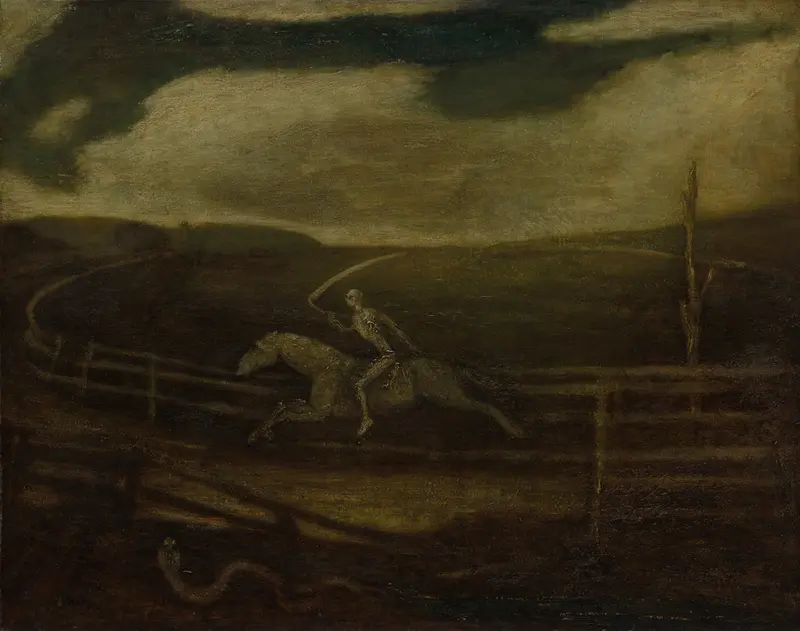
The Race Track (Death on a Pale Horse)
Albert Pinkham Ryder
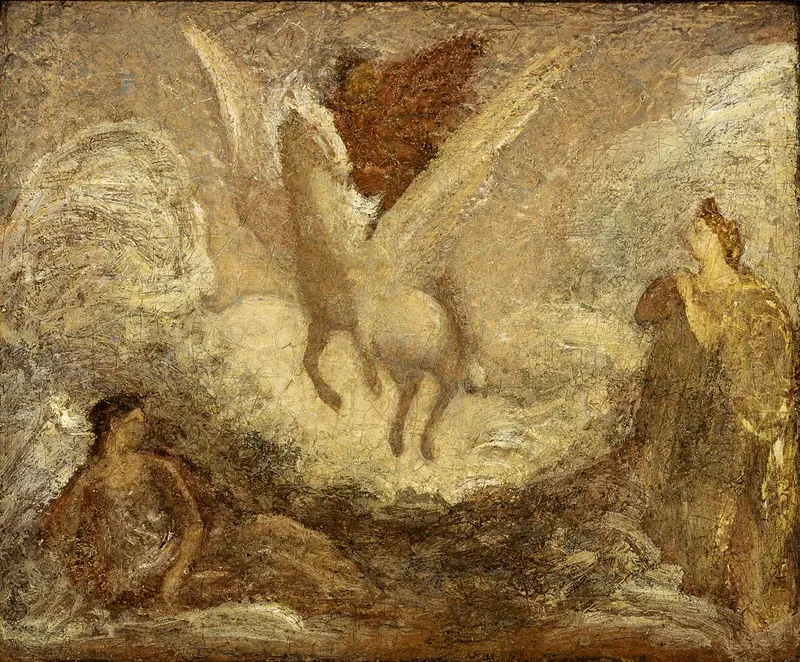
Pegasus Departing
Albert Pinkham Ryder
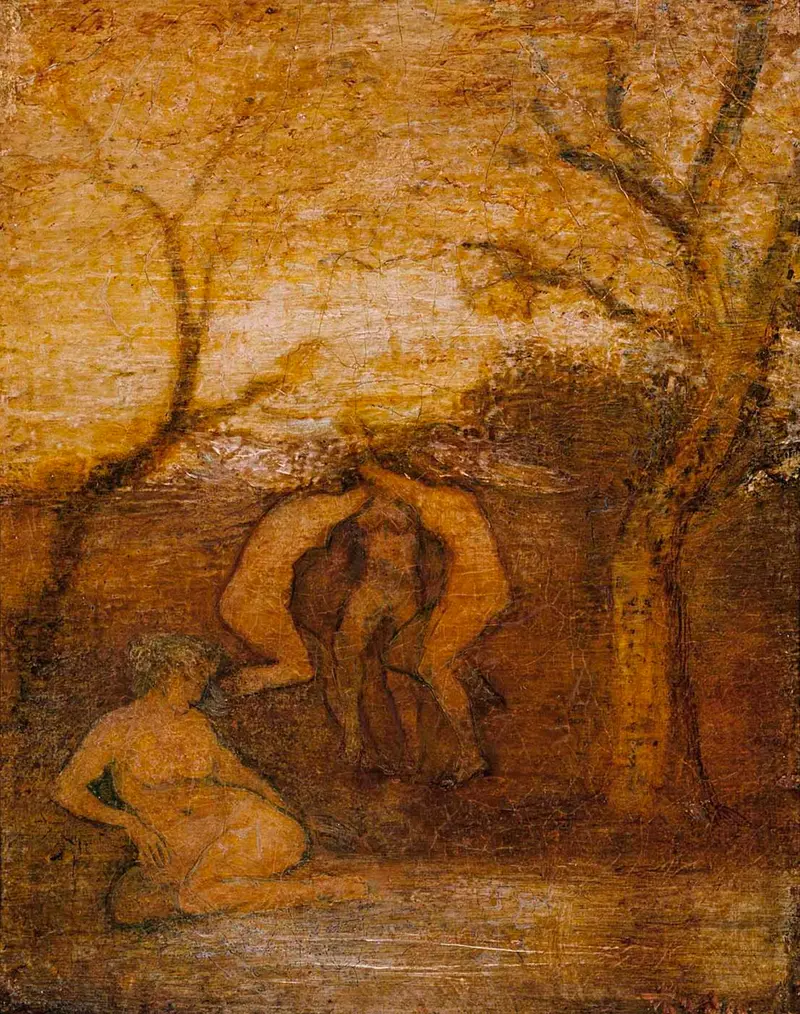
Dancing Dryads
Albert Pinkham Ryder
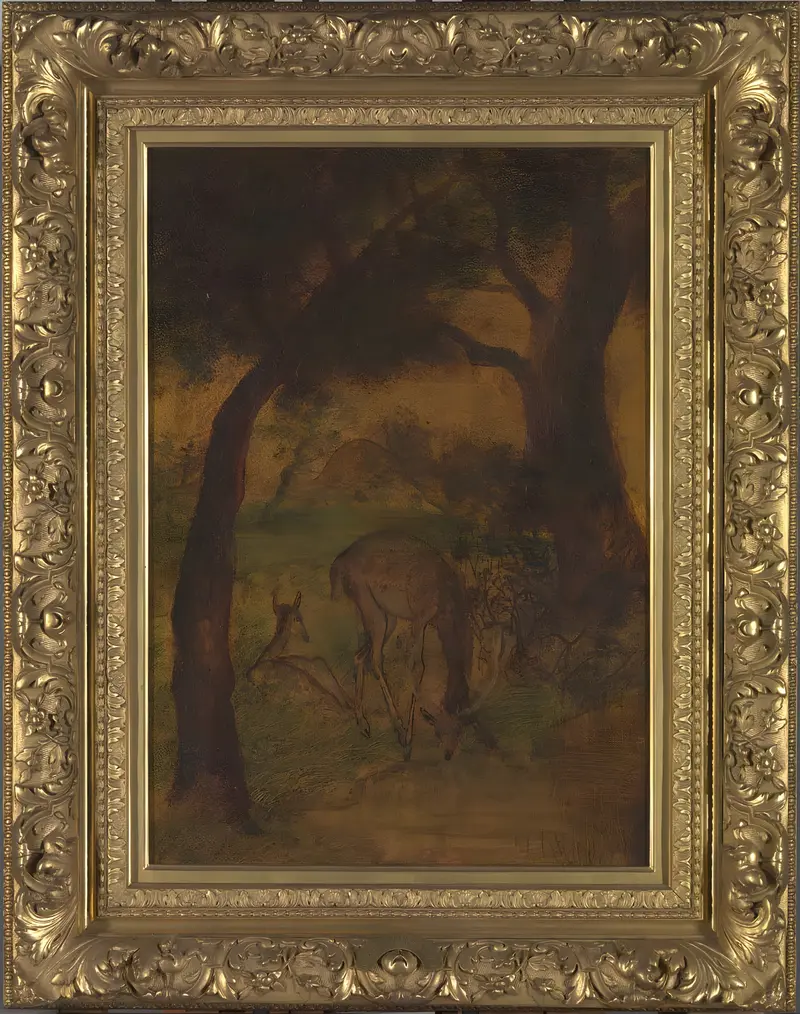
A Stag Drinking
Albert Pinkham Ryder
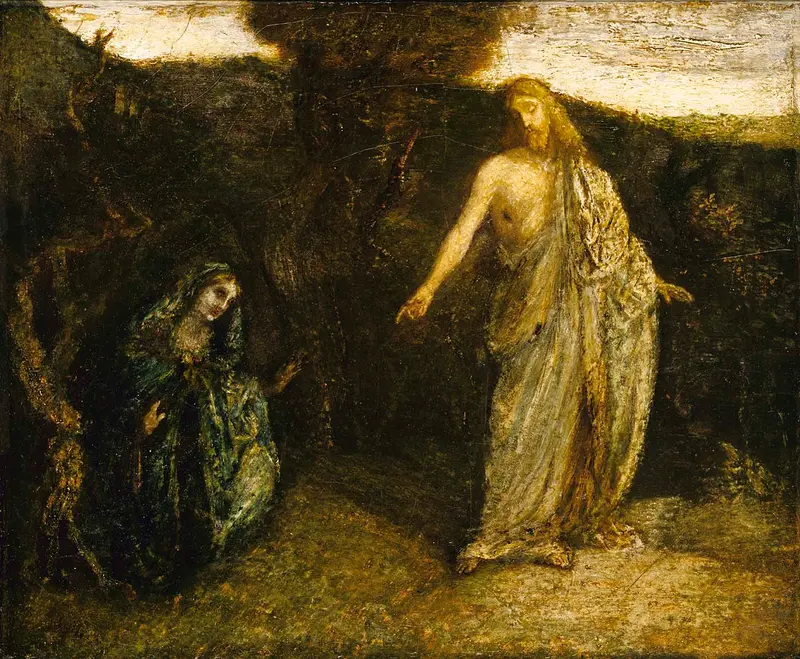
Christ Appearing to Mary
Albert Pinkham Ryder





