
The Trysting Place — History & Facts
What first catches the eye in The Trysting Place is the quiet tension in the young woman’s gesture: her hand, poised with a stylus, carves a heart into the ochre wall, while her gaze drifts downward, lost in thought. The artist, John William Godward, leads us into a private moment—a secret left in plain sight. The soft, blue folds of her dress catch the light, their delicate transparency contrasting with the solid, sun-warmed wall behind her.
A single rose, loosely held, hints at longing or remembrance, while the curling vine above frames her in a secluded, almost sacred space. Every detail, from the crisp shadow at her feet to the inscription “VALEMEA SAVA F...” on the wall, pulls us deeper into her silent reverie. Painted in 1907, this work belongs to a world fascinated by the imagined elegance of ancient Rome and Greece—a favorite territory for late Victorian and Edwardian artists like Godward. These scenes, often commissioned for private homes, offered viewers a retreat into a classical past, promising beauty and calm in an age of rapid change.
While history has kept few traces of this particular painting’s journey, we know it surfaced at Bonhams, a reminder of how such images continue to circulate and enchant. The careful reconstruction of classical costume and architecture, paired with a mood of introspection, marks Godward’s place among those who made the antique world feel both distant and achingly close. Let your eye return to the wall’s inscription and wonder: what message, what hope, lingers there still?
More Artworks by John William Godward

Eighty and eighteen
John William Godward
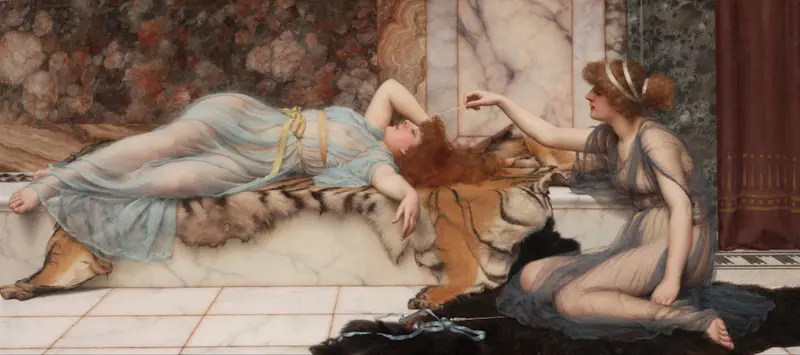
Mischief and Repose
John William Godward
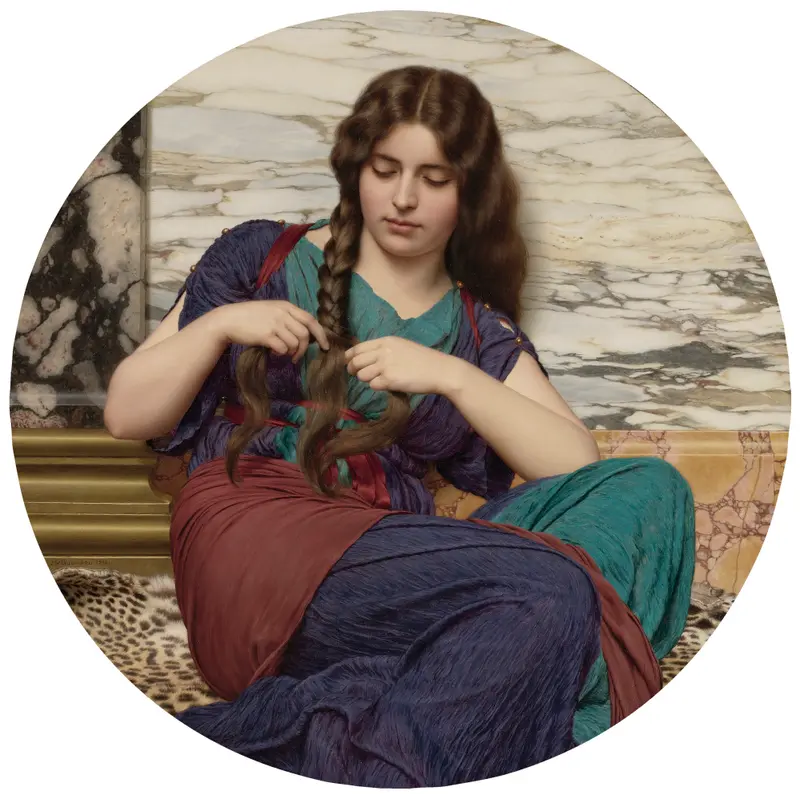
A Congenial Task
John William Godward
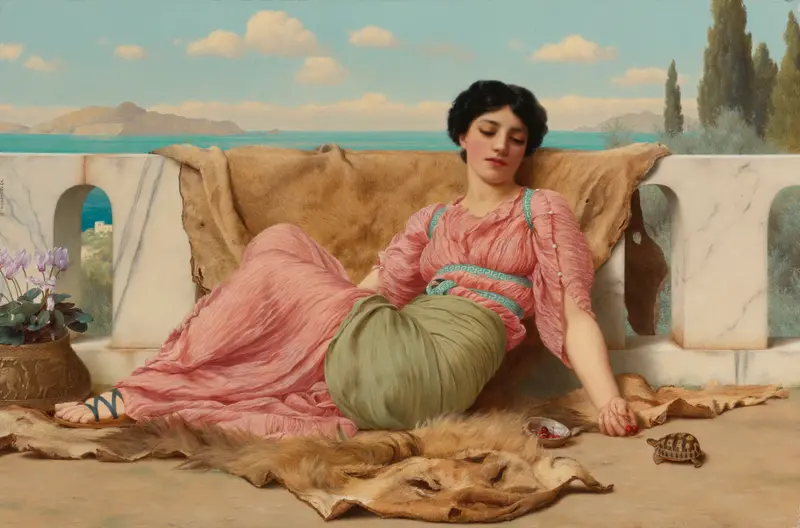
The Quiet Pet
John William Godward
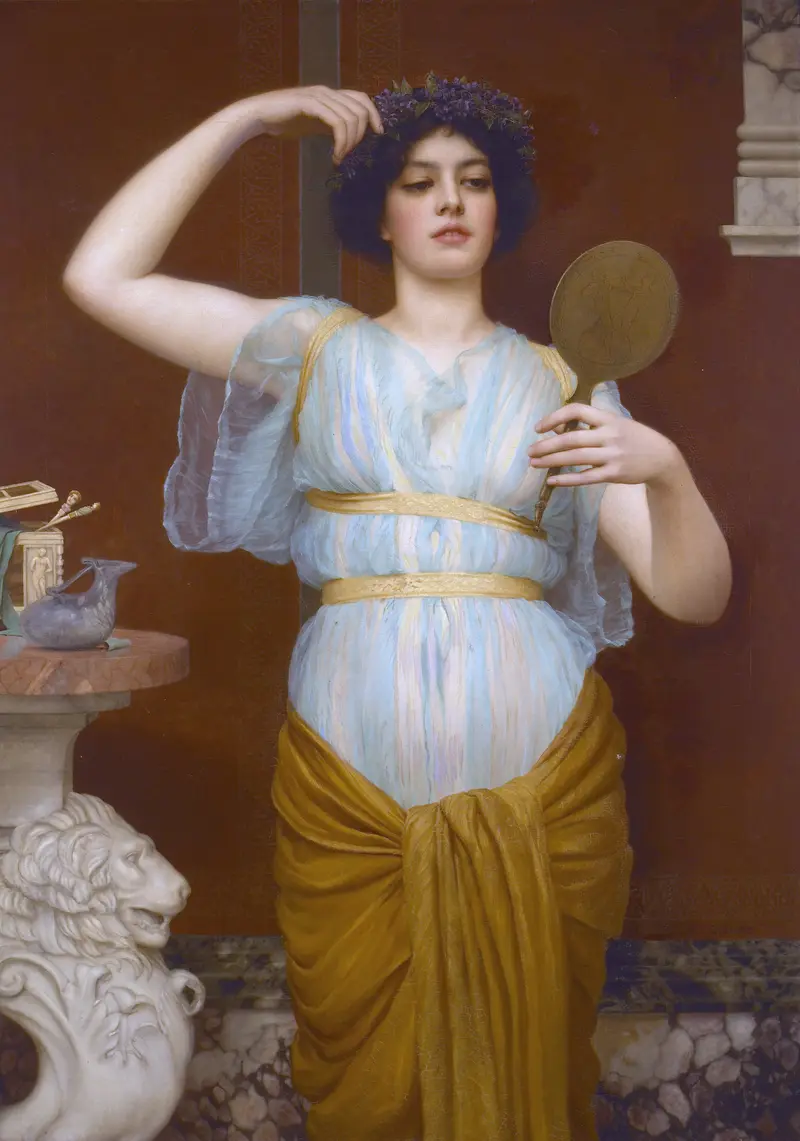
Ione
John William Godward
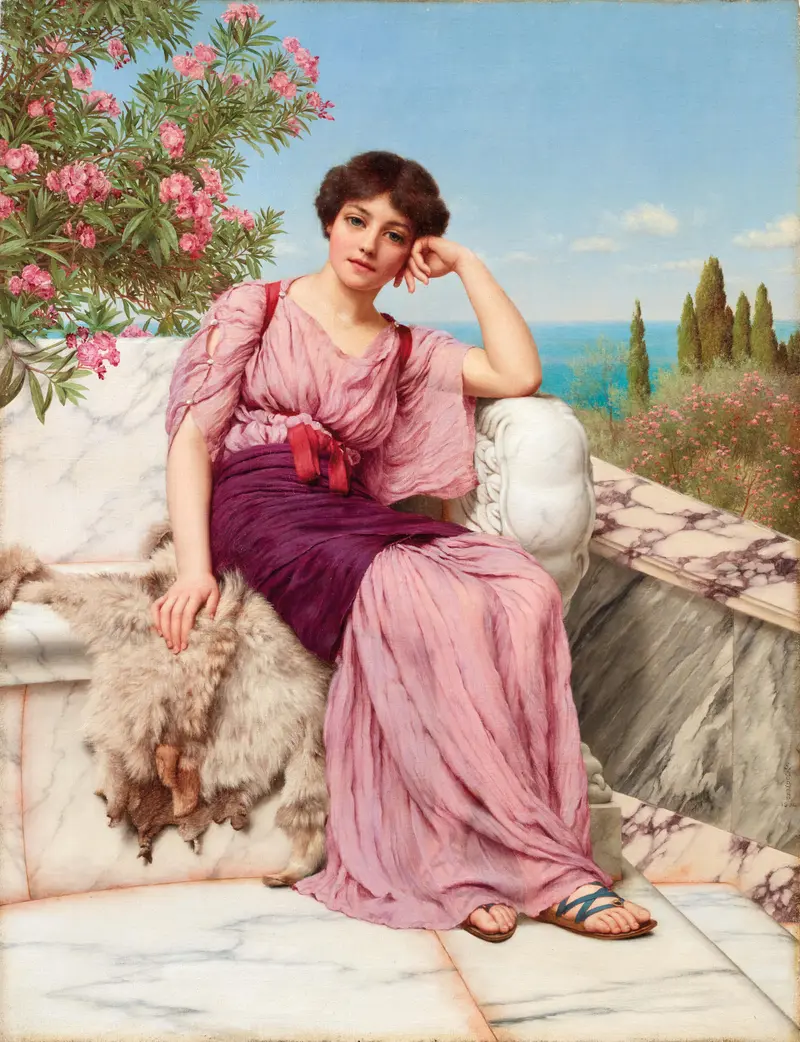
Sweet Dreams
John William Godward
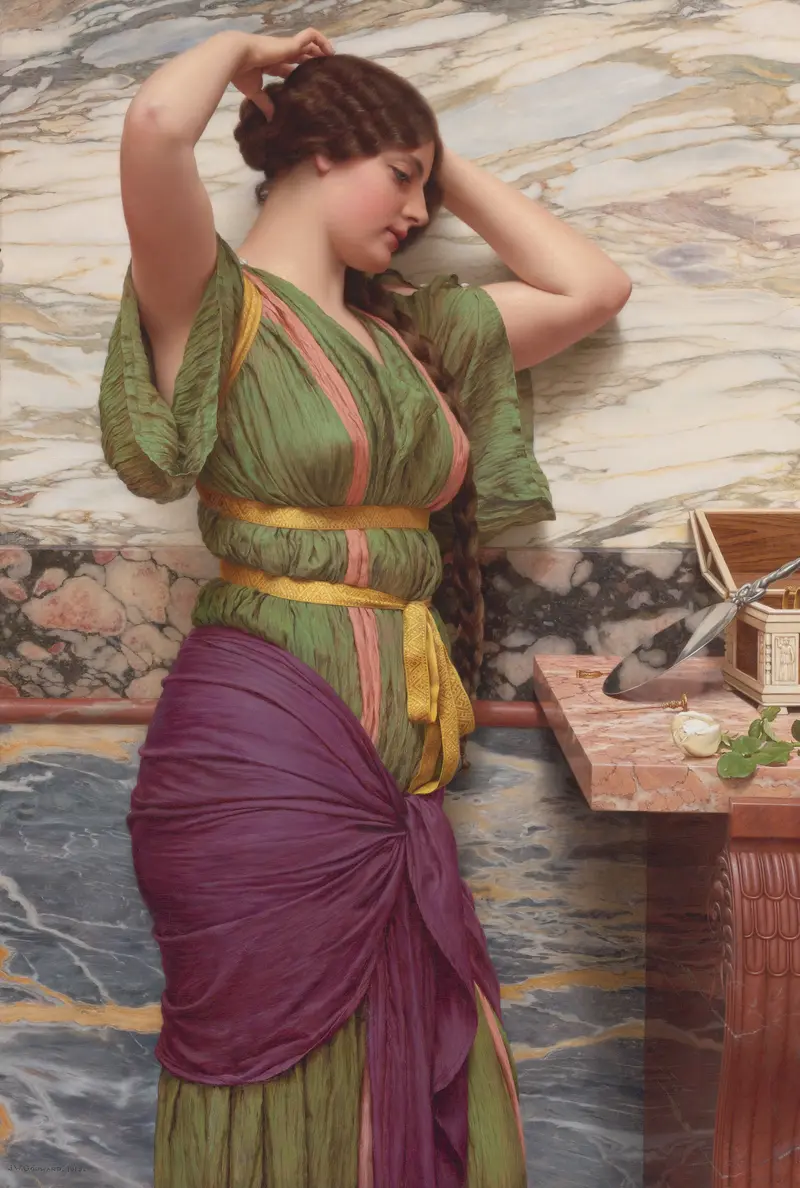
A Fair Reflection
John William Godward
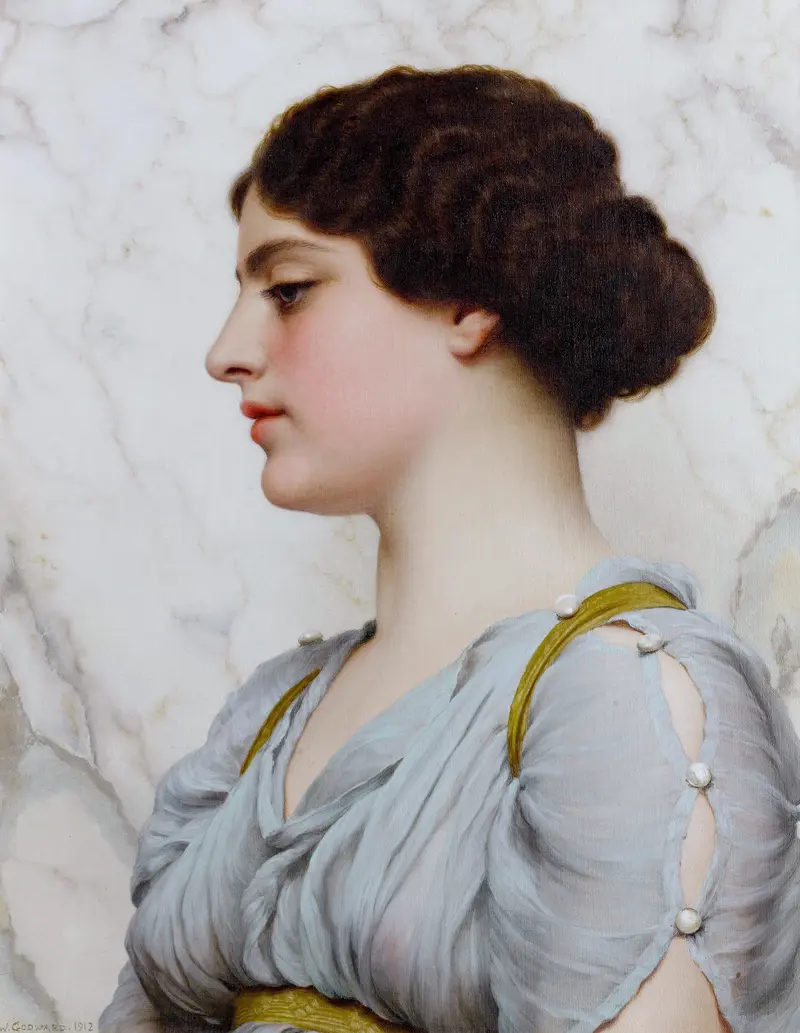
A Roman Beauty
John William Godward
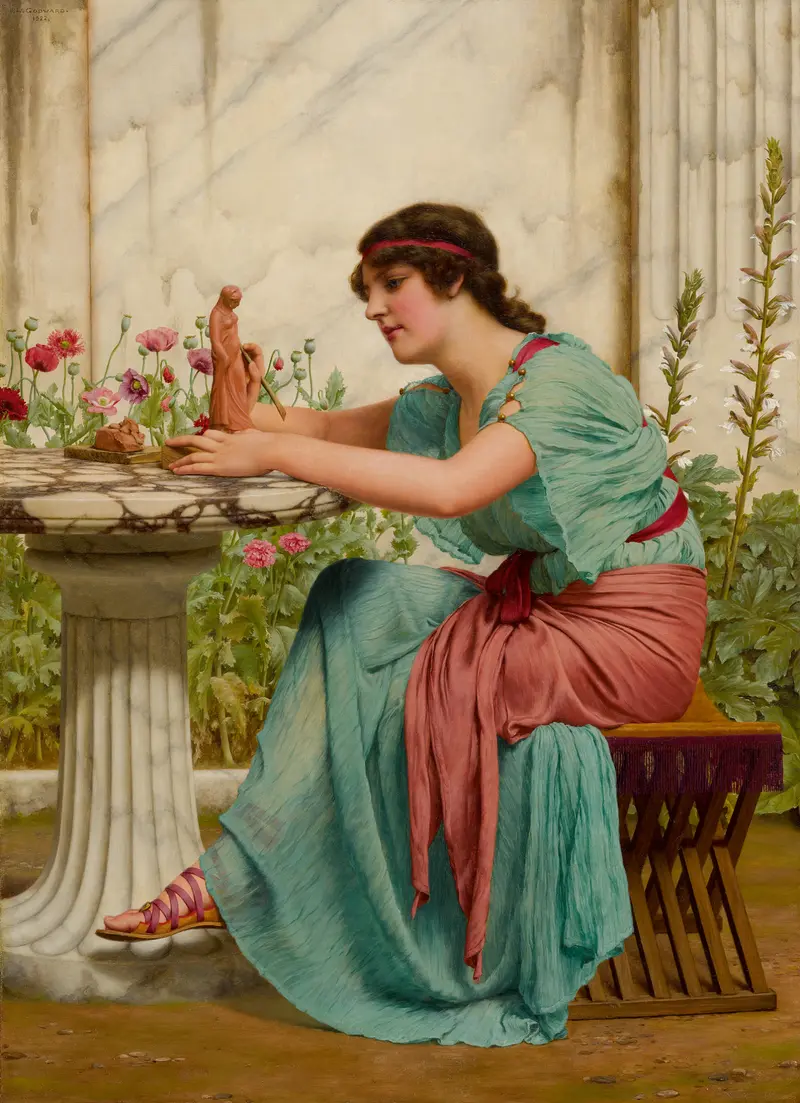
A Dilettante
John William Godward
Reverie
John William Godward
More Genre Scene Art

Banquet of the Officers of the St George Civic Guard
Frans Hals

Rembrandt and Saskia in the Scene of the Prodigal Son
Rembrandt van Rijn

Bal du moulin de la Galette
Pierre-Auguste Renoir

Quadrille at the Moulin Rouge
Henri de Toulouse-Lautrec

A Burial at Ornans
Gustave Courbet

When Will You Marry?
Paul Gauguin