
The White Horse — History & Facts
No one knows for certain when Albert Pinkham Ryder painted The White Horse, nor exactly what inspired its creation, but the painting has long been shrouded in mystery—both for its elusive subject and Ryder’s own secretive working methods. Unlike many of his contemporaries, Ryder rarely dated his canvases, and his habit of reworking paintings over many years leaves the true chronology of his art open to debate. This uncertainty has only added to the painting’s allure among collectors and scholars, who have debated its meaning and origins since it first appeared in Ryder’s studio in New York.
The painting is also notable for its rarity: Ryder painted only a handful of equestrian subjects in his entire career. A solitary white horse stands at the edge of a shadowy landscape, its luminous form emerging from a dark, almost dreamlike background. Ryder captures the animal at a moment of stillness, as if pausing between worlds—its head slightly bowed, body tense with quiet energy. The horse’s whiteness is not just a matter of color, but of light; it glows against the gloom, a beacon in the painter’s signature palette of deep greens and browns.
Some viewers see the horse as a symbol of purity or spiritual passage, while others read it as a ghostly presence, lost in a world of Ryder’s invention. Unlike the heroic steeds of George Stubbs or the mythic horses of Delacroix, Ryder’s creature is inward, solitary, more apparition than animal. The White Horse’s physical history is as enigmatic as its subject. Like many of Ryder’s works, it was painted on a small, humble panel, and its fragile surface bears the marks of the artist’s obsessive layering and scraping.
The painting circulated quietly among Ryder’s circle of friends and admirers in New York, rarely exhibited during his lifetime. After Ryder’s death in 1917, his paintings became prized by collectors of American art, and The White Horse eventually found its way into a major museum collection, where it is now recognized as a key example of Ryder’s visionary approach. Today, it stands as a testament to the artist’s ability to conjure mystery from the simplest of subjects, and to the enduring fascination his work holds for audiences and scholars alike.
More Artworks by Albert Pinkham Ryder

The Toilers of the Sea
Albert Pinkham Ryder
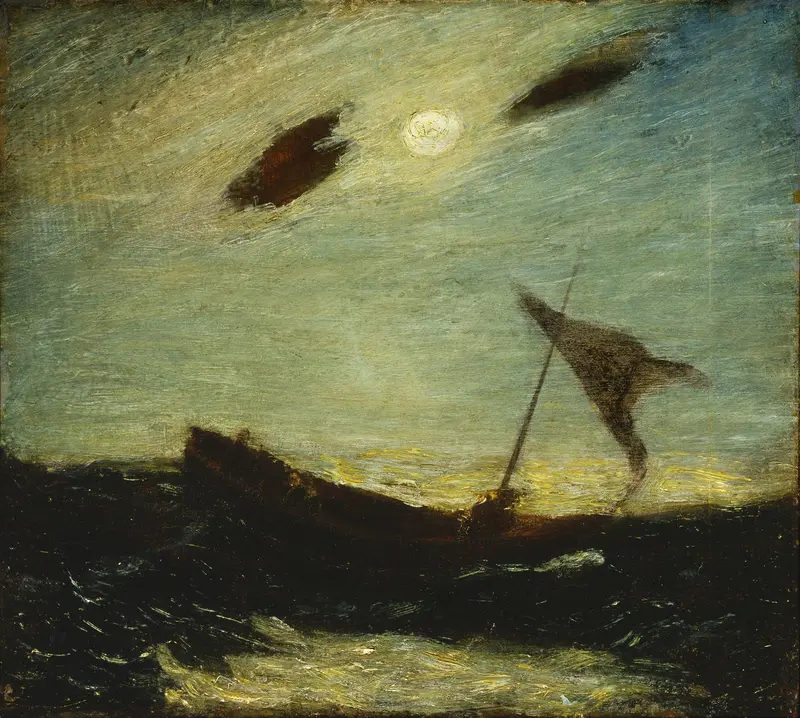
Moonlight
Albert Pinkham Ryder
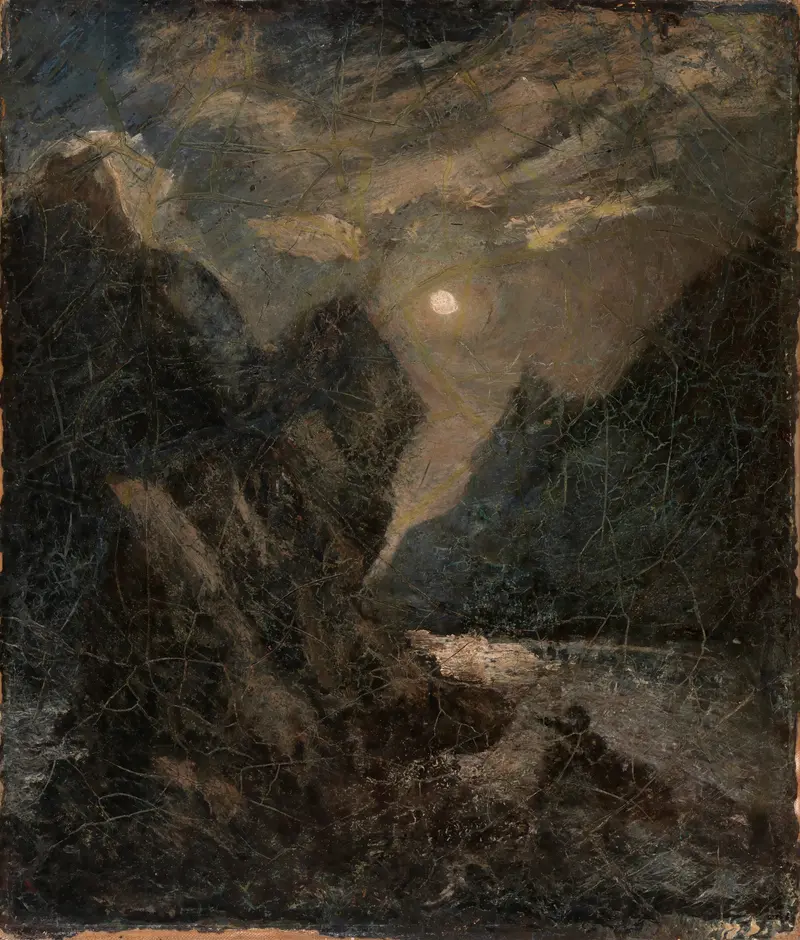
The Lorelei
Albert Pinkham Ryder
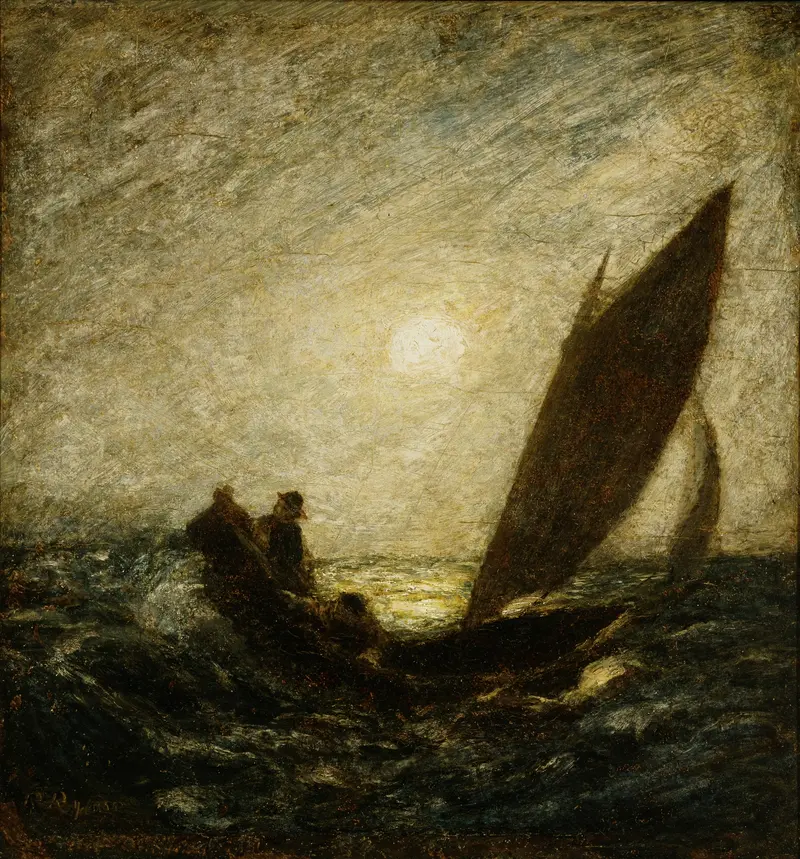
With Sloping Mast And Dipping Prow
Albert Pinkham Ryder
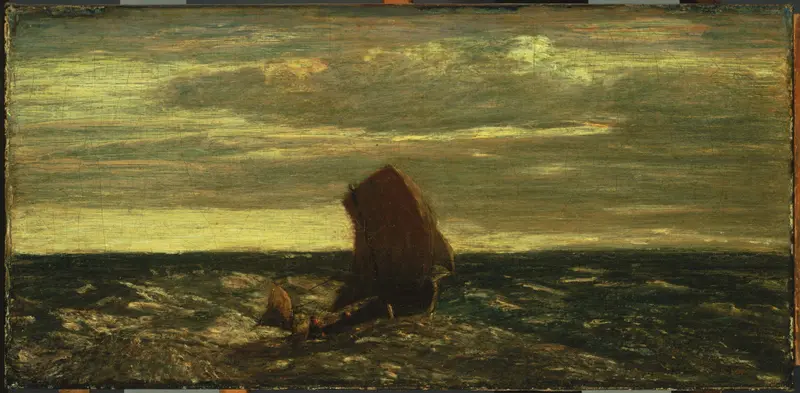
Homeward Bound
Albert Pinkham Ryder
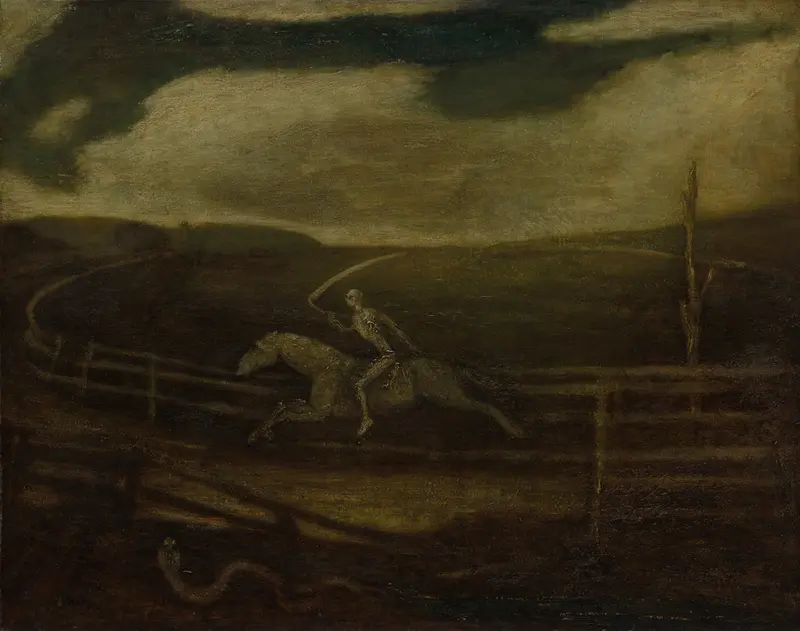
The Race Track (Death on a Pale Horse)
Albert Pinkham Ryder
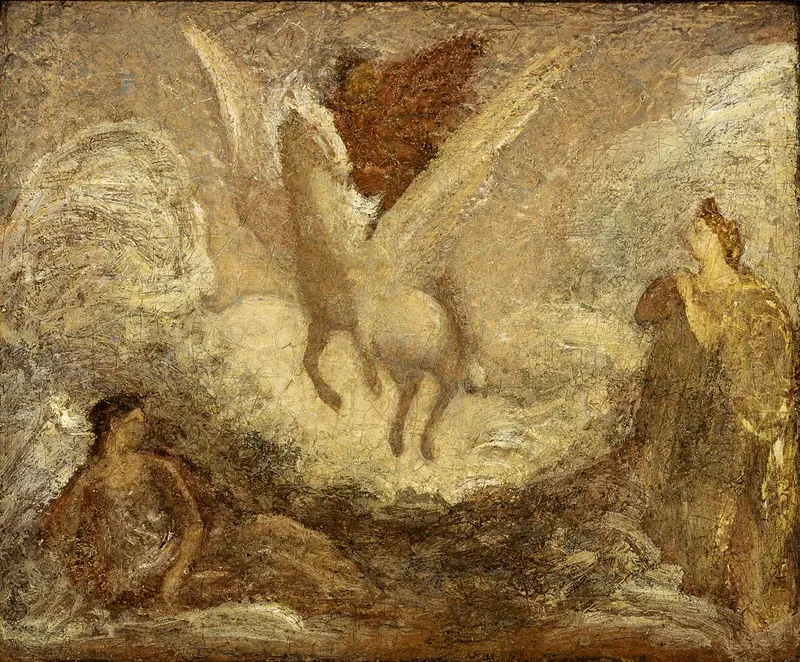
Pegasus Departing
Albert Pinkham Ryder
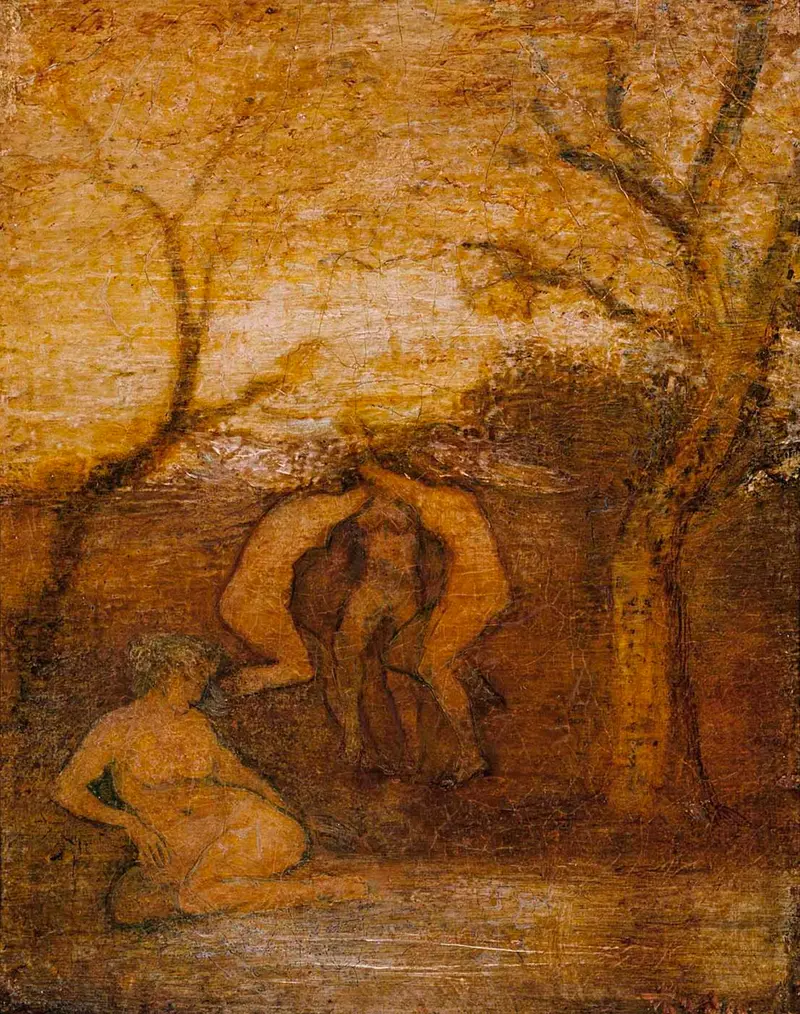
Dancing Dryads
Albert Pinkham Ryder
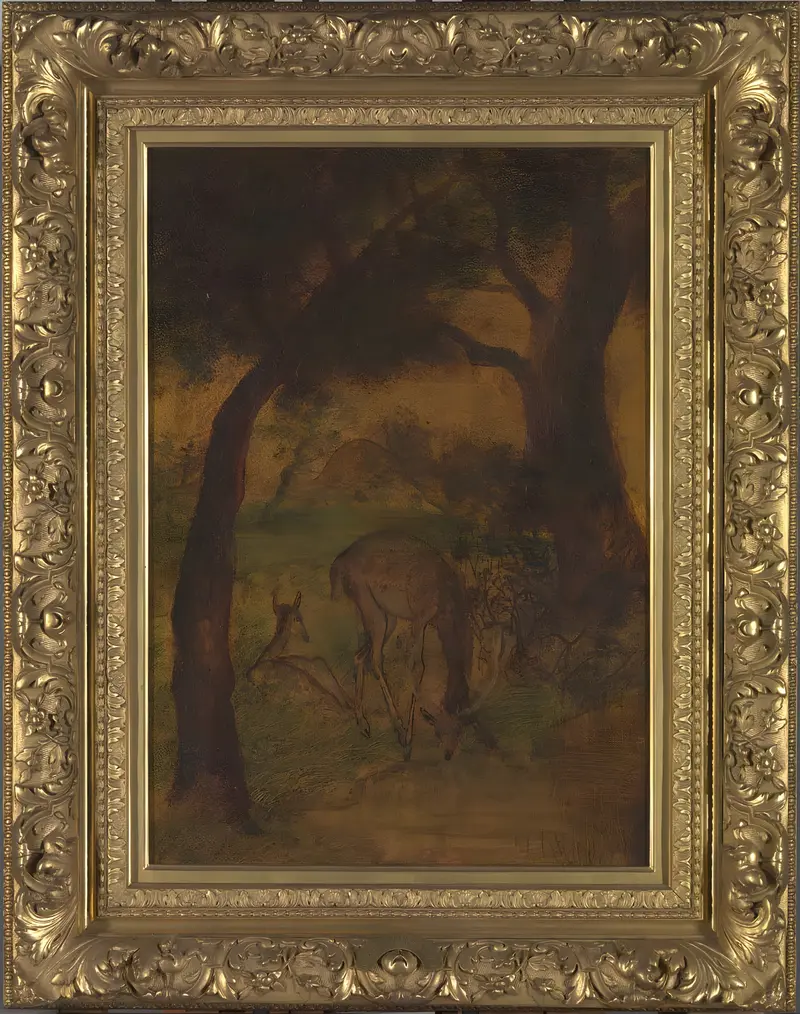
A Stag Drinking
Albert Pinkham Ryder
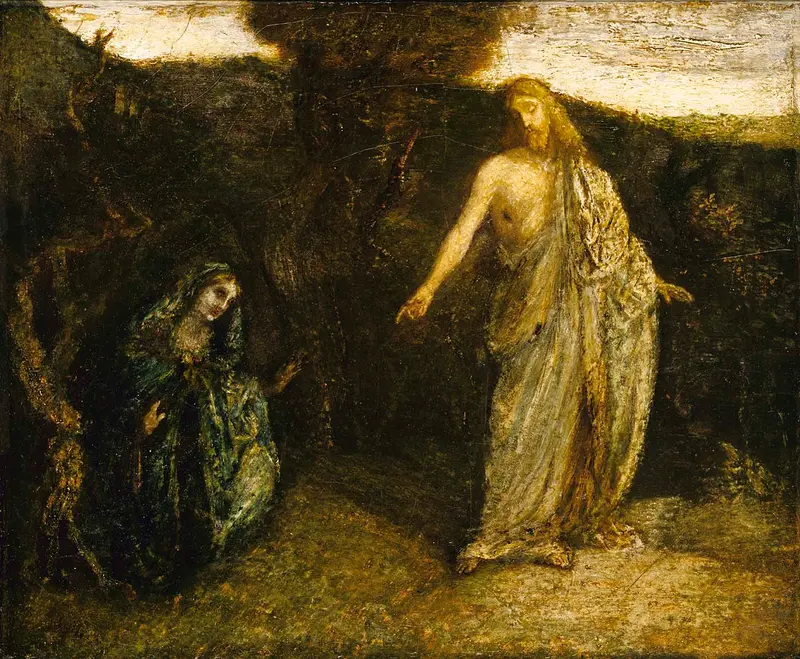
Christ Appearing to Mary
Albert Pinkham Ryder





