
Three Angels Making Music on a Shawm — History & Facts
No other work by Gustave Van de Woestijne has sparked as much curiosity as Three Angels Making Music on a Shawm. The painting’s date and original commission remain unknown, but its subject—a trio of angels absorbed in music—stands out in Van de Woestijne’s oeuvre for its blend of mystical intensity and folk-like directness. The shawm, a medieval double-reed instrument, is rarely seen in religious art, making its appearance here all the more striking.
Scholars have noted that Van de Woestijne, a central figure in early twentieth-century Belgian art, often returned to religious themes, but rarely with such an enigmatic, almost processional focus. The canvas captures a moment of rapt concentration: three angels, robed and haloed, lean together as one blows the shawm and the others listen or prepare to join in. Their faces are solemn, their gestures deliberate, suggesting both the discipline of music and the gravity of worship. The shawm’s presence hints at medieval church processions, while the angular forms and muted palette recall the spiritual austerity of Georges Rouault or the stylized saints of late Gothic altarpieces.
Unlike the exuberant musical angels of Hans Memling or Jan van Eyck, Van de Woestijne’s figures are introspective, their music directed inward as much as upward. Little is known of the painting’s early history, and no record of its first owner survives. It is thought to have remained in private Belgian collections for much of the twentieth century, surfacing in exhibitions dedicated to Gustave Van de Woestijne’s religious works. This painting stands as a testament to the artist’s ongoing dialogue with spiritual subjects, bridging the folk traditions of Flanders with the modern search for meaning.
Today, Three Angels Making Music on a Shawm is recognized as a key example of Van de Woestijne’s ability to fuse the sacred and the everyday, though its precise journey to the present remains, fittingly, a mystery.
More Artworks by Gustave Van de Woestijne
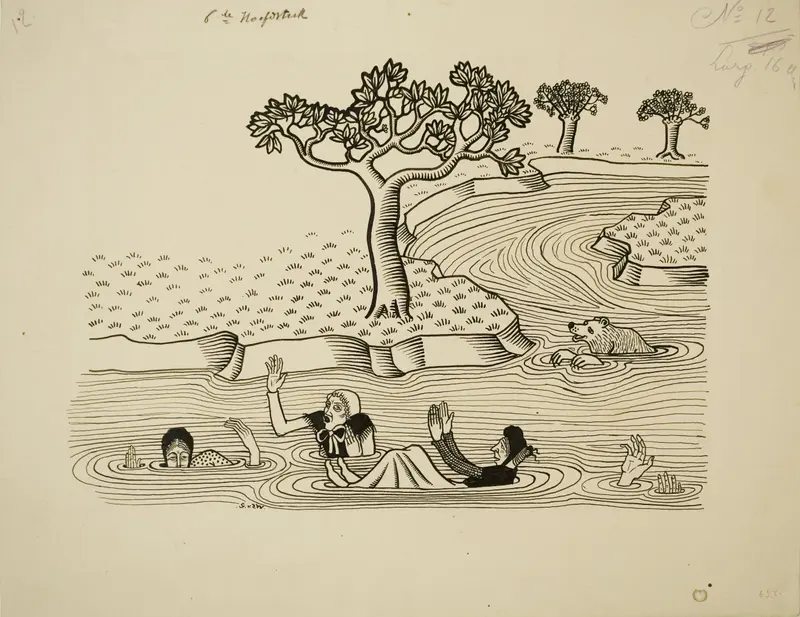
How Brown went out with Reynard where he thought he was eating honey and how he was caught by head and feet and suffered further misfortune
Gustave Van de Woestijne
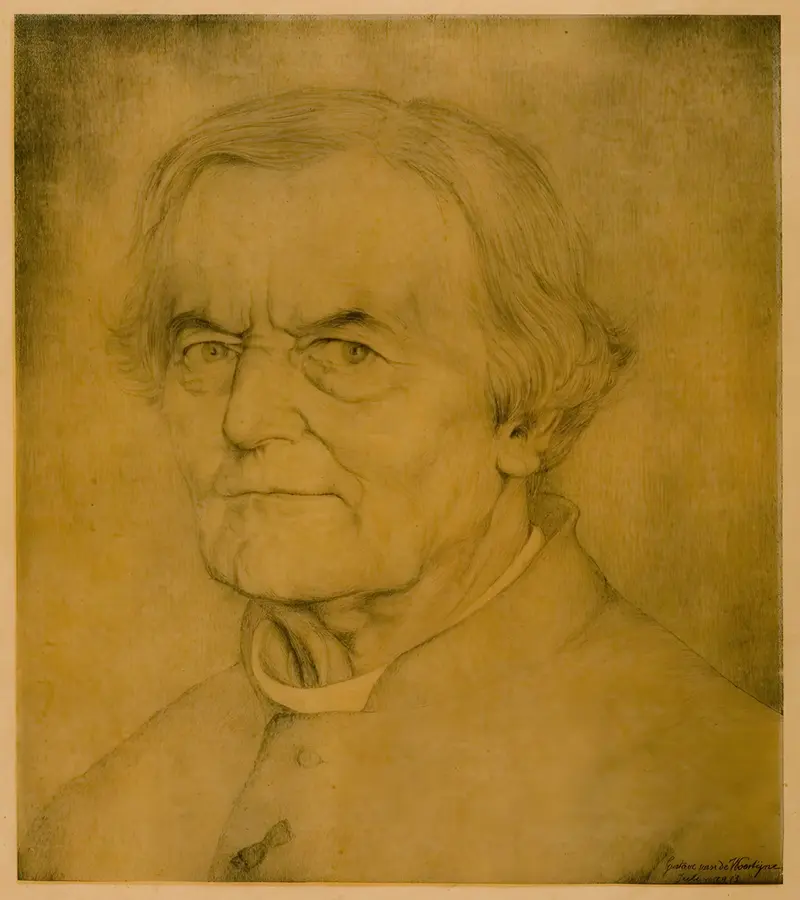
Portrait of Hugo Verriest
Gustave Van de Woestijne
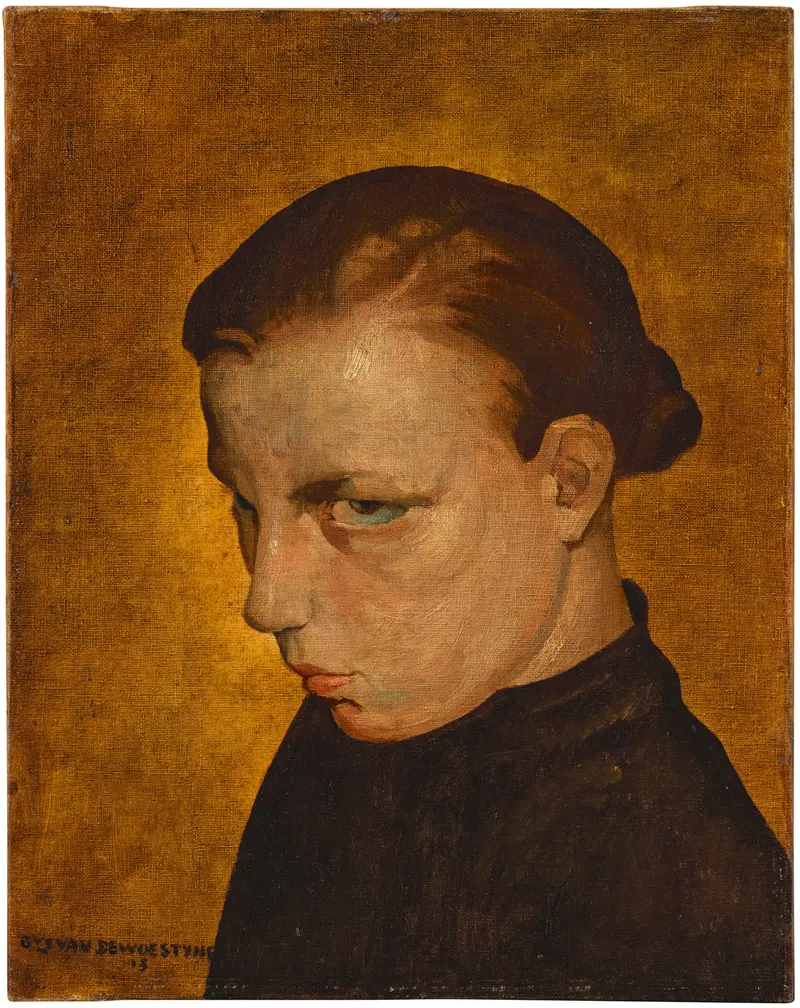
Angèle
Gustave Van de Woestijne
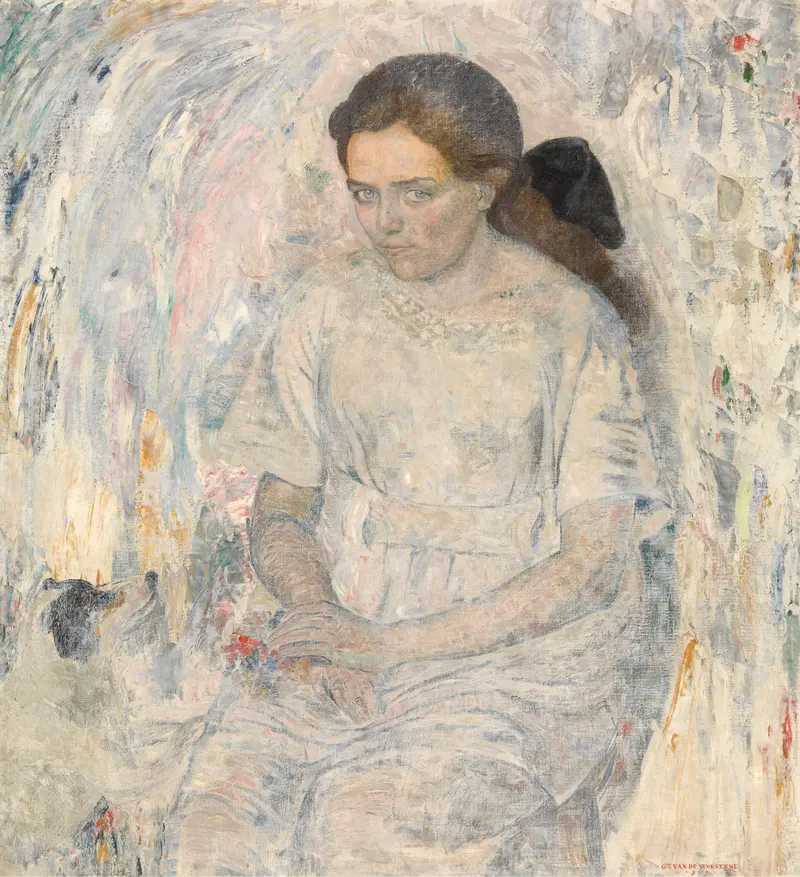
Adrienne
Gustave Van de Woestijne
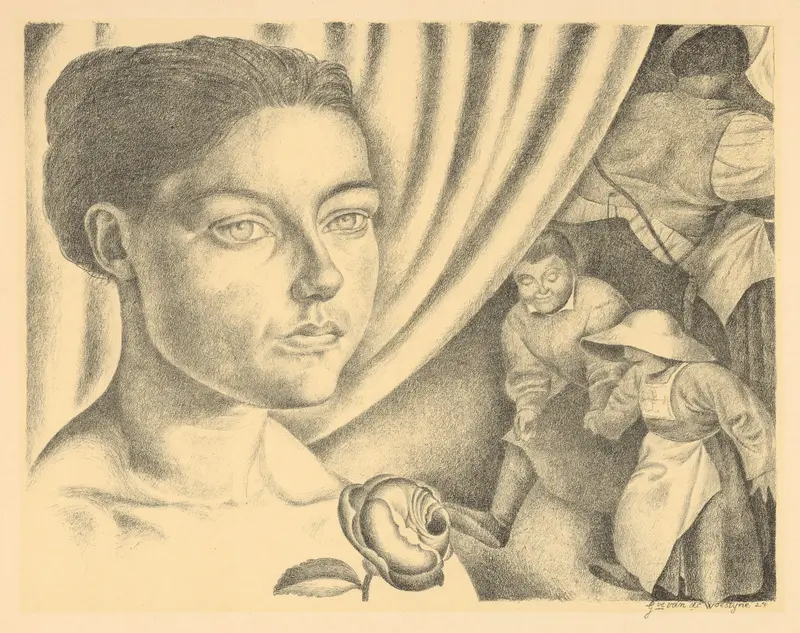
Jeune Femme
Gustave Van de Woestijne
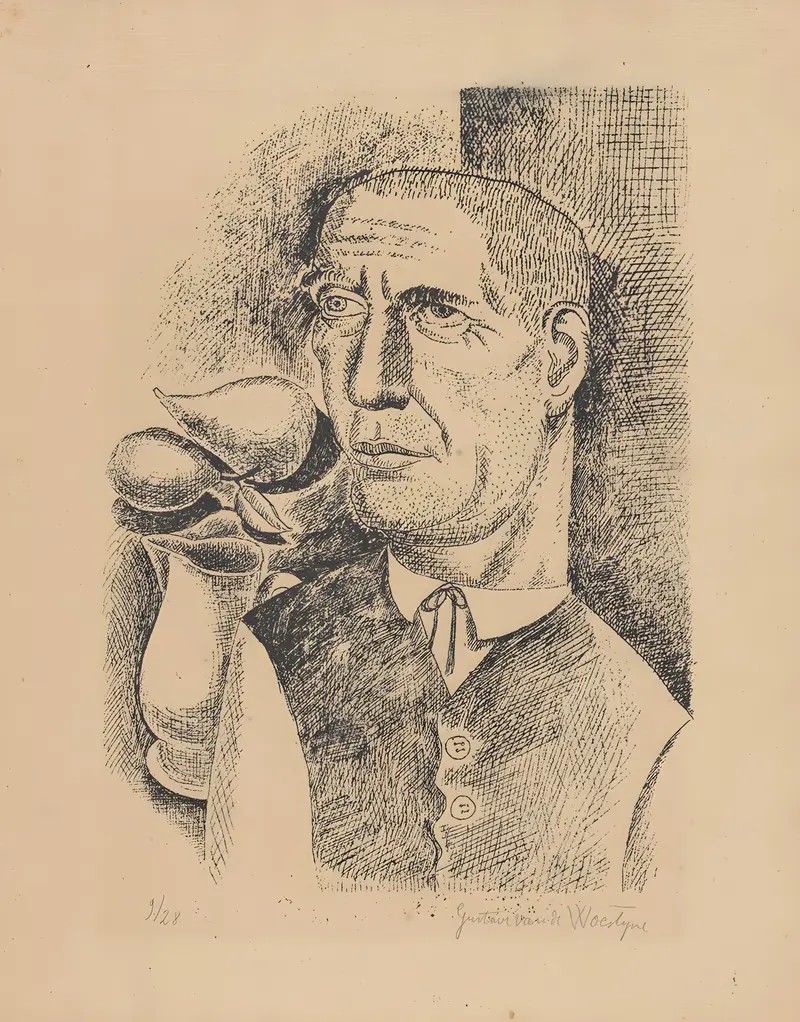
Boer op zijn zondags (Paysan endimanché)
Gustave Van de Woestijne
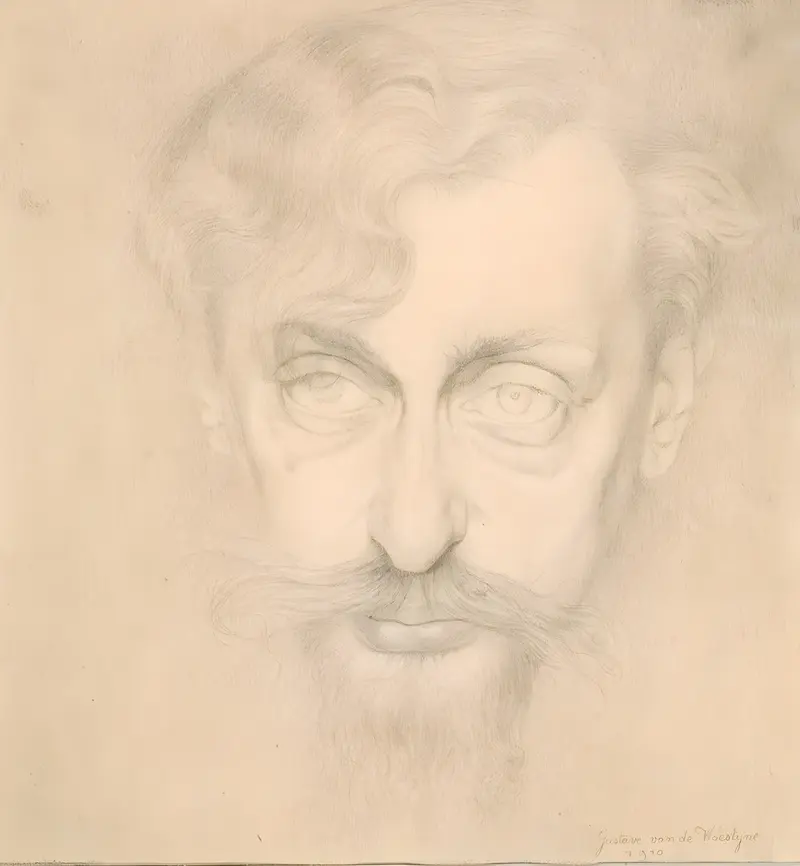
Portrait of the Writer Karel van de Woestijne
Gustave Van de Woestijne
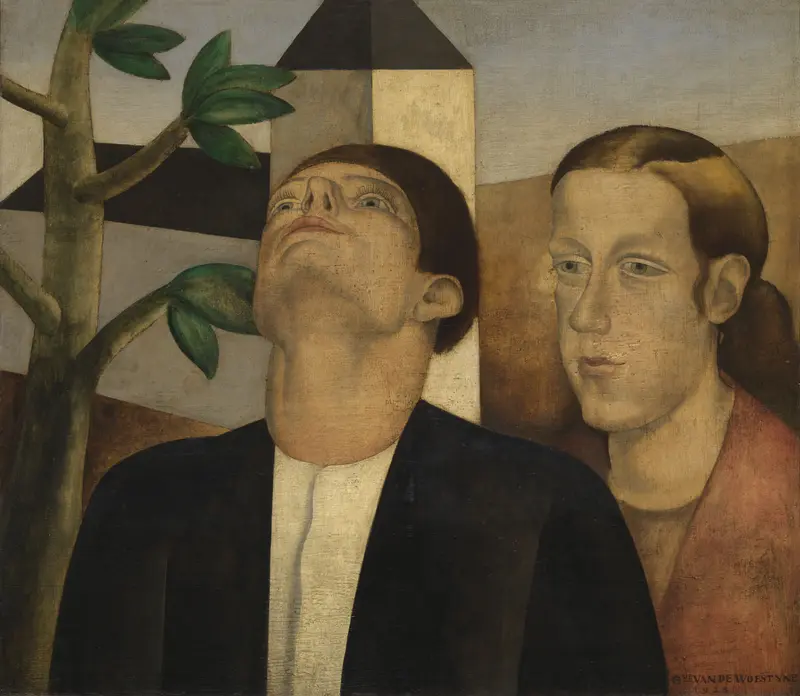
Azure
Gustave Van de Woestijne
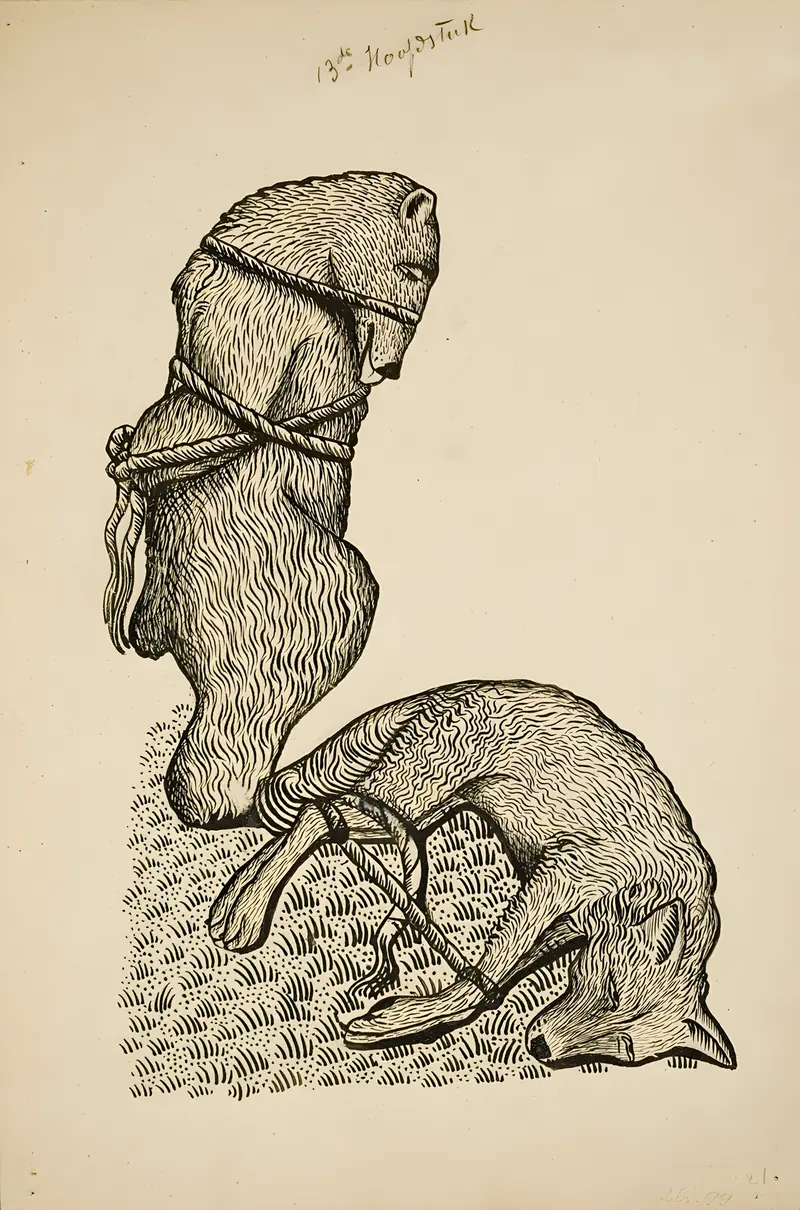
How Reinaert devises a new trick to get free and exterminate his enemies
Gustave Van de Woestijne
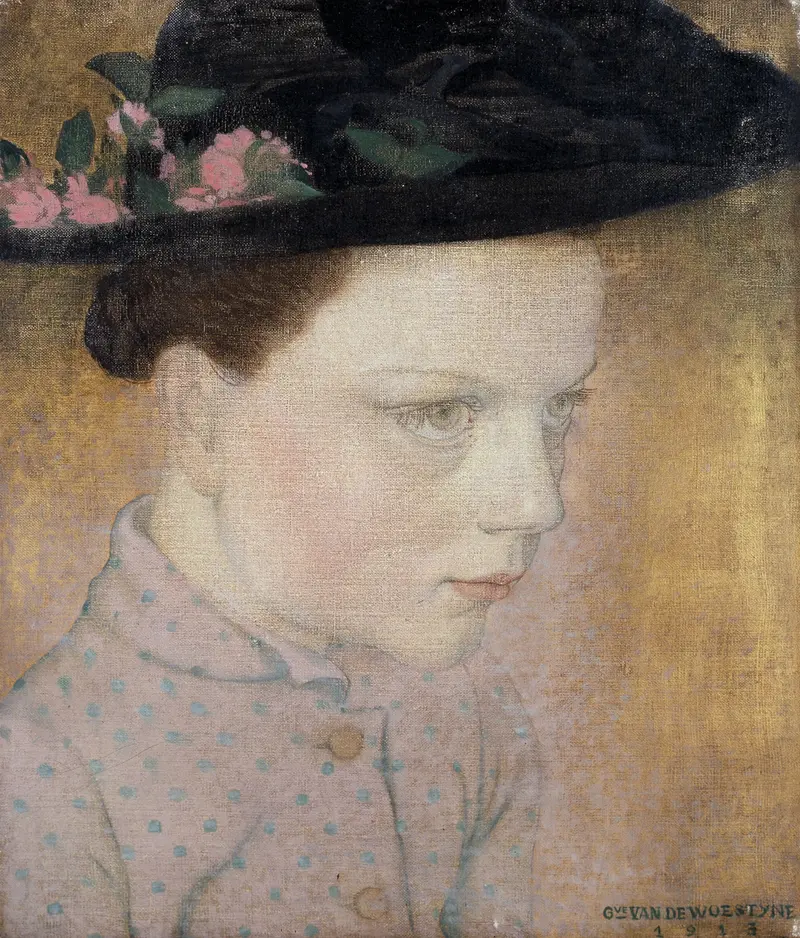
Country Girl
Gustave Van de Woestijne





