
Thunder God — History & Facts
When Katsushika Hokusai created Thunder God in 1847, he was nearly ninety years old and almost blind, yet this work is part of a legendary late burst of creativity known as his "One Hundred Ghost Stories" series. Hokusai, famed for The Great Wave off Kanagawa, turned to supernatural subjects in his final years, and this depiction of Raijin—the fearsome god of thunder—stands among his last completed works. The precise medium of Thunder God remains uncertain, adding a layer of mystery to its origins, as some believe it to be a painting, while others suspect a print or drawing.
The piece is also notable for its rarity: only a handful of Hokusai’s late supernatural images survive, making each one a precious window into his twilight imagination. Raijin, the thunder god, is caught mid-leap, surrounded by a ring of drums he strikes to create storms, his wild hair and fierce eyes flashing with energy. Hokusai captures the moment just as Raijin summons a bolt of lightning, his clawed hands poised above the swirling clouds. The god’s muscular form, exaggerated fingers and bestial face evoke both awe and unease, signaling the power and unpredictability of nature.
The swirling composition and dynamic pose recall Hokusai’s earlier prints, but here the palette is more muted, the lines more expressive, as if the artist’s own frailty sharpened his vision. In contrast, Ogata Kōrin’s earlier screen paintings of Raijin and his brother Fujin present the deities as more decorative and less menacing, highlighting Hokusai’s dramatic approach. The journey of Thunder God as an object is less documented than Hokusai’s famous prints, and its current location is not universally agreed upon—some sources list it in private collections, while others suggest it resides in a Japanese museum. Its uncertain medium and provenance have fueled scholarly debate, with experts poring over stylistic clues to authenticate its place in Hokusai’s late oeuvre.
What is clear is that Thunder God reflects the artist’s enduring fascination with the supernatural and the raw forces of nature, themes that preoccupied him until his death in 1849. As a late work, it stands as a testament to Hokusai’s restless spirit and his ability to conjure the extraordinary from the depths of age and near blindness.
More Artworks by Katsushika Hokusai

The Great Wave off Kanagawa
Katsushika Hokusai
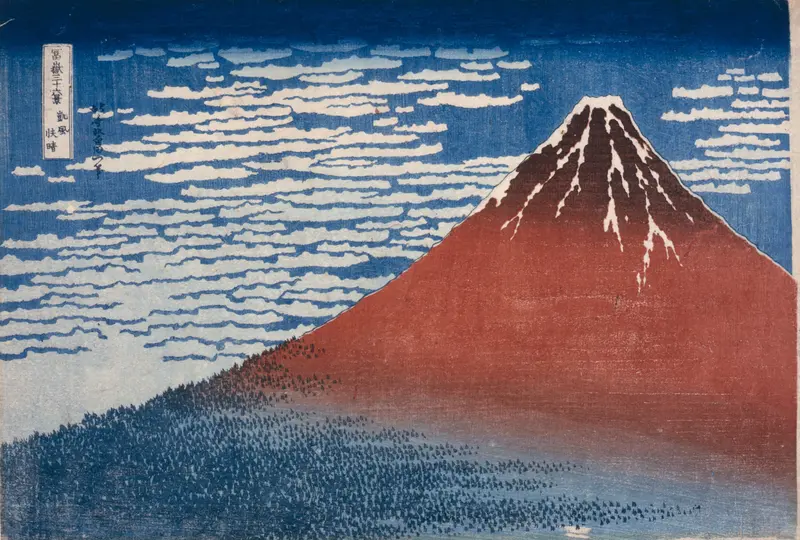
Fine Wind, Clear Morning (Red Fuji)
Katsushika Hokusai
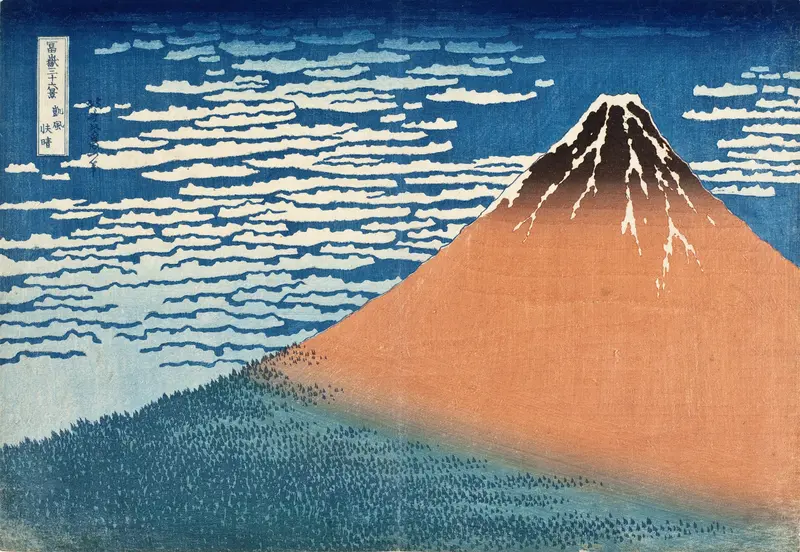
South Wind, Clear Dawn
Katsushika Hokusai
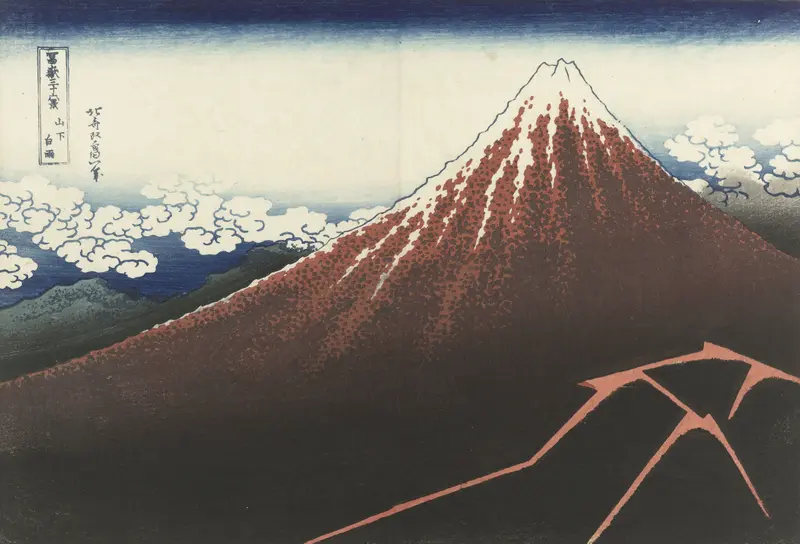
Rainstorm Beneath the Summit
Katsushika Hokusai
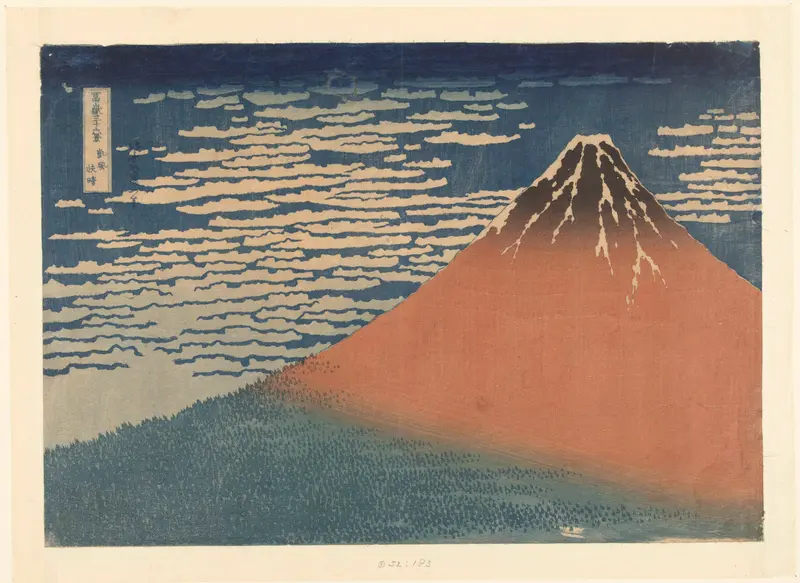
Clear Weather with a Southerly Wind
Katsushika Hokusai
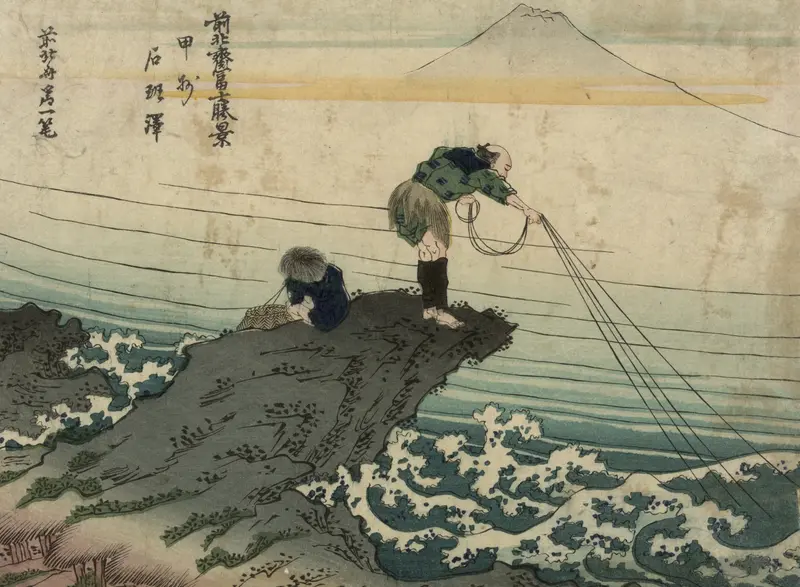
Kōshū kajikazawa
Katsushika Hokusai
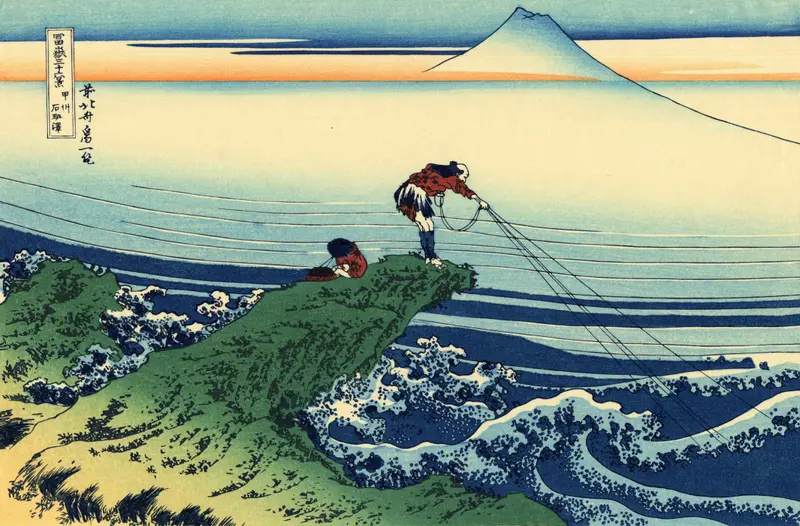
Kōshū kajikazawa 2
Katsushika Hokusai
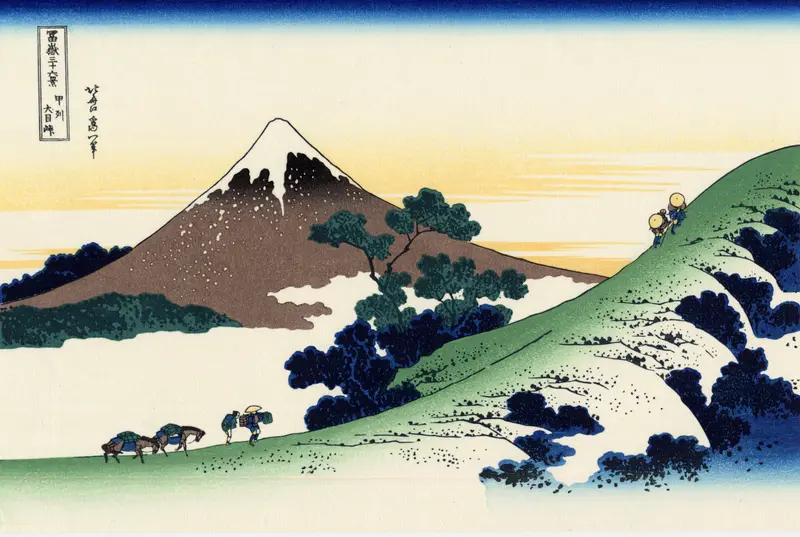
Inume Pass in Kai Province (Kôshû inume-tôge)
Katsushika Hokusai

Yoro Falls in Mino Province (Mino no Yoro no taki), from the series "A Tour of Waterfalls in Various Provinces (Shokoku taki meguri)"
Katsushika Hokusai
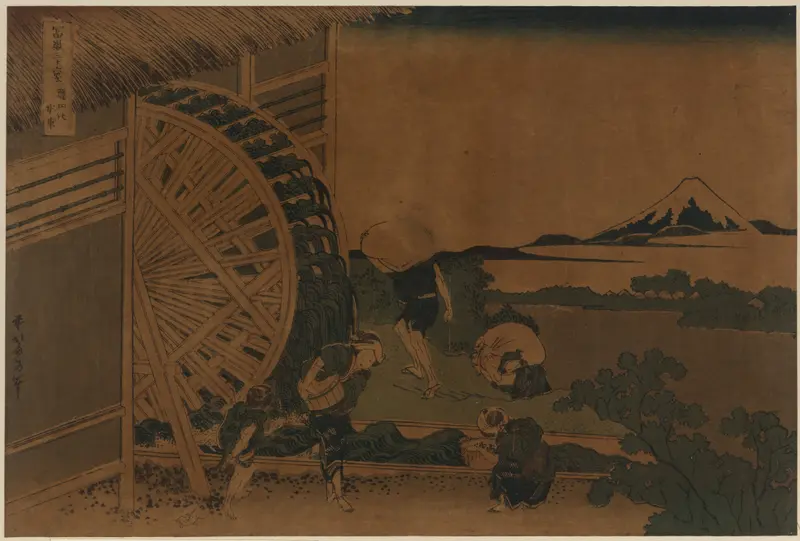
Onden no suisha
Katsushika Hokusai





