
Velazquez-taller-tela real-prado — History & Facts
When Velazquez-taller-tela real-prado entered the royal collection, it sparked immediate discussion among court observers for its candid glimpse into the world behind the Spanish crown’s most celebrated canvases. Rather than presenting a grand myth or royal portrait, Diego Velázquez turned his gaze inward, capturing the hum of activity within his own workshop. The painting’s date, 1601, places it at the very dawn of Velázquez’s career, making it one of the earliest known attempts by a Spanish artist to depict the act of painting itself—a theme that would later obsess him in works like Las Meninas.
The work’s focus on the process, rather than the finished product, was unusual for its time and may reflect the growing prestige of painters at the Habsburg court. At the heart of the scene, Velázquez shows a young apprentice stretching a large, raw canvas across a wooden frame, while the master himself—perhaps a self-portrait—stands nearby, brush in hand, scrutinizing the fabric’s tautness. The studio is cluttered with jars of pigment, brushes, and a half-finished portrait propped against the wall, suggesting a place of constant creation and experimentation. Light pours in from a high window, illuminating the textures of linen and wood, and highlighting the careful choreography between teacher and student.
This focus on the everyday labor of art-making stands in marked contrast to, for example, Tintoretto’s grandiose depictions of Venetian workshops, which emphasize spectacle over process. Here, the drama is quiet and internal—a meditation on the discipline and collaboration required to create. The exact origins of Velazquez-taller-tela real-prado remain somewhat obscure, as documentation from the early 1600s is sparse. It is likely that the painting was commissioned by a member of the Seville art guild, or perhaps acquired by a royal agent who recognized the young artist’s promise.
Over the centuries, the painting has survived periods of neglect and shifting attributions, at times being credited to lesser-known contemporaries before its style and subject matter were definitively linked to Velázquez. Today, it hangs in the Museo del Prado, where it is prized not only as a rare early work by the master but also as a window into the daily realities of the Spanish Baroque studio.
More Artworks by Diego Velázquez

Las Meninas
Diego Velázquez

The Triumph of Bacchus
Diego Velázquez

Rokeby Venus
Diego Velázquez

Equestrian Portrait of Prince Balthasar Charles
Diego Velázquez

Bacchus
Diego Velázquez

Don Gaspar de Guzmán (1587–1645), Count-Duke of Olivares
Diego Velázquez
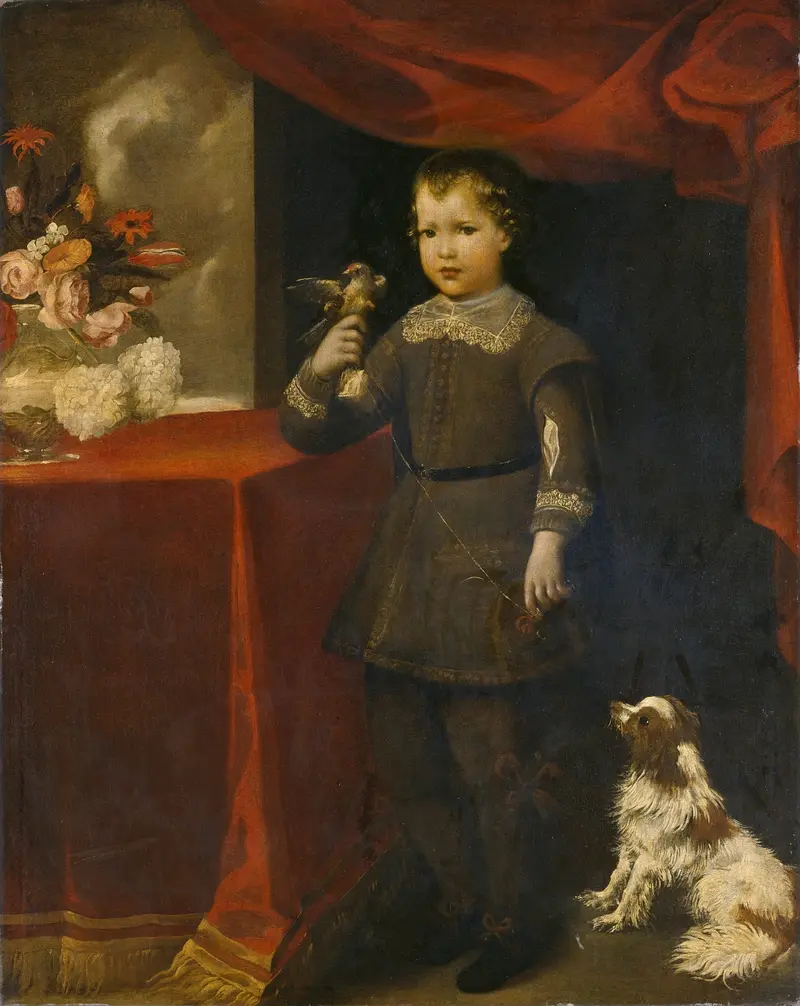
El príncipe Baltasar Carlos de Austria
Diego Velázquez

Equestrian Portrait of Philip III
Diego Velázquez

Equestrian Portrait of Margarita of Austria
Diego Velázquez
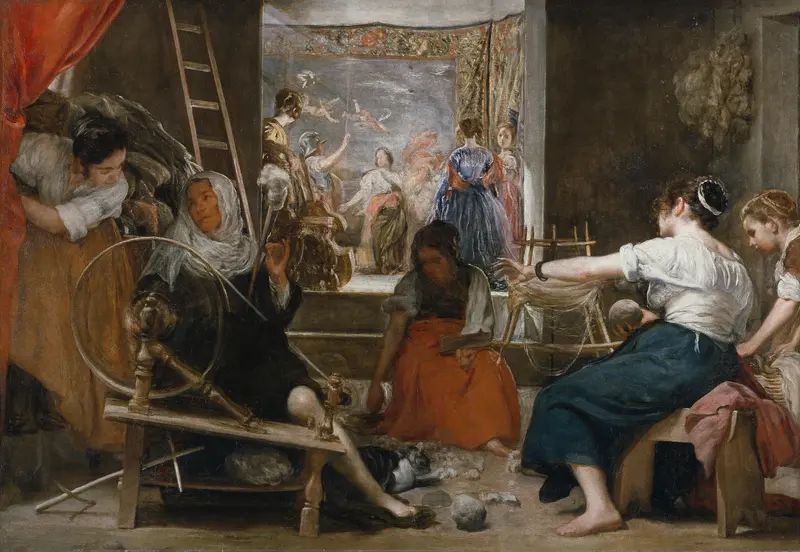
Las Hilanderas
Diego Velázquez





