
Village-Kirmes — History & Facts
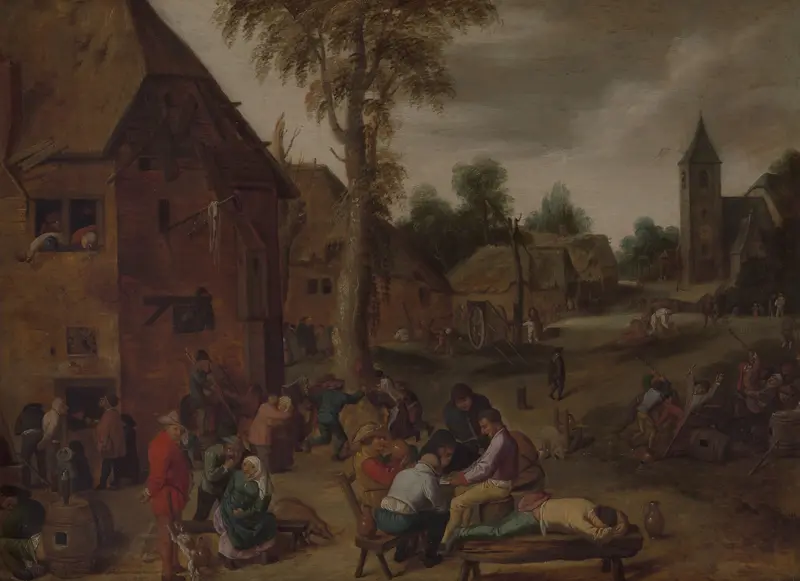
A surge of chaotic energy ripples through Village-Kirmes, drawing the viewer into the heart of a rural celebration that feels both unruly and utterly alive. Bodies twist and lean, faces flushed with laughter or drink, as the crowd spills from the haphazard houses into the open air. The painter, Adriaen Brouwer, delights in the tangle of limbs and gestures: a woman slumps heavily across a barrel, a pair of men lock hands in a contest or argument, and everywhere, the crowd seems to teeter on the edge of disorder.
The light picks out the rough textures of clothing and wood, lingering on the glazed jugs and flushed cheeks, while the palette—earthy and muted—grounds the revelry in the everyday. Painted in 1630, this work belongs to a tradition of genre scenes that flourished in the Low Countries, where artists like Brouwer made the lives of peasants and villagers their subject. Such paintings were not mere records; they were often commissioned or purchased by urban collectors fascinated by the spectacle of rural festivity, sometimes with a hint of moral warning, sometimes as sheer entertainment. The Deutsches Historisches Museum now holds this piece, but history has kept few traces of its early journey or patrons.
What endures is the immediacy of the scene: a moment of communal abandon, rendered with a sharp, observing eye—inviting us to linger, to count the stories within the crowd, and to wonder what tomorrow will bring for this unruly village.
More Artworks by Adriaen Brouwer

The Smokers
Adriaen Brouwer
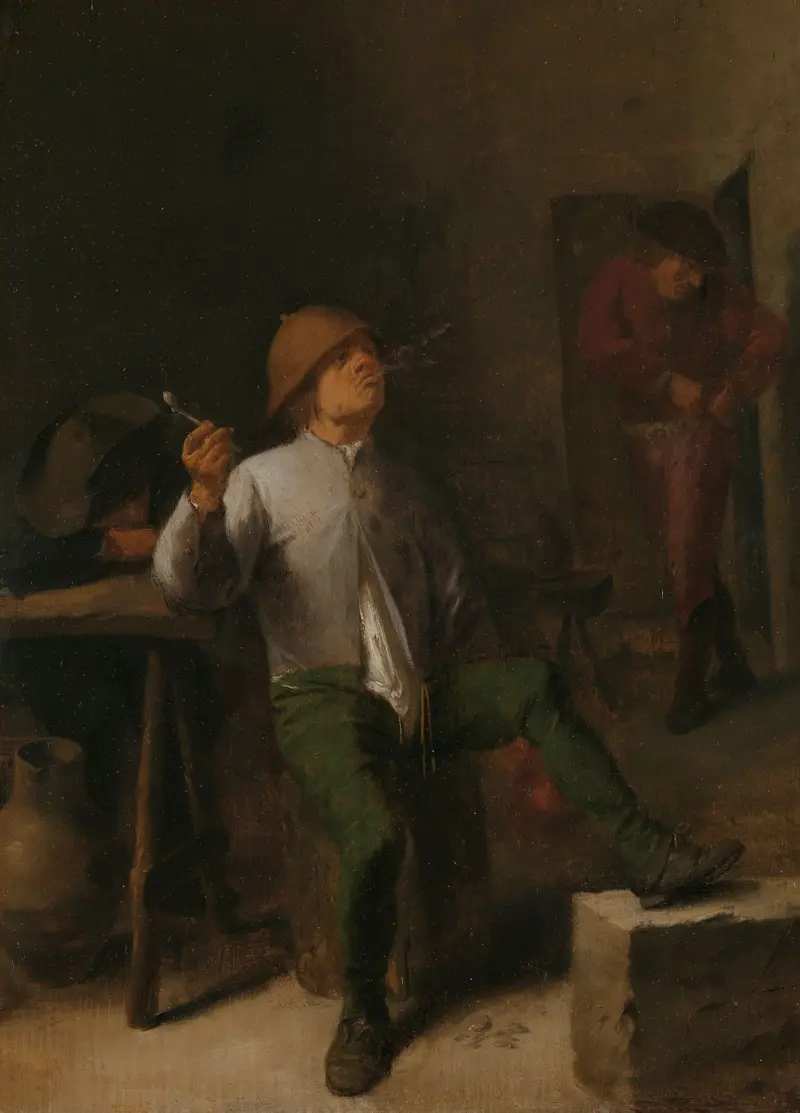
The Smoker
Adriaen Brouwer
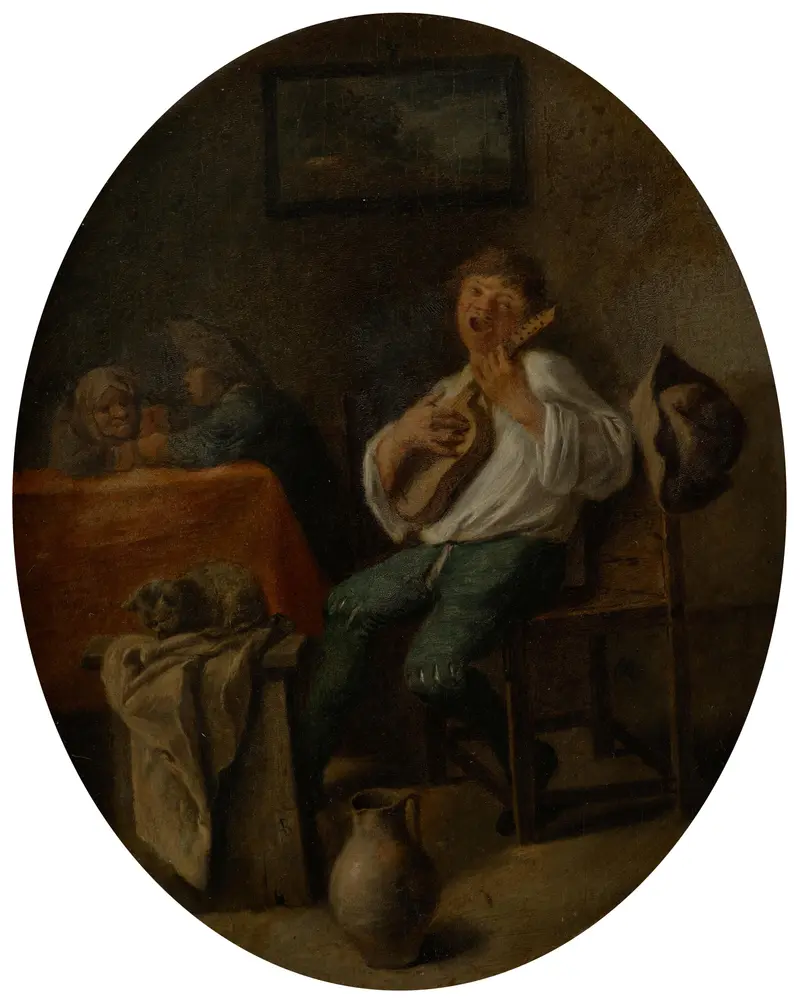
The Guitar Player
Adriaen Brouwer
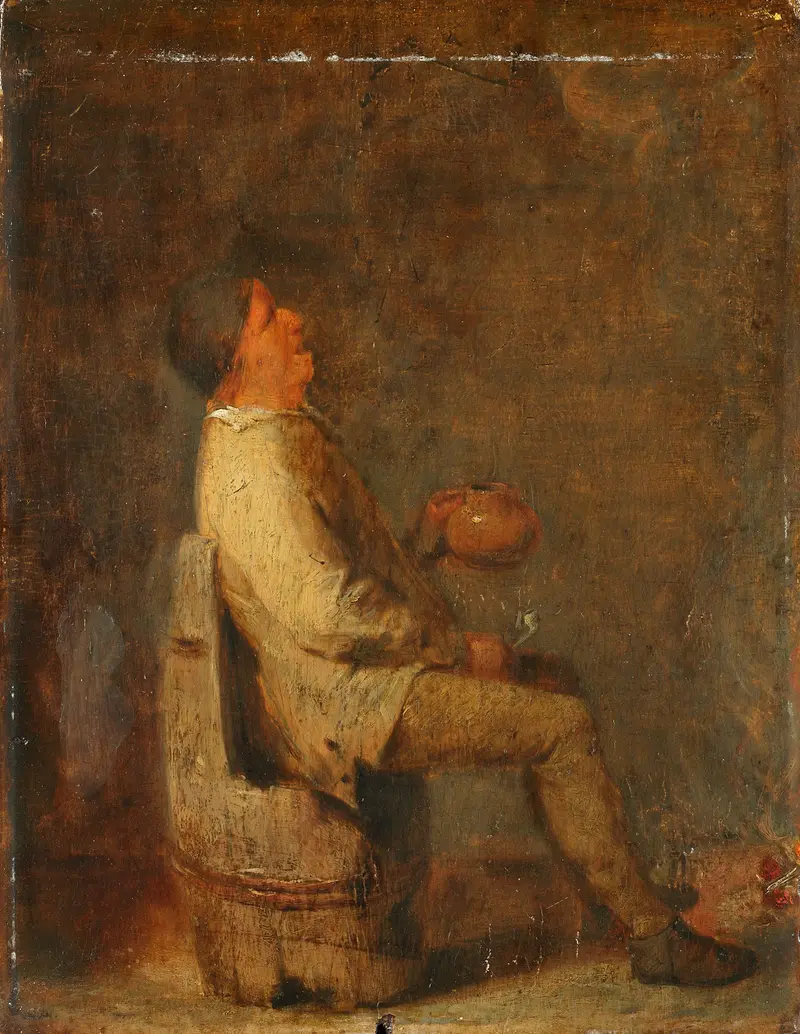
A Peasant Singing
Adriaen Brouwer
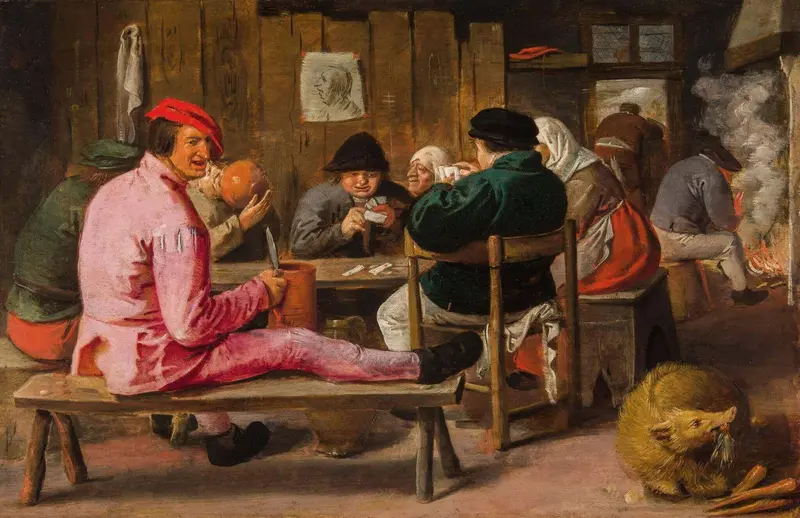
Merry Peasants in an Inn
Adriaen Brouwer
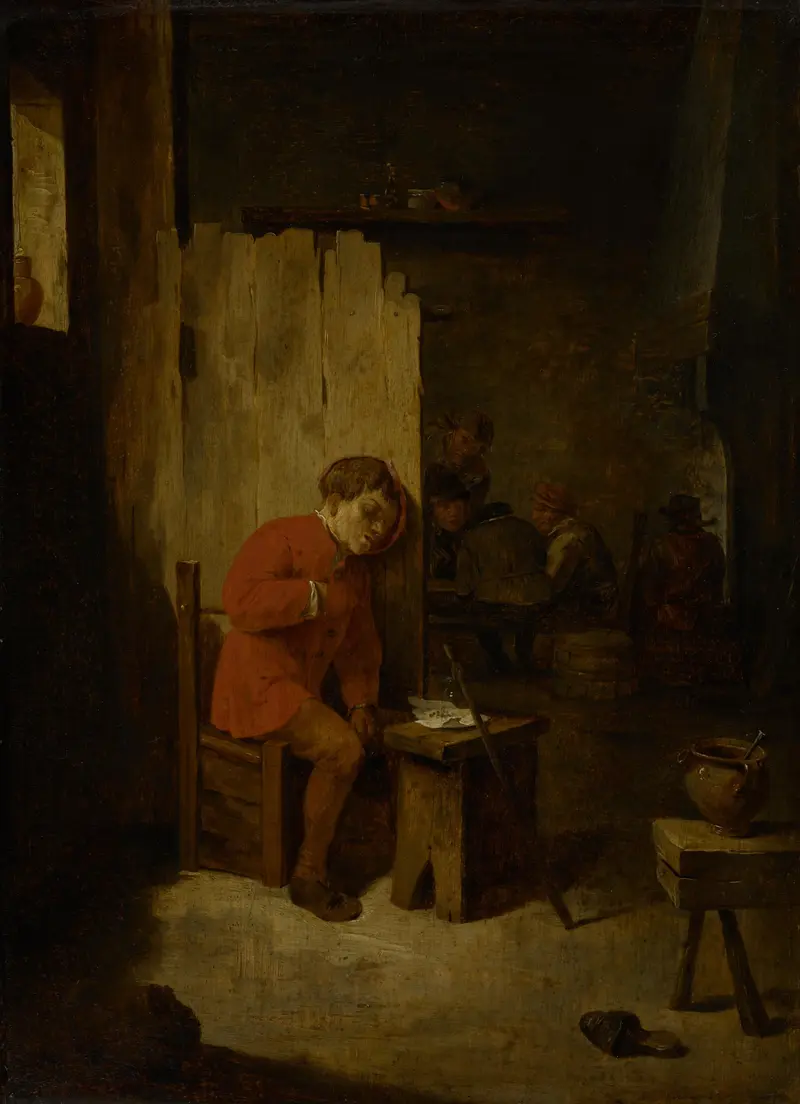
Nachahmer, Schlafender Bauer 853G Gemäldegalerie
Adriaen Brouwer
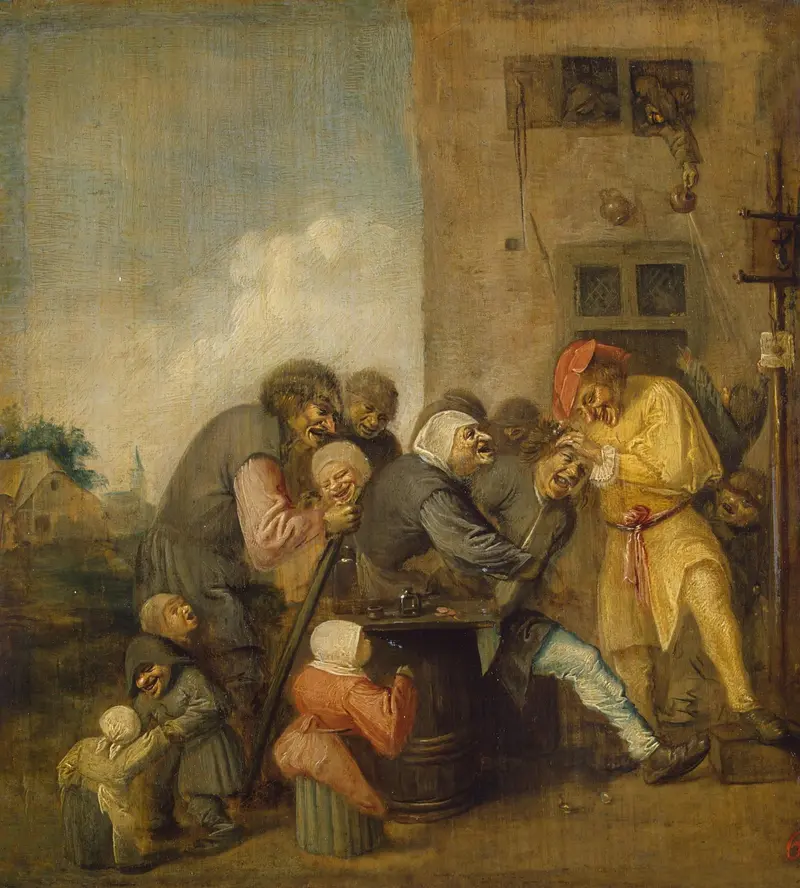
Village Charlatan (The Operation for Stone in the Head)
Adriaen Brouwer
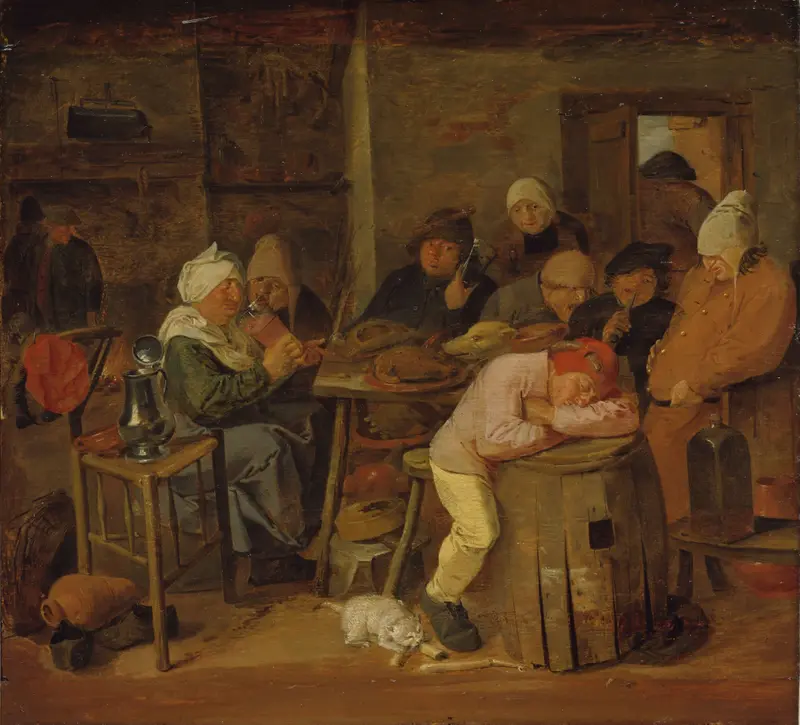
Peasants in an interior (The slaughter feast)
Adriaen Brouwer
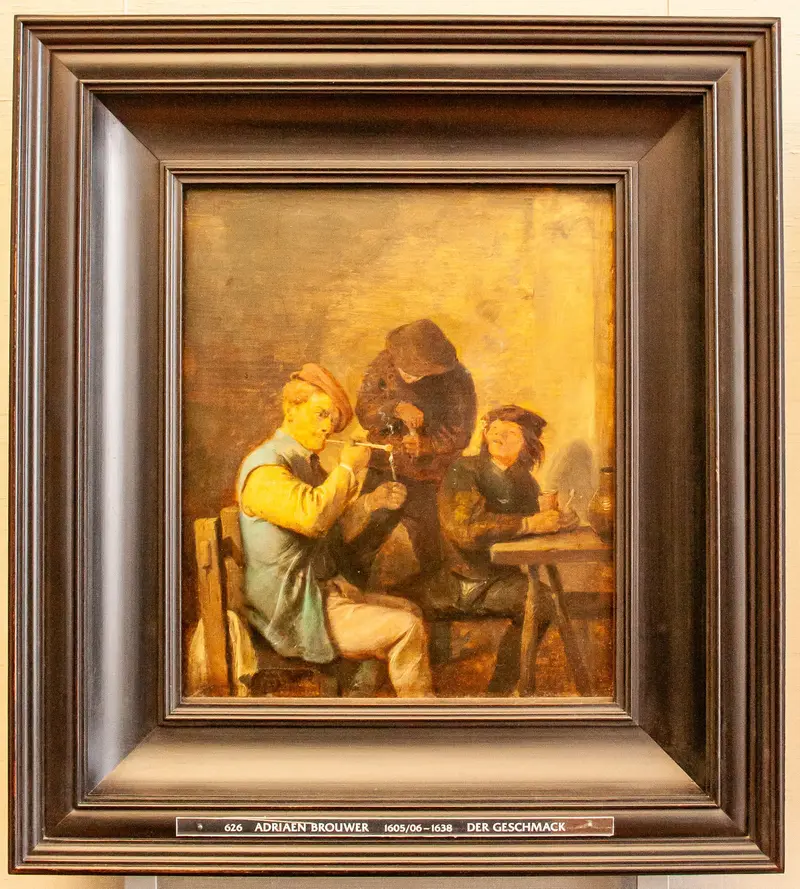
The Taste
Adriaen Brouwer
A Fair
Adriaen Brouwer
More Genre Scene Art

Banquet of the Officers of the St George Civic Guard
Frans Hals

Rembrandt and Saskia in the Scene of the Prodigal Son
Rembrandt van Rijn

Bal du moulin de la Galette
Pierre-Auguste Renoir

Quadrille at the Moulin Rouge
Henri de Toulouse-Lautrec

A Burial at Ornans
Gustave Courbet

When Will You Marry?
Paul Gauguin