
Village Scene with Men Drinking — History & Facts
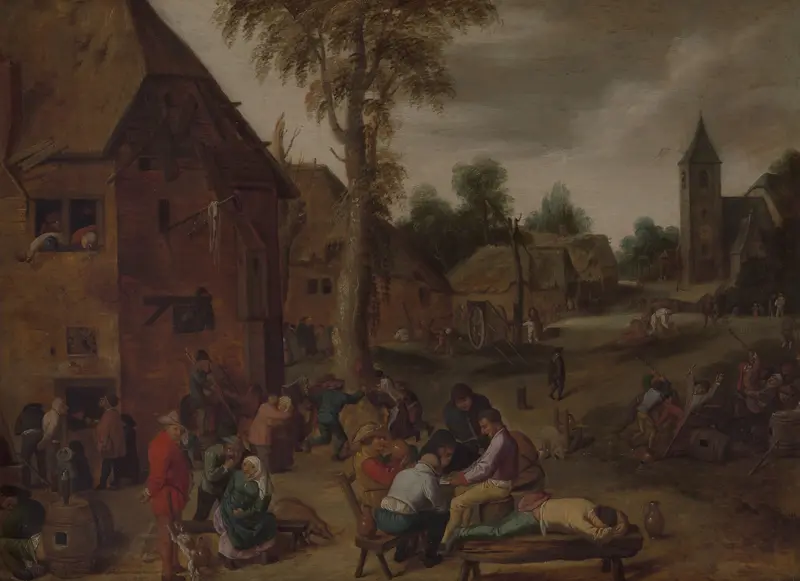
A single raised bottle catches the eye first, hoisted triumphantly by a figure whose gesture is equal parts celebration and challenge. Around him, the rough timber and patched roofs of the village lean together, their battered surfaces echoing the weathered faces at the table. The painter’s brushwork is loose and lively, capturing not just the forms but the very air of the place—a world where laughter and hardship mingle in the mud.
The pig nosing in the foreground is no mere detail; it roots the scene in the earthiness of daily life, a reminder that pleasure and survival are never far apart. This is the world of Adriaen Brouwer, painted between 1631 and 1635, now in the Museo Thyssen-Bornemisza in Madrid. In the early seventeenth century, such scenes of peasant revelry were both entertainment and moral lesson, prized by urban collectors who saw in them a mirror—sometimes mocking, sometimes affectionate—of their own society’s boundaries. Brouwer’s genius lay in his ability to balance the comic and the real, never letting the humor tip into caricature.
History has kept few traces of the specific lives behind these faces, but the painting’s energy invites us to linger, to imagine the stories that begin where the brushstrokes end.
More Artworks by Adriaen Brouwer

The Smokers
Adriaen Brouwer
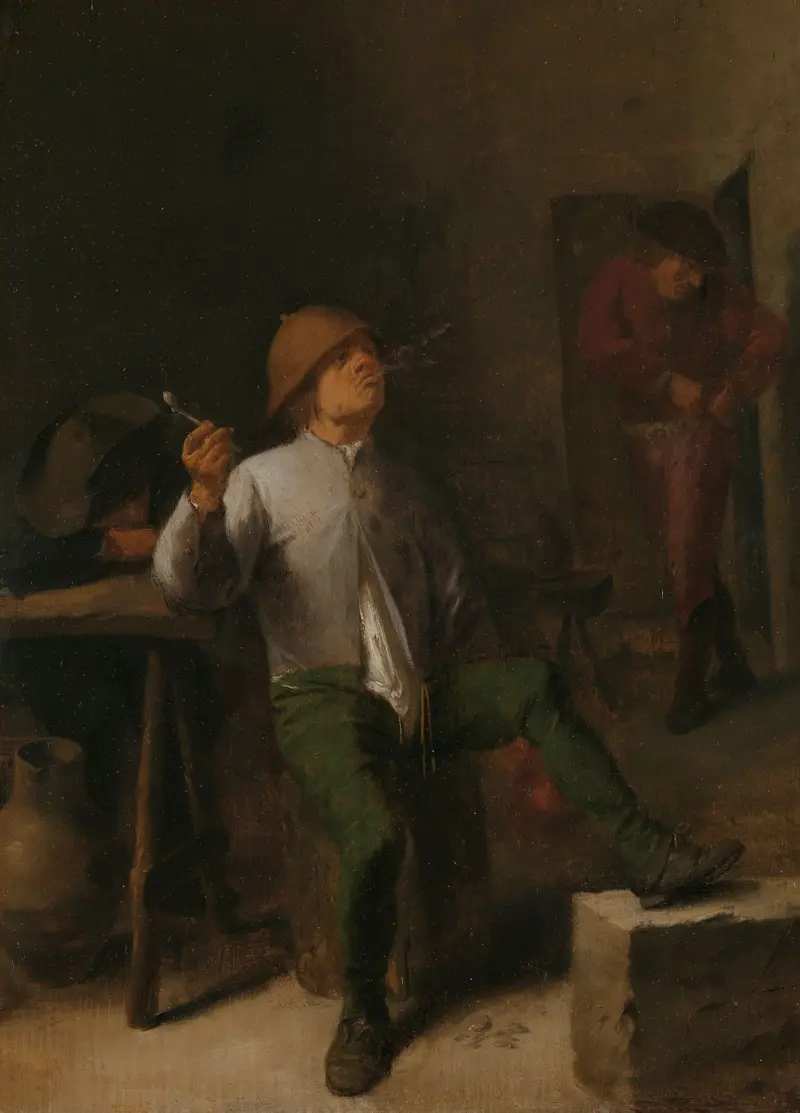
The Smoker
Adriaen Brouwer
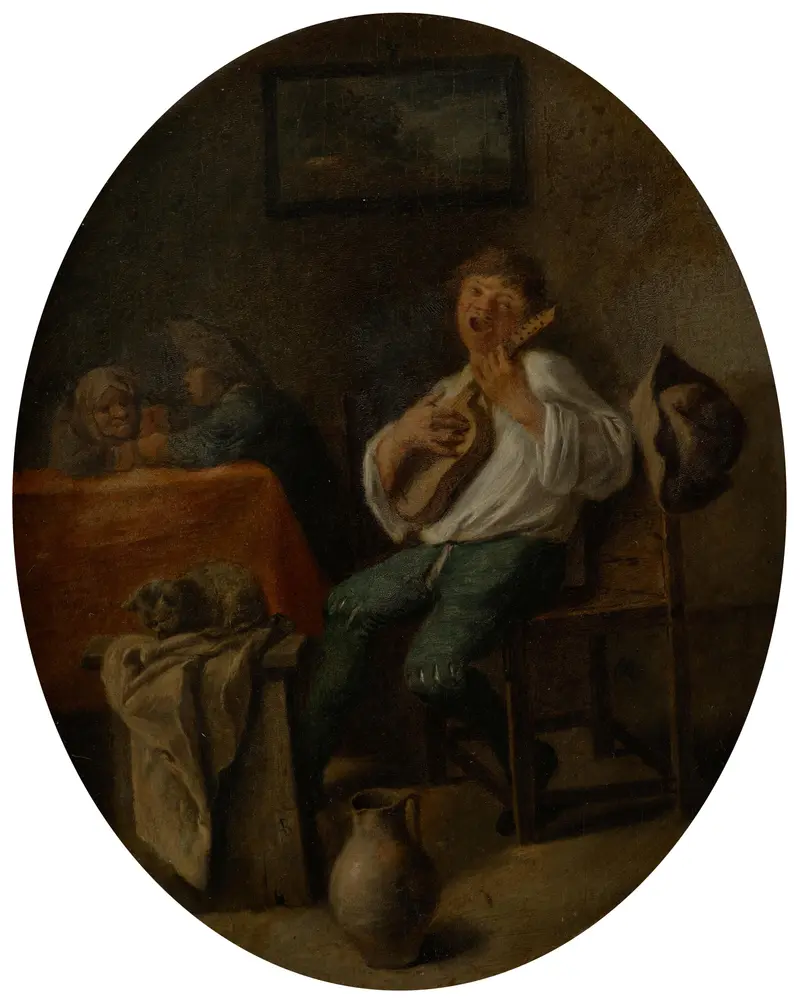
The Guitar Player
Adriaen Brouwer
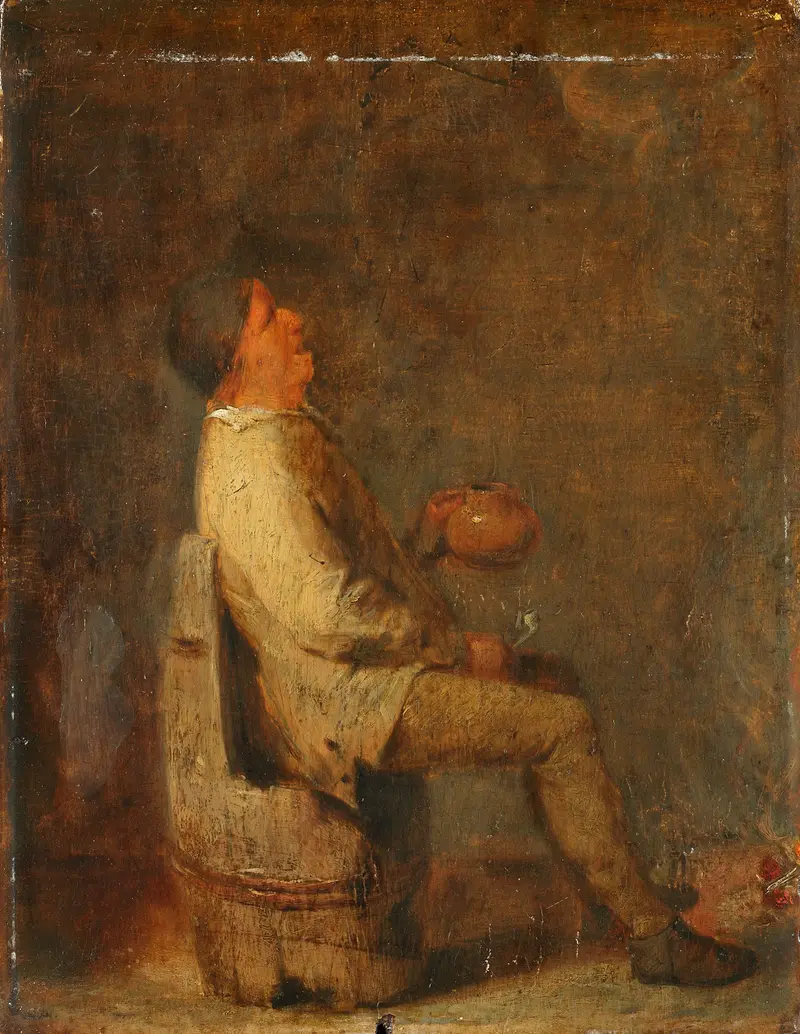
A Peasant Singing
Adriaen Brouwer
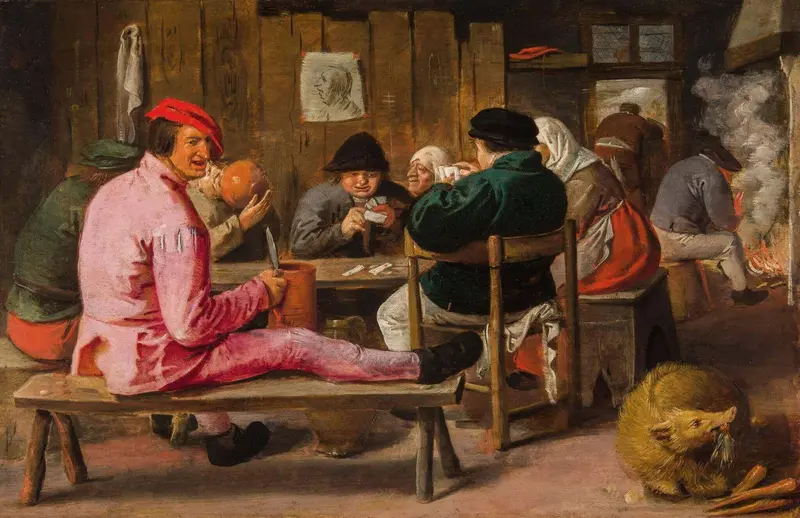
Merry Peasants in an Inn
Adriaen Brouwer
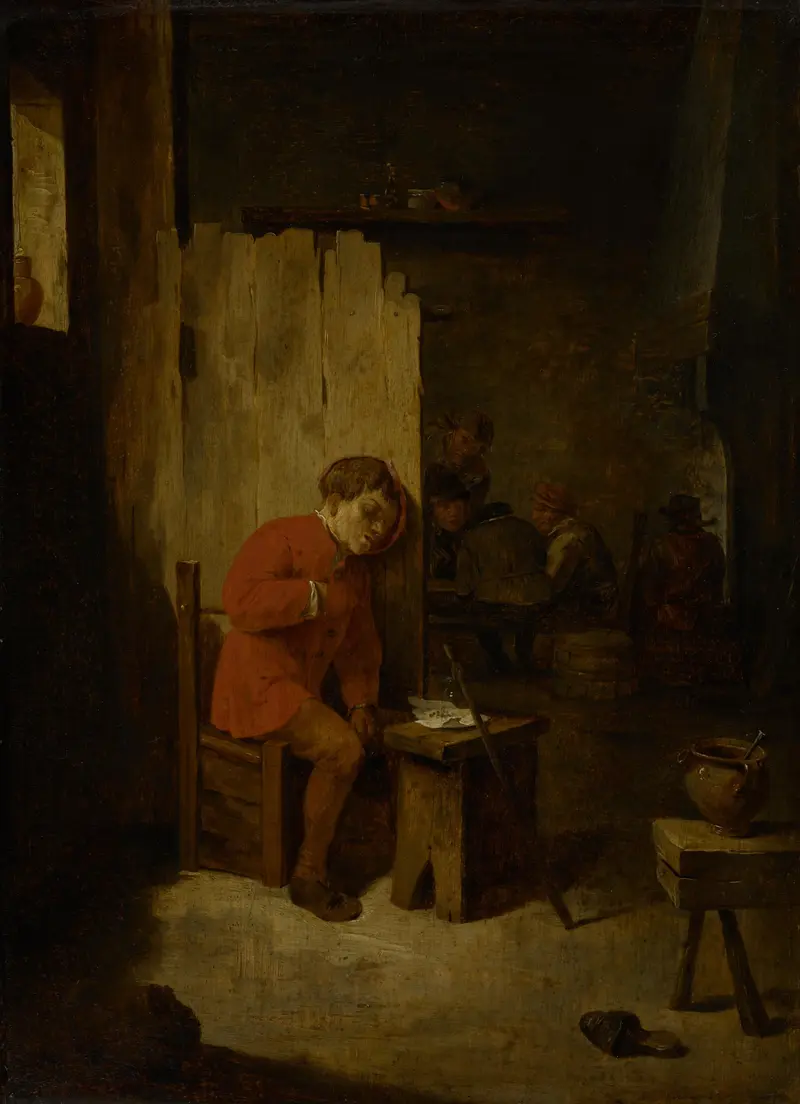
Nachahmer, Schlafender Bauer 853G Gemäldegalerie
Adriaen Brouwer
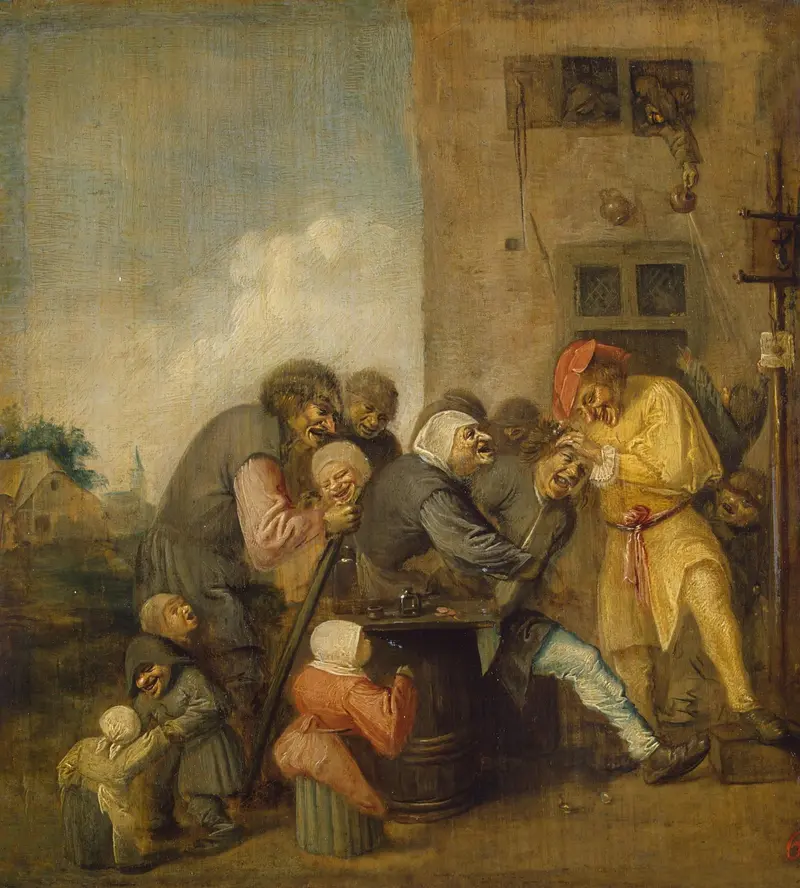
Village Charlatan (The Operation for Stone in the Head)
Adriaen Brouwer
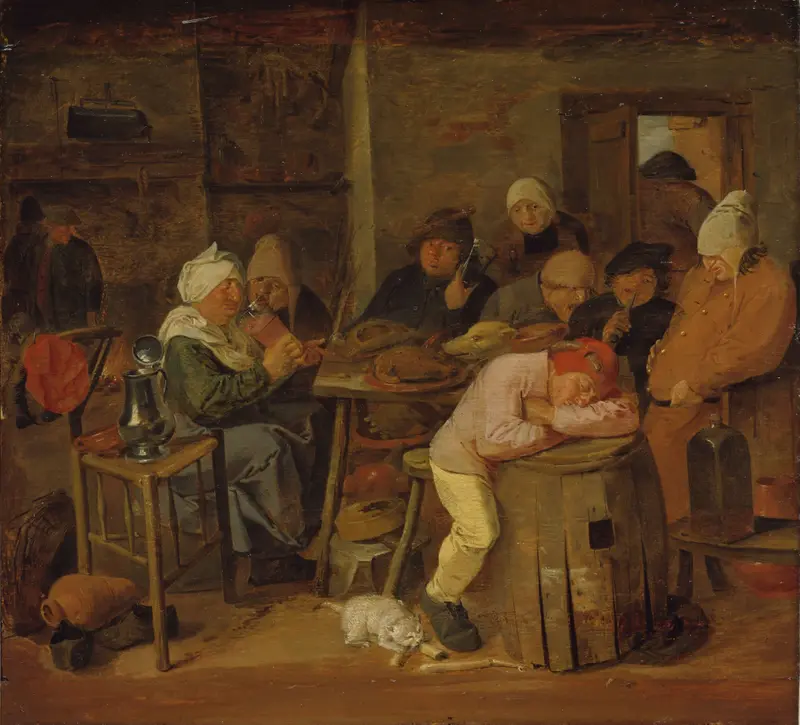
Peasants in an interior (The slaughter feast)
Adriaen Brouwer
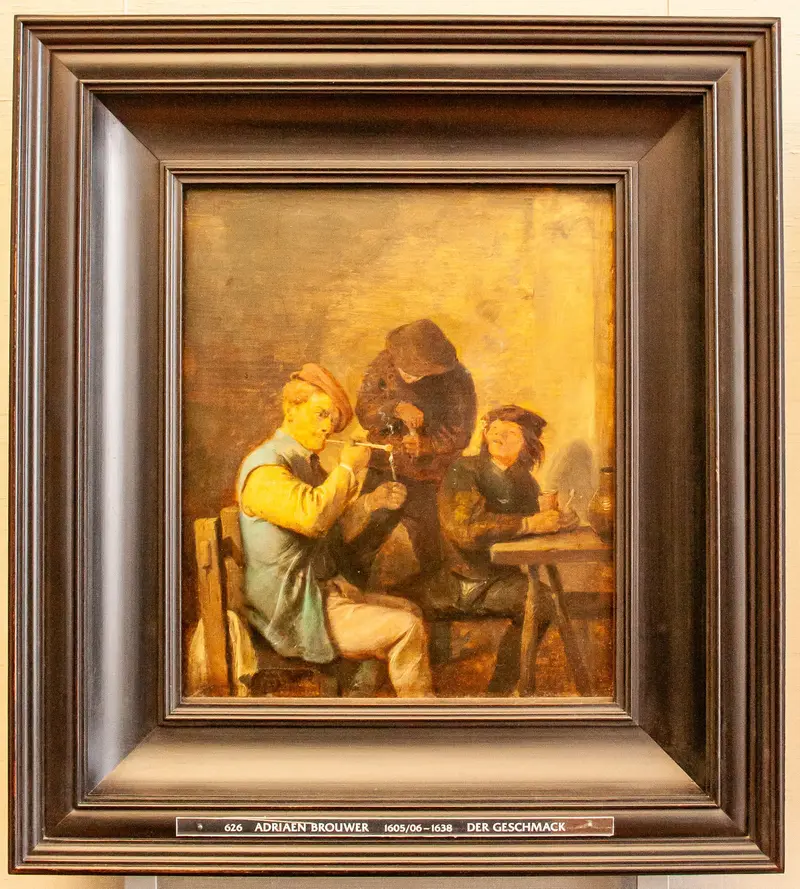
The Taste
Adriaen Brouwer
A Fair
Adriaen Brouwer
More Genre Scene Art

Banquet of the Officers of the St George Civic Guard
Frans Hals

Rembrandt and Saskia in the Scene of the Prodigal Son
Rembrandt van Rijn

Bal du moulin de la Galette
Pierre-Auguste Renoir

Quadrille at the Moulin Rouge
Henri de Toulouse-Lautrec

A Burial at Ornans
Gustave Courbet

When Will You Marry?
Paul Gauguin